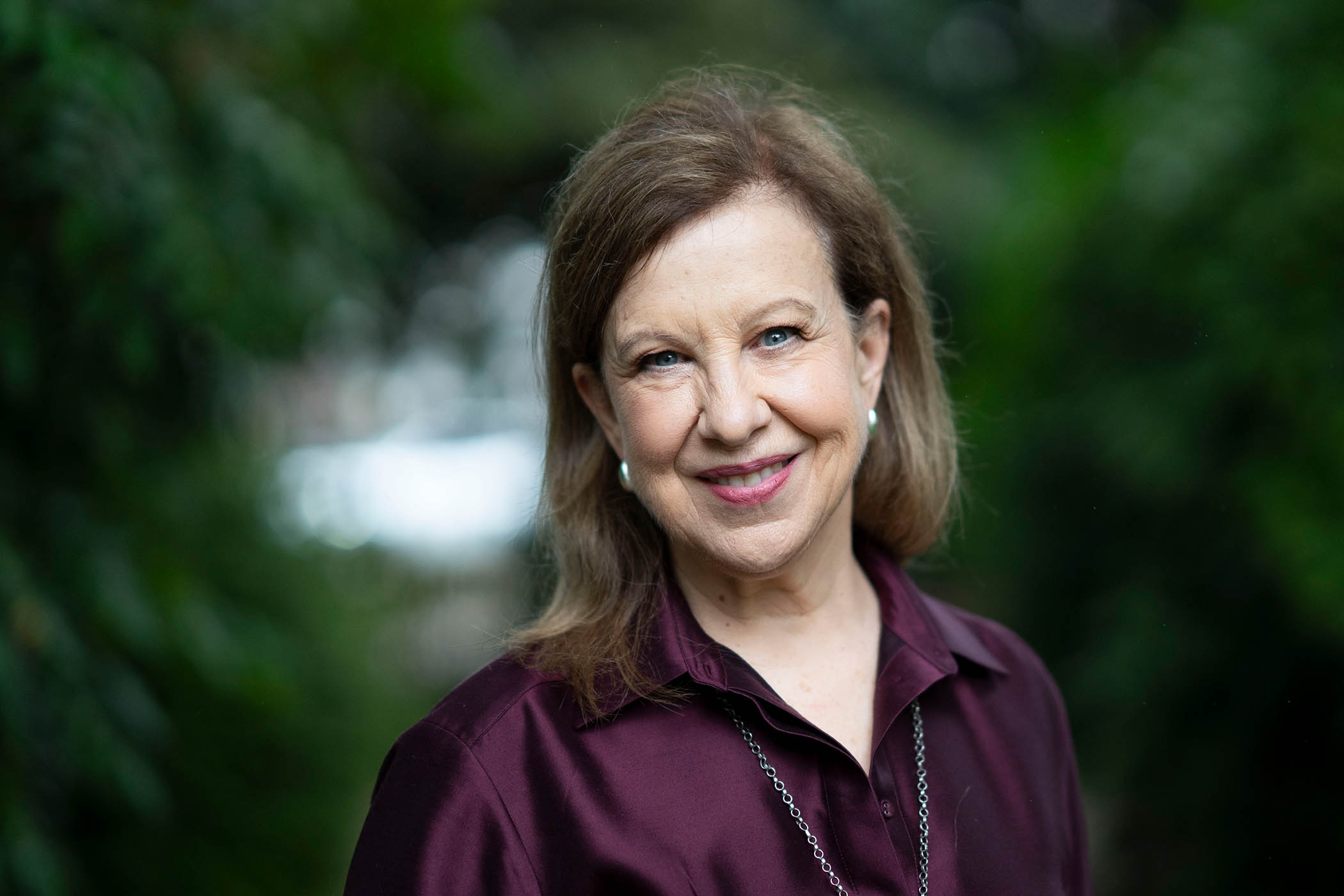
Lyse Doucet, 67, is a broadcast journalist who was born in Canada and began her BBC career in the 1980s. Now chief international correspondent, she has led BBC coverage of events including the Arab spring and the Sudanese civil war. It was on the day after her 30th birthday, on Christmas Day 1988, that she first arrived at the Kabul Inter-Continental hotel, from where she was to cover the withdrawal of Soviet troops from Afghanistan. In her first book, The Finest Hotel in Kabul, which yesterday won the 2026 Women’s Prize for nonfiction, Doucet weaves together portraits of the establishment’s remarkable staff to tell a “people’s history of Afghanistan”, covering life under civil war, American invasion and Taliban rule. The Observer sat down with Doucet on the afternoon following her win.
You’re an accomplished journalist. What’s it like to have received such praise for your first work in a different medium?
I still walk down the street and think: “Did I finish that book? Is it really done?” Because there is a disbelief about it. My job – every journalist’s job – is busy, but since I signed the book contract in 2021 there’s been a major, earth-shaking event every year: Kabul fell to the Taliban in 2021; the full-scale Russian invasion of Ukraine in 2022; the Gaza war in 2023; then we had the Sudan war, and so on. It took time.
Did you take a break from your day job to write it?
I don’t have enough courage for that. I would have major fomo. A lot of the places I report on are not just stories for me, they’re part of my personal history. So if something major happens in the Middle East, in parts of Africa, in Afghanistan, in Ukraine, I want to be there. I would be distracted at my writing desk. Whenever there was a quiet moment, I stole time.
How did you find writing in such a different style to news?
For me, this was taking a risk – I didn’t know how to write a book. But I love writing; words are so delicious. My writing journey is like that great tome of English literature, Goldilocks and the Three Bears, in that I sent in the first draft of the first chapter, and my editor was like: “Too short!” Then when I sent it again, and he goes: “No, Lyse, that’s too long – there’s too much history in there, too many coups!” Then I realised where the middle was.
Why was the Inter-Continental hotel the right framing for a history about Afghanistan?
Small stories carry bigger truths. I was conscious that I needed a familiar prism. My agent said: “Lyse, you need a conceit” – I had to Google [what that means in literature]. I discussed it with some Afghan friends, and so many Afghans have their own story of this hotel. For a lot of them, it was too expensive for a long time – this place on the hill – but maybe they went to a wedding there. The Inter-Continental was my first Afghan home, which gave me a little bit of authenticity. And hospitality is so hardwired in Afghans. The more I looked, the more I realised just how much had happened there.
Did you ever consider writing a memoir?
No. I’m proudly part of a very big tribe of journalists, including at the BBC, and I don’t think my story is that different from others. I couldn’t imagine sitting down with myself.
The book reads like fiction, and you appear in it as one of many characters.
When I started writing, there were some stories that very much involved me, like the story of Amanullah, who loved drawing cartoons as he worked as a room-service cashier. A lot of the cartoons were given to me, so to make that story work, I needed to be there. It was the same with the letter [to me] from the British embassy. Then I remembered how the Afghans often said my name as just one word, because Afghans have one name, so I became “LyseDoucet”. I did that Hitchcock thing, where I drop myself in occasionally.
How did you balance day-to-day events with more dramatic political action?
Wherever you have these huge sweeps of history, the minutiae of daily life goes on. So, on 15 August 2021, what was the headline news? The Taliban are at the gates of Kabul. The president of Afghanistan has fled. The Taliban are now in the palace. But when I went to the hotel, what did the head waiter tell me first? “Lyse, there was a wedding in the hotel, and the bride didn’t change from her green dress to the white dress, which, of course, signifies she’s married. And they didn’t eat the food.” And then: “Oh, and the Taliban came to the hotel too.” We all have our own headlines in our lives. It was about trying to get into the Afghan people’s thinking.
What has been your experience of the west’s shifting interest away from Afghanistan?
Hardly a day goes by without me getting a message from an Afghan woman saying: “I’m living in a prison, can you help me?” But Afghanistan has largely slipped from our headlines. 15 August 2021 left many with a dark question about what two decades of international engagement was all for. The Taliban are not budging. I think the world has been turning away, partly because [of that].
What comes next for Afghanistan?
Afghans have lived with possibly every political system the world has known: a kingdom that was not perfect – but was a time before war – and Afghans remember it as the golden years; then Soviet-backed communism; then warlordism; Islamism; a would-be democracy backed by the west; and back to Islamism again. The danger is that if this continues, a new generation of girls will be created who think it’s normal to stay at home. Even more dangerously, boys will grow up thinking it’s normal that girls and women stay at home, and boys are the ones who are educated. We live in unpredictable times, but there’s no expectation that there’ll be another major international intervention. It will have to come from within Afghan society. But we don’t have the privilege of giving up on hope for Afghans.
The Finest Hotel in Kabul: A People’s History of Afghanistan is published by Hutchinson Heinemann (£25). Order a copy from The Observer Shop for £22.50 (10% off RRP). Delivery charges may apply
Photograph by David Levenson/Getty Images
Newsletters
Choose the newsletters you want to receive
View more
For information about how The Observer protects your data, read our Privacy Policy