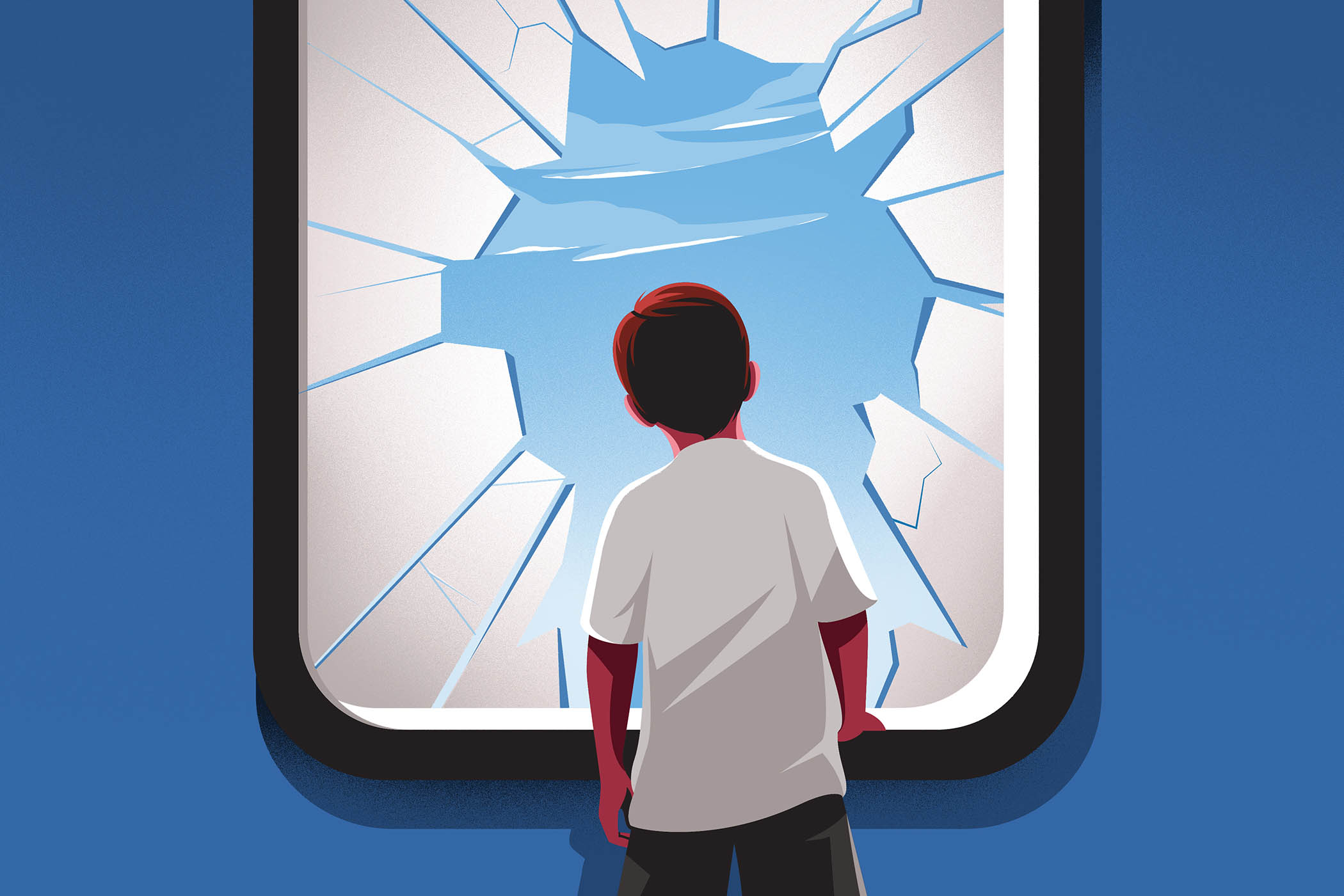
We never learn the name of the protagonist in Lisa Owens’s second novel. We are introduced to her sons – one-year-old Rudy and four-year-old Felix – in the very first paragraph. But their mother is always just “she” or “Mum”. It’s a telling device in a novel about how society strips women’s identities from them as soon as they become mothers.
Natural Disaster, which follows British author Owens’s comic debut Not Working, plays out across one – albeit pretty long – day in the life of a mother of two. It’s a crucial day: the last of her maternity leave before she returns to work. And she has promised it will be a special one – for her, and the children. Instead of following her friends’ advice and putting the boys into nursery a day early in order to treat herself to a massage, she has chosen to “honour the day for what it is: the last of her hermetic, full-time parenting, before the cares and inconveniences of the real world leech in”. She is spending the day with Rudy and Felix.
The novel, which follows her protagonist in a close third person, takes a sprightly tone. The mother isn’t a slapstick character, or the kind of overbearing parent you’d come across in Motherland. The beauty of Owens’s book is that she is really quite ordinary, which means that, yes, she is anxious and sometimes sarcastic, but above all she just loves her children. Natural Disaster is very funny, but not unbelievable or overwrought.
The day gets off to a bad start when the protagonist goes into her husband’s gym bag to borrow some of his deodorant and instead finds an unused tampon in a lilac wrapper that is not the type she buys. It dawns on her that he, conveniently away at a conference in Barcelona, is having an affair. But the day must go on. So she, Felix and Rudy head to the library, via a bakery, and then on to the park, as altercations with Felix about whether he can have a “panno chocklit” and a “fluffy milk” play out.
Owens expertly depicts the many ways society does not welcome parents of young children
Owens expertly depicts the many ways society does not welcome parents of young children
In a corner shop, she is trying to stop Felix digging his hands into a self-service bin of oats when she hears a voice calling “Mum”. The shopkeeper is addressing her; his household goods are blocked by her double buggy. The buggy ends up stuck in the shop’s doorway, and a ridiculous episode involving other customers, a sticky brake and the suggestion of an angle grinder ensues.
“What was she thinking, daring to venture out into the world, behaving like a normal, competent mother?” thinks the protagonist. Owens’s novel expertly depicts the many seemingly small ways society does not welcome parents of young children, especially mothers. As her protagonist navigates these obstacles, she is all the while mulling about how she will cope with returning to work (and what on earth she’ll wear), reflecting on her pregnancies, and fearing what the future holds for her relationship with her husband.
It’s true that we don’t learn his name either: on one level, both parents have their identities stripped from them. But in the book’s final section, in a hospital, where the doctor is yet another stranger to view our protagonist only in relation to her children (“So tell me, Mum, what’s been going on?”), and her husband is still nowhere to be seen, there is no doubt that parenting has upended her life in a way it never will his. Recalling an argument over domestic work, she considers how “she always feels, after these interactions, like a bearskin rug with the head still on: prone and glassy-eyed, stunned by the shot she hadn’t seen coming … his brain, his life, his self have not been remade completely in the process”.
Natural Disaster by Lisa Owens is published by Virago (£16.99). Order a copy from The Observer Shop for £15.29 (10% off RRP). Delivery charges may apply
Newsletters
Choose the newsletters you want to receive
View more
For information about how The Observer protects your data, read our Privacy Policy