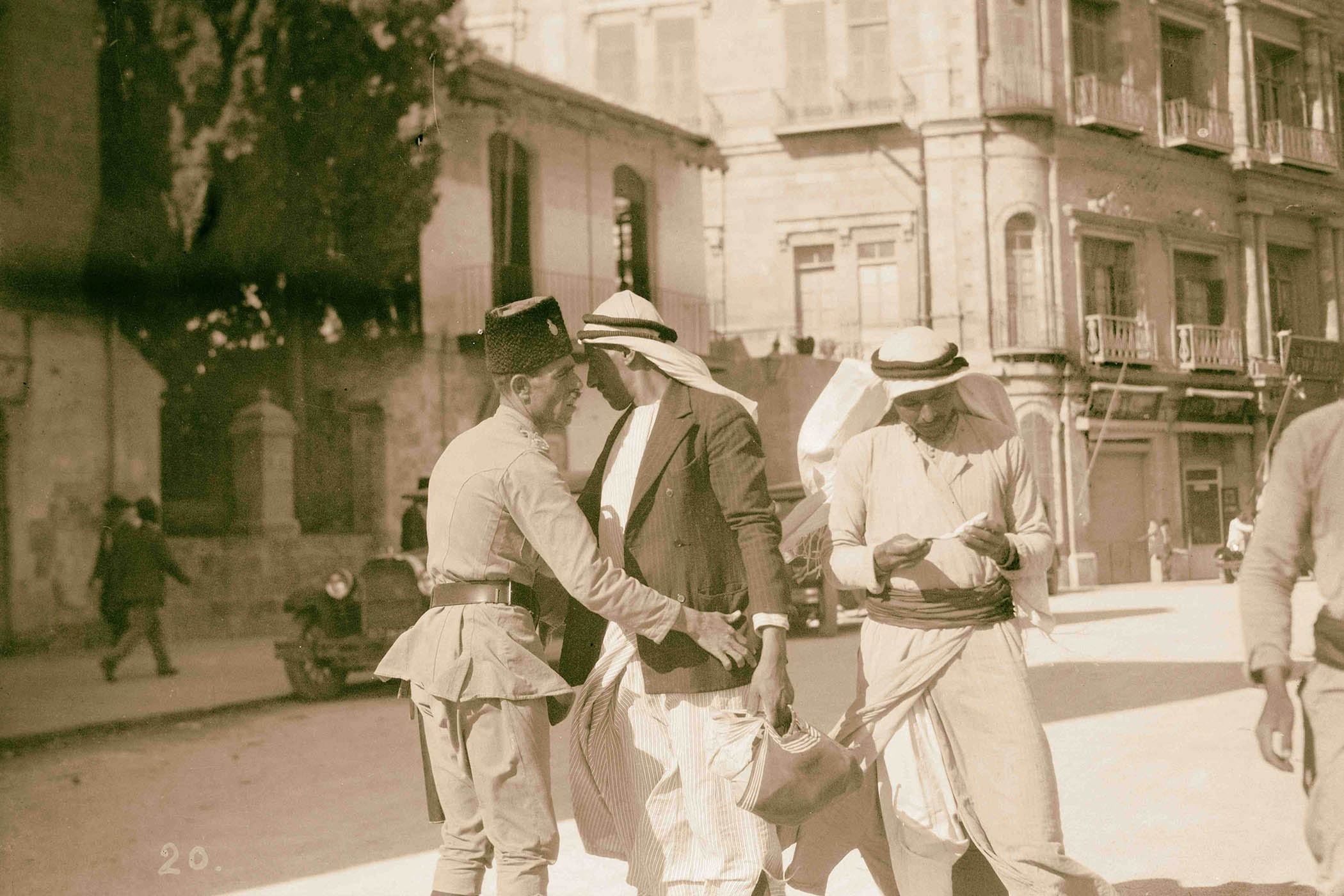

Soraya Antonius was born in 1932 in Jerusalem, then the capital of Mandatory Palestine. The territory, part of the Ottoman Empire prior to the resolution of the first world war, had been placed under British governance by the League of Nations in 1920. This was supposedly an interim arrangement leading to Palestinian self-rule. But the matter was complicated, even before its inception, by the Balfour Declaration of 1917, in which the British pledged to help establish a “national home for the Jewish people” in Palestine.
Antonius, who died in 2017, was brought up in a cultured Palestinian household. Her father was a well-known historian and Arab nationalist, her mother a socialite and philanthropist. After being educated in Egypt then England, Antonius worked in Lebanon as a journalist. She wrote two novels, both long out of print. The first, The Lord, published in 1986, is told by an unnamed reporter in 1980s Lebanon who is piecing together a story that unfolded in the leadup to the Palestinian uprising of 1936.
The story within a story concerns the growing repute of Tareq, a travelling magician – the “Lord” of the title – whose act attracts the attention of the British, first as a source of entertainment then suspicion. Some see Tareq’s regular trick of turning a Homburg hat into a keffiya as an allegory for the Arab overthrow of their masters. At a Christmas party for British families, Tareq appears – although eyewitness accounts differ – to momentarily strip the high commissioner of his clothes and thus, symbolically, his power. This is enough for Challis, the head of military intelligence and a man fiercely dedicated to eradicating Palestinian insurgents, to make Tareq a primary target. Challis, who the narrator thinks might have been “remembered kindly had he lived in the suburbs and dug his garden strip”, is a monstrous product of the colonial machine.
The Lord combines history, political analysis, spycraft and misguided love affairs in le Carré-like grey
The Lord combines history, political analysis, spycraft and misguided love affairs in le Carré-like grey
Through the narrator’s interviews with Miss Alice, a missionary schoolmistress who taught Tareq, what unfolds is not only an account of the surveillance and apprehension of Tareq but also a study of the British colonial character, the system that shaped it, and the brutal indifference with which it treats the Palestinians. “It was time to finish, once and for all,” the narrator comments, “with the minor irritant that this tiny backward people constituted in the great oiled differential of empire.”
The Lord combines history, political analysis, spycraft and misguided love affairs, shrouding all these elements in le Carré-like grey. Antonius is a sophisticated writer and expects us to keep up with her. Despite some occasionally elliptical sentences, she is capable of pointed aphorisms and cutting irony. It is hard to think of a more concise summary of the iniquities of empire than this: “Shopgirls wanted to buy lipstick, their parents wanted to keep pigeons and go to a pub and have a few days off once a year at the seaside, a bet on a game of darts, their young men were looking at small cars with new surmise. Everything has to be paid for, and a small island with neither mineral wealth nor a devotion to a work ethic has to turn to violence to acquire a standard of living that can otherwise only be based on a continent’s resources or a frank acceptance of the helot substratum.”
Antonius’s narrator writes from a Lebanon reeling from the Sabra and Shatila massacre. With this reissue, the book’s resonance gains another dimension. In 1988 a young William Dalrymple reviewed Where the Jinn Consult, Antonius’s second novel. It shouldn’t be possible that the closing line of his piece can, 37 years later, serve the same purpose here, and yet “now, as Gaza burns… the questions she raises still cry out, ever louder, for an answer”.
The Lord by Soraya Antonius is published by NYRB Classics (£16.99). Order a copy from The Observer Shop for £15.29. Delivery charges may apply.
Editor’s note: our recommendations are chosen independently by our journalists. The Observer may earn a small commission if a reader clicks a link and purchases a recommended product. This revenue helps support Observer journalism
Photograph by Sepia Times/Universal Images Group via Getty Images
Newsletters
Choose the newsletters you want to receive
View more
For information about how The Observer protects your data, read our Privacy Policy