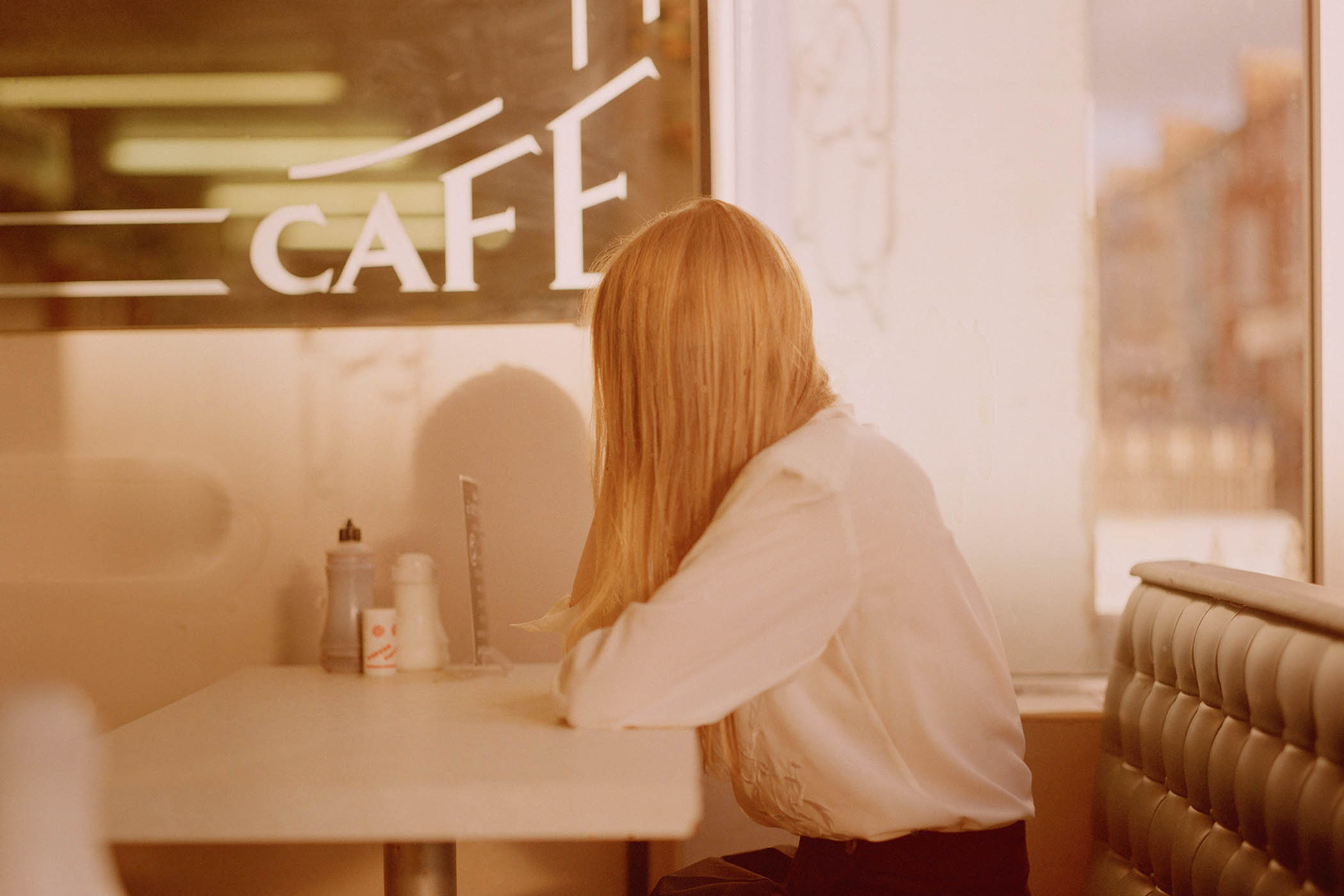


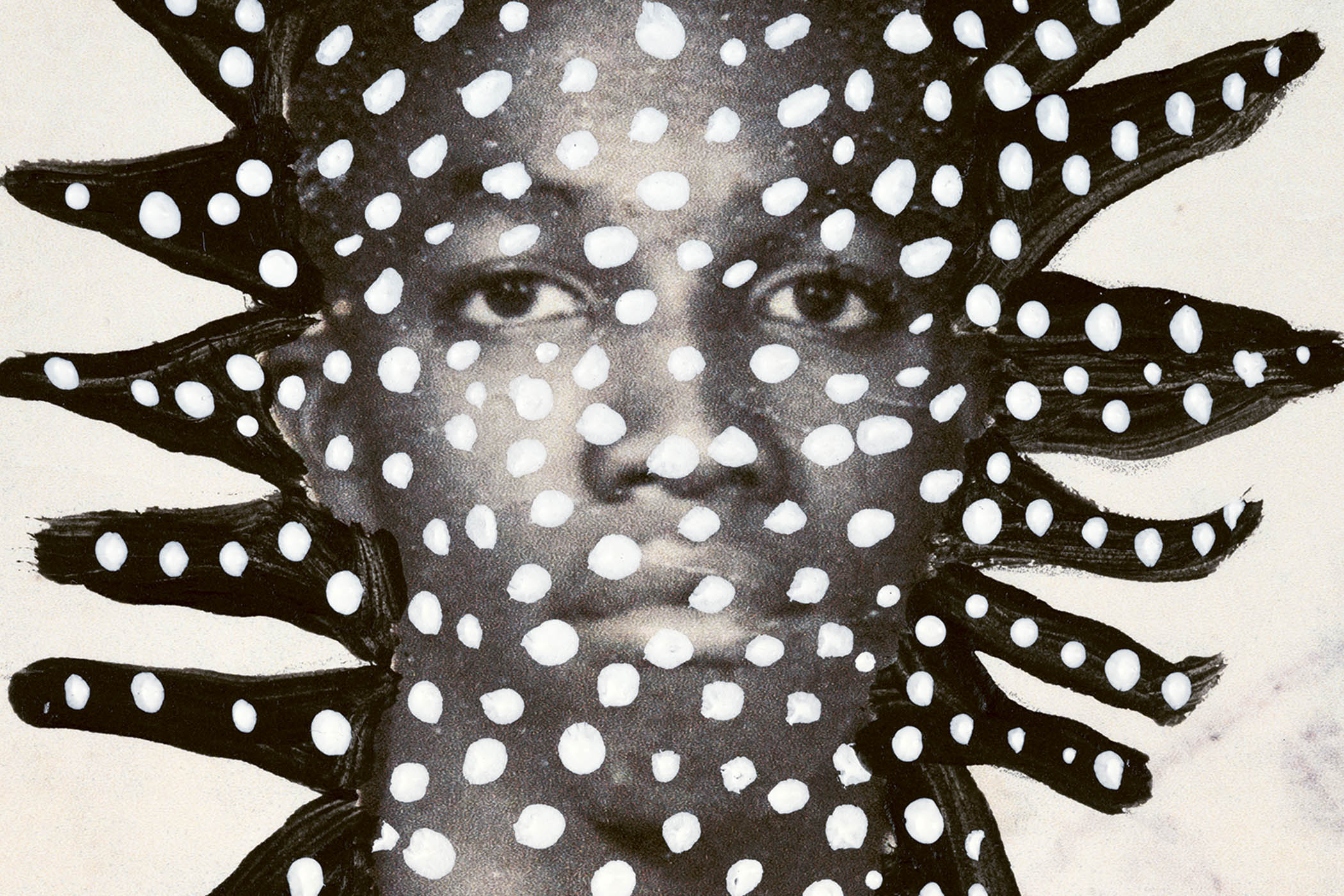
Holly Pester’s second poetry collection, Cafés, offers a surreal meditation on the unofficial office that many writers could not live without. Whether finding beauty between the butter smears, smiles in plug-socket scrambles, or philosophical revelations between strands of hair, Pester’s poetic world is never a dull place to be. Written from the perspective of a narrator who likens themself to a “cartoon cat that can’t stop wisecracking”, Cafés is one of the most fun – sometimes farcical – collections I’ve read all year.
While some cafes have the dismal “ambience of a letter of resignation”, and in others, “everyone sits apart, irritating their class divisions with dutifully dirty looks”, the cafes here are whimsical portals to a parallel world. This feeling is fitting for an enterprise selling escapism from the outside world: “the awful boring job I’ve taken on, the role that shocks people with its brutal leaking thunder”. “It is a luxury to be able to think about something else,” Pester explains, rescued from “the engine rooms of corporate consciousness”.
Cafés is a buffet of aphorisms. These curious poems are served in prose chunks without titles, as if scrawled hastily on napkins. A good café “confuses work with leisure”, is “a battleground for good thoughts” or “reminiscent of another time” – when talk came easily, pre-social media. But my favourite moments are when Pester’s logic spills like coffee into “romantic […] classic madness” and I’m left scratching my head wondering what is going on.
This book is bonkers in the best way, begging us to ‘treat each invoice like a love note’
This book is bonkers in the best way, begging us to ‘treat each invoice like a love note’
“Lamps want arguments.” Chairs hide lustful desires. In “brainstorm” meetings the speaker “bang[s] on the sun”. She longs to open her own cafe, but “pretend[ing] everyone in the room works for you” is a good place to start. Next: “Rename the public your team. Have a secret meeting about the future.” As I read, reality no longer quite holds. In a cafe myself, I look with suspicion at the salt and pepper shakers.
The collection features cakes so tempting they become characters (one “untouched tea cake” inspires “the most erotic experience of her life”). This book is bonkers in the best way, begging us to “treat each invoice like a love note”. For while a cafe’s shape is “so extremely unlike a temple”, it preserves many of the “same origins”, Pester argues: “Same spiritual equipment. Similar method to wandering out into the desert and forgetting my name.”
Another poet testing the limits of line breaks is Helen Mort. Her fourth collection, Stepmother, charts her tumultuous grappling with this most maligned of female archetypes, that goes back at least to Euripides: “better a serpent than a stepmother”. These poems also enjoy the comforting cohesion of prose over the broken household of more chaotic forms. It is a fitting analogy for the “blended family” Mort seeks to grow: uneasy portraits of an “awkward trio, leaning together like plants”, wariness (“not sure whether you can ask”) and hesitations (“You wanted to say then: she’s not my daughter. She already has a mum. To speak would have seemed like a disavowal, a distancing. To stay silent meant taking something which was not yours”).
Mort goes one step further – embracing the stepmother role – crystallising through poetic form the “urge to impose order” in a house that doesn’t yet feel like home. “What are you doing in this house if not creeping?” she asks. “You try to make your presence on the stairs unfelt. You are quiet when you should speak.”
Just as the reader starts to feel at home in the familiarity of fairytale references and predictable form, the rug is pulled, underscoring the speaker’s insecurity. Here, even the ever-faithful “moonlight” becomes “a long knife” in an uncanny motif that spreads throughout the collection: another poem involves the speaker trying “to fit the whole moon in her mouth”; elsewhere she checks herself for “signs of serpentry”.
Eschewing lineated artifice and often titles, Mort demonstrates commitment to sharing an excruciating truth. Most stepmother narratives are “unsatisfactory” and outright false. Must women always be “set in structural competition”, Mort wonders, where “the only way to make a truce is to kill off one of them”? When does one become a stepmother anyway, she asks. Is it when a stepchild loops their arms into yours, or when they ask for a lift? Is it when the first argument has been resolved? And why are there no stories of wicked stepfathers? Surely men can be “poisoned by jealousy”, too? Where neat answers falter, messy love persists.
From Cafés, by Holly Pester
Newsletters
Choose the newsletters you want to receive
View more
For information about how The Observer protects your data, read our Privacy Policy
And whatever else the café is, it is also a conceit, to a great extent, a frame
You can observe who you are, think your thoughts, as the world in jest, or put thoughts against the world, protest-march into the café until it fizzles. Have a thought about atrocity and what comes next. The dif ference between my scruffy handwritten notes and what I’m capable of saying is increasing. What and who survives the atrocity of the world might meet in a place, this is the shape. Already have. Will I watch? Watch myself watching. Form a circle of shock until the silence hears itself turn into speech, into a word like ‘shock’, then into euphemism, with a word like ‘shocked’. Here we become a watching shape blurred against glass. We acknowledge the café as a formalisation, a hardened architecture of whatever the world is and isn’t, all its totalitarianisms and mock Tudor windows. You and I are in the sham. It is a luxury to be able to think about something else. The effort is to make thoughts paddle. This is the real café. Out of the engine rooms of corporate consciousness, out of the engine rooms of horny married customers, the café is a battleground for good thoughts. Match each one against the time it arrived.
Slipper, by Helen Mort
What if the sisters weren’t ugly,
& the stepmother only usually cruel?
What if they all walked home together
after school, sharing fuchsia bubblegum?
What if ashes festered in the grate
and nobody rose to light the fire
in that low-ceilinged house
of women. What if they each desired
the other? And if the pumpkin remained vegetable
the mice carried on their secret lives
and midnight passed without incident
and moonlight was a long knife
that pared the palace garden, where the Prince
walked, cradling a glass stiletto
bought only for himself, what if his want
was a high shelf he’d built and decorated,
lined with wigs and stick-on jewels?
What if he stopped beside the ornamental pond
with its monstrous koi and – face held in the water –
tried the damn shoe on?
Cafés by Holly Pester is published by Fitzcarraldo (£12.99) and Stepmother by Helen Mort is published by Chatto & Windus (£12.99). Order a copy of either book from The Observer Shop to receive a 10% discount off RRP. Delivery charges may apply
Photography by Keeley Bentley/Millennium Images