


Mark B Smith, a Cambridge historian, has written a fascinating chronicle of the Soviet Union, from the death of Joseph Stalin in 1953 to the resignation of the reformist leader Mikhail Gorbachev 38 years later. No single volume can adequately explain the Soviet state’s collapse, but Exit Stalin is a valiant attempt. Smith provides a teeming, collage-like picture of how ordinary Soviet citizens withstood repression and food scarcities yet clung hopefully to the 1917 revolution’s promise of a better life. Gorbachev, a “tragic figure” in Smith’s estimation, did not intend to replace the ailing revolutionary project but rejuvenate it through cautious profit-making. Kremlin hardliners were aghast. Not since Lenin sought to rescue Russia with his abashedly capitalist policies of 1921 had the free market intruded.
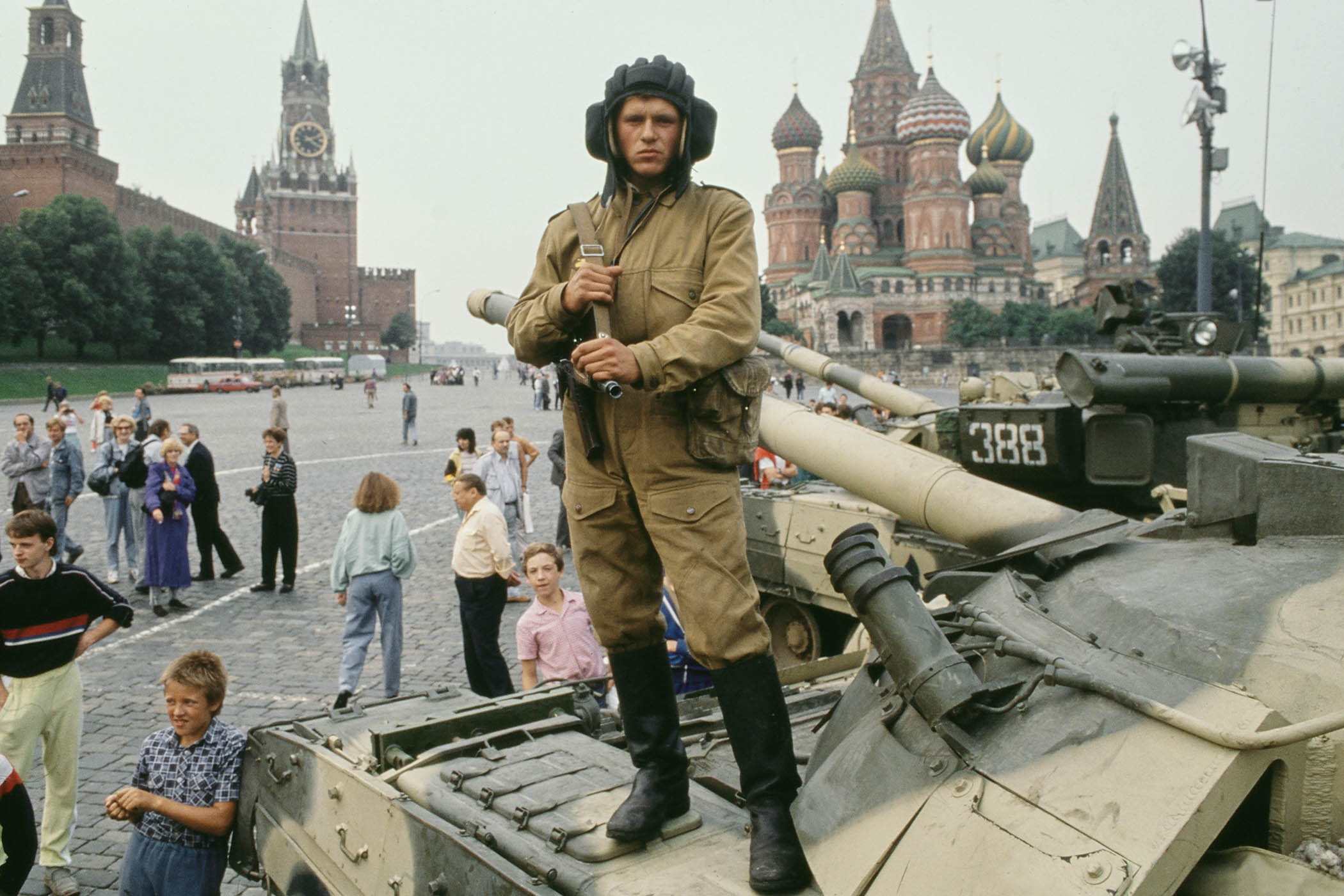
In smoothly readable pages, Smith describes Gorbachev’s fall from power in August 1991, when factions loyal to the sanctity of the Soviet Union detained him and his wife, Raisa, in their villa on the Black Sea. Russian tanks and around 4,000 troops were sent to Moscow as part of the coup attempt; ordinary Russians implored them not to shoot on their fellow citizens. Far from saving the great Slavic superstate that stretched from the Baltic in the west to the Pacific in the east, the plotters accelerated its disintegration. Later that momentous year, the USSR suffered what historians call “state death” when Ukraine, the largest of the non-Russian Soviet republics, followed Estonia by voting overwhelmingly for independence from Moscow. Gorbachev learned too late that the moment of greatest danger for an absolutist regime is when it sets out to reform itself. Under a more autocratic Soviet premier, Smith argues, the USSR might have limped on by whipping restive states like Estonia into line. But the Soviet Union had become too clogged with corruption and political cynicism to absorb anything of Gorbachev’s enlightened guidance.
A string of Soviet leaders before Gorbachev had tried to relaunch the revolution in a spirit of Kremlin egalitarianism or “Leninist revivalism”, writes Smith. Central to Exit Stalin is the wily pugilist figure of Nikita Khrushchev. Obsessed by his place in Russian history, Khrushchev led the Soviet state for more than 10 years until, in 1964, he too was ousted. As a career apparatchik, Khrushchev was complicit in Stalin’s Great Terror of 1936-38, when close to two million alleged state enemies were shot dead or sent to the forced labour camps of the gulag. Having extirpated Trotskyists and peasant proprietors from Ukraine, where he was a senior party functionary, Khrushchev was promoted by Stalin to the central committee in Moscow.
In Smith’s view, Gorbachev was the USSR’s ‘last revolutionary’: he tried but failed to restore a human face to socialism
In Smith’s view, Gorbachev was the USSR’s ‘last revolutionary’: he tried but failed to restore a human face to socialism
In 1956, however, three years after Stalin died, Khrushchev denounced the dictator’s cult of personality and executions without trial. Stalin’s public unmasking was an epochal event in the history of the USSR, Smith reminds us, that anticipated the Gorbachev reforms three decades later. In the utopian spirit of the anti-tsarist uprisings of 1905 and 1917, Khrushchev initiated a series of massive housing projects and, in 1961, stole a march on the US with the space race triumph of Yuri Gagarin, the first man in orbit.
Khrushchev’s mission, according to Smith, was to forge a partial detente with the west and de-Stalinise aspects of Soviet life. He was therefore quick to praise such anti-Stalinist works of literature as Aleksandr Solzhenitsyn’s searing gulag novel One Day in the Life of Ivan Denisovich, published in 1962, which exposed once and for all the punitive reality of the Stalinist regime. Yet Khrushchev surely was deluded in his hope that telling the “truth” about the crimes of the Stalinist past would serve to strengthen and purify the Soviet Union. Access to the facts about the execution pits and mass deportations instilled a dangerous new boldness in dissidents and survivors of the gulag.
In a fascinating chapter, Smith considers the ex-KGB chief Yuri Andropov, who succeeded Brezhnev as leader in 1982. In an effort to root out cronyism and reduce economic stagnation, Andropov promoted the police state and cracked down on, among other things, factory absenteeism. He was in power for only 15 months, however, and his chosen successor, Gorbachev, was the one who would bring Soviet civilisation to an end.
In Smith’s view, Gorbachev was the USSR’s “last revolutionary”: he tried but failed to restore a human face to socialism. After the USSR’s demise, Russia hurried to open its markets to American capital. There was a free-for-all scramble for state assets and a triumphant expression of the wish to westernise – later expressed by the US commentator Thomas Friedman, who said: “I want everyone to become an American.” No one stopped to think that an authoritarian government might return one day with a pseudo-tsarist dream of nationalist redemption.
For Vladimir Putin, the death of the USSR was “the greatest geopolitical catastrophe of the 20th century”. The Ukraine war – which enters its fourth year on 24 February – prompts Smith, at the end of this extraordinary book, to see the Soviet collapse as not just the end of a specific era, but as part of a Russian continuum. Indeed, providence (in the Russian Orthodox worldview) has called on Putin to reinvent ancient Rus, the vast empire that comprised Russia, Ukraine and Belarus – and whose last incarnation was the Soviet Union.
Though marred at times by a surfeit of information, Exit Stalin offers a superb history of the rise and fall of a utopian state and its dangerously deluded ideology.
Exit Stalin: The Soviet Union as a Civilization, 1953-1991 by Mark B Smith is published by Allen Lane (£40). Order a copy from The Observer Shop for £36. Delivery charges may apply
Newsletters
Choose the newsletters you want to receive
View more
For information about how The Observer protects your data, read our Privacy Policy
Photograph by Peter Turnley/Corbis/VCG/Getty Images