
Photograph by Oksana Parafeniuk for The Observer
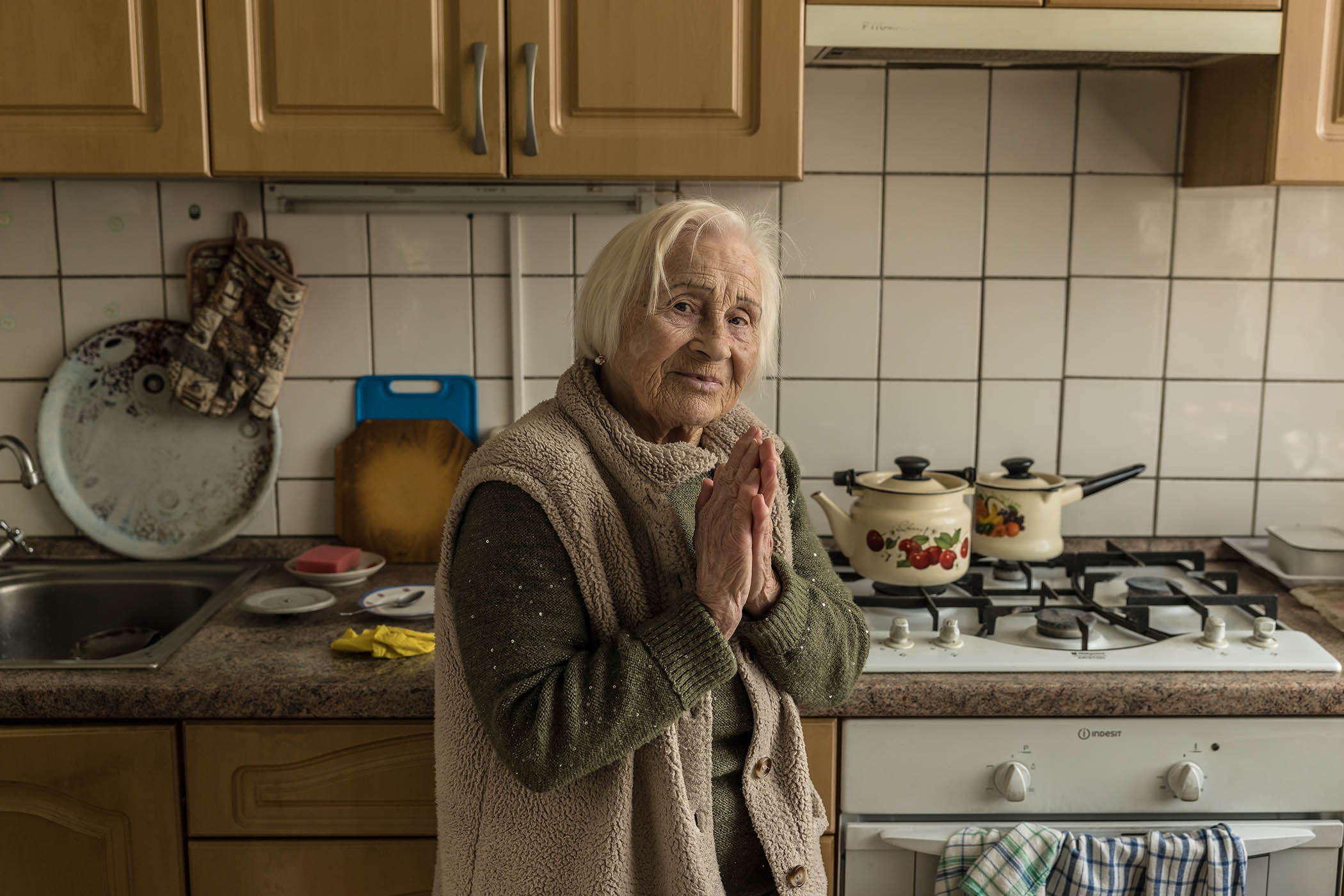
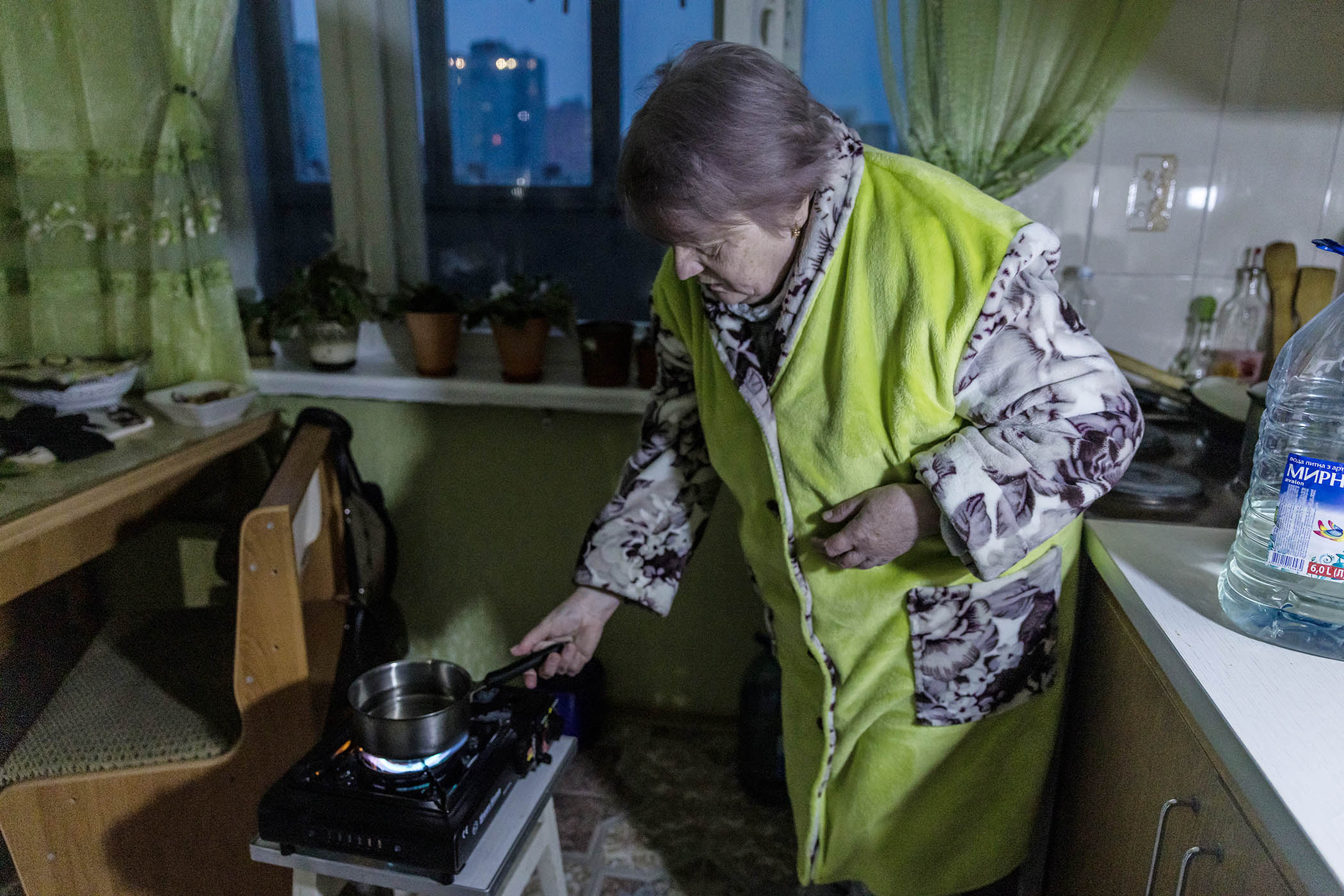
Valentina Barabash, 90, warms her gnarled hands over the flame from a gas hob in the kitchen of her Kyiv apartment. She has had no heating for three weeks and it is her only source of warmth. It’s -17C outside, and the ground is blanketed in thick snow and ice – inside, her breath hangs in the air as she talks.
This is the harshest winter many of Kyiv’s older residents say they can remember. Valentina lived through (and recalls) bombings of the capital during the second world war, the difficulties of the Soviet years and even drone attacks that hit her apartment building last year – but nothing to match this.
It is normal for Ukraine to experience intense cold, but temperatures have stayed well below zero since December, hitting lows as extreme as -30C. It is compounded by continued Russian drone and missile attacks, causing widespread electricity and heating outages as they pummel energy infrastructure already compromised by almost four years of war.
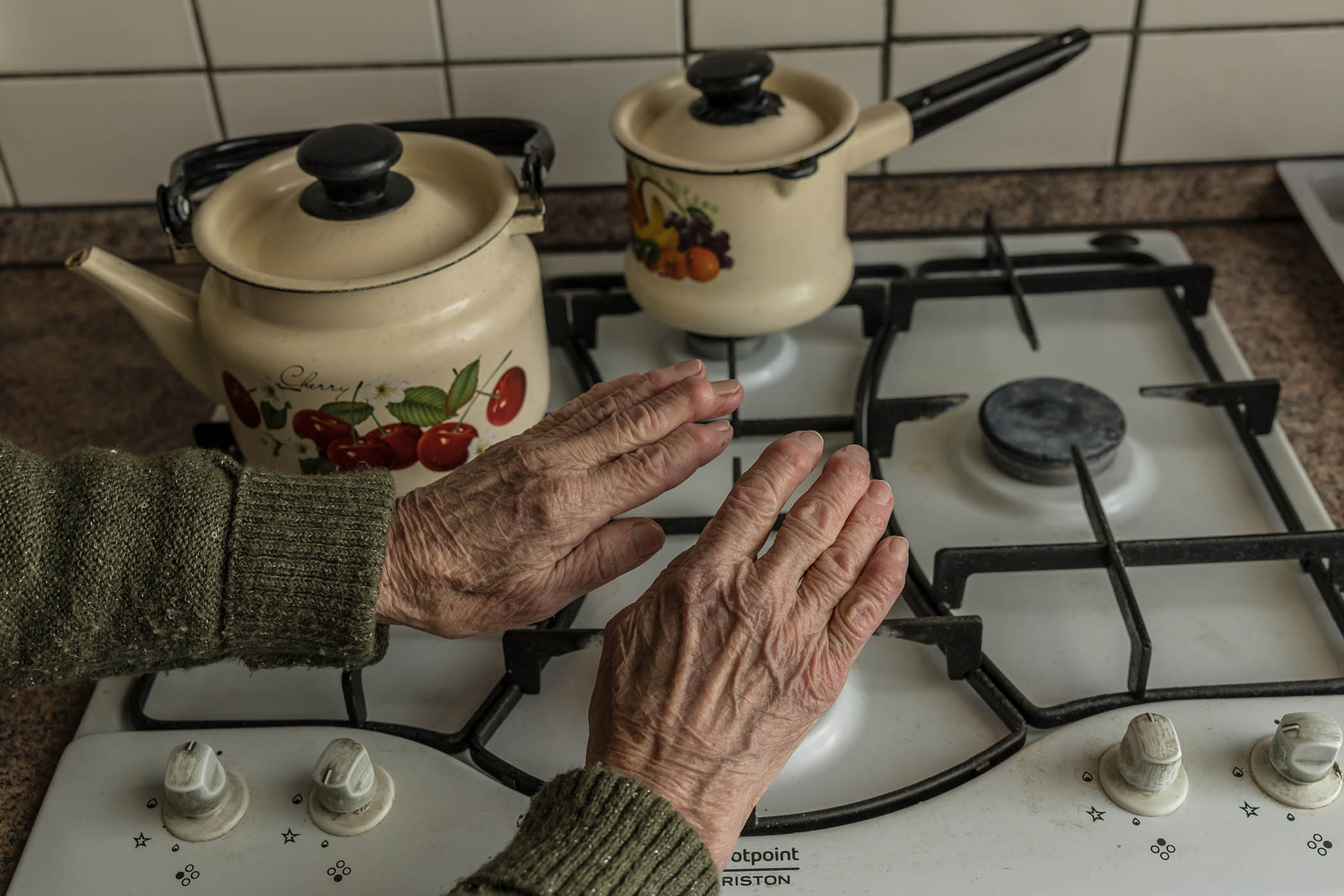
Valentina Barabash warms her hands
Valentina’s fingers are covered in small burns. Every night, she boils water in pans on the hob and funnels it into plastic water bottles, placing them around her bed for warmth. Without them, she’s not sure how she would make it to morning. “I wrap myself in lots of layers of clothes,” she says. “Like I’m a cabbage.”
With Russia’s full-scale invasion set to enter its fifth year later this month, President Volodymyr Zelensky has accused Russia of trying to freeze Ukraine into submission. Millions of Kyiv’s residents have been left in the cold and dark, in some cases for weeks at a time. The most vulnerable are the least able to weather it, with power outages stalling lifts and leaving people with mobility issues or young kids trapped at the top of freezing-cold high rises. Elderly people have reportedly frozen to death.
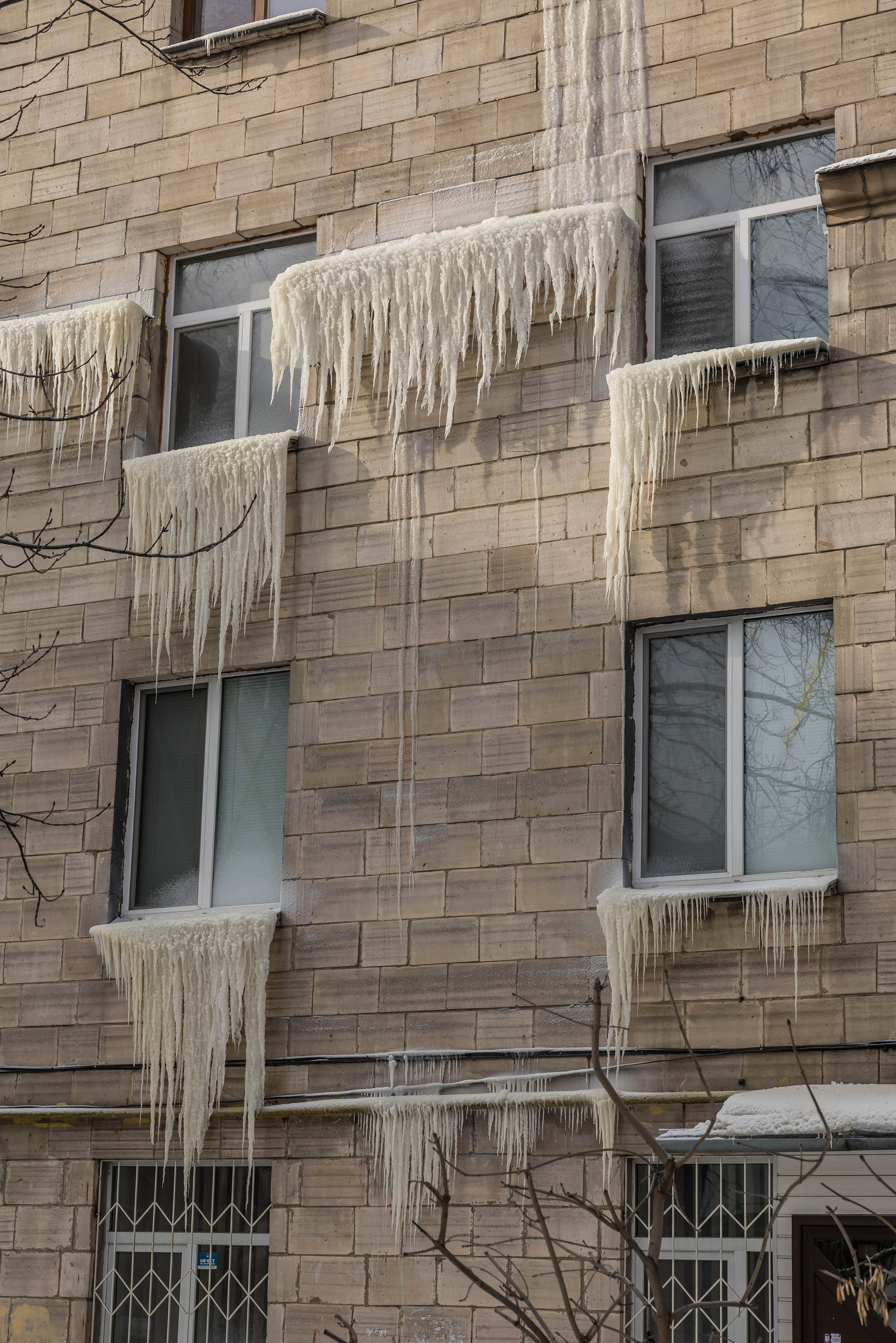
A building in Kyiv with icicles caused by burst heating pipes
While US president Donald Trump agreed a brief ceasefire on Ukraine’s cities and energy infrastructure with President Vladimir Putin to ease the pressure, it was already over by Tuesday morning. A large overnight Russian attack, involving a record 71 ballistic missiles as well as attack drones, hit power generation and distribution plants. Overnight on Friday, another large attack caused “significant damage” to thermal plants in the country’s west, according to Ukraine’s largest private energy firm, DTEK. It was the 10th mass attack on its facilities since October.
While Zelensky warned that last Monday’s strike would shift Ukraine’s position at ongoing peace talks, without specifying how, diplomatic efforts to end the war continue. On Thursday, as a new storm buried the capital under fresh snow, causing travel chaos, a second round of US-brokered talks in Abu Dhabi concluded without a major breakthrough. The two sides agreed to resume negotiations soon, but key disagreements on territorial disputes and mechanisms for a full ceasefire continue to remain unresolved. On Saturday, Zelensky told reporters in Kyiv that the US is pushing for an end to the war by June, with the first trilateral peace talks on US soil expected to take place as soon as next week.
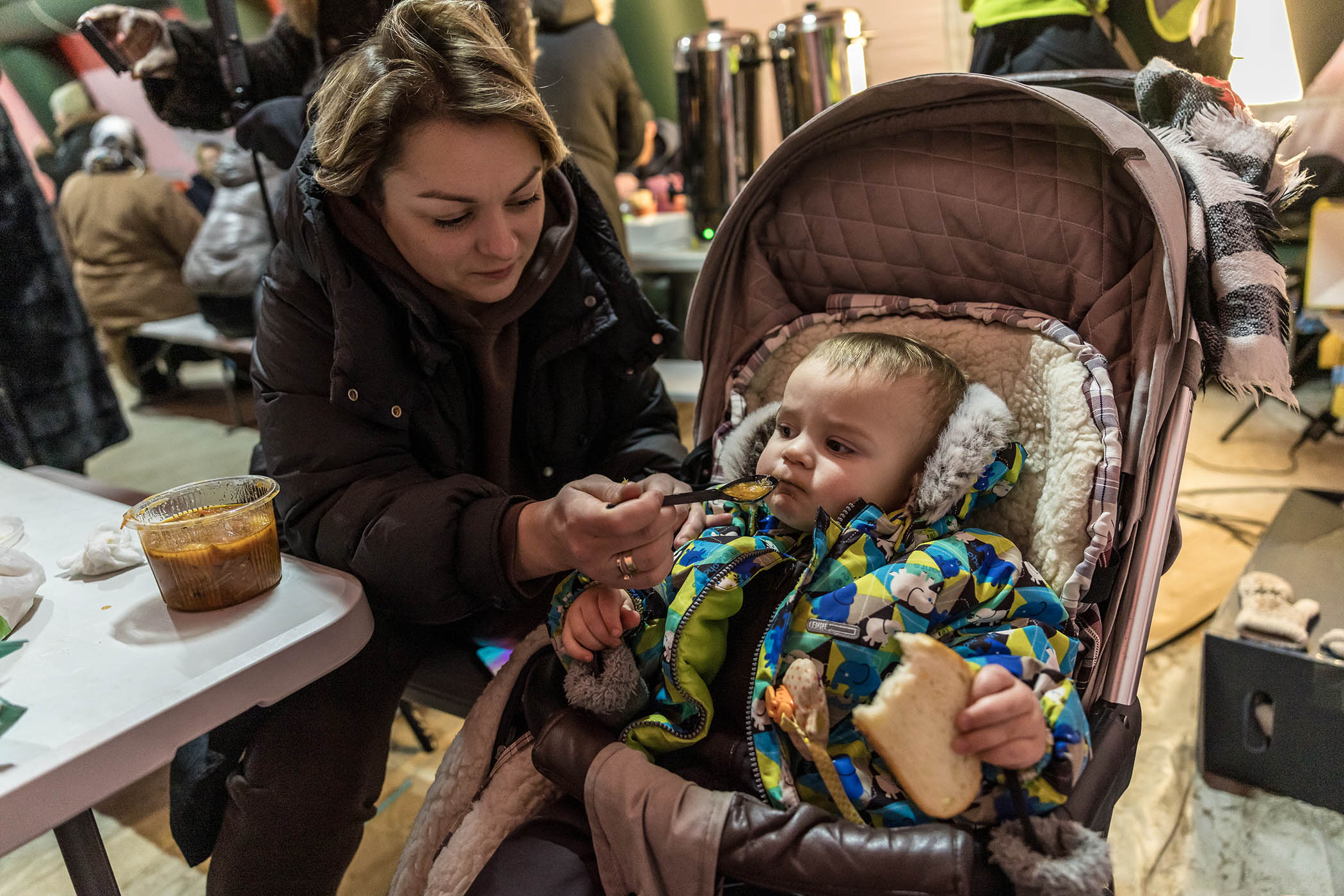
Yulia Dolodova feeds her son hot soup she received from the World Central Kitchen
The main development was an agreement to exchange just over 300 prisoners - the first in five months. Many of those returned to Ukraine were soldiers who had been in captivity since 2022 and there were heart-wrenching reunions near the border. One woman survived years of stage 4 cancer to finally see her husband again. The deep chill has exposed Kyiv to its toughest months since the first year of the war, but its resolve remains unbroken. Communities say they have come together, spending time with neighbours they didn’t really know before and finding ways to cope. A poll conducted in last month by the Kyiv International Institute of Sociology found that Russia’s efforts to weaponise winter had not significantly impacted public mood. Some have even taken to hosting raves on the frozen Dnipro river.
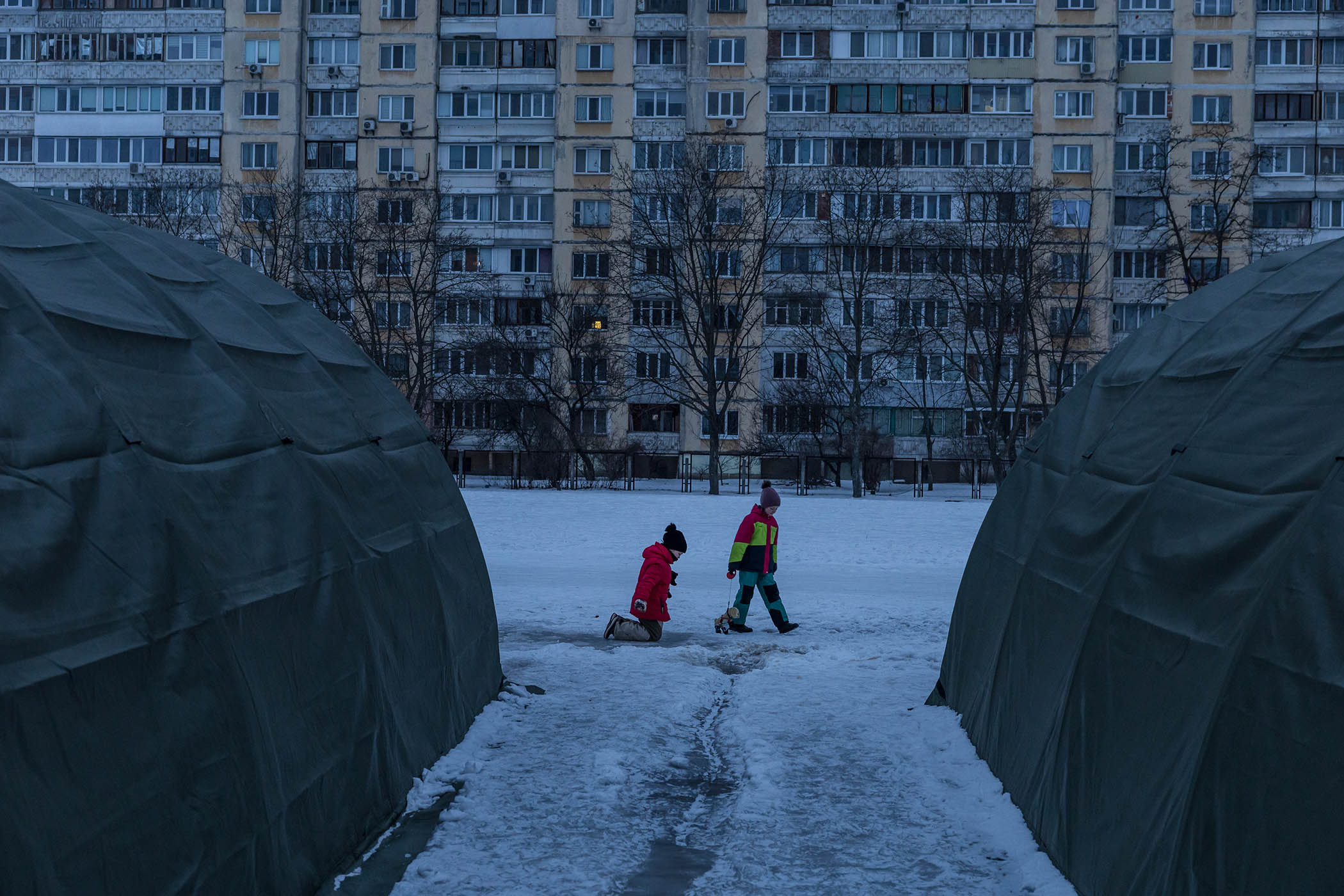
Children walk past tents set up by emergency services that offer electricity and heat
In the worst affected districts, such as Troieshchyna, the state rescue service has installed heat tents, with generators, heaters, charging points and tea facilities. At night, the lights inside make them glow a comforting red against a backdrop of blacked out Soviet residential blocs. Rescuers say most of those who come to the tents are elderly, and that without them many could succumb to the cold.Power cuts often take out the water supply, making it hard to wash, clean clothes or flush the toilet. Damp has also caused creeping mould. Buildings around the city are encrusted with giant icicles because f rozen water pipes burst, causing floods of frigid water that then freeze into clusters of dagger-like ice. Bedrooms left unheated for weeks have frost on the walls, radiators are coated in ice. People keep curtains closed and stuff old blankets around windows for an extra layer of warmth.
World Central Kitchen has set up an outdoor stove, cooking a huge pot of soup each day for a queue of people, who stand in the snow to have at least one hot meal. Not everyone had a gas connection installed, meaning they can’t cook. Local resident Neila, 65, has been heating food with solid fuel cubes, while filling her pockets with old soup pouches filled with hot water for warmth.
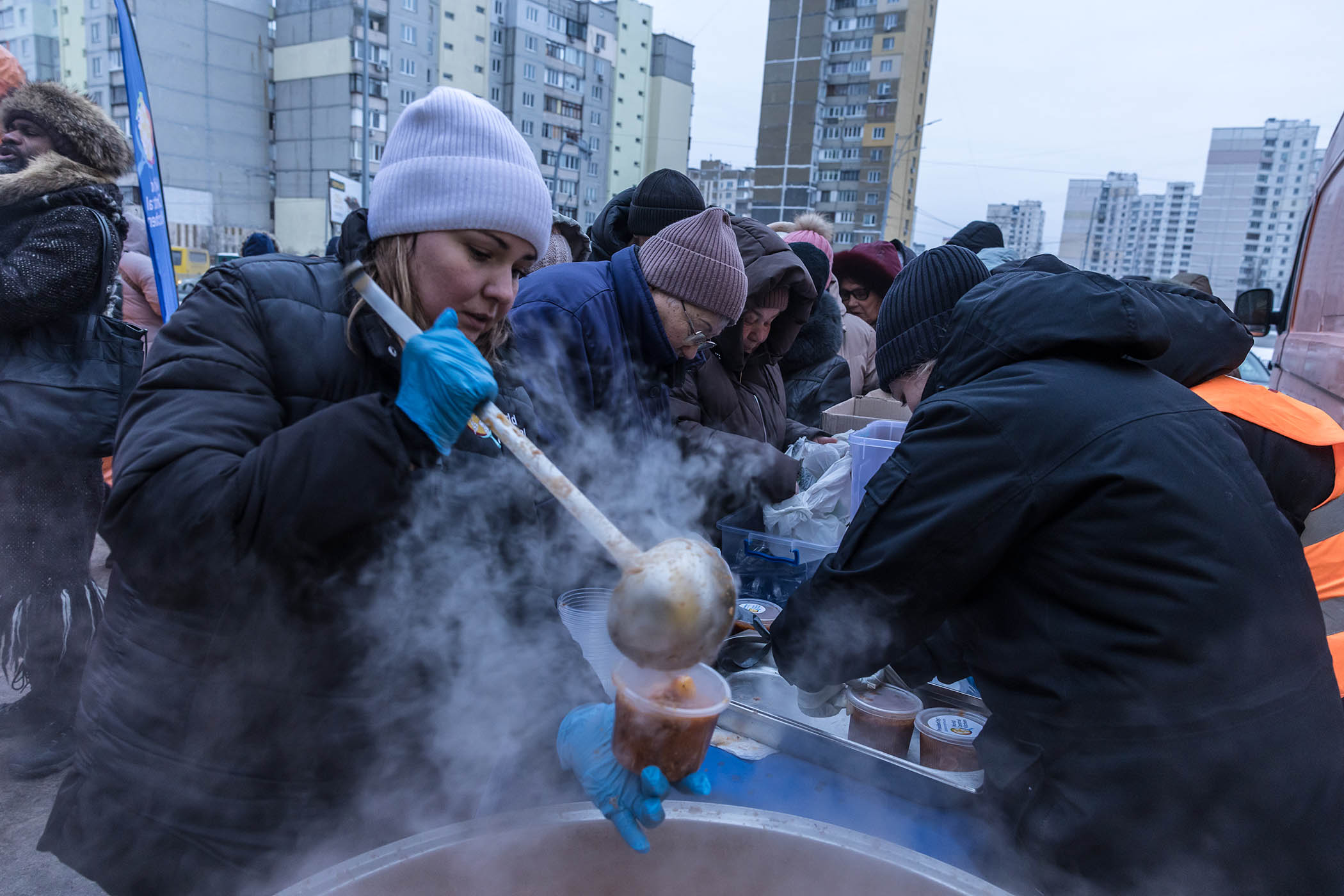
World Central Kitchen helps feed the many people who cannot cook at home
“I have known my neighbours for decades,” she says from her 12th floor apartment, where she lives alone. “This is a crisis, but it has seen us come together like family.”
“I try to sleep as much as possible,” says Natalya, 75, a former architect who lives on the ninth floor of the same building, alone, since she lost her husband and son. “If you’re asleep, you don’t notice that you are hungry or cold,” she says. It is a tip her mother gave her from surviving the Holodomor famine – when many millions starved to death at the hands of Joseph Stalin – as a small girl. Some have dubbed Kyiv’s big freeze “kholodnomor” – a pun on the Ukrainian word for cold.
Neonila Fesenko, 68, heats water on a gas stove she received from social services
Neila gets up in the middle of every night to pour salt down the sink to stop her building’s pipes from freezing overnight. As a result of unprecedented need and mobilisation, Kyiv is short of plumbers and other utility workers to stop an epidemic of burst pipes. Volunteers have travelled in from across Ukraine to help; a team from the country’s west said they had been staying in unheated dorms with no electricity for 18 days. In the basement of a building, they heat a tangle of pipes with a blow torch to melt ice accumulating in the system.
“When we get in after a long day of difficult work,” said Roman, a volunteer, “we can’t even have a hot shower to warm or wash ourselves.”
Most Ukrainians already know Russia’s missile and drone launch locations and their flight routes, but now they are also experts in the local energy grid and their building’s water infrastructure. People share tips and updates to neighbourhood Telegram groups. They also try to cheer each other up or ask if any help is needed as they pass each other climbing endless flights of stairs.
Valentina, the 90-year-old, has not left her house since the war started, feeling too vulnerable after breaking an arm just before. Without electricity she has little to do all day, but her son brings her groceries and other supplies. “The intention is to break Ukrainians,” she says. “But it has done the opposite. We have united more than ever.”
Newsletters
Choose the newsletters you want to receive
View more
For information about how The Observer protects your data, read our Privacy Policy