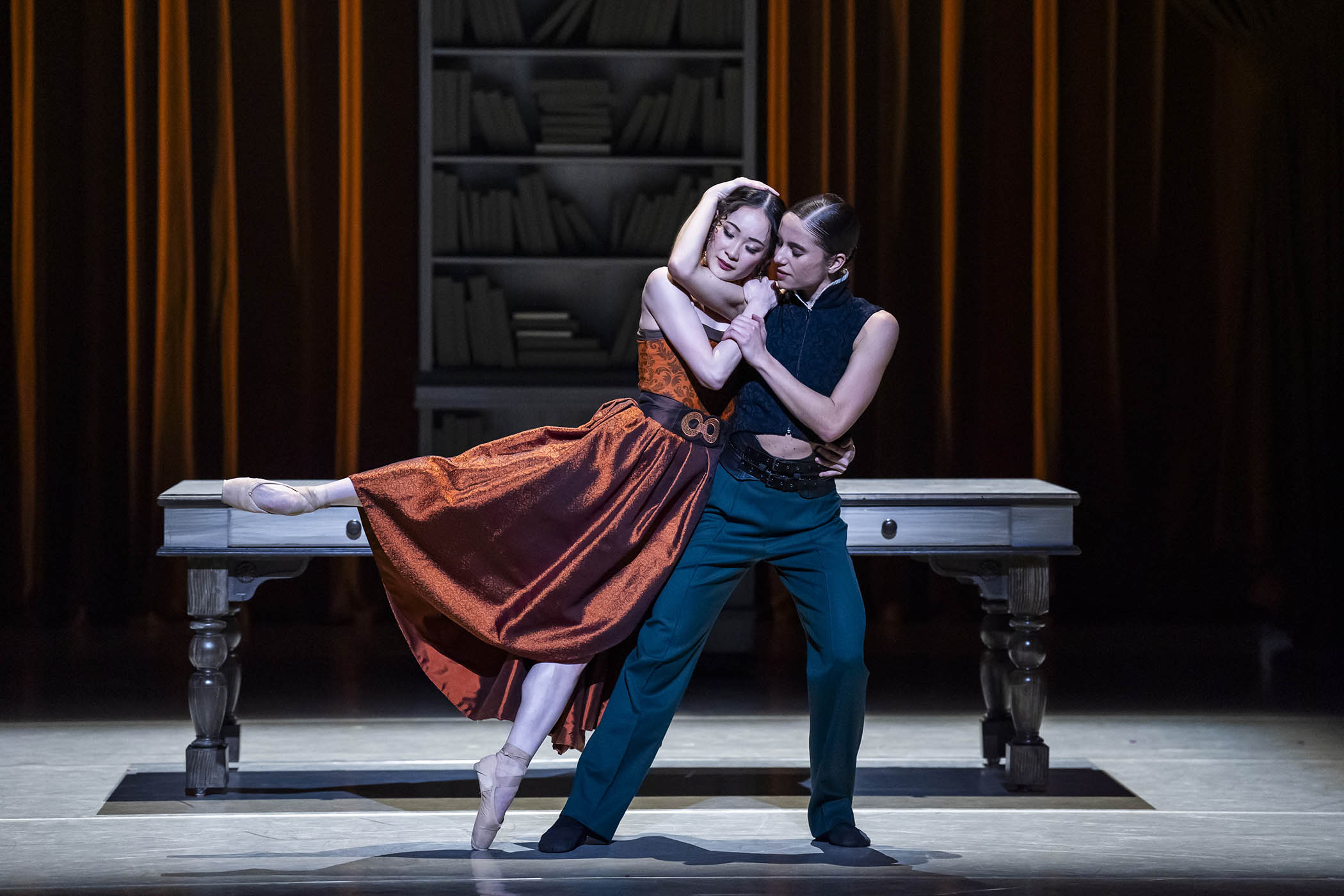

In the week of Timothée “no one cares about ballet” Chalamet, the Grand theatre in Leeds was packed to the rafters for the premiere of Gentleman Jack, a new full-length work about local heroine Anne Lister, dubbed “the first modern lesbian”.
With remarkable sophistication, it celebrates and narrates the story of this radical woman, whose explicit, coded diaries record her determination to live a fulfilled life on her own terms. Not that common in 19th-century women, or in ballet heroines for that matter.
Yet impressively, choreographer Annabelle Lopez Ochoa (working with dramaturg Clare Croft) has forged movement that clearly expresses Anne’s character; you don’t need to read the programme to understand what is happening as a series of carefully crafted and fluent scenes reveal Lister as an imposing figure, facing down prejudice, and ultimately finding love.
In a black frockcoat, lined with gleaming green silk (glorious costumes by Louise Flanagan), with top hat and stick, Gemma Coutts’s Lister stands surrounded by her fellow landowners. With a glance and a weight-shifting wiggle of her hip, she communicates both her difference and her defiance.
In a tender duet with her first great love Mariana (Saeka Shirai), she melts sexily into her lover’s back, shimmying around her body. When she meets Ann Walker, who becomes her wife, they flirt confidently, stepping out side by side, bathed in sensuous golden light. Lopez Ochoa constantly finds ways of letting two women dance together, creating lifts from the waist and leaning arabesques. These softer steps of love are contrasted with the baroque formality of Mariana’s partnering by her husband (Jackson Dwyer) or the fierce angles and sharp jumps of the men who menace Lister’s happiness, led by George Liang’s lowering mine owner.
Christopher Ash’s sharply defined lighting and his set of manoeuvrable bookshelves with video screens in the back emphasises each shift of place and mood. Peter Salem’s attractive score – blending brass and strings, folksy and elegant – has the same effect. The hard-working dancers also play the words in Lister’s diary, carrying her aloft, quill in hand, as she bequeaths her thoughts to posterity.
Coutts is charismatic and terrific, conveying Lister’s vulnerability as well as her strength – and it is a great pleasure simply to see women dancing in different and unexpected ways.
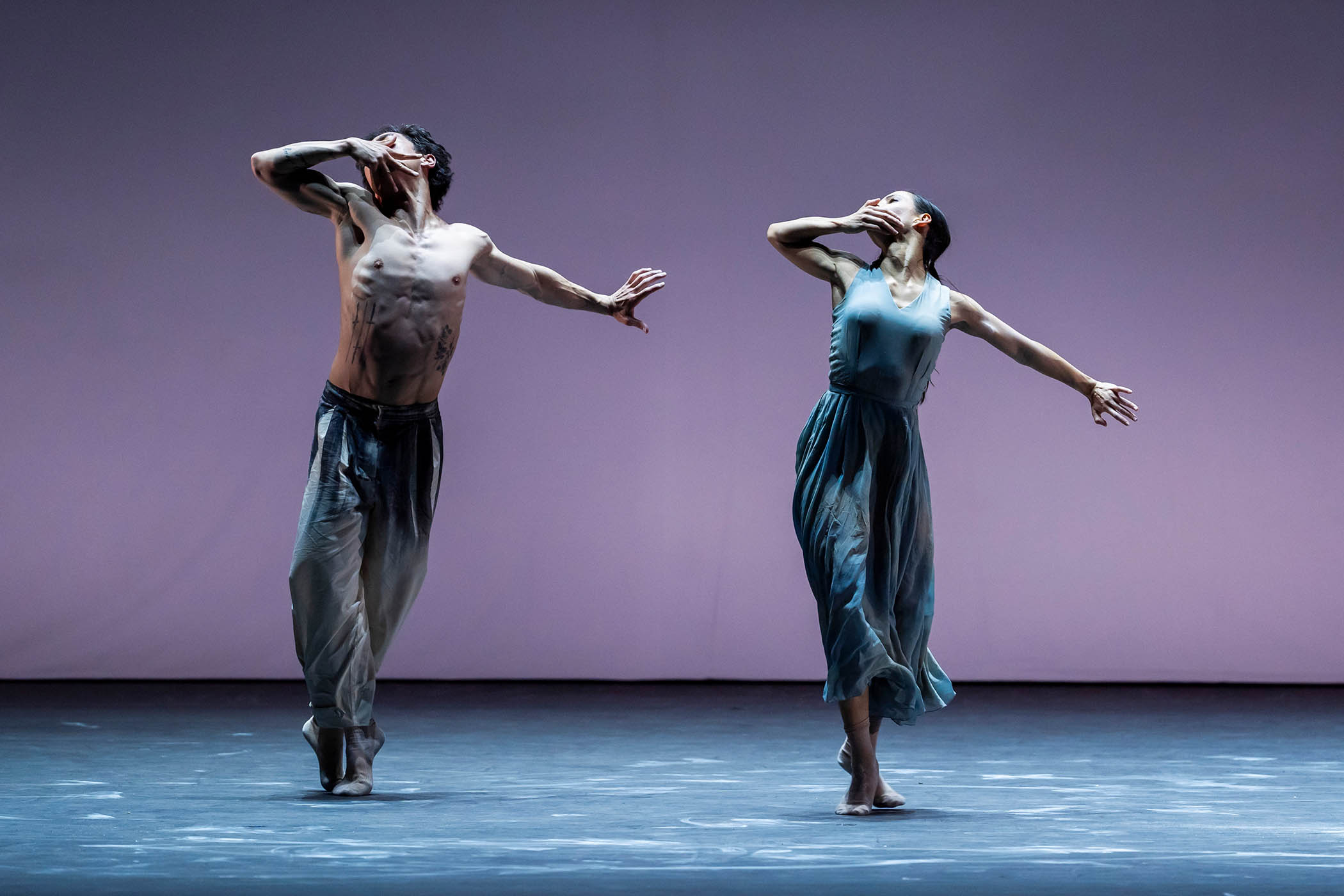
So huzzah for dance, Timothée. Where the art form does have a problem is not with audiences, but with administrators who don’t appreciate its appeal. The fact that Russell Maliphant, one of Britain’s most thoughtful dance-makers, lost his Arts Council funding in 2023 is both mysterious and scandalous. All his experience and value are on clear display in Landscapes at Sadler’s Wells East – three solos that add up to a magical exploration of bodies moving in light.
Two are familiar, but endlessly amazing. In Afterlight, Daniel Proietto whirls in contracting and expanding pools of dappled light, conjuring the spirit of mad Nijinksy; in Two, Alina Cojocaru turns movement into story, every stretch and flex considered.
Maliphant himself, now 64, performs the new piece, In a Landscape, a pensive journey of exploration with music by Dana Fouras. With effects created by the lighting designer Panagiotis Tomaras, he dances with his own shadow, or with the clothes that drop from overhead, making ripples and shapes so that darkness becomes visible, light substantial. It’s beautiful, and it is awful that Maliphant’s company is struggling to survive.
Newsletters
Choose the newsletters you want to receive
View more
For information about how The Observer protects your data, read our Privacy Policy
Photograph by Emily Nuttall