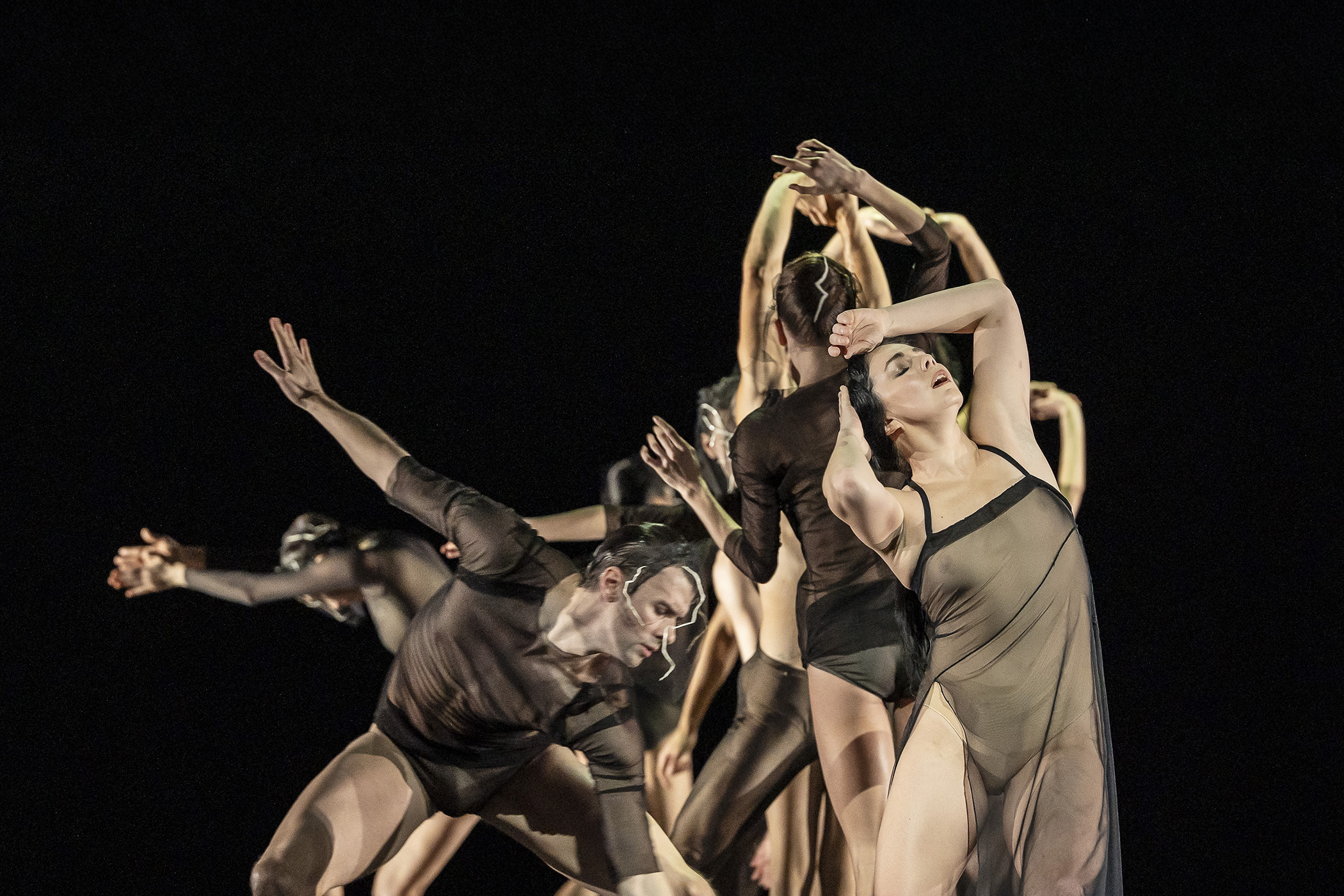

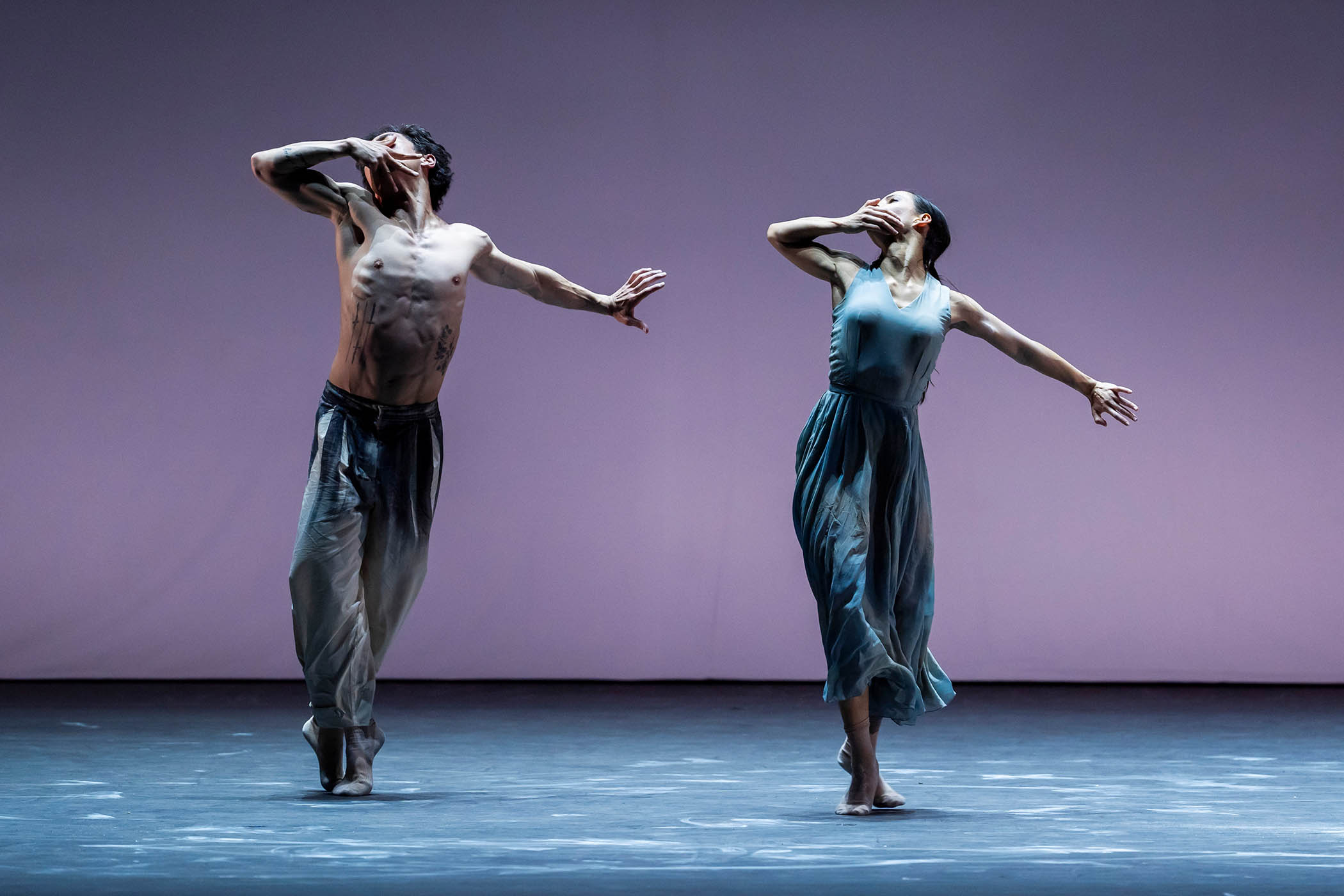
In 2015, the choreographer Wayne McGregor created Woolf Works, his first full-length ballet. The following year, Akram Khan made his version of Giselle. The coincidence that revivals of both these pieces have opened in the same week is a chance to understand just how important they are. These works changed the face of ballet. Both still seem modern, expansive, welcoming.
They are quite different from each other, of course. Woolf Works is a sophisticated rethinking of the nature of a three-act ballet. Based on the life and writing of Virginia Woolf, each act is inspired by a different novel – Mrs Dalloway, Orlando and The Waves – but straightforward narrative is replaced by an impressionistic tapestry of images and emotions, a conjuring of character and story that is at once elusive and memorable.
Khan’s Giselle is a complete re-imagining of the 19th-century ballet, pulling its romantic story of peasants, nobles and ghosts into a dystopian, timeless space, where factory workers are exploited by sinister overlords, and return after death in a bedraggled, sepia phalanx to haunt their oppressors. Yet Giselle’s love for Albrecht, fiercely expressed, still saves him from death.
Both works are animated by the fact that their choreographers brought radical thinking to the ballet space. Khan’s second act – in which ghosts pursue their victims wielding sticks they hold between their teeth or bang menacingly on the floor – is a unique blend of all his dance knowledge. He uses the speed of Indian kathak, the flex of contemporary, and the strength of ballet to create a uniquely ferocious mood, full of sharply defined images.
The final section – which begins with Woolf’s suicide note, ‘Dearest, I feel certain I am going mad again’ – becomes a poem to all human suffering
The final section – which begins with Woolf’s suicide note, ‘Dearest, I feel certain I am going mad again’ – becomes a poem to all human suffering
In Woolf Works, McGregor’s courage in jettisoning direct story has the same effect. Both are driven by original, haunting scores – an electronically plangent reworking of Adam by Vincenzo Lamagna in Giselle, a lyrically powerful Max Richter composition for Woolf Works.
They feel of the moment yet suit classical dancers, and crucially they are broad enough to allow different dancers to thrive within them, colouring their characters with their interpretations. At English National Ballet, in Giselle, Emily Suzuki is an entirely different dancer to Alina Cojocaru, who originated the part. Yet she brings the role to life with her own expressiveness, shaping a Giselle who is unusually fierce and determined; her Albrecht, James Streeter, is a tender partner and a dramatic presence, making every step register. Emma Hawes is utterly terrifying as Myrtha, queen of the ghostly Wilis.
At the Royal Ballet, Sarah Lamb made her debut as Virginia Woolf at the Saturday matinee, bringing grave grace and thought to the part, carving its shapes with a dignified classicism. There’s something slightly prickly about her interpretation, which suits the sense of Clarissa Dalloway as well as Woolf. In the glorious quintet of youth and age that concludes the first act, Lamb’s elegant melancholy was contrasted with the lovely musicality of Ella Newton Severgnini, floating like gossamer through the past.
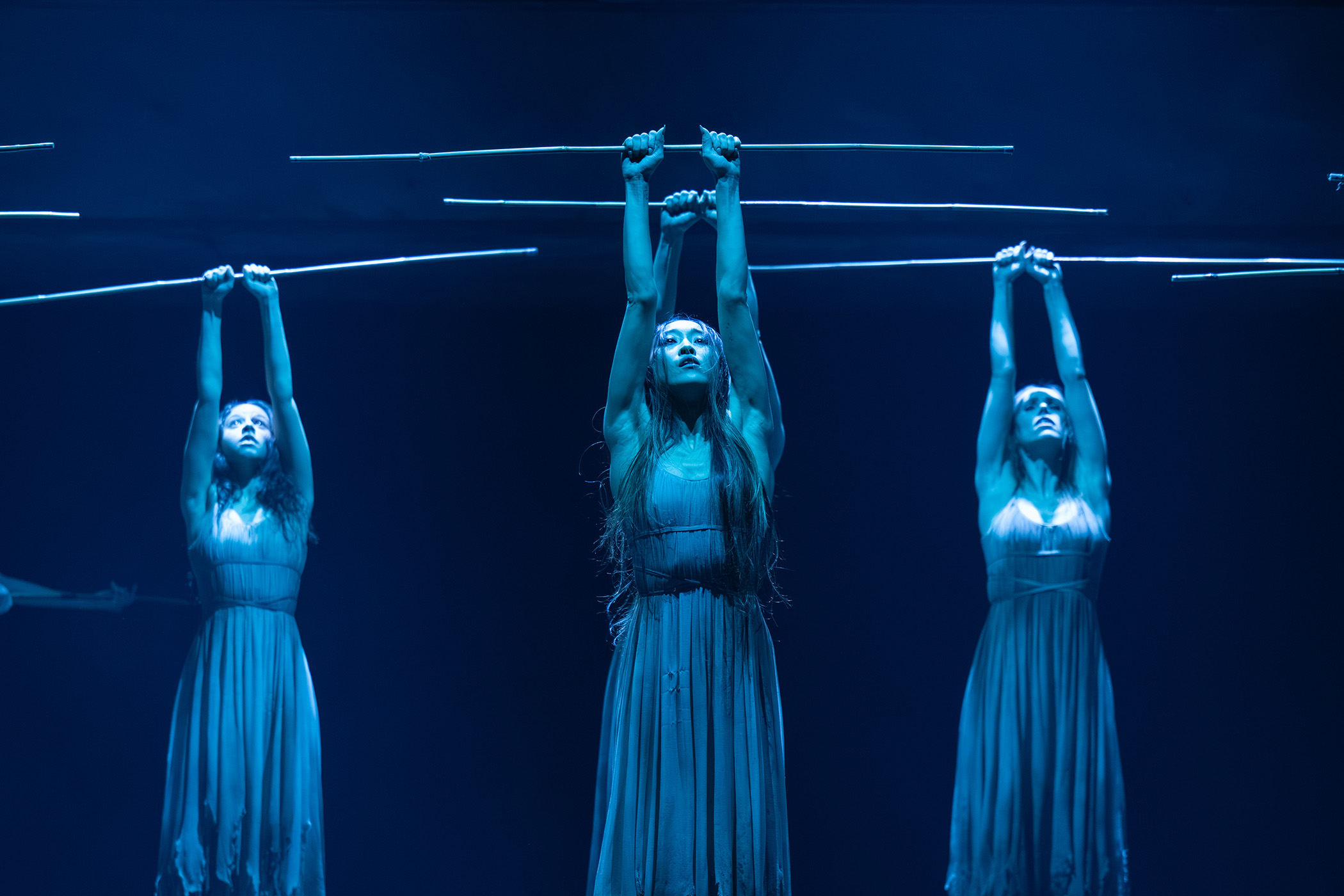
Akram Khan’s ‘uniquely ferocious’ Giselle. Main image: Natalia Osipova in Wayne McGregor’s Woolf Work
In the evening, Natalia Osipova returned to the role of Woolf, making it absolutely and passionately real. Her visceral sense of drowning under the weight of her own grief made the final section – which begins with Woolf’s suicide note, “Dearest, I feel certain I am going mad again” – into a poem to all human suffering. As her partner, William Bracewell seems to offer benediction, holding her head with infinite tenderness as Ravi Deepres’s black and white film of unrelenting waves washes above them.
The richness of the piece is revealed by the way in which different moments spring to life in different performances. Marcelino Sambé brings the agony of the war-damaged Septimus into sharp focus; the section where he and he and his lost love, danced by Marco Masciari, spin across the stage as if their speed can defy death, catches at the throat.
In Becomings, based on Orlando, you glimpse different moments of that shape-shifting narrative as McGregor builds a palimpsest of flashing movement. Gold costumes gleam under Lucy Carter’s stage-splitting lights, Sambé and Fumi Kaneko lead the charge in an ever-changing, beautifully structured sequence of dance; lovely Akane Takada brings quiet thoughtfulness to the close.
Newsletters
Choose the newsletters you want to receive
View more
For information about how The Observer protects your data, read our Privacy Policy
Woolf Works begins with the only known recording of Woolf speaking, talking about the English language. “Words, English words, are full of echoes, of memories of associations…” It sets the tone of a piece that is held together by that sense of memory, of thoughts, loves, lives passing in front of your eyes.
It perfectly captures Woolf’s bravery, her sense of experiment and ability to pin down experience in sensation. That’s a wonderful thing for dance to do.
Woolf Works is at Royal Ballet and Opera, London, until 13 February
Photographs by Johan Persson/ASH