
Great parts for male dancers are rare in classical ballet. They are often condemned to dripping around as a lovelorn prince, supporting the ballerina, and waiting for their one big solo.
This is one reason why Kenneth MacMillan’s Mayerling, created in 1978, remains such an important work. In telling the story of Crown Prince Rudolf, tortured heir to the Austro-Hungarian empire, and his death at the age of 30 in a suicide pact with the 17-year-old Baroness Mary Vetsera in an imperial hunting lodge in Mayerling in 1889, it offers a magnificently meaty role for its antihero.
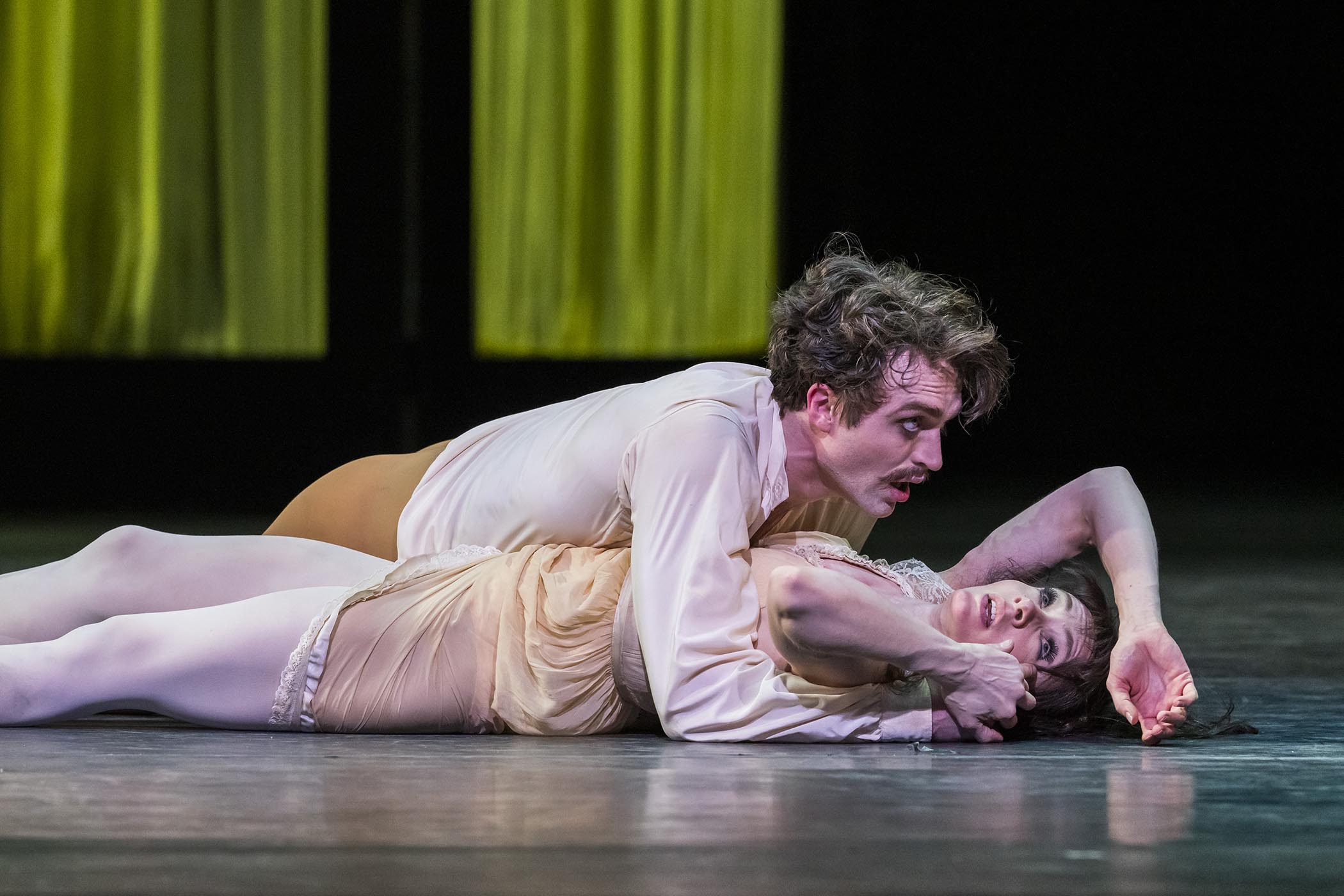
It’s a richly textured ballet, full of historical detail and searingly inventive pas de deux for Rudolf and the women who surround him. It’s also dark and demanding, punctuated by sexual violence (the unbearably painful first act duet that depicts Rudolf’s rape of his terrified bride, Princess Stephanie), an obsession with death (the first thing Mary does when she finally meets the man with whom she has become fixated is pick up a skull), and graphic drug use.
MacMillan’s genius as a choreographer is that he invented ways to explore these complex psychological relationships in steps that are constantly surprising, wrenching the classical vocabulary into distorted and compelling shapes to express character and intent.
It helps to read the programme – or at least a synopsis – to understand the nuance of the story: the way Hungarian separatists keep appearing to enlist Rudolf in their liberation movement; the role of his courtesan mistress, Mitzi Caspar, as a spy; and the scandalous presentation of a portrait of his lover by the Empress Elisabeth to her husband, the Emperor Franz Joseph, are all confusing without some background knowledge of the intrigues of the time. Their inclusion adds to the ballet’s reach and range, a sense of an entire world being depicted.
But what is utterly unmistakable is the trajectory of Rudolf from melancholy to deathly despair, and the Royal Ballet is giving six of their excellent men an opportunity to imprint the role with their own interpretation, each surrounded by a changing roster of women who understand, exploit and care for him. So far, I’ve seen three casts.
On opening night, Matthew Ball was Rudolf, opposite Melissa Hamilton’s feverish Mary; he makes the steps sharply defined, conveying a powerful sense of a man clinging on to his sanity and his life until, finally, he’s overwhelmed. The final rush to their joint end was brutally vivid and strongly emotional.
Then two debuts. William Bracewell’s long arabesques and ferociously fast turns combine with his inherent gentleness to conjure a tragic Hamlet-like sense of insecurity; rejected by his mother, and constantly watched at court, he turns inwards, clinging to Fumi Kaneko’s Mary, her beauty twisted by the choreography into ugly misery.
Calvin Richardson has found a unique new way through the role, playing up the prince’s initial urbanity; he’s very bored and very unhappy but his deterioration comes late, as drugs and illness (syphilis in historical terms) take grip. He softens the way he performs the steps, too, making Rudolf almost catlike, both fascinated and appalled when he meets Sarah Lamb’s Mary, high on power and control, as obsessed with mortality as he is.
All are devastatingly good readings and, around them, the Royal Ballet’s dancers do what they do, rising to the challenge of building character through carefully specific dancing, responding in the moment to the action. There’s much to admire: Leticia Dias’s sultry Mitzi Caspar; Anna Rose O’Sullivan’s socially anxious Countess Marie Larisch (and Mayara Magri’s compassionate reading of the same character); Elizabeth McGorian’s Baroness Helene Vetsera, nervous for her daughter; and Kristen McNally’s distant empress.
Newsletters
Choose the newsletters you want to receive
View more
For information about how The Observer protects your data, read our Privacy Policy
As the brutalised Stephanie, humiliated from the moment of her marriage, Meaghan Grace Hinkis is spirited; Viola Pantuso frightened and pathetic. The gift of the ballet to the entire company is that it permits dancers to make their mark. They bring it to life, night after night, in different hues.
Birmingham Royal Ballet do the same in Carlos Acosta’s production of Don Quixote, which is as sunny and silly as Mayerling is gloomy and intense. But the character of Basilio, the barber who wants to marry the innkeeper’s daughter, Kitri, is another exception in the refined world of the three-act ballet. He’s a working man, not a prince, and a chancer, not a role model.
At Sadler’s Wells, concluding the company’s tour, the ebullient Riku Ito turned him into a real charmer, spreading bonhomie as he flew effortlessly into high jumps and sculpted shapes. He was matched by his Kitri, Miki Mizutani, as quicksilver and moody as a teenager, flirtatious and romantic.
Don Quixote is an entirely pointless ballet that exists to make its audience feel happy; with the help of Tim Hatley’s colourful designs and the energy of the entire company, it absolutely succeeds.
Mayerling Royal Opera House, London, until 18 May
Photograph by Tristram Kenton