

Photograph by Marte Garmann
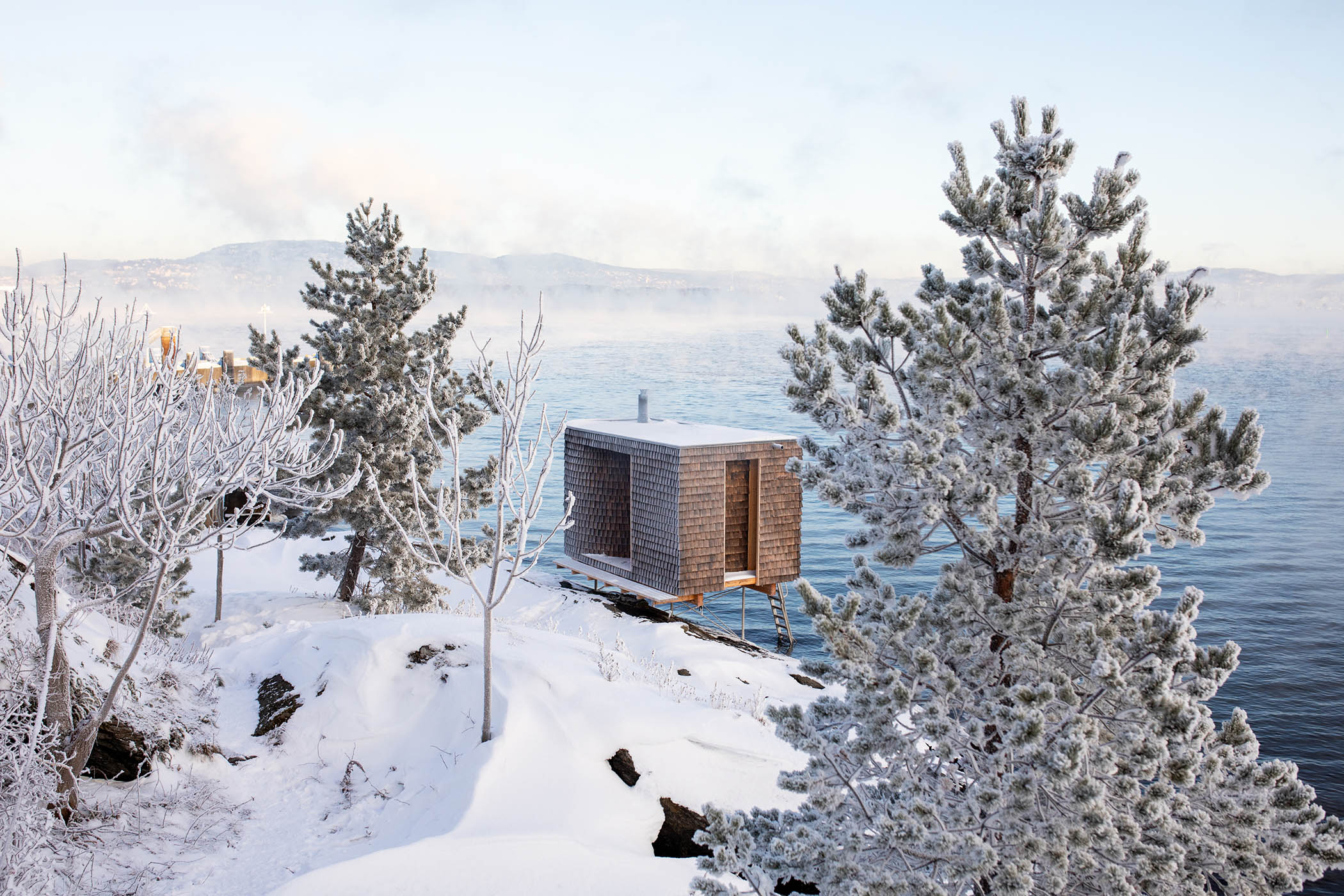
To experience sauna in its purest form, head to Nesodden, a peninsula community just a 20-minute electric-ferry ride from Oslo. Most of the houses here enjoy wide panoramas over Norway’s most famous fjord, the Oslofjord. But nowhere is the view better than from inside the Hotspot, a statement sauna perched on steel girders facing the ocean.
From afar, it might look like a typical boxy Norwegian cabin, but the sauna room is actually cylindrical, with a floor-to-ceiling window that creates the illusion of being outside while you toast away beside the wood-fired burner. “The curvature of the sauna makes it unique,” Francis Brekke, a partner at architecture practice Oslo Works, told me over coffee in his high-ceilinged studio. “But it’s the big window and the closeness to the fjord that make it breathtaking.”
Constructing the sauna was a challenge. The only way down to the plot from the main road is via a narrow, meandering path. Rather than risk hauling the inch-thick 200kg glass window across uneven ground, Brekke decided it would be better to float it to the location by sea, balanced across two paddleboards. A local carpenter captained the unlikely vessel.
While its shape might be unusual, the sauna’s design language includes several nods to Scandinavian architectural heritage. Its exterior is covered in a coat of burnt and oiled pine scales, which protect it from the harsh coastal conditions. “It’s a traditional Norwegian cladding technique,” said Brekke, whose own house is covered in them, too. “Each piece is carved by hand with an axe, just as they did back in the old days.” The scales help the sauna to blend in with the surrounding pine trees, which dot the shorefront. Brekke used untreated timber from Norwegian forests for the frame, rather than cheaper pressboard, which is often used in saunas; timber is a hardy material that means the cabin needs little maintenance.
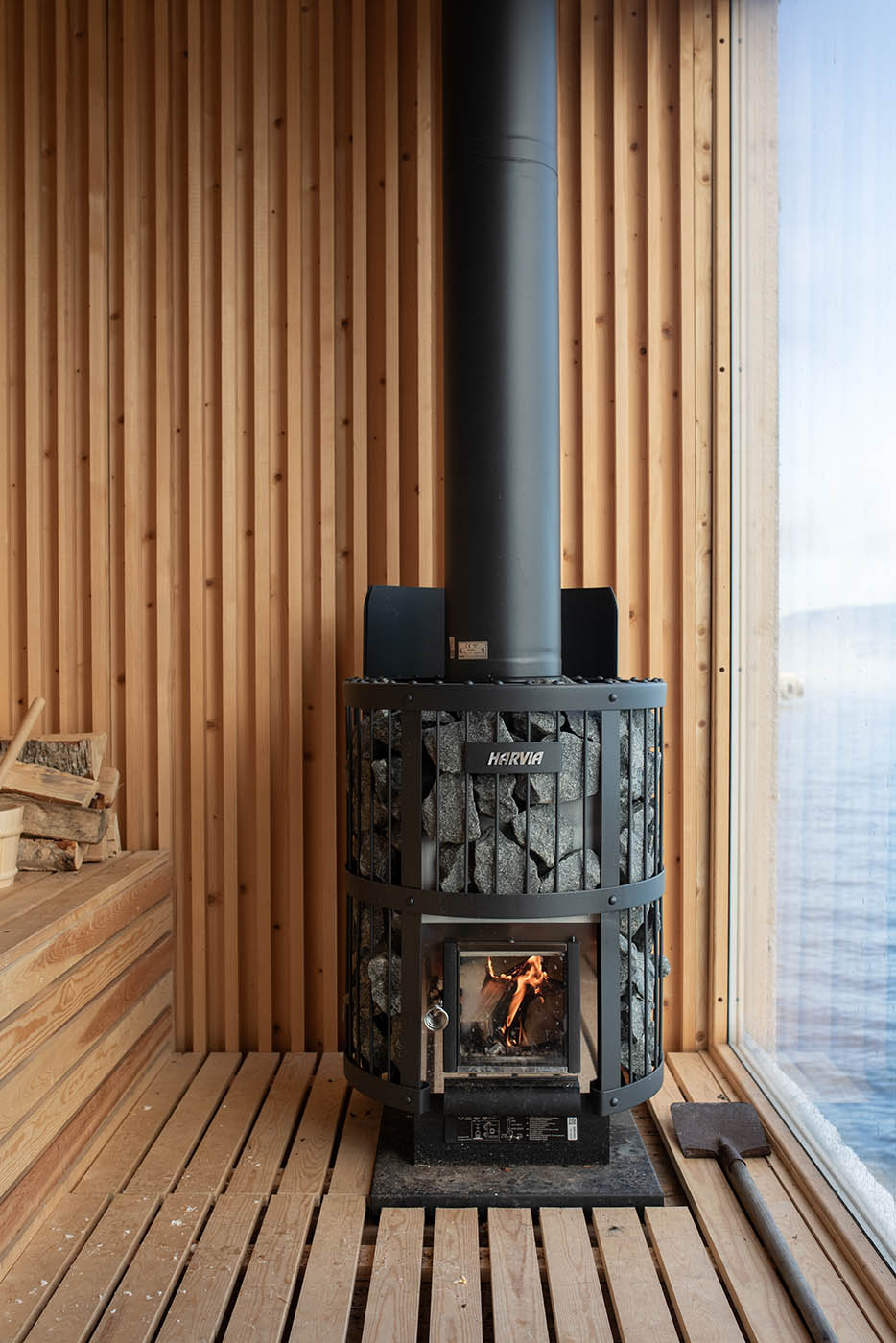
Hot and steamy… the burner at the Hotspot
The Hotspot, which opened in 2024, is one of a growing number of community-owned saunas across Norway. Today, the country is seeing a revival of this ancient tradition, driven by a sense of collective spirit and a newfound interest in the potential health benefits of sauna. Lily Vikki, leader of Nesodden’s local neighbourhood association, began and co-ordinated the process to get the Hotspot built here, working with other locals. “Sauna helps you to stretch your time outside,” she told me while walking her dog. “It benefits the whole community.”
Oslo Works’s final design was chosen through a competition commissioned by Vikki and the neighbourhood association. “We were three women from Nesodden and a jury of local architects,” Vikki told me. When they saw Brekke’s drawings, “We just fell for it,” she said. “It was like a little piece of jewellery, a very aesthetic design.”
As with many sauna builds in Norway, the Hotspot is a non-profit endeavour. Funds were raised by the community and supplemented with a grant from one of the country’s numerous charitable foundations focused on “friluftsliv”, or “open-air living”. Each year, millions of krone are spent developing the bond between Norwegians, the natural environment, and – perhaps most importantly – each other. This is a key aspect of sauna culture, according to Stig Arild Pettersen, general secretary of the Norwegian Sauna Association. “We say that in a sauna you become naked, both directly and indirectly,” he told me. “It creates an atmosphere where people are more willing to open up and have conversations that are hard to have in other circumstances.” In these spaces, such as the Hotspot, our guard comes down. “To me, that’s the most fascinating thing about it,” Pettersen continued. “The magic, that togetherness, that just rises out of the heat.”
Newsletters
Choose the newsletters you want to receive
View more
For information about how The Observer protects your data, read our Privacy Policy