
As film titles go, Rosebush Pruning isn’t the most obviously appealing. It promises something decorously bucolic – perhaps a horticultural essay in slow cinema, snip by methodical snip. In fact, it proves to be quite the hothouse bloom – a black comedy of familial decadence with a star cast, made by a Brazilian director with a taste for the torrid, from a script by a Greek neo-surrealist, inspired by an Italian 1960s film. Rich compost indeed, though perhaps too rich to yield satisfying results.
The director is Karim Aïnouz, known for intense, queer-leaning dramas such as 2024’s claustrophobic, sexed-up Motel Destino. But the other auteur here is Efthimis Filippou, co-writer of several films by Yorgos Lanthimos (notably The Lobster and 2009’s peerlessly unsettling Dogtooth) and, as such, co-inventor of the Lanthimos aesthetic of barbed provocation.
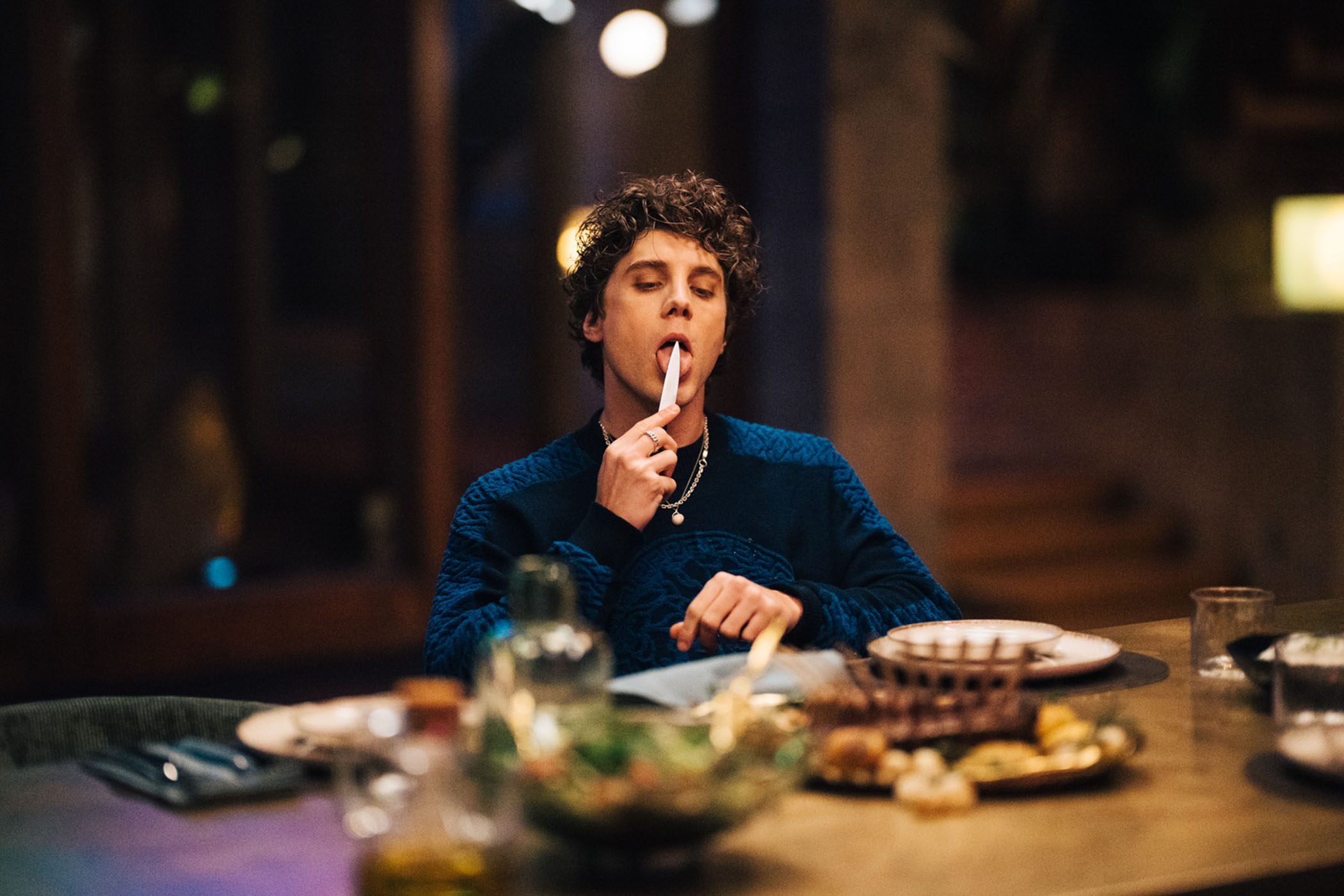
Rosebush Pruning certainly has a Lanthimos-like tone to its studied weirdness. It’s about a wealthy American family living in luxurious exile in Spain (the film was shot amid much splendour in the landscapes of Catalonia). There’s the blind, tyrannical father, played by playwright-actor Tracy Letts, and four adult children, all deranged and/or perverse to varying degrees. Callum Turner plays voice-over narrator Edward, a dapper, beaming naif obsessed with fashion brands; Riley Keough is his sister, Anna, who seems to do all the cooking (mysteriously, the household has no visible servants); Lukas Gage is cross-dressing, epileptic brother Robert.
The sane, grown-up sibling, supposedly – and the only one with actual sexual experience – is Jack (Jamie Bell), whose romance with expat Martha (Elle Fanning) threatens to unsettle the domestic order. It’s already pretty unsettled though. Manifest tremors of incestuous feeling run among the brood, while Dad is abusive in a way that’s outré even by previous Filippou standards: his nightly toothbrushing ritual is one point at which the shock factor starts to feel gratuitously in-your-face. There’s also the ritual of remembrance for the children’s lamented mother (Pamela Anderson, impishly grand), reportedly devoured by wolves. Even ostensibly fawn-like Martha shows her brutal side, Fanning expertly giving the character unexpected range.
There are relishable moments of spiky comedy: a bemused postman delivering a very improper communication to Edward; Anna, determined to compete with Martha’s musical skills, caterwauling over a one-chord guitar thrash.
And the glamorous cast is undeniably on form. Keough’s Anna is obsessively flirty, yet clueless about carnal realities, while Bell gives Jack a feral edge beneath his veneer of responsible maturity. And Turner – who, as the newly minted Mr Dua Lipa, surely knows something by now about high-gloss living – exudes a wide-eyed gaucheness that makes boy-man Edward all the more troubling.
But Rosebush Pruning strives too hard for absurdist effect. Some eccentricities feel like a screenwriter’s literary conceits: oddball cadences in the dialogue, Edward’s delight in inventing new proverbs. One of his mottos, indeed, is that families are like rosebushes, and require occasional pruning. Sure enough, the pruning soon kicks in, inevitably building to full-blown grand guignol.
It’s hard to quite see the purpose of Rosebush Pruning. To tell us that rich people are crazy? That consumerism eats the soul?
It’s hard to quite see the purpose of Rosebush Pruning. To tell us that rich people are crazy? That consumerism eats the soul?
There are clear echoes of Dogtooth in this story of a family living in poisoned artificial isolation, but the credited inspiration is Marco Bellocchio’s 1965 feature Fists in the Pocket. That was a thoroughly disturbing parable about a bourgeois clan destroyed by its own troubled offspring, and a film that savagely but artfully confronted Italian pieties about tradition and the family in a decade of radical social change. By contrast, it’s hard to quite see the purpose of Rosebush Pruning. To tell us that rich people are crazy? That consumerism eats the soul? As the song goes: is that all there is?
It’s a hollow, mannerist exercise in “lifestyle gothic” – yet indisputably gorgeous. Aïnouz has long worked with the French cinematographer Hélène Louvart; together they specialise in pushing colour to electric, anti-realist limits. Rodrigo Martirena’s production design and Bina Daigeler’s costumes are dazzling (Anna’s blue go-go boots; Dad’s scarlet satin pyjamas, suggesting a mad blood-hungry god).
Aïnouz has often scored magnificently working on home turf (try his Rio melodrama The Invisible Life of Eurídice Gusmão), but we don’t really get a sense of his personality or passions here, other than the visual. There’s definitely invention here, but the tragedy never feels worked through with the iron logic that’s required, and it all ends with frustrating abruptness.
Newsletters
Choose the newsletters you want to receive
View more
For information about how The Observer protects your data, read our Privacy Policy
In the 60s and 70s, Italian directors including Marco Bellocchio, Pier Paolo Pasolini and Lina Wertmüller explored the power of provocation to challenge the mores of their nation and era. By comparison, Rosebush Pruning comes across as wan shock-jockery given a catwalk sheen. Voguish but vacant.
Photograph by MUBI