
The big controversy in Berlin this year was about controversy itself. The jury president, the German film-maker Wim Wenders, caused uproar when he argued at the festival’s opening press conference that films “should stay out of politics”. The Indian novelist Arundhati Roy responded by withdrawing her presence from the festival, calling Wenders’s remarks “unconscionable”. The festival’s director Tricia Tuttle responded that artists should not “be expected to speak on every political issue raised to them unless they want to”. Charli XCX, also in town to present her feature The Moment (released in the UK this week), defended the festival “for not shying away from political films”. But then some 80 eminent names, including Tilda Swinton, Mike Leigh and Javier Bardem, issued an open letter criticising the Berlinale for “censoring artists who oppose Israel’s ongoing genocide against Palestinians in Gaza and the German state’s key role in enabling it”.
At the time of writing, with the festival soon drawing to a close, the debate continues, with Tuttle citing the festival’s 76-year history of “inclusion, multiple perspectives and understanding”. Indeed, Berlin has never been considered an apolitical festival or one that censors polemic, nor has it failed to address Palestine. Two years ago, the Berlinale premiered No Other Land, the Oscar-winning documentary about village demolitions on the West Bank, sparking huge discussion worldwide.
And this year’s programme featured a powerful fiction debut by Palestinian-Syrian director Abdallah al-Khatib. His Chronicles from the Siege was a set of linked vignettes about the rigours of life in a community under bombardment, not specified but that could easily be read as Gaza. People huddle for shelter in an abandoned video shop, or trade fridges and other machinery for one puff of a cigarette; lovers try and get through trysts without interruption. It was a film about survival and desperation but also about imagination, humour and hope under impossible conditions, made with energy, blackly comic wit and manifest, eloquent rage.
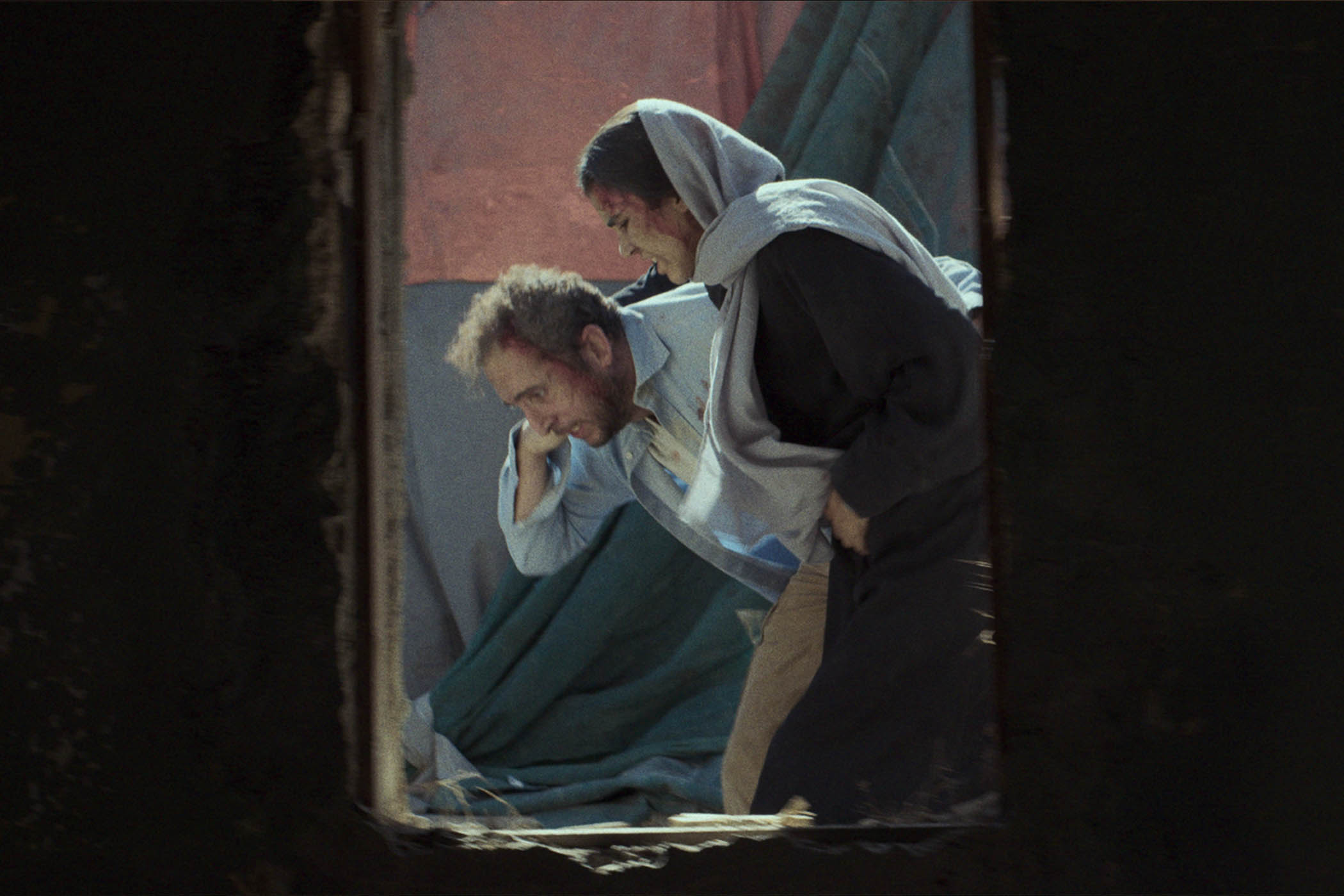
Chronicles from the Siege, the powerful fiction debut by Palestinian-Syrian director Abdallah al-Khatib
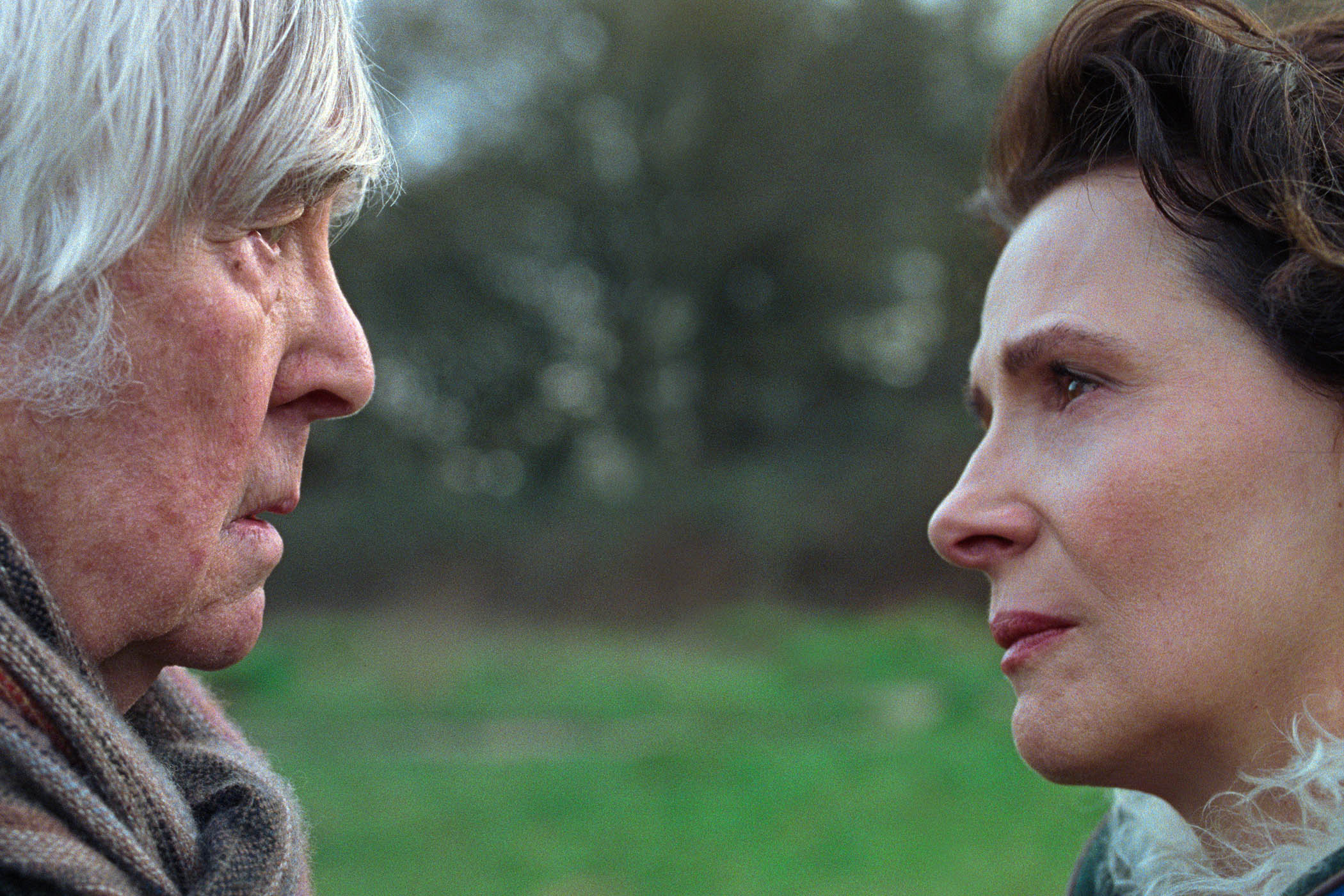
The overall competition this year was a strong vintage – although, as ever, the emphasis was not necessarily on giving audiences a good time. One of the best offerings was easily the most harrowing: Queen at Sea, a London-set drama about old age by the American writer-director Lance Hammer. Juliette Binoche was the ostensible star, but took a restrained back seat to the veteran duo of Tom Courtenay and Anna Calder-Marshall.
Binoche plays a woman whose artist mother has dementia; she reports her mother’s husband for having sex with his wife, arguing that she is unable to give consent. This puts the family on an irreversible, devastating path. Queen at Sea is bleak to begin with, and gets bleaker – or more ruthlessly realistic – as it goes on. Courtenay is affectingly, proudly human; Calder-Marshall gives a fearless and insightful performance as a woman eking out what dignity is left her. There’s also a breakout part for rising star Florence Hunt, from Bridgerton, as Binoche’s teenage daughter, embodying the merciful truth that the circle of life keeps spinning regardless.
Bleakness was mixed with joy, wit and some sublime music in Everybody Digs Bill Evans, a biopic of sorts by the British director Grant Gee. It’s about the great jazz pianist Evans, played by the Norwegian actor Anders Danielsen Lie – but it mainly focuses on a brief spell in the early 60s, when he abandoned music and went to live with his parents. Highly stylised, shot mainly in black and white, this is a bold film about a protagonist who barely speaks while everyone talks around him. Lie’s nuanced, mumbling reserve is astonishing; Laurie Metcalf and a bullishly affable Bill Pullman are terrific as his folks.
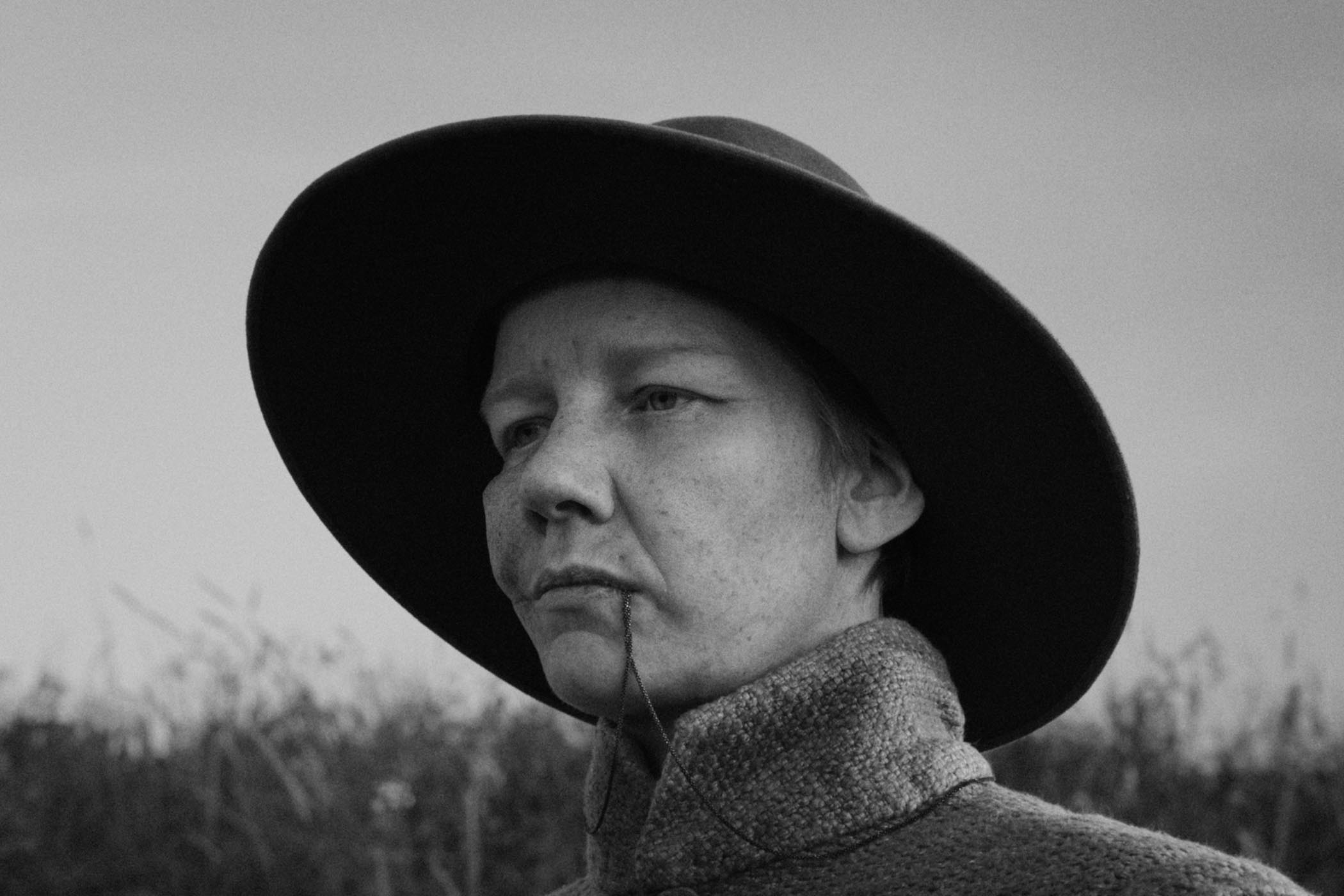
Sandra Hüller in the ‘meticulously mounted’ Rose
In black and white again, another dose of austerity: Rose, by the Austrian director Markus Schleinzer. It stars Sandra Hüller (Anatomy of a Fall, The Zone of Interest) as a woman in 17th-century Germany who passes as a man and, after fighting as a soldier, comes to a small village to set up as a farmer. Rose marries a local woman (Caro Braun), and the couple make their arrangement work until the truth is discovered. On one level, it’s a manifesto for self-invention and for gender equality, with Rose as a sort of domestic Joan of Arc fighting the established order. It’s also a meticulously mounted historical study, and a starkly beautiful one, its winter scenes suggesting a cross between Breugel and Béla Tarr. Berlin’s acting awards became gender neutral in 2021, so five years on, it seems especially appropriate that Hüller’s utterly commanding lead is an out-and-out front runner for best leading performance.
There was, mercifully, some entertainment to be had. Anthony Chen’s competition drama We Are All Strangers popped with energy. It’s a Singaporean family melodrama about a noodle chef whose son has disastrously misguided dreams of success falling into his lap. It’s hugely involving, an unashamed heart-tugger and socially observational – like a 50s Hollywood melodrama recrafted for modern Asian economics and the social media age. Also enjoyable, in a briskly camp and preposterous way, was The Blood Countess, a horror spoof by long-time Berlinale fixture and doyenne of European queer cinema Ulrike Ottinger – with an insouciantly lofty Isabelle Huppert as vampire aristo Erzabet Bathory, running riot in Vienna amid a cornucopia of outré costumes and set pieces.
Not everything lived up to expectations, least of all the big prestige titles. At the Sea starred Amy Adams in an agonised drama by the Hungarian director Kornél Mundruczó – an established competition fixture in major festivals, but somehow not an auteur who particularly sets critics’ hearts racing. Written by his regular collaborator Kata Wéber, it casts Adams as a star choreographer who returns from a detox to her elegant Cape Cod home, still struggling with her demons – mainly the shadow of her overpowering father, seen as a demonic figure in glittering evening wear. With its ominous flashbacks, lavish East Coast lifestyle and rampant symbolism (kites, jellyfish, overturned cars), this is the kind of film in which characters express their agonies with bursts of interpretative dancing. It could almost have been cooked up by a big Hollywood studio expressly to discredit the very idea of arthouse cinema.
More exuberant, but also a dud, was the most awaited competition entry, Rosebush Pruning. It’s directed by Brazil’s Karim Aïnouz, but if there’s an obvious auteur here, it’s really the writer Efthimis Filippou, known for his collaborations with Yorgos Lanthimos (from his breakthrough Dogtooth to Kinds of Kindness). It’s an exorbitantly glossy black comedy about a wealthy and wildly dysfunctional family, its members played by Riley Keough, Callum Turner, Jamie Bell, Pamela Anderson and playwright Tracy Letts as the blind tyrant father.
Newsletters
Choose the newsletters you want to receive
View more
For information about how The Observer protects your data, read our Privacy Policy
The film is a torridly surreal brew of incest, death, delusion and the very inappropriate use of toothpaste. It’s nicely acted – Anderson is extremely good, as is Elle Fanning, playing the supposedly sane outsider fated to disrupt the family dynamics. It’s also lusciously styled – there are few directors as creative with colour as Aïnouz. But it’s a bloodless affair, its shock tactics utterly mechanical. And its message is hardly a revelation: some families are weird, but rich ones are the weirdest. Perhaps if it were double billed with Melania, it might pass muster as a political statement.
The ones to watch
Best films
Queen at Sea (Lance Hammer); Rose (Markus Schleinzer); We Are All Strangers (Anthony Chen)
Best discoveries
The Red Hangar (Juan Pablo Sallato): a gripping black-and-drama about a Chilean air force officer caught up in the coup that starts the Pinochet dictatorship; 17 (Kosara Mitic), a brutally intense Macedonian drama about a girl experiencing a secret ordeal on a school trip.
Best lead performances
Sandra Hüller, Rose; Anna Calder-Marshall and Tom Courtenay, Queen at Sea; Anders Danielsen Lie, Everybody Digs Bill Evans
Best support performances
Bill Pullman and Laurie Metcalf, Everybody Digs Bill Evans
Best rising stars
Florence Hunt, Queen at Sea; Eva Kostic, the young lead in 17; Tut Nyuot, the lead in Ashley Walters’s directing debut, hard-boiled young offenders drama Animol.
Best documentaries
Tutu (Sam Pollard): a comprehensive and revealing portrait of anti-apartheid figurehead Archbishop Desmond Tutu; The Ballad of Judas Priest, co-directed by Rage Against the Machine guitarist Tom Morello: a history of the preposterous but, it transpires, oddly heroic heavy metal veterans Judas Priest.
Best dancing
My Wife Cries, by German writer-director Angela Schanelec, proving that it’s possible to be rigorously conceptual and still find new ways to move bodies in sync to a vintage Leonard Cohen number.
Photographs by Seafaring LLC/ © 2026_Schubert, ROW Pictures, Walker+Worm Film, Gerald Kerkletz/ISSAAD Film Productions© Idir Benaibouche Nour Seraj