
The chief of police is smeared with glitter and sticky with beer-sweat. A dead body, dumped next to the petrol station, has lain there for days. The streets are full of the kind of heightened, well-lubricated celebration that’s just a stumble away from tragedy. The sharks are circling, both in the ocean off the north-eastern coast of Brazil and in the corridors of power. And in an insalubrious park frequented by sex workers, a severed leg terrorises the punters at night.
It’s carnival in Recife. Amid the mayhem, a man arrives with an assumed name and a price on his head. I’ve always felt that one measure of a great director is how close they can skate to chaos without the film disintegrating into incoherence. By that metric, Kleber Mendonça Filho is at the top of his game with the sprawling, anarchic, supremely entertaining 1970s-set thriller The Secret Agent.
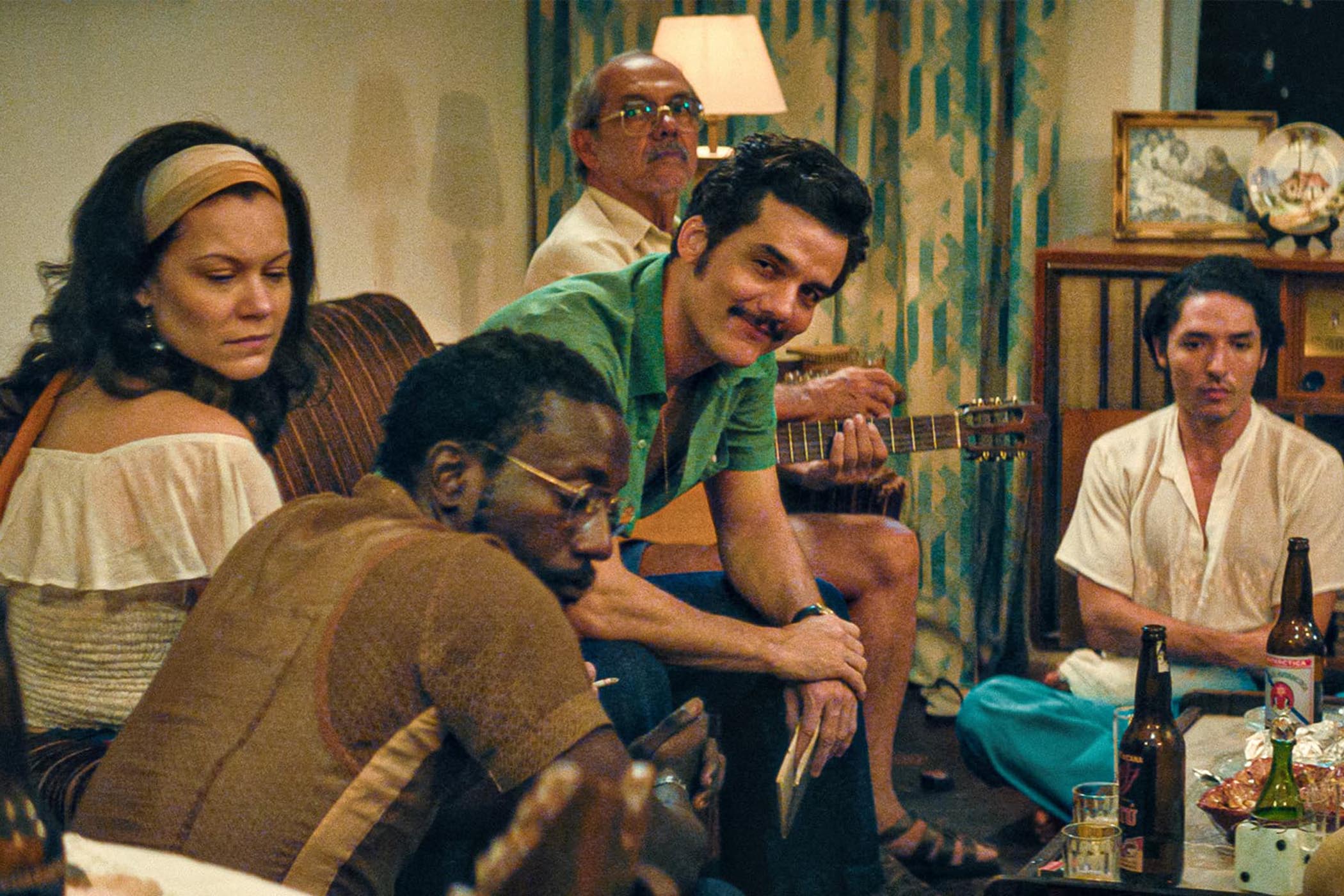
The new arrival in town calls himself “Marcelo” (he’s played by the magnetic Wagner Moura, best known as Pablo Escobar in Narcos). He’s a left-leaning academic who has made a powerful enemy. The year is 1977 – described with a degree of understatement as “a time of great mischief” by a scene-setting title at the film’s opening – and the military dictatorship still has its boot firmly on the country’s neck. The threat to Marcelo is not from government forces but a shady businessman who has enough money for his own militia: two slippery contractors who arrive in town with plenty of guns and no discernible scruples.
The year is 1977, described with a degree of understatement as ‘a time of great mischief’ in Brazil
The year is 1977, described with a degree of understatement as ‘a time of great mischief’ in Brazil
The brutal backdrop of the junta will prompt some comparisons with Walter Salles’ factually based political drama I’m Still Here, released last year. And like that picture, The Secret Agent has deservedly scored four Oscar nominations, including best picture, best international film and best actor for Moura. But while I’m Still Here was an impassioned and overtly political work, here the storytelling is driven by a rebellious spirit: it is wilder, weirder, more unpredictable. Its playful atmosphere draws from the character of Recife, Mendonça Filho’s hometown and the location for most of his films (Neighbouring Sounds, Aquarius and the documentary Pictures of Ghosts all explore aspects of the city).
Marcelo finds a temporary sanctuary in a covert community presided over by Dona Sebastiana, a force of nature at 77 years old (a gloriously characterful performance by Tânia Maria). There he meets a couple of political exiles from Angola, a queer kid who has fled his conservative family and numerous others, all of whom have their reasons for hiding from the world.
Concealed for the time being by his alias, Marcelo sets out to reconnect with his family. His young son is living in the city with the parents of his late wife; Marcelo plans a new start with the boy somewhere out of the reach of his enemies. Meanwhile, he takes a job in a municipal records department, hoping to find a trace of his impoverished, illiterate late mother somewhere in the archives.
So this is a leisurely story that ranges widely, with Marcelo’s quest to find a record of his mother mirrored by scenes set in the present day in which historians excavate accounts of his adventures. The central story branches and weaves: there’s an oddly compelling detour in which the protagonist is taken to visit an elderly German emigré (played by the late Udo Kier). Then there’s the rampaging severed limb, realised through endearingly clunky stop-motion animation – a Recife in-joke about the “hairy leg”, a coded reference used in local newspapers to report on the repressive activities of local police.
For all the digressions – and despite a run time of two hours and 40 minutes – not a moment drags, and every frame is vibrant and full-blooded. Mendonça Filho’s artistry is thrilling and his passion for the medium infectious: shot on vintage lenses that give the digital photography a tactile, lived-in texture and glowing with a colour palette that takes its cue from Marcelo’s egg-yolk yellow Volkswagen Beetle, The Secret Agent is a strong contender for the best-looking picture of the year. There may be bloodshed, corruption and a rapidly mounting body count but, like the waters off Recife, this is a film you dive into and never want to leave.
Photograph by Mubi
Newsletters
Choose the newsletters you want to receive
View more
For information about how The Observer protects your data, read our Privacy Policy