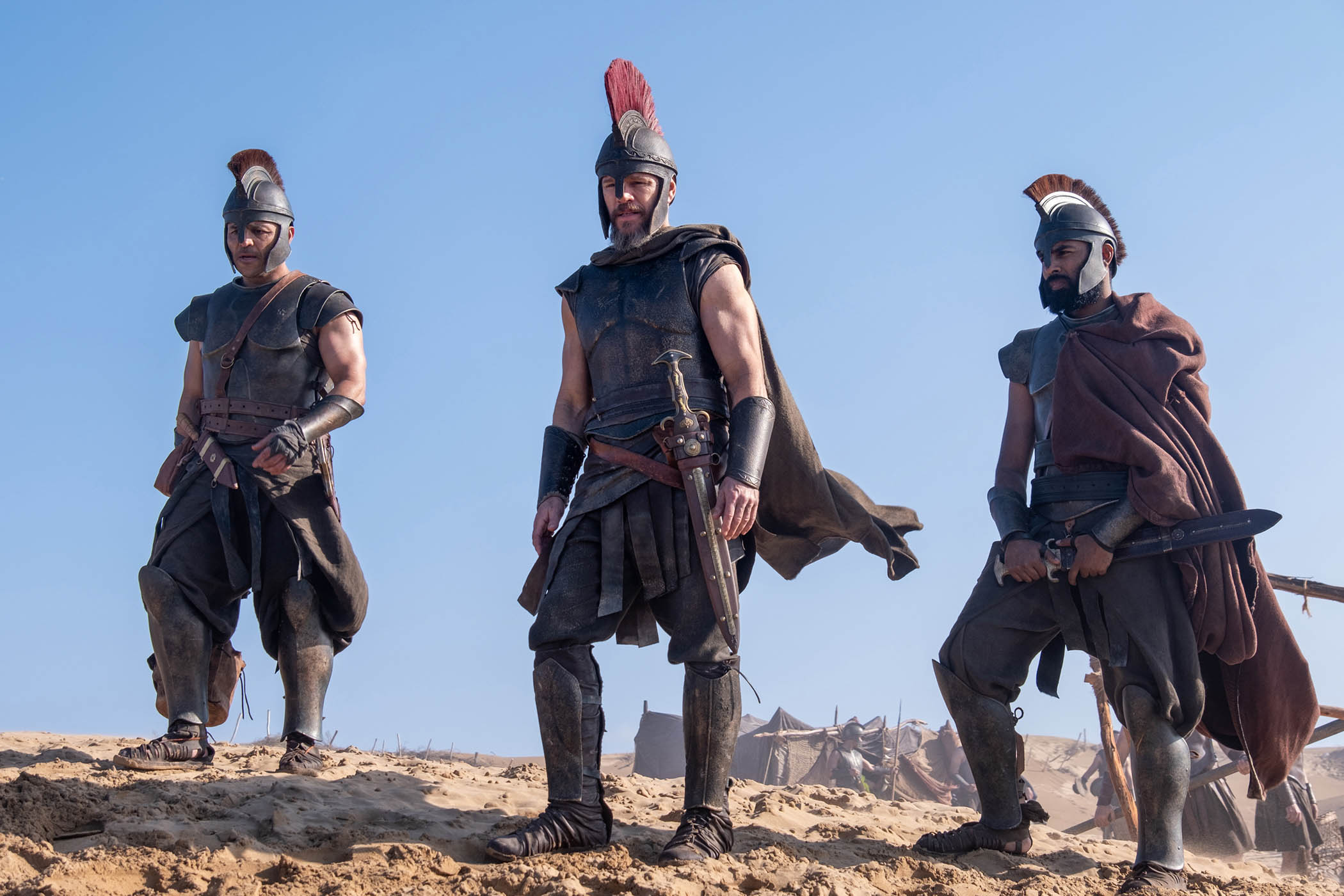

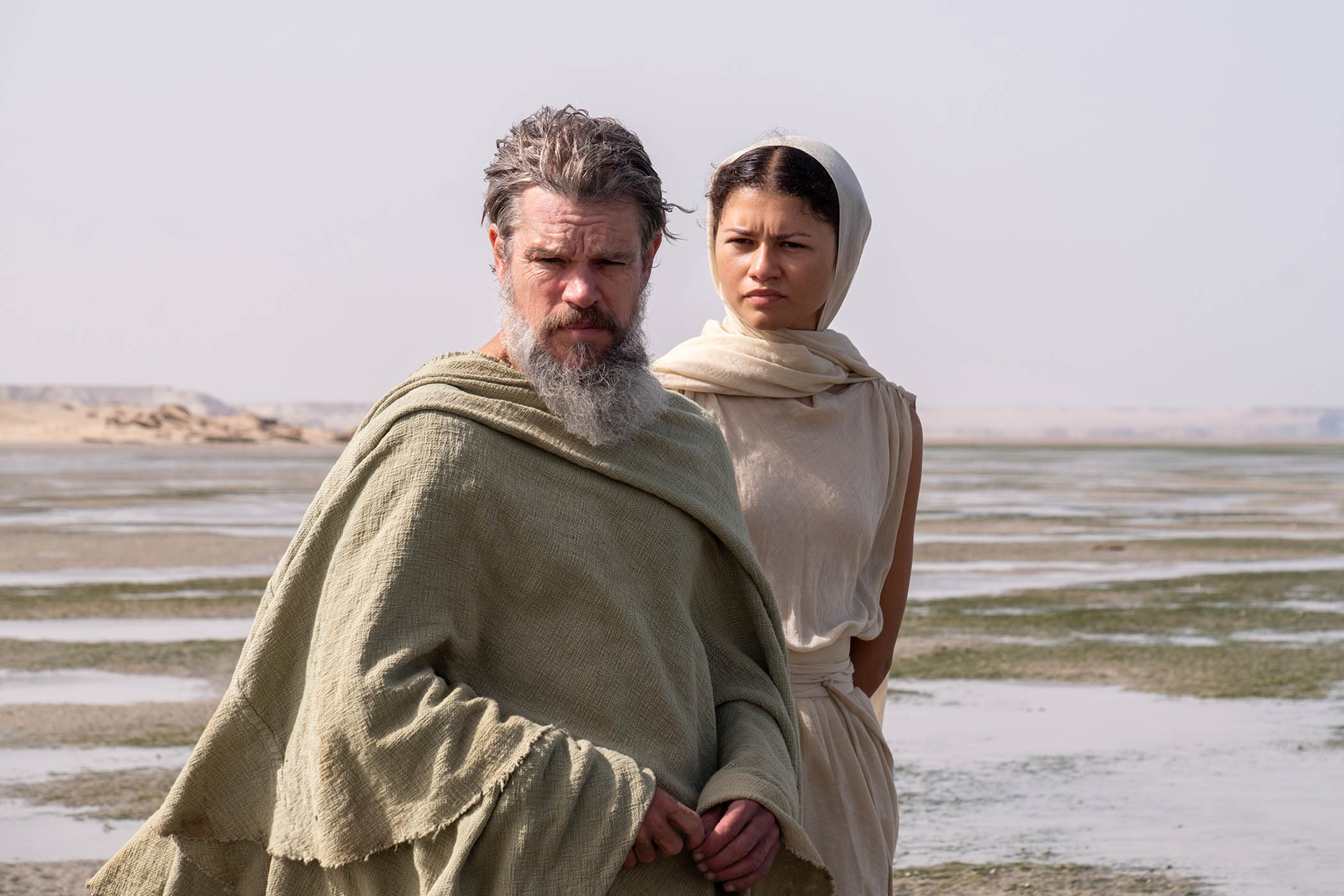
A pantheon of A-listers has been assembled for Christopher Nolan’s much-anticipated take on the Odyssey. Matt Damon is joined by Robert Pattinson, Zendaya, Tom Holland, Anne Hathaway and Lupita Nyong’o. But the real star name on the credits is Nolan’s own. One of the very few working film-makers to have achieved blockbuster auteur status, he delivers unequivocal event movies. But even by his standards, The Odyssey is an immense undertaking.
This is an epic, mythic spectacle that honours its ancient Greek source material, with its monsters and magic, while also addressing more topical themes of exile, war trauma and survivor’s guilt. In a way, the film is a Trojan horse; an extravagant, good-looking adventure that serves as a delivery mechanism for messages about the treatment of strangers, the uneasy weight of legacy and the impossibility of returning from combat as the same person who left.
Tackling the last 10 years of the marathon journey detailed in Homer’s poem, the movie presents Odysseus (a burly Damon) as an honourable man. His lies and deceptions are numerous but justified, he believes, since they serve a greater good. His strategic military genius finds a parallel in J Robert Oppenheimer’s scientific ingenuity; both this and Nolan’s previous feature hinge on the discovery that ideas have the power to alter the course of civilisations. Odysseus’s ruthless masterminding in war, the film suggests, fundamentally changed the nature of peace for his people.
Homer’s Odyssey poses numerous challenges for anyone attempting to adapt the story for screen: how to whittle this sprawling saga down to a manageable length? How to create a coherent flow and avoid a choppy, episodic structure? Uberto Pasolini’s 2024 version, the Ralph Fiennes and Juliette Binoche-starring The Return, dodged the issue by only telling the final part of the story, in which an unrecognisable Odysseus washes up on the shores of Ithaca. Nolan, who also wrote the screenplay, takes a more complex approach, featuring an elegant dance of multiple timelines and a deft baton-passing of narrator duties. At points the momentum dips but, at nearly three hours, it is for the most part a richly rewarding piece of storytelling.
The film starts by exploring two moments a decade apart. We see the Trojan horse, half-buried in sand on the beach, with a lone soldier, Sinon (Elliot Page), standing guard, and Odysseus and his sweaty warriors sardined inside. And we are introduced to Odysseus’s serene, sad queen, Penelope (Hathaway), besieged by power-hungry suitors, including the treacherous Antinous (a wonderfully venomous Pattinson, playing the character as a smiling snake). Increasingly restless at his mother’s side, and vulnerable to the circling chancers, is Telemachus (Holland), the son who is losing faith in the father he has never known.
The events that unfold between these moments include a run-in with a brutish cyclops who chomps the heads off Odysseus’s warriors as if they were crudités. There’s a fateful encounter with the enchantress Circe (Samantha Morton, firing sly, stabbing glances at her guests), who, with her witchcraft, reveals the bestial qualities in Odysseus’s men. A diversion through Hades introduces Odysseus to the disgruntled dead, their hollow eyes full of grit and recriminations. The sirens’ song tears open the hero’s psyche, as Damon, strapped to the mast of his ship, squirms like a man with fire ants in his tunic. A sojourn on an island with Charlize Theron’s underpowered Calypso and her lotus flowers accounts for seven lost years and blurred memories.
Nolan nods to Hollywood past: the swords-and-sandals swagger of films by William Wyler or Cecil B DeMille, and the escapist fantasies populated by Ray Harryhausen’s stop-motion creations. The monsters here are more sophisticated in their rendering, but Nolan favours practical effects over CGI and green screen techniques where possible. Hoyte van Hoytema’s full-blooded Imax cinematography is sensational. With its tawny light and throbbing colours, it evokes the saturated palette of Technicolor.
In contrast, Ludwig Göransson’s forcefully unpredictable score brings the film up to date. At first, the composer dabbles in noodling lute melodies, before venturing into more abrasive – at times, almost avant garde – techniques. What sounds like the sharpening of knife blades provides a rhythmic motif; the feature’s extended climax plays out to a thunderous pulse. The Odyssey is pure cinema. Watch it on the biggest screen you can find.
Photograph by Universal Pictures
Newsletters
Choose the newsletters you want to receive
View more
For information about how The Observer protects your data, read our Privacy Policy