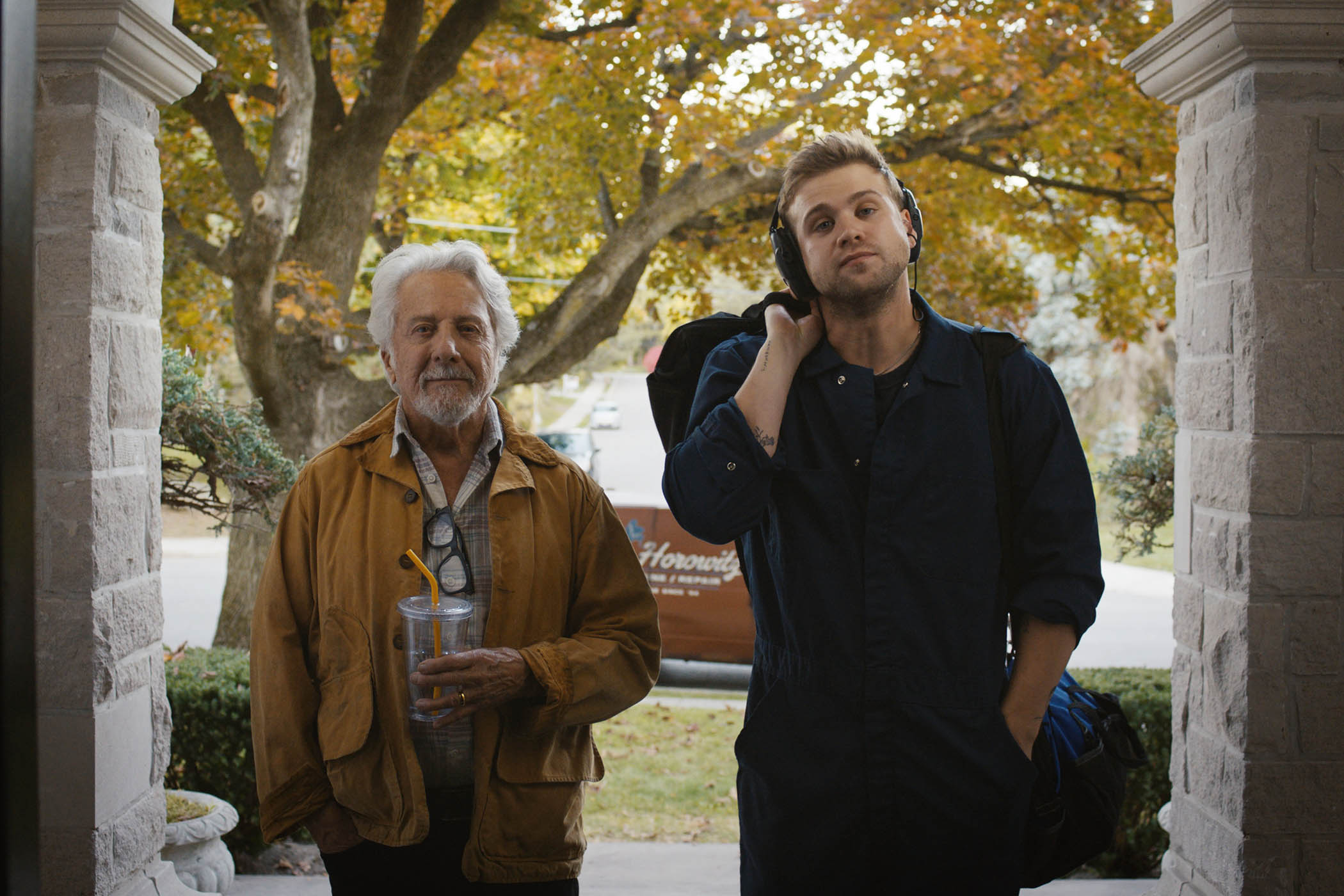


Plenty of films incorporate music within the fabric of their storytelling, but few do it so successfully as Tuner. The fiction feature debut from the Oscar-winning documentary film-maker Daniel Roher (Navalny, Once Were Brothers: Robbie Robertson and the Band) is the story of a piano tuner; not only does it make extensive use of jazz piano in the score, it is infused with musicality on every level. The crisp, syncopated editing, the kinetic camerawork – all of it is tuned into the skittish rhythms of jazz percussion.
British actor Leo Woodall (One Day, The White Lotus), whose star is rising so rapidly that you’ll soon need a telescope to see it, takes the central role of Niki, a piano tuner who channels his hyperacusis (a rare condition resulting in extreme hypersensitivity to sound) into a side hustle as a safe-cracker. He is the assistant and protege of veteran New York-based tuner Harry Horowitz (Dustin Hoffman, making a substantial impression in a relatively brief appearance), but there’s more to their relationship than a simple boss-employee dynamic: we glean that Harry has known Niki since he was a boy and was a close friend of Niki’s late father. To its credit, the screenplay, by Robert Ramsey and Roher, doesn’t overexplain the connection. But Roher knows that in crime flicks, as in jazz, pacing is everything: he reveals just enough – we learn that Niki has perfect pitch and was once a pianist of considerable talent – but allows the audience to fill in the gaps.
Harry and Niki come into contact with the heavy hitters of the world of professional ivory-ticklers (Herbie Hancock appears in a cameo), but more often they find themselves tuning the untouched instruments of the obnoxious ultra-wealthy, the kind who see a Steinway as a status symbol or something on which to put a flower arrangement. The kind, in other words, who deserve to be burgled.
Here, the screenplay ties itself in moral knots trying to maintain sympathy for the central character, even as he starts robbing people. He does it out of the goodness of his heart, to fill the shortfall in Harry’s lapsed health insurance. He does it, says Niki’s crime boss, because the victims are too rich to notice.
In fact, this kind of hand-holding in the script is largely unnecessary: Niki’s character flaws are so wrapped up in Woodall’s insouciant charisma that they are easier to forgive. Woodall’s Niki is a physically magnetic presence but also an innocent whose insulation from the world (he blocks out sound with earplugs and noise-cancelling headphones) has stripped away the instinctive cynicism that’s as much a part of New York as yellow taxis and giant rats. Evocative sound design is instrumental in placing us in the head of a man who, in his own words, is “allergic to sound”.
This is a New York story played out in the concert halls of Manhattan and the palatial mansions of Long Island, but the film-maker who sprung to mind when watching Tuner is French. Two films by Jacques Audiard have a clear kinship: one is Read My Lips, about a partially deaf woman who uses her lip-reading skills for criminal purposes; the other is The Beat That My Heart Skipped (itself based on a New York movie, James Toback’s Fingers), about a young man torn between following his father’s mob activities and the chance of escape through a career as a concert pianist. These are films that, like Tuner, elevate the crime picture with rich characterisation and an appreciation for the harmonies of human connection.
Photograph Alan Markfield/Black Bear
Newsletters
Choose the newsletters you want to receive
View more
For information about how The Observer protects your data, read our Privacy Policy