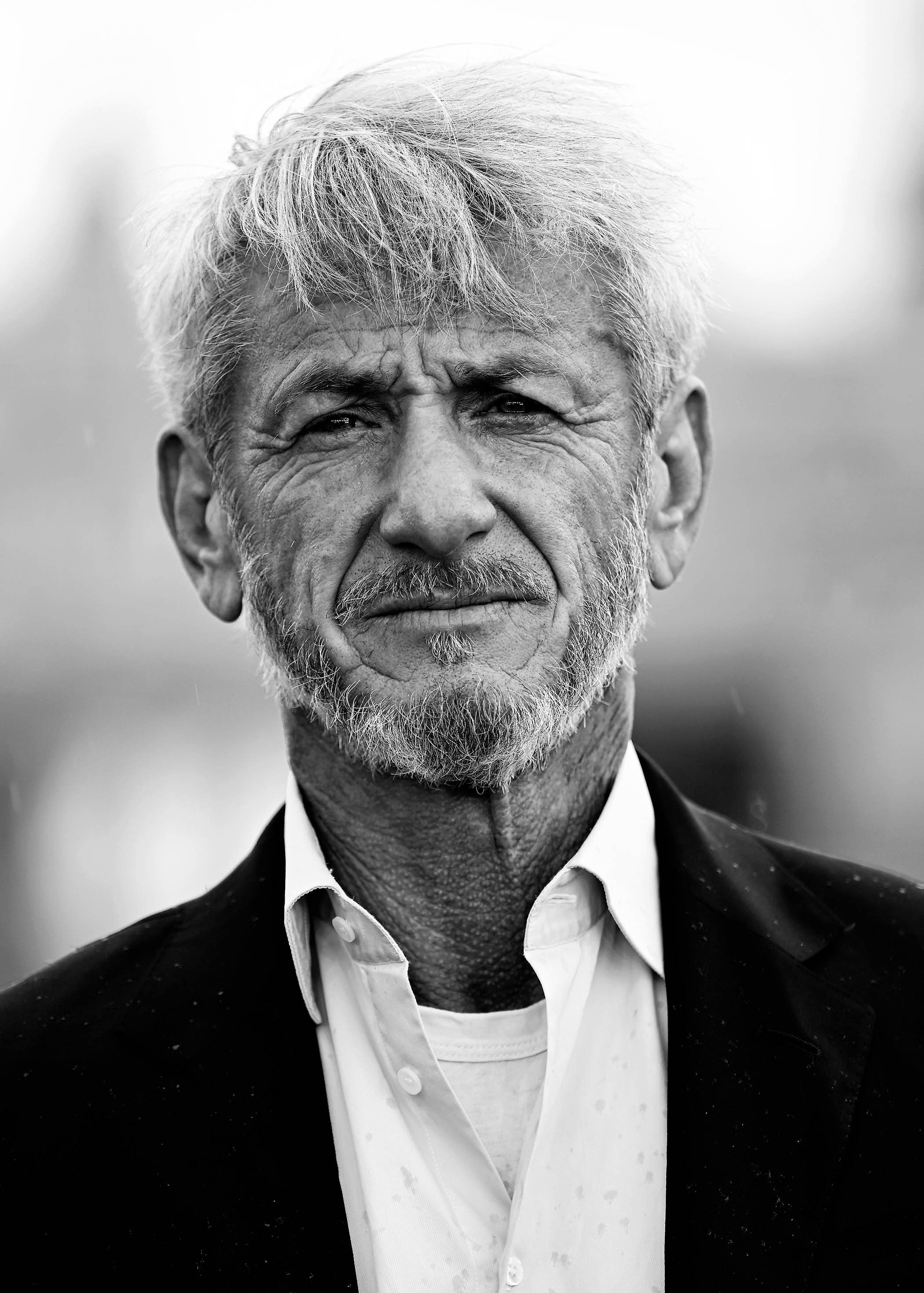


I hope Sean Penn wins the Oscar for best supporting actor. Really, he’s the star of One Battle After Another, textured and funny though Leonardo DiCaprio is as the ageing revolutionary with the bong and the man-bun. But it’s Penn’s face you remember. His Col Steven J Lockjaw is a masterclass in nominative determinism and the embodiment of a very modern type of American nastiness – Robert Kennedy Jr meets Popeye meets Greg Bovino, Donald Trump’s former commander of the US border patrol.
Aged 65 and a passionate smoker, Penn has a face that is deeply lived in. He smoked through the Golden Globes, despite the best efforts of event staff, and was applauded by some for his anti-wokery, but the actor is a committed progressive: he just likes to smoke. He brings his politics and everything else he has – every wrinkle, every setback – to the role of Lockjaw, the racist soldier who blackmails revolutionary Perfidia Beverly Hills (Teyana Taylor) into sex and fathers her child. He pouts, twitches, chews his lip and bares his teeth. When Perfidia skips witness protection, he swallows his hurt with a jutted jaw and an upwards jerk of the chin. Everything is clenched. The gun Perfidia pegs him with may still be in there.
Lockjaw’s great wish is to be admitted to the Christmas Adventurers’ Club, a Ku Klux Klan-like secret society, and his walk to and from its first meeting – stiff, bow-legged, down endless hotel corridors – is a study in machismo and male vulnerability. As a performance, it’s almost matched by DiCaprio and Benicio del Toro, who are also nominated for Oscars. DiCaprio is revelling in his Jack Nicholson era, with that groove between the eyebrows and a willingness to look a mess. Del Toro wears reading glasses and a paunch. These are baggy, craggy stars who know the value of a hooded eye, a frown and a face that tells a story – though Penn goes one better: his face gets blown off and rebuilt, badly, the upper lip lifted to expose one goofy tooth. Still, he conveys Lockjaw’s hatred, his ambition and self-pity.
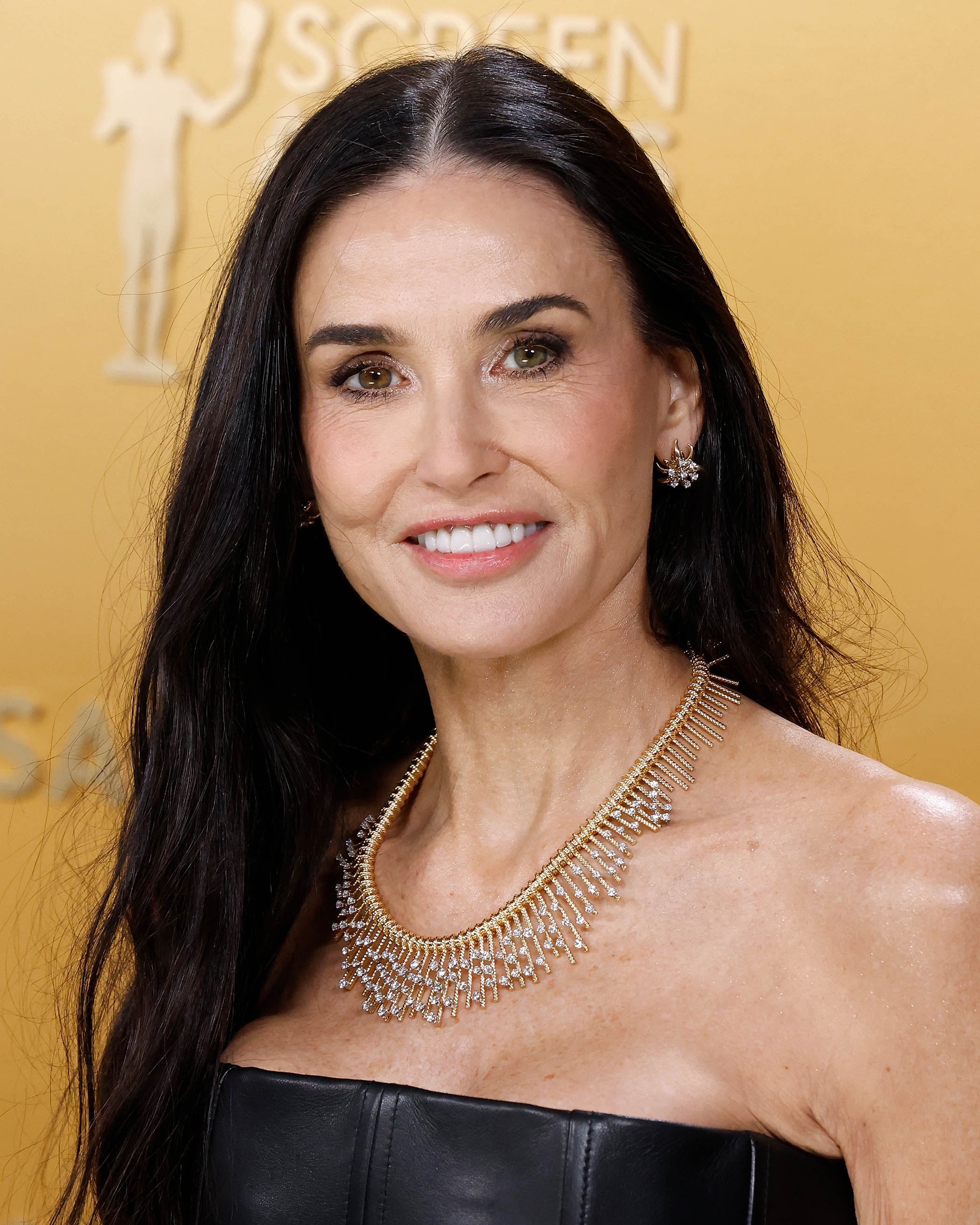
Demi Moore was applauded and derided for looking younger than 63
I love these performances, and that we are celebrating the work of men in their 50s and 60s (DiCaprio is 51, Del Toro is 59) because, in 2026, the Academy is still a lot less enthusiastic about women who look their age. Compare the 10 men and 10 women nominated for this year’s best and supporting actor and actress Oscars, and there’s a stark difference: there is no actress nominated between the ages of 46 (Kate Hudson for Song Sung Blue and Rose Byrne for If I Had Legs I’d Kick You) and 75 (Amy Madigan for Weapons). Meanwhile, men in exactly that age bracket dominate, taking seven of the nominations, with Wagner Moura (49), Ethan Hawke (55), Delroy Lindo (73) and Stellan Skarsgård (74) joining the One Battle After Another trio. Madigan is reportedly brilliant in Weapons (I am not good with horror) but she does play a witch.
As film lovers, what are we missing? Three decades of life experience, for a start. Where is the dystopian road trip with Holly Hunter, Viola Davis and Daryl Hannah, or the one where crime boss Angela Bassett outwits Salma Hayek and Winona Ryder? An Oscar movie today with three older women who look their age feels a stretch. There are exceptions, but prizes for Frances McDormand and Jamie Lee Curtis are not enough; the erasure is too consistent. Coralie Fargeat’s satire on ageing in Hollywood, The Substance, was nominated for five Oscars but won only the makeup and hairstyling award. Its star, Demi Moore, was recently applauded and derided for looking far younger than 63: she used to date Penn in the 1980s and is only two years younger, but a female actor at least as talented has had to look like his daughter just to stay in the game.
Penn brings every wrinkle, every setback to the role of Col Lockjaw. He pouts, twitches, chews his lip
Penn brings every wrinkle, every setback to the role of Col Lockjaw. He pouts, twitches, chews his lip
This is not vanity at work but misogyny, says Fay Bound-Alberti, the author of a new cultural history, The Face, when I ask her how we got here. “It’s that double bind: women are not allowed to age and not allowed to enhance themselves. It’s putting women on spits and roasting them and standing around to judge. Men’s faces have always been allowed wrinkles, because it shows experience and character. But we obliterate that in women.” There is no male equivalent of resting bitch face, she says: resting asshole face is not a thing.
This is why there are great female actors Penn’s age, and much younger, who can no longer move their faces for Botox and filler and surgery. Witness the gen Z amazement at Claire Danes’s untweaked 46-year-old face in Netflix’s The Beast in Me. Amid the streamer hits starring frozen midlifers, here was a forehead that frowned, a lip that trembled, a chin that ugly-cried. “To see someone who can move every corner of their face is really remarkable,” said one commentator on YouTube. “Hollywood now has three faces,” said another, “the super-inflated, the vacuum-sealed and the oh-my-God-what have you done with Christina Aguilera … The tox is toxing.”
Last year, a TV casting director told me she had no problem with performers who got “the Botox sprinkle”: acting is a confidence trick and whatever works, right? But she added that the industry had changed more in two years than in all the 20 she had been working: she worried that the streamer algorithms were driving an impossible aesthetic and that the more characterful faces were starting to disappear. A blank-faced lead can affect everything, from the script to the score, requiring more exposition in the writing or drama in the music, so that an audience knows a character is really, really sad rather than surprised. Jonny Greenwood’s score for One Battle After Another never needs to tell you what Penn thinks.
Newsletters
Choose the newsletters you want to receive
View more
For information about how The Observer protects your data, read our Privacy Policy
There’s a poignant moment in Rosanna Arquette’s fantastic 2002 documentary, Searching for Debra Winger, a series of conversations with A-list women prompted by the realisation that the An Officer and a Gentleman star had quit at 40. Arquette asks Penn’s then wife Robin Wright the secret of their “dream” marriage. Simple, Wright says: she looks after the kids, does one film a year and has no regrets. And you almost believe her, until she talks about the roles she had to pass on and her eyes light up: “But when they come out! Twenty years from now, I will miss not having done that role.” Diane Lane describes ageing as “like a slow train coming… and much harder when you were once Daisy Perfect”. DiCaprio was once Daisy Perfect, and so too Penn to a degree – the heart-throb who married Madonna – but they have been allowed to age into interestingness.
Last year, Penn told Louis Theroux how acting had made him bored and miserable, turning him into a recluse and a man with a woodwork habit. He yearned for a golden age of great scripts and iconoclasts: when Jack Nicholson gave a speech at Penn’s wedding to Wright, Marlon Brando pulled down his trousers. “There’s no such thing as a movie star any more,” Penn complained. “The industry is so fragmented. You’re not going to have another Warren Beatty.”
I think he’s wrong, and that he’s the proof of that; as is DiCaprio, Del Toro, Skarsgård and the rest – exceptional actors doing their best work into their 50s and well beyond. But can we have another Shirley MacLaine, or Annette Bening, or Jane Fonda? Otherwise, it’s just one battle after another.
Photographs by Jeff Pachoud/Getty Images, Taylor Hill/FilmMagic/Getty Images