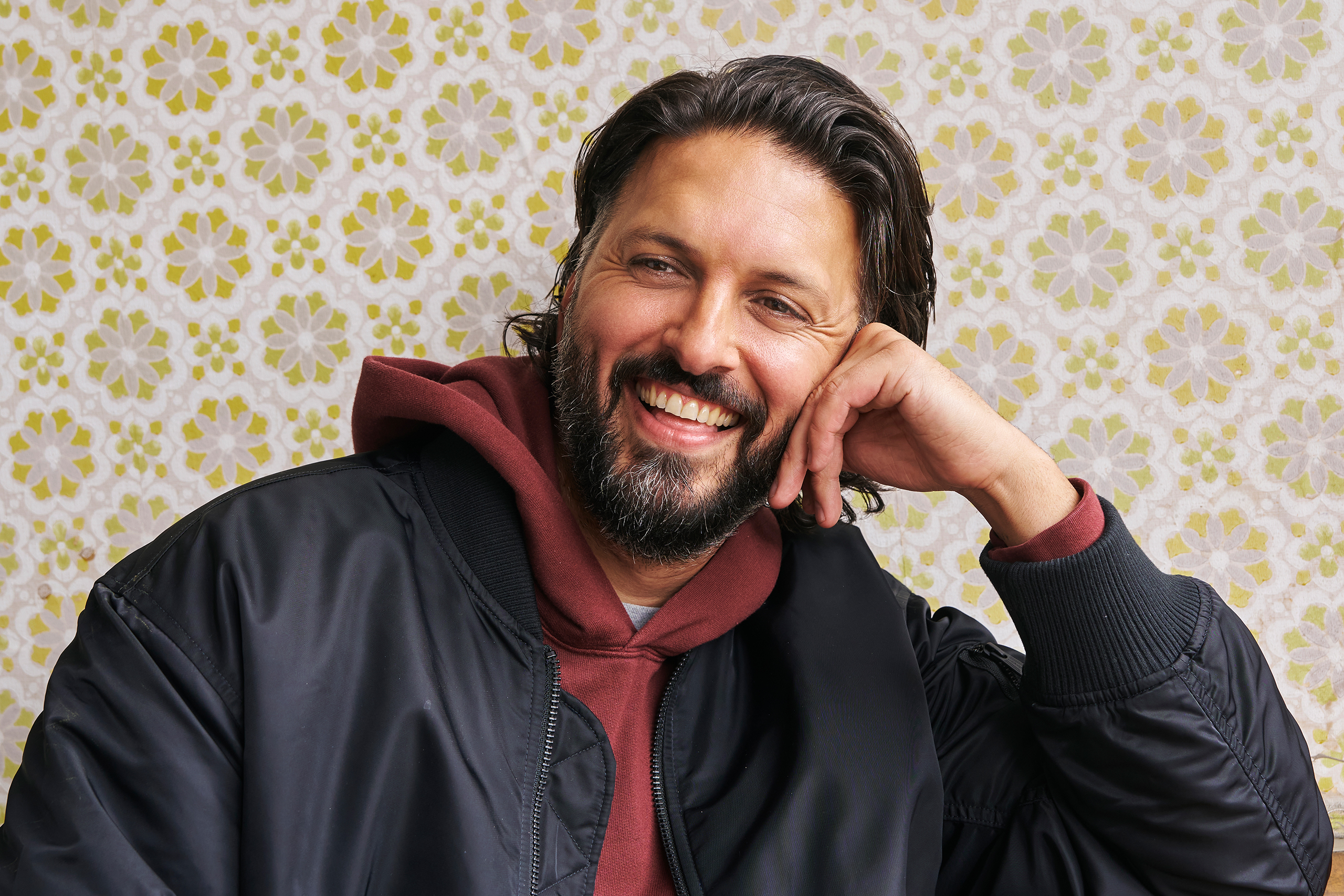



Shazad Latif, much like the cuckolded husband he plays in the recent film adaptation of Wuthering Heights, is by his own admission a hopeless romantic. “I flew to Australia eight times in a year for one person,” he says. “I have tattoos of nicknames that cannot be discussed.” He smiles widely. “Hopeless is the word. I haven’t figured it out yet.”
Latif and I are meeting in the days before Wuthering Heights is released in cinemas, and at the feverish height of its promotional campaign. Since its provocative tease of a trailer landed last year, pulsing with sexual metaphor, the discourse around its heaving horniness and infidelity to Emily Brontë’s literary classic has been inescapable, and Latif, previously best known for TV roles in Spooks, Star Trek: Discovery and 2025’s Atomic, has been getting to grips with sudden global recognition. “It’s been mad but I love it,” he says. “Being part of a project like this is what you work towards as an actor.”
Casual today, in a T-shirt and hoodie, Latif is at a relaxed remove from the recent whirlwind of press calls and premieres, where he worked with the stylist Michael Miller on a procession of red-carpet looks that included pieces by Maison Margiela, Etro and Hermès. “Being Pakistani, growing up amongst my aunties and cousins in saris, colour comes naturally to me,” he says. “Michael and I wanted to mix that with the look of a classic English gentleman.”
In Emerald Fennell’s rendering of Wuthering Heights, Latif plays Edgar Linton, the well-to-do textiles merchant who marries the story’s protagonist, Cathy, played by Margot Robbie. Traditionally, Linton is a dull, sensible foil to Cathy’s true love, Heathcliff, but Fennell and Latif had other ideas for their version of the character. “We wanted to make him less of the pathetic guy he comes across as in the book,” he says, “and more of a real rival to Heathcliff.” Linton’s visceral devotion to his new bride is apparent when Cathy arrives at his dreamlike manor house, where one bedroom wall is decorated, complete with veins and moles, to mimic her own skin.
Before filming began the cast had three weeks of rehearsals to get to know one another. Latif has lived in Australia, and he bonded easily enough with his antipodean costars Jacob Elordi and Robbie, though his offscreen relationship with the latter mirrored that of Edgar and Cathy: someone in awe to the point of self-destruction, or at least a few accidents on set. “I was madly clumsy around her,” he recalls. “I nearly choked on hot coffee once. I was doing slapstick basically every day, but it made Margot laugh. And I wanted to keep making her laugh.”
‘I was doing slapstick every day, I just wanted to keep making Margot laugh’
‘I was doing slapstick every day, I just wanted to keep making Margot laugh’
Born to a Pakistani father and Scottish mother, Latif grew up in Tufnell Park in north London. He credits his late grandmother with his love of film. “My nan was a real film buff,” he says. “She had so many films on VHS, and posters on her wall, and we would sit and watch Wuthering Heights together.” His lightbulb moment came when he watched Baz Luhrmann’s 1996 adaptation of Romeo and Juliet, starring Leonardo DiCaprio and Claire Danes. “That was the first time I cried in the cinema,” he says. “I realised then that acting was what I wanted to do.” He attended Bristol Old Vic Theatre School but left a year early, after he was offered a part on Spooks.
As a fellow second-generation immigrant, I ask Latif if he has feelings about Britishness, or being “British-ish”. He hums thoughtfully. “It’s something I don’t think about,” he says. “I’m a wanderer, a bit of a nomad, which I think is something all creatives feel as we try to understand who we are and what we are doing here. I feel very Pakistani but also very British, which is really the sum of it. There’s so much trying to define Britishness as one thing. To me the beauty of this country is meeting up in London with my Somali best friend and my friend who is Jewish, and grabbing Turkish food.”
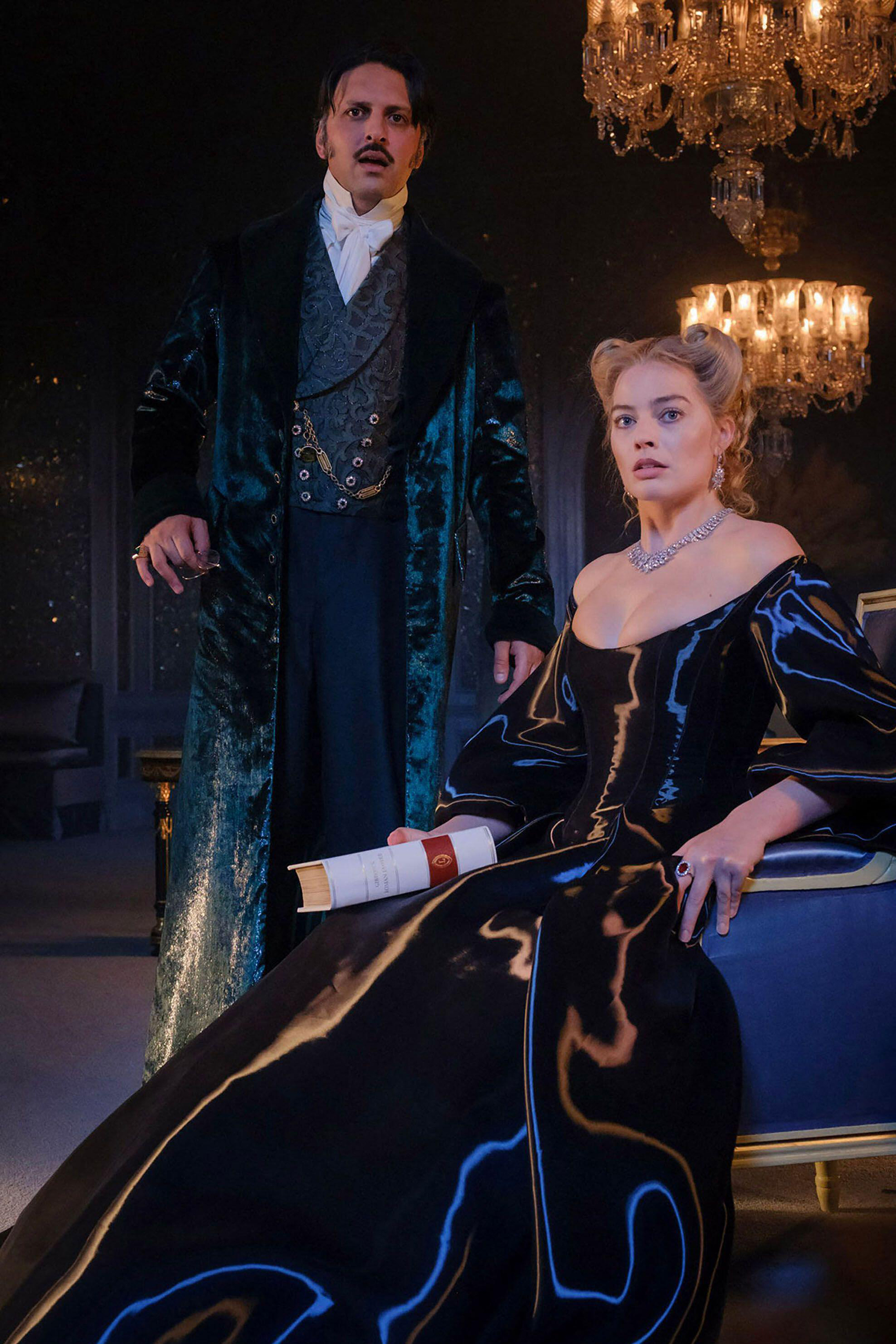
‘I hope people have a collective experience’: Shazad Latif with his Wuthering Heights costar Margot Robbie
One of the numerous controversies surrounding Fennell’s Wuthering Heights is an accusation of whitewashing. In Brontë’s novel, Heathcliff is described as a Lascar, a term for a sailor from India or south-east Asia; the casting of Elordi, a white man, in the role has raised eyebrows in corners of the internet. When I bring it up, he says, “If anything, it shouldn’t be on me, or any person of colour, to comment on this. It’s one for the industry. What is cool, to me, is being able to play these roles. We’re adding colour back into period dramas because we’ve always been there.” Understandably, he would rather focus on the ease with which his own heritage was woven into the narrative. “We were able to flesh out this backstory, which included the Linton family being from south Asia and adopting Isabella, who is white, as a ward. It adds another dimension to the story.”
Latif seems to enjoy being both in the spotlight and slightly removed from it. Now that the promotional juggernaut of this project is winding down, he plans to finish reading John Steinbeck’s East of Eden and to start Homer’s Odyssey before Christopher Nolan’s reimagining of it is released this summer. He is also committed to staying away from the film’s reviews, which are due to come out the same day we meet, and will turn out to be mixed. “I’ll probably get some slips from friends and family members,” he admits. “But my main hope is that people have a collective experience. Cinema can really create these microcosms where you laugh and cry with strangers. It’s very unifying. That’s what’s important to me.”
Newsletters
Choose the newsletters you want to receive
View more
For information about how The Observer protects your data, read our Privacy Policy