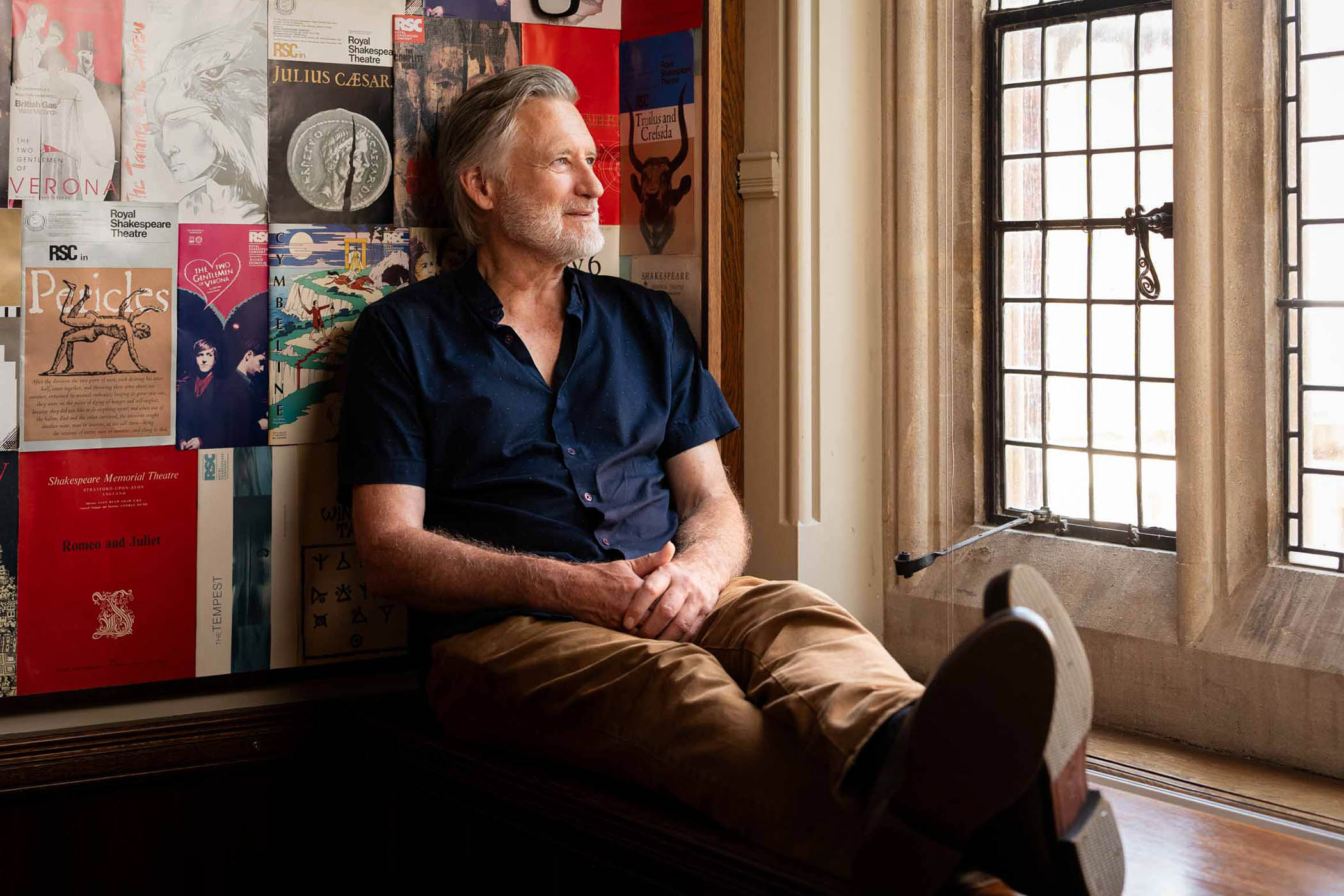

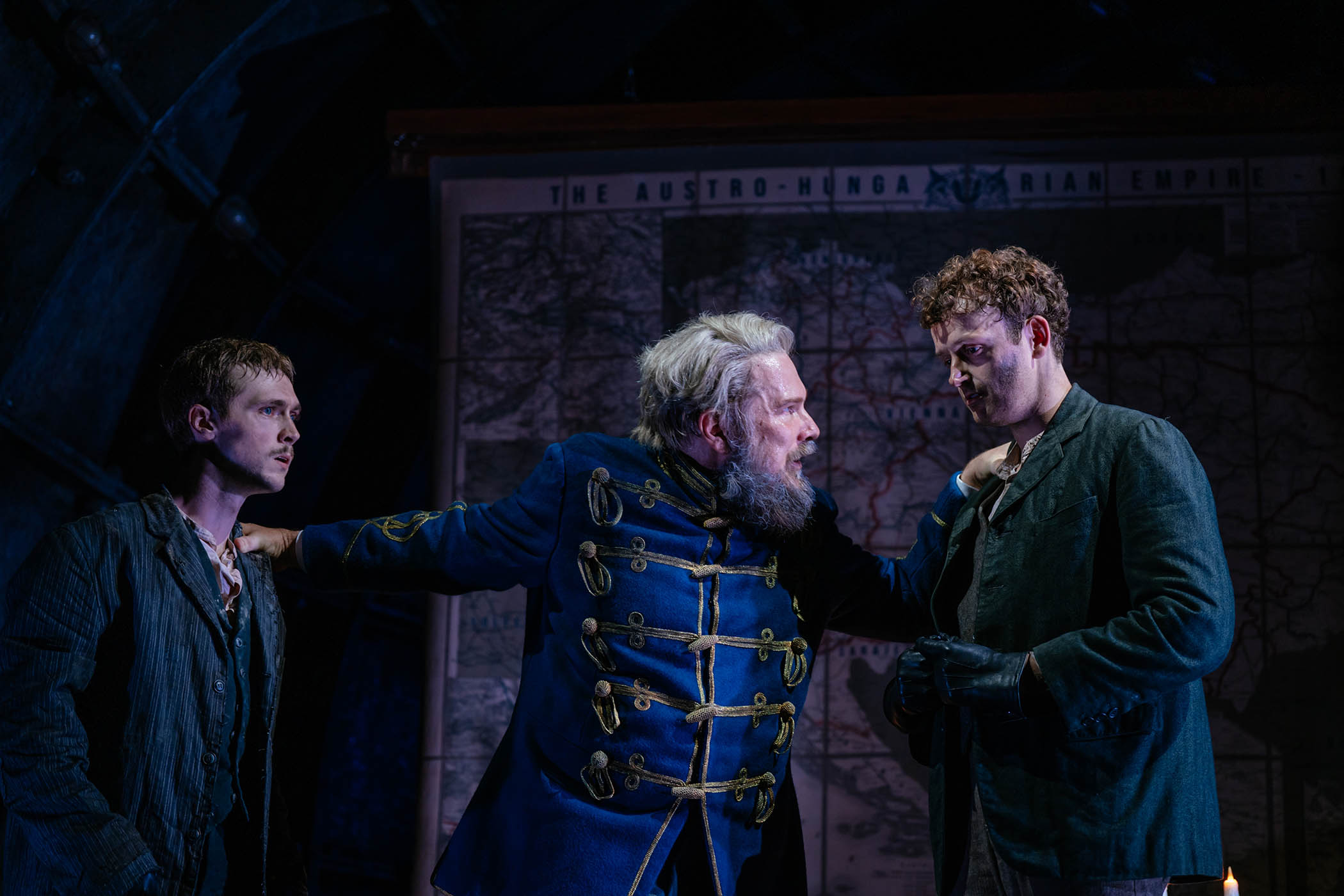
Bill Pullman, 72, is a veteran actor of screen, stage and TV. He grew up in New York state and, after studying and then teaching theatre at university, made his film debut in 1986’s Ruthless People, alongside Danny DeVito and Bette Midler. Early on in his career he gained a reputation for playing upstanding or slightly naive characters in films such as A League of Their Own and Sleepless in Seattle. But he showed he could do weird and sleazy in David Lynch’s Lost Highway and the neo-noir The Last Seduction. He lives in Los Angeles with his wife, Tamara Hurwitz, a modern dancer. He will be appearing as Gaev in The Cherry Orchard at the Swan theatre in Stratford-upon-Avon.
You’ve worked on the British stage before, but how did you come to be cast in an RSC production?
This play has been on the books since last year. Helen [Hunt] came on board late last December, and then Tamara [Harvey, RSC co-artistic director], the director of the play, wrote me a most brilliant letter. It was digital, but it felt like a letter. Her take on Gaev was very specific and I think she knew enough about me to know that she’d tickle my interest. So I didn’t take long to think about it.
You must be one of the few actors to perform The Cherry Orchard who has also been a fruit farmer. Has that had any bearing on the role?
I love those sections of the play when they talk about their love of the orchard, because I have that. When you can catch the blossoms, and it’s early, and they’re coming into the spring, they’re just so exquisite and full of hope and promise. I started fruit farming when I was in high school. In Los Angeles we started a community initiative in our neighbourhood called the Hollywood Orchard. It’s a chance to build community around fruit and it’s still going after 13 years.
Have you appeared in a Chekhov play before?
No, never in a professional setting. I did some scenes in college. It’s the same for Helen. I think this is her first Chekhov production. It’s not often done in the States. We’re not so bold and arrogant as to think we could pull this off. They’re not easy, these plays.
In your experience is there a difference between American and British theatrical audiences?
Most people would say that there is a little bit of an easy win with American audiences. Sometimes they are really eager to laugh. It’s heartfelt, but it does seem like they want to take the play away from you. The British audiences pull back a bit, but the applause at the end somehow means so much.
You own a Montana cattle ranch. Is the TV series Yellowstone an accurate depiction of the life? Have you waged armed battles with rival landowners?
Our ranch is in south-west Montana, not far from where they shot quite a bit of Yellowstone. It’s a beautiful corner of the state. There was a lot of interest in the show among the local community. Whenever I get up there I help with the cattle and the fencing and irrigation systems. My sister-in-law Sue is the rancher, and she used to gather weekly for the first season with a whole cadre of female horse people and they would laugh at all the anomalies [in Yellowstone].
When you were 21 you suffered an accident during a rehearsal that left you in a coma. Did you ever wonder if perhaps you weren’t meant for the stage?
The theatre can wound you. But by the time I came out of it I think I was just ready to move on, get back on the horse again and keep riding. My college was very good about bringing course work to me so I could carry on, but I was isolated and I think it was a good perspective to make me realise that this was something I really wanted to do.
You’ve worked a lot in theatre, TV and film. Do they require very different types of acting or is it all essentially the same thing?
They’re really different. In film you prep and everything, but on the day you deliver and the work is done. You don’t come back to revisit it, except maybe at night when you say: “Jesus, why didn’t I…?” That’s tormenting. But with theatre, as much as you feel you’ve got it one night, it can move a degree to the left and then all of a sudden it’s: “What’s going on now?” Kenneth [Branagh] is doing The Tempest here at the moment. The other day he did a matinee and an evening show and he said the evening show was 10 minutes longer. You can tell if people are getting a little indulgent.
Hollywood is not renowned for marital longevity but you’ve been married for 39 years. What’s the secret?
I feel there’s an element of luck about it. When you get together with someone early on, sometimes you grow in different directions. I know in my family [Pullman is one of seven children] there have been a good number of divorces. They all needed to get divorced, and it’s better. But I don’t think it’s about meeting the perfect person. It’s about having the ability to respect certain qualities that you find precious. That’s sustaining.
Is there an ambition you’ve nurtured that you’ve yet to realise in acting?
Well, doing this play now is kind of like that. I haven’t done a play in four years, and I’m in really good company here, with some great actors. So it’s a high bar, and I have to shape up. But we’re all enjoying one another’s company and supporting one another. And I’ve got the benefit of this amazing institution.
The Cherry Orchard runs at the Swan theatre, Stratford-upon-Avon, from 10 July to 29 August
Photograph byJohan Persson