
Portrait by Christine Armbruster
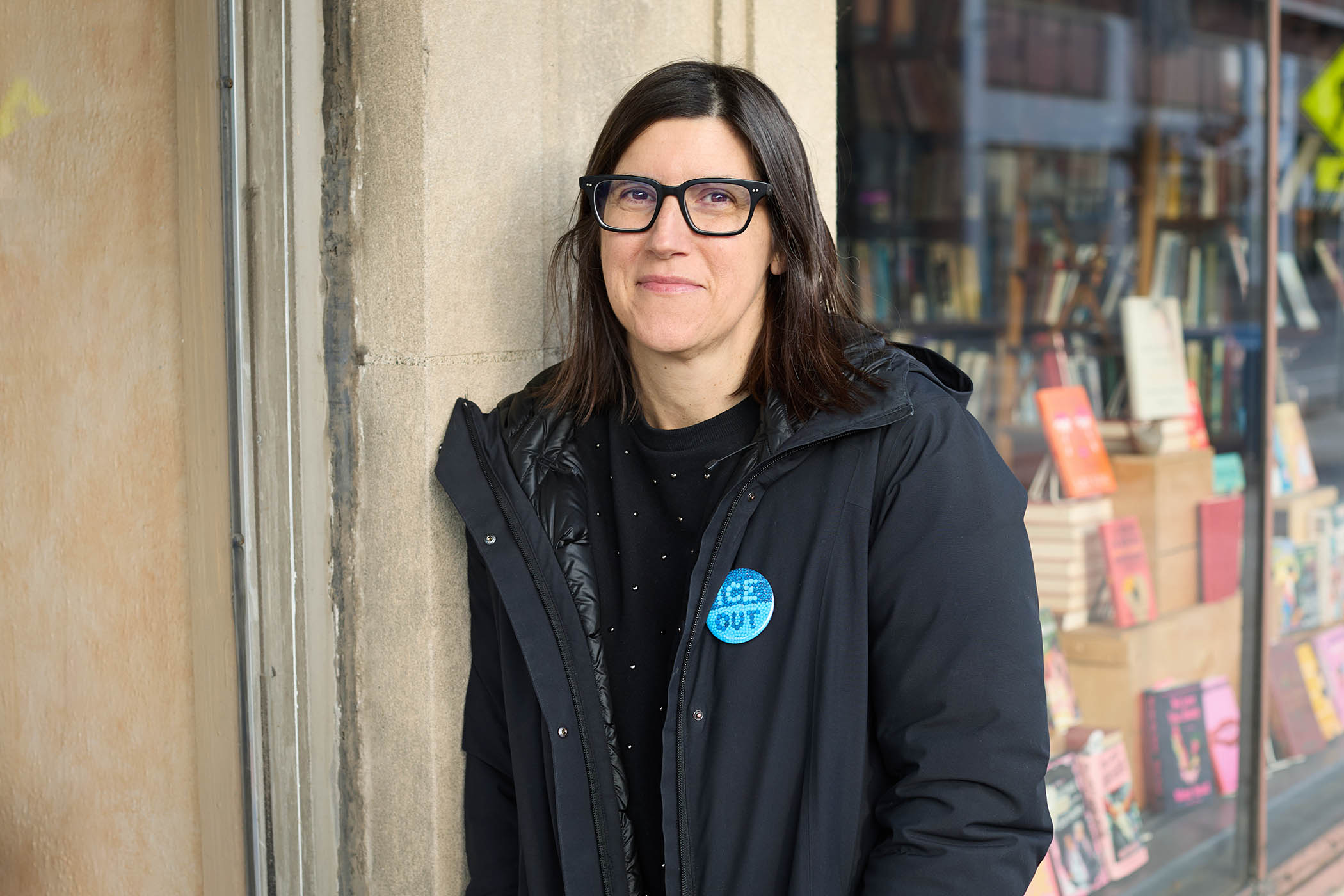
When a huge protest came to Minneapolis in January, the novelist Curtis Sittenfeld couldn’t decide if she would go. She felt strongly about what was happening in her city: Donald Trump’s brutal programme of mass arrests of immigrants, and the killing of Renée Good by a US Immigration and Customs Enforcement (ICE) officer. But on that day, wind chills were reaching almost -40C. She heard that officers would be using tear gas. She worried she might get frostbite. Then she had a realisation. Almost every day, in any temperature, she goes for a walk. “I thought to myself, I’m a middle-aged white woman who has an enormous amount of cold-weather clothing. I’ve been training for this! I have no excuse not to go.”
She is glad she went. But, she explains, “if you see images of people protesting in Minnesota, it might seem like people are fearless. I don’t think that’s true… People are, at times, working out their fear, figuring out what to do.”
Sittenfeld, 50, is speaking to me from her office at home in Minneapolis, where she has lived since 2018 with her family (she has two daughters, and in January announced that she is now divorced). “I feel like I have a writer self, and then I have a self self,” she tells me. “It’s almost like you’re interacting with both of them.” It’s late morning and, at -1C (“pretty warm here”), lightly snowing. She is wearing a black T-shirt and a grey Patagonia fleece, and has spent the morning working on her latest book (her 10th – and her eighth novel), about “middle-aged people going on journeys and thinking about their lives and talking about their lives”.
Middle age is a theme, too, of her latest collection, Show Don’t Tell. Its 12 stories mostly revolve around intelligent, liberal, middle-aged Midwestern women at moments of change or conflict. “It’s a really rich, interesting time of life,” she says. “You have so much to look forward to going from being 40 to 50.” Several stories touch on points of contact between ordinary people who are politically polarised or socially segregated. In A for Alone, an artist grapples with the absurdity of “the Mike Pence rule” (based on the former US vice-president’s claim that he would never dine alone with a woman who isn’t his wife) by beginning a project in which she invites men she knows for dinner. In White Women LOL a woman finds herself going viral locally for a thoughtlessly racist interaction at a friend’s birthday party. In The Marriage Clock, a high-powered film producer visits the conservative author of a marital self-help book to persuade him to allow a gay couple to feature in the screen adaptation.
‘People of colour and white people are living two different experiences in Minnesota’
‘People of colour and white people are living two different experiences in Minnesota’
“I think most Americans are conscious of how politically polarised the country is,” Sittenfeld says. “People put each other in categories, or – I’m guilty of this – might see someone as being largely defined by who they voted for. I don’t know that that would have been as true in the past; I think it’s become more true every year for the last 25 years, since the 2000 election.”
Sittenfeld describes the ICE crackdown as “surreal” and “disturbing”. “Immigrants are being abducted from their jobs, from their houses, from their cars. It’s a violation of the law. It’s a violation of human decency.” It’s not just happening in Minneapolis, but across the whole state. “There are ICE agents in rural areas, in small towns, and I think increasingly in the suburbs.” The protests are, she says, “an illustration of how interconnected the city is”, thanks to the local networks set up in the wake of the killing of George Floyd in Minneapolis in 2020.
Sittenfeld is conscious that “by design, people of colour and white people are living two different experiences in Minnesota… For some families the focus is on staying safe. White people have more of a luxury of asking: how will I engage?” Still, she wonders, “what is my responsibility to my community?” She has recently donated to local causes, attended protests and spoken at local writers’ events that raise money to protect immigrants in the state. She feels “grateful that people are standing up and saying: this thing that’s wrong is wrong”.
Sittenfeld is a rare author who has written everything from hefty political fiction to romance novels. She has written two novels about political wives – American Wife, based on the life of Laura Bush, and Rodham, imagining Hillary Clinton’s life had she not married Bill. (“I do not anticipate writing a novel about Melania,” she says dryly.) Her 2023 book, Romantic Comedy, a witty love story about a pop star and a comedy writer falling for each other during the pandemic, is being made into a film by Reese Witherspoon’s production company.
Newsletters
Choose the newsletters you want to receive
View more
For information about how The Observer protects your data, read our Privacy Policy
Her masterful, beloved first novel, Prep, about a teenage girl at an elite boarding school, was a surprise bestseller: “I had this really sweet, special, beautiful experience. I was 29 and I still feel incredibly lucky about that.” All of her subsequent books have been commercial successes. “A lot more writers have one very successful book, rather than multiple successful books.” Having been optioned more than four times over the last 20 years, she tells me that Prep is now finally being made into a TV series by Netflix, adapted by the Scottish screenwriter Nicole Taylor, who was behind David Nicholls’s One Day for the platform. “I thought, can a person who’s not American pull this off?” Sittenfeld says. “And she pulled it off really beautifully. I read a pilot script, and I was very impressed. And I would not say that if it were not true – I just wouldn’t say anything at all.”
Despite her range and dexterity, Sittenfeld is often described as a writer of “women’s fiction”. “I often joke that I have so few male readers that I know them by name. There’s like seven of them. Then all these men will reach out like, ‘I’ve actually read your books.’ And I’m like, ‘Yeah, I know, you were one of the seven!’”
In a winking aside in Show Don’t Tell, a writer observes that “women’s fiction” is “an actual term used by both publishers and bookstores” that “means something only slightly different from ‘gives off the vibe of ten-year-old girls at a slumber party’”.
I ask if Sittenfeld feels limited by the phrase. “The term makes me roll my eyes,” she says. “There are always things to complain about, and I would even say I, at times, enjoy complaining.” She smiles. “But also I do feel like the world is burning… So who cares?”