
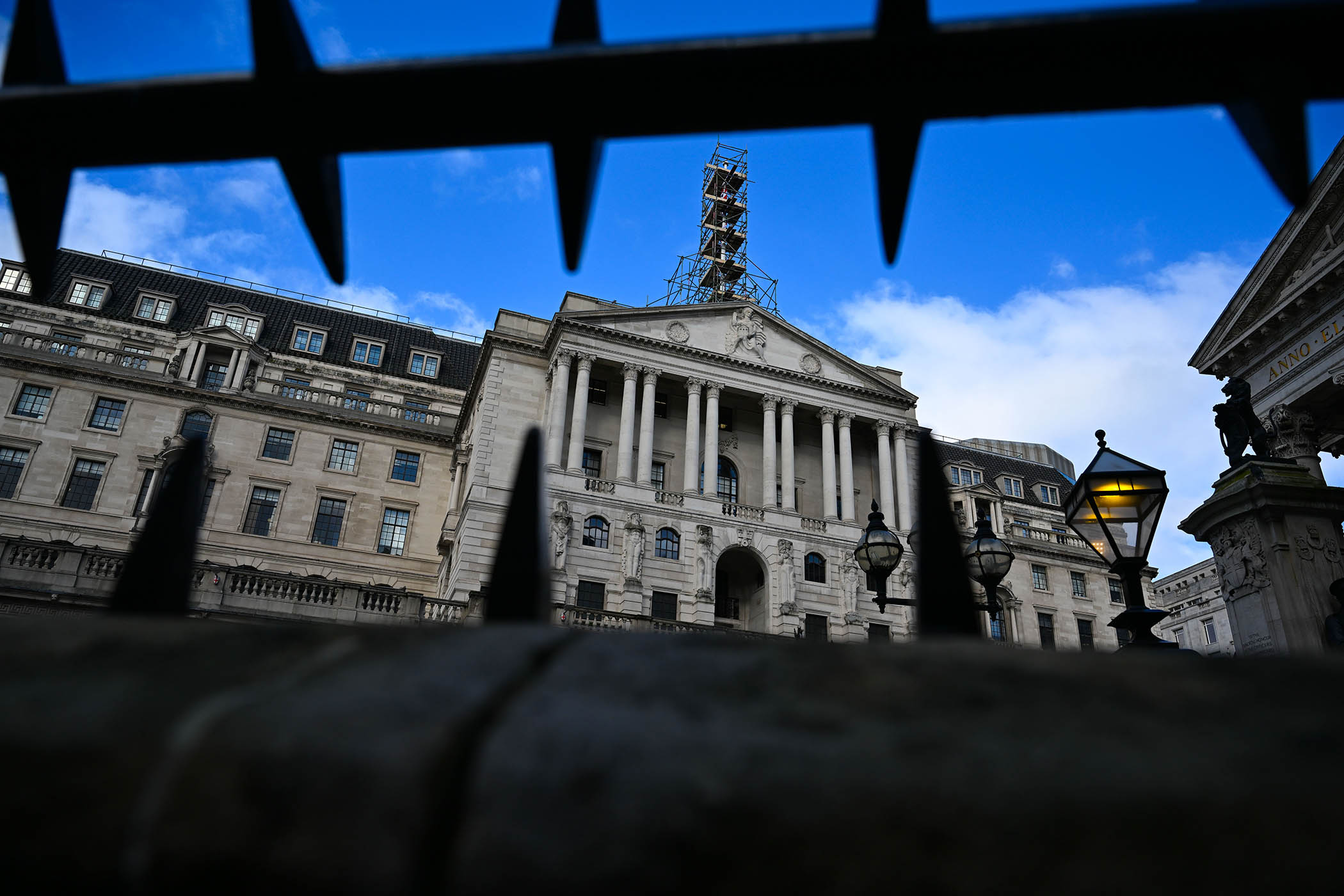
The UK media industry faces an existential crisis. Ad revenue is booming, up by over 8% in 2025. Online search and social media account for 83% of that, with television, radio, newspapers and magazines all slumping. According to the regulator Ofcom’s July media nations report, the healthiest traditional medium was printed books – read by 53% of 15 to 24-year-olds, while live TV attracted fewer than half of them.
An Ofcom report that same month warned British public service media were “fighting to be seen and heard” and faced “fundamental financial challenges”, and that immediate action was needed as “time is running out to save this pillar of UK culture and way of life”.
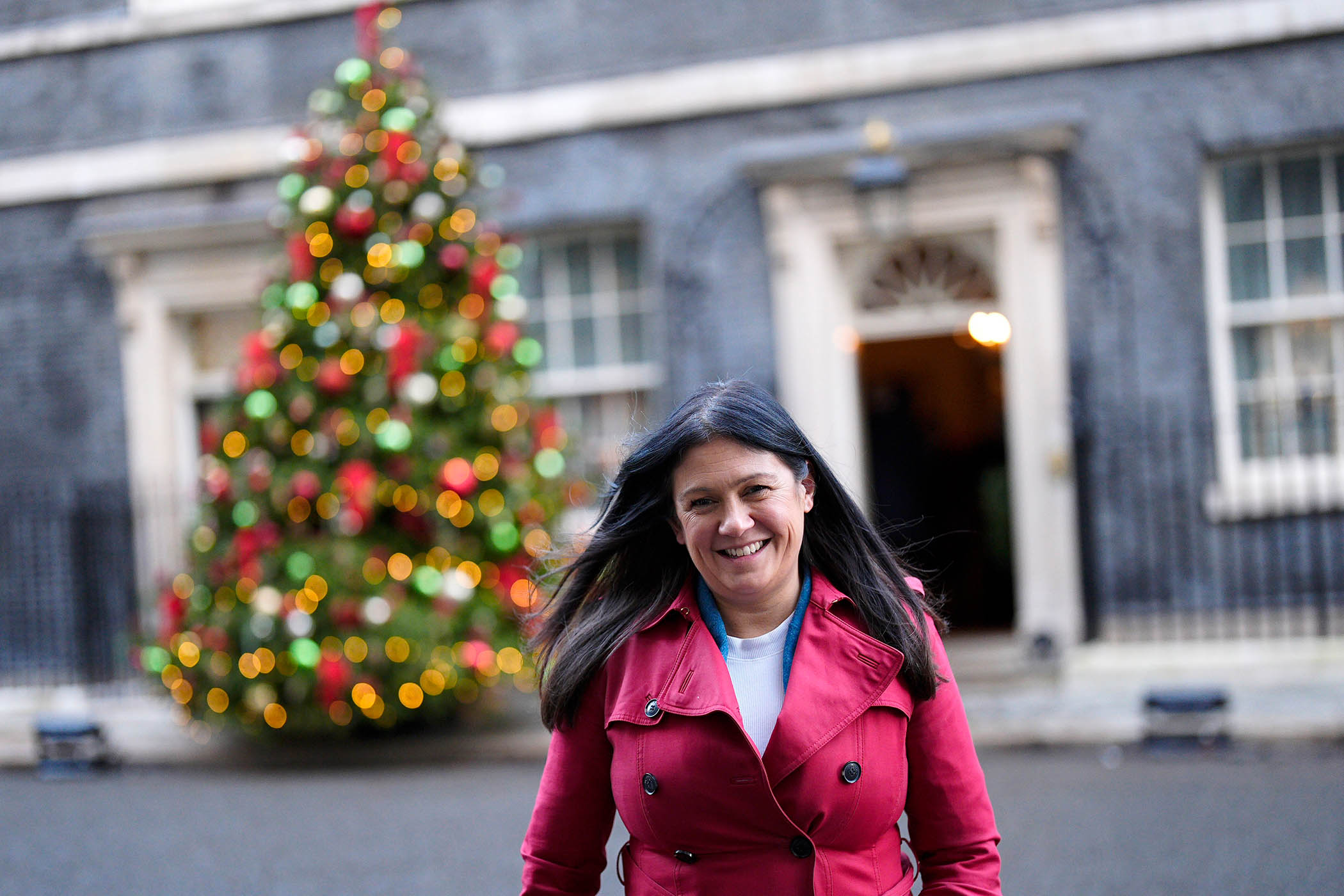
This is the landscape that Lisa Nandy, secretary of state for culture, media and sport, must marshal. She will decide on the Daily Mail’s bid for the Daily Telegraph, and may also oversee Sky’s bid for ITV. The decisions she makes over the next few years are some of the most consequential any culture secretary has faced for decades.
We speak on the day she launched the green paper that will shape the next BBC charter. It is also the day Donald Trump announced that he was suing the corporation for $10bn over a 2024 episode of Panorama in which his 6 January speech was edited in a way that, according to the BBC’s subsequent apology, gave “the mistaken impression that President Trump had made a direct call for violent action”. Yet Nandy seems remarkably hopeful.
When it comes to Trump, she suggests that time is up for the BBC board’s political appointees. “The political appointments to the board have undermined the sense of independence and trust from the public,” she says. “My job is to make sure that the BBC remains independent, remains free from political interference, but is far more accountable to the public.”
The Panorama edit sparked uproar thanks to political board appointee Robbie Gibb – a BBC board member with links to the Conservative party – who amplified an internal report, leading to the resignations of the director general, Tim Davie, and BBC News chief executive Deborah Turness.
Nandy won’t be drawn on the Daily Mail or Sky bids as she has a quasi-judicial role in those mergers – and often hedges her bets. Underpinning our conversation is what could be a radical restructuring of the media. She wants a “timely” end to uncertainty regarding the Telegraph and is deciding whether to refer the deal for scrutiny by regulators. She wants pluralism at the heart of UK media but is wary of Ofcom’s recent request to regulate any and all news providers. Central to her strategy is the BBC.
“Although the BBC has made mistakes in a number of areas over recent years, it remains one of the most important institutions in our country, alongside the National Health Service,” she says. “While the NHS is responsible for the health of our people, the BBC is responsible for the cultural health of our nation.”
She considers the corporation central in the fight against disinformation. “We’re at a crossroads about the sort of country that we want to live in,” she says. “Do we want one where people can’t trust what they see and hear, and lose faith in one another, or to build a vibrant national conversation where people see themselves and their lives reflected?”
‘We’ve had 17 men in a row as BBC director general. Many of the candidates considered to be frontrunners are women’
‘We’ve had 17 men in a row as BBC director general. Many of the candidates considered to be frontrunners are women’
Lisa Nandy
The BBC is still the most trusted source of news in the UK, she points out, and in the US it is the second, behind the Weather Channel. The World Service reaches 64 million people in 20 of the world’s most fragile states. “If the BBC didn’t exist right now, we would be trying to invent it.”
Newsletters
Choose the newsletters you want to receive
View more
For information about how The Observer protects your data, read our Privacy Policy
This green paper is open to public discussion until March 2026 and covers new forms of funding, support for public service and local print media, development of talent in the nations and regions on a far wider scale, and increasing collaboration with the likes of YouTube. Separately, Nandy would also like to see a female director general of the BBC.
“We've had 17 men in a row, I think it’s difficult to argue that there’s never been a woman good enough,” she points out. “Obviously the appointment is for the chair and the board, but I think the BBC is very alive to that. Many of the candidates considered to be frontrunners are women, so I think there’s every possibility. But,” she adds hastily,”it’s not for me to say.”
While there has been speculation that the BBC could adopt an advertising model, Nandy is wary. “There are serious concerns about the impact on the commercial public service broadcasters, and on the BBC itself,” she explains. “It’s one of the few shared civic spaces that we still have that can provide critical moments where the whole nation comes together.”
Nandy grew up in Manchester and her mother and stepfather worked on Granada’s World in Action. “Apologies, we were an ITV family,” she says. “But when I was growing up, the nation used to stop at 7.30 on weekdays to watch Coronation Street. Those things don’t exist in many places any more, but once you start moving to subscription and advertising, those things become weaker.”
The only thing she has absolutely ruled out when it comes to funding is general taxation because it means political oversight of the BBC “that we don't want to expose it to”.
Conversely, as commercial broadcasters struggle with falling ad revenue, she is prepared to consider some sort of BBC-Channel 4 consolidation, an idea mooted by a range of voices, including Phil Redmond, creator of Hollyoaks, and culture minister Ian Murray. However, Nandy is cautious.
“It’s not been particularly thought-through, but we are open to those conversations,” she says. Her father, the Marxist academic and early race relations chief Dipak Nandy, was a member of the Annan committee that created Channel 4 in the early 1980s, and she’s had discussions with the recently appointed chief executive Priya Dogra about the future of the channel. “Channel 4 was established to fill a really important gap in our public service broadcasting ecosystem, and I strongly believe that it still plays that essential role today,” she says. “What form it takes and how it interacts with other public service broadcasters is obviously up for discussion.”
Every government department has been charged with creating growth. The green paper sees the BBC’s footprint in every nation and region as an asset. Major streamers are attracted by the skills and talent underpinned by the BBC: she points to projects such as Digbeth Loc in Birmingham and Media City in Salford, which provide opportunities for “young people from towns like mine in Wigan to have careers in broadcasting. It helps diversify an industry that is appallingly London-centric, overwhelmingly middle and upper class and has very poor diversity across the board.”
She is also considering whether, rather than competing with regional outlets such as the Manchester Evening News and Yorkshire Post, the BBC could support local print media outlets.
Separately, under the Media Act 2024, she has charged Ofcom with creating a video-on-demand code. Three in four UK households use a subscription streamer, but Disney+ and Amazon Prime Video have light-touch regulation while Netflix and Apple TV+ are uploaded from overseas and not regulated at all. The new code will level the rules between streamers and traditional broadcasters, with secondary legislation in 2026.
Nandy wasn’t expecting her role at the Department for Culture, Media and Sport, but at the 2024 election Labour’s much admired shadow secretary of state, Thangam Debbonaire, lost to the Green co-leader Carla Denyer. Some observers thought that Nandy took a little time to get up to speed. “But recently she’s hit her stride,” according to one city analyst. “I was at a lunch a couple of weeks ago where our predictions for 2026 included Lisa Nandy as prime minister.”
Photograph by Aaron Chown/PA Wire