
Portrait by Julia Bostock for The Observer
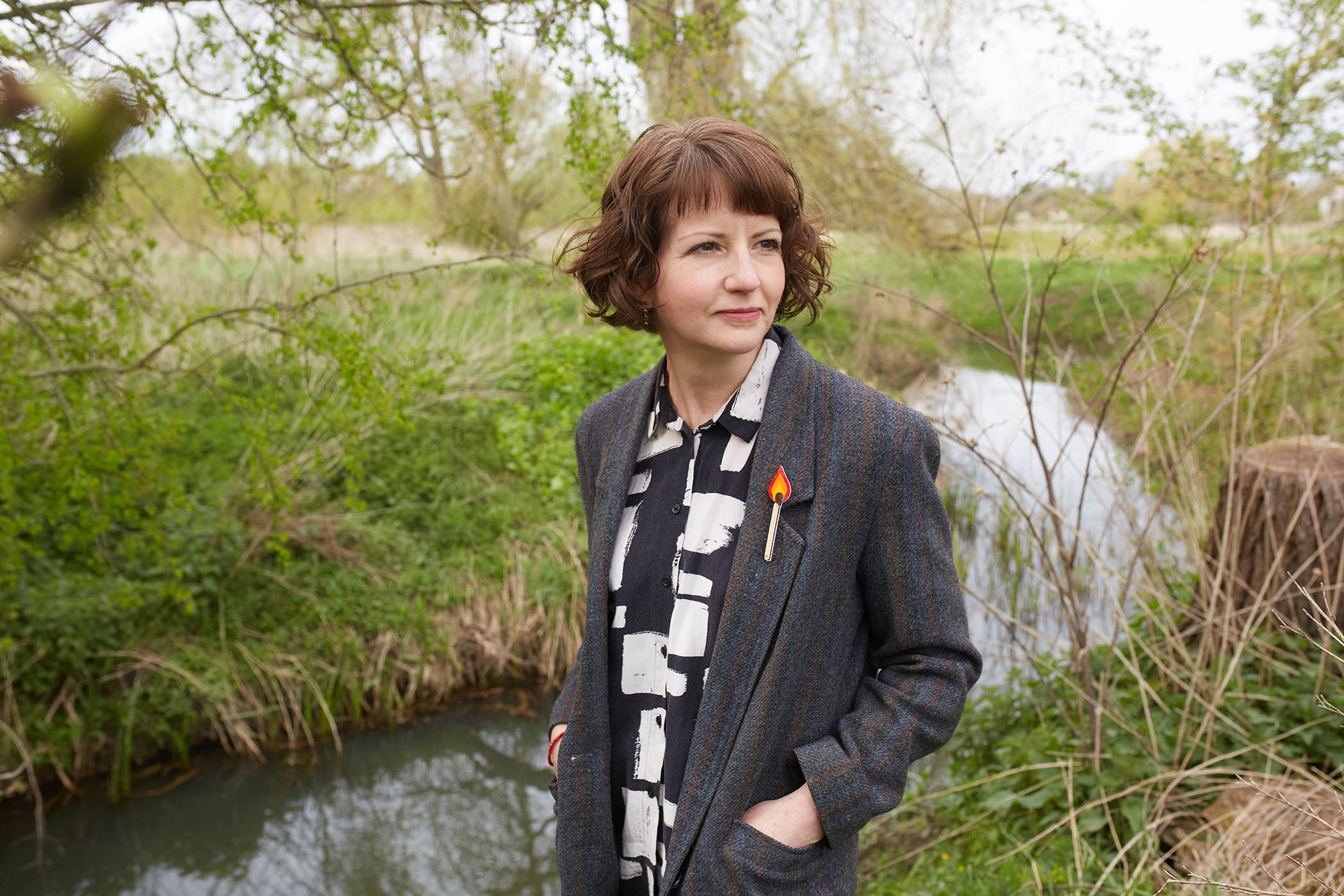
I’ve never been to Melissa Harrison’s Suffolk village before, but it seems immediately familiar: I almost feel I recognise her cottage opposite the church with its gently sloping graveyard. In common with many others, I was an avid listener of her podcast, The Stubborn Light of Things, which she began in the pandemic spring of 2020 and continued weekly until that autumn as a way of bringing a sense of connection to nature to those otherwise unable to access it. Each episode offered an audio diary, as Harrison described her walks through the village and surrounding countryside to explore the local wildlife and history. Listeners found themselves drawn into the details of the changing seasons and the creatures whose lives play out alongside the village’s human inhabitants.
Village life is central to her fiction too. Her 2018 novel, All Among the Barley, is set in East Anglia in the early 1930s, at a point when rural life in England was poised on the cusp of irrevocable change, and it examines how romanticised ideas of a bucolic English past can be appropriated by the far right. Her new novel, The Given World, is set in the present, but is similarly concerned with themes of change and loss. The fictional village of Lower Eodham (its location is left vague, though she is adamant that it is not Suffolk) provides the backdrop to a catalogue of quiet disappearances:
“The cuckoo has departed the valley unmated. He will not return next spring. Things don’t end all at once, though, but in stages… The coming winter will be punishing in ways none of the valley’s inhabitants have had to face before, and neither the adult owls nor their chicks will see next spring.”
“I didn’t want to write climate fiction,” Harrison says firmly, when I ask about this aspect of the novel. “People already know the arguments; they’re already scared. I don’t think writing a book that shows what could happen in the next 50 years is actually creating any kind of change, and it can risk being didactic. I’m more interested in bringing forward things that are in the background of people’s minds. One of the things art can do is to act like a kind of seismograph – it’s the pencil on the piece of paper that shows the movement of tectonic plates that everyone’s trying not to be aware of. The moment you’re trying to control the patterns, you’re no longer doing the job.”
Her way of working, she explains, is to “try to almost be the pencil on the paper and see what comes through. With this book, more than any of my others, I wanted to really work with my subconscious, which is very difficult for someone like me: I’m a list-maker and a planner; control is safety to me. But I’ve learned that in my writing, the parts that people find most resonant are the parts that are a bit of a mystery to me. I’ve always felt that I control about a third of a book, my subconscious controls about a third, and the final third the readers bring. So I wanted to let that process play out, but that means trying to kick open the door to your subconscious and then sitting with whatever comes through – and some of that is difficult and lonely and painful. It wasn’t an easy book to write.”
The Given World is an ensemble piece, following the interconnected lives of several characters who span the village’s social strata: from the middle-class second-homers with their Emma Bridgewater-esque vision of country living, to the ageing farmer trying to scrape an income from the little land he has not been forced to sell. Reading the novel, you realise afresh that it’s impossible to write about rural life without involving politics – not only environmental, but also the broader politics of class.
‘I’ve learned that in my writing, the parts that people find most resonant are the parts that are a bit of a mystery to me’
‘I’ve learned that in my writing, the parts that people find most resonant are the parts that are a bit of a mystery to me’
“I’m very interested in class, and how it works,” Harrison says, “because I grew up not really knowing what class we were. We had a house full of books, but we didn’t really have any money. I wasn’t sure where we fitted, and I felt like an outsider in most situations, which is useful for a novelist.”
Harrison, now 51, grew up in Surrey, the youngest of six children. “My dad was an accountant, my mum was born and brought up in what is now Pakistan; she was part of the Anglo-Indian community there.” Her elder siblings, who are all close in age, were raised in India; Harrison, five years younger, was the only one brought up in England. “I remember being teased at school that our house stank of curry, and I had the wrong vocabulary for things – we had a verandah, and a drawing room – and we didn’t fit in a Surrey village.” After studying for an English degree at Oxford, she worked in publishing and magazines, spending 13 years at the dance music magazine Mixmag.
Having described herself as “a lonely child”, it was the club scene in London and Ibiza where she found a sense of belonging: “I think if you’re a child who wasn’t popular at school, and was bullied and didn’t feel accepted, that experience of being in a crowd of strangers who welcome you – it was transformative to me. It changed my way of being in the world for ever and I’m incredibly grateful for those experiences.” When I remark that the rave scene might be an unusual path to becoming a nature writer, she laughs. “Well, it’s all standing in fields, really.”
It was at a low point in her 20s, living in London, that it hit her “like a ton of bricks” that what was missing from her life was that early sense of connection with the natural world. She moved to a rented flat with a garden, got a rescue dog, and during their daily walks on Tooting Common began making herself once more aware of the cycle of the seasons. “I also got a proper SLR camera, and that process of slowing down and putting a frame around things really changed my ability to look closely. Suddenly the world became more fine-grained and textured rather than just background. It did me enormous amounts of good, so my first novel, Clay, was very evangelical – I wanted to share the experience of finding that richness with other people.”
She eventually left London, moving on her own to Suffolk after the end of her marriage in 2017. But she’s cautious about the idea – popular on social media and in certain types of memoir – that nature can be applied like a wellness treatment. “I think we’ve oversimplified something that is very powerful but more complicated,” she says. “It’s not really the case that you can go and ‘do a nature’ and make yourself better. But having a greater depth of connectedness to nature – and we can now measure the extent of that – does predict better mental and physical health, greater life satisfaction scores. And most importantly to me, it predicts better pro-nature behaviours. So people who are more connected to nature become better custodians.”
Since childhood, Harrison has had the sense that she needed to justify her existence: in recent years she has come to the belief that her purpose was helping people connect with the natural world. It’s a vocation she has pursued across various media; in addition to the podcast and her published books (three works of nonfiction, four novels and two children’s books), she has also edited an anthology series about the four seasons, writes a regular Nature Notebook column in the Times and a thriving Substack (Witness Marks), and last year she launched an app, which – she says, laughing – has been a very steep learning curve.
“I had the idea when I was writing Homecoming, which is a guided nature journal. I realised that you can’t just tell people when to go out and look for, say, frogspawn, because in Dorset it might be the end of January, and in Scotland it might be May. I kept thinking, ‘This is an app,’ because an app would know where people are. And partly because I’d made the podcast and people had enjoyed it, I thought, ‘Ooh, I can just make things!’ So I did, and it’s been really hard.”
Newsletters
Choose the newsletters you want to receive
View more
For information about how The Observer protects your data, read our Privacy Policy
Friends invested in the venture, and the result is Encounter, an interactive journal that prompts users to look for seasonal markers based on their location, and allows them to make notes and save photos. The most important aspect of the app, for Harrison, is that it should remain free to use. “I’ve found that I make most of my best work for free,” she says. “Like the podcast – I made that as a gift, and I think that’s why people took it to their hearts. I don’t think that would have happened if it had had adverts for fast food in the middle of it. But it’s hard with the app – we do need someone to come in and help us to keep it going. You can put that in,” she adds, demonstrating that she’s not entirely without commercial nous.
The next few months will be spent promoting The Given World, a part of the job she has mixed feelings about. “It means turning myself into a different kind of person for a while,” she says, choosing her words carefully. “I’m now selling a product, and that’s not the same kind of person that can sit down and write a book. I know that sounds very precious, and I’m grateful for the opportunity to meet readers and talk about what I’ve made, but it means that I won’t be able to start writing creatively again until this part is done, so it’s bittersweet.”
She takes me on a walk around the village, pointing out landmarks from the podcast, features of the landscape that found their way into the novel, and identifying plants and bird calls as we pass. When I express admiration for the breadth of her self-taught knowledge, she waves it away. “Anyone can do it. All it takes is curiosity and the willingness to look things up. My knowledge is pretty basic, but I think I do have the journalist’s ability to be a bridge. I can remember what it’s like to be a beginner, and that helps me to invite people on to this path that I’ve found so powerful without using words like taxon or genus.”
Authenticity is a term that can feel worn from overuse, but it strikes me that Harrison’s great gift, across all her work, is a genuine care for her subject matter and a desire to communicate something meaningful to her audience. The Given World may have been painful to produce, but it feels like a book that will have lasting value.
The Given World is published by Hutchinson Heinemann (£18.99). Order a copy from The Observer Shop for £16.14. Delivery charges may apply