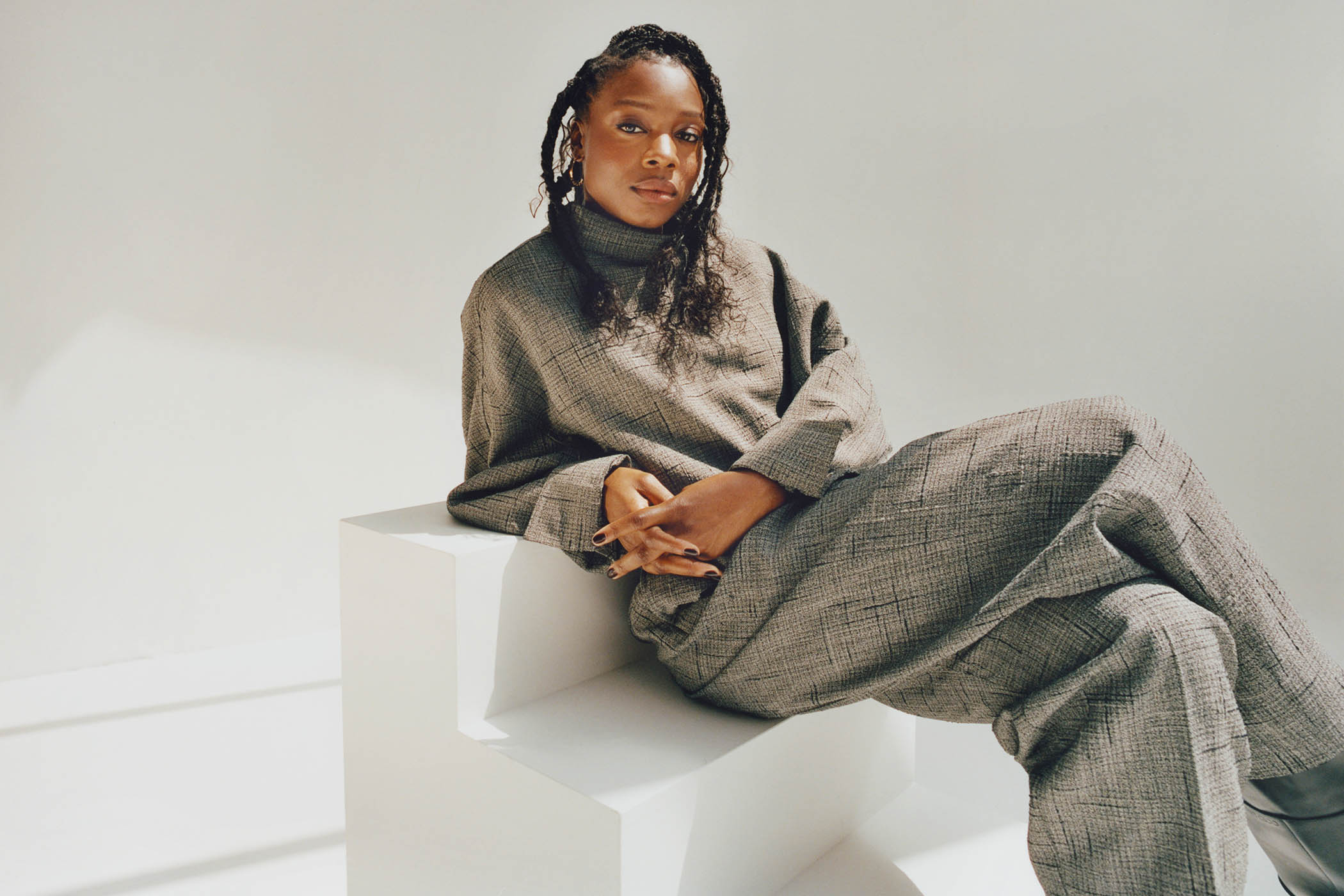
Nia DaCosta, 36, was born and raised in New York City, and studied film-making at NYU, before completing a master’s at London’s Central School of Speech and Drama. She made her feature directing debut in 2018 with the independent crime drama Little Woods, collaborated with writer-producer Jordan Peele on 2021’s inventive horror sequel Candyman and, in 2023, became the first black woman to direct a Marvel Studios film with The Marvels. After changing pace with last year’s updated Ibsen interpretation Hedda, she’s back on franchise turf with 28 Years Later: The Bone Temple, a grisly fourth entry in the post-apocalyptic horror series. She lives in north London.
From Marvel to Hedda to 28 Years Later is quite the stylistic transition. Do you feel a kind of whiplash going between these projects?
If I do, it’s the thing I love. I just feel drawn to different worlds and different spaces. I knew, when I was starting out, that I wanted to work in many genres and I didn’t want to be pigeonholed. So I go where I feel the passion: the franchises I’ve worked on have always been connected to things from my childhood that I loved, like Candyman, Marvel, 28 Days Later. I think now I’m going to move more strictly into original work, but it’s been really fun.
So you were a 28 Days Later nerd going into this assignment?
Oh, yeah. You know how before streaming, you just watched the DVDs and VHS tapes you had in your house over and over again? I was at boarding school, so in our common room we watched whatever was there. I watched 28 Days Later over and over when I was 13 years old, and I thought it was amazing. I was still learning what film-making was; I couldn’t articulate then what I was so drawn to, but I knew it was so much more than just a scary movie. It also felt really human. So when I got [Alex Garland’s] script for The Bone Temple, I could see the same thing: it’s horror, but humanist.
What were the other films that made you want to be a film-maker?
The new American cinema of the 1970s. It was Francis Ford Coppola who really started it for me. Apocalypse Now, when I was in high school, was a huge turning point. But also Elizabeth – oh my God, I thought Cate Blanchett was just, just … yeah.
What made you want to adapt Hedda Gabler?
It’s funny, because I actually wrote Hedda just after I did Little Woods. No one asked me to write it. I was just really in love with the play ever since around six years before, when I read it for the first time while I was studying theatre in London. Hedda is the kind of complex character I was dying to dig into more. Then, when I was in the last year and a half of the Marvel film, it became really clear that that’s what I needed to do next.
You’ve been frank about your dissatisfaction with The Marvels, which was a protracted production. How do you look back on your experience of working with Disney?
I went in with pretty clear eyes, but it was still very different from what I thought it would be. It was helpful to understand a different kind of process and I could take from it what worked well and leave behind what did not work for me. As directors, we have so much responsibility to make sure the thing is good, but I realised, OK, the way I take responsibility is in these specific ways. And if I’m not allowed to do those things, then I can’t; then who’s in charge of making sure it’s good? So now I go into everything and say, here are my parameters. If they can’t be met, then that’s totally fine. Other directors are great at that. I’m not one of them.
With Candyman you were the first black female director to top the US box office. With The Marvels you were the first black woman to direct a Marvel film. Do these firsts mean anything to you?
It’s more surprising than anything else, because there have been black women before me. I thought Ava DuVernay [Selma] had got there at the box office. I thought Gina Prince-Bythewood [The Woman King] had got there. That wasn’t even a thing I was tracking until a journalist told me. Same with Marvel: when I got the job, I spoke to Chloé Zhao, who’s a Chinese woman. I spoke to Ryan Coogler, who’s a black man. I talked to Taika Waititi, who is Maori and Jewish. So I didn’t feel that sense of scarcity, just because the minorities weren’t exactly my kind of minority. The meaning of it isn’t really about me. I just happen to be a fact on a website.
What first brought you to the UK?
The very first time I came here I was 13 and I was visiting family in Birmingham, and I always wanted to come back. I just really liked it here. So when I decided to get a master’s, I knew I wanted it to go abroad, and I knew I wanted to go to a drama school because I wanted to work with actors. So the options came down to London. Then I just decided to stay.
As a born-and-bred New Yorker, what’s the appeal of London?
It’s slower, it’s greener, and I’ve softened because of it. New Yorkers are insane, but at first I thought people in London were nuts. I was like, why are things closed at 4pm on a Sunday? Why can’t I get exactly whatever I want, whenever I want it? But you adjust: you accept that’s just what it is, and that actually made me a much calmer person. I also think my sense of ambition really shifted when I moved here, which was really good. I began to think about how my work can bring me joy as opposed to just success – as a means to an end, to good box office or whatever. I love New York City. I still think it’s the best city in the world. But London right now is definitely home.
28 Years Later: The Bone Temple is released on 14 January
Photograph by Tom Craig
Newsletters
Choose the newsletters you want to receive
View more
For information about how The Observer protects your data, read our Privacy Policy