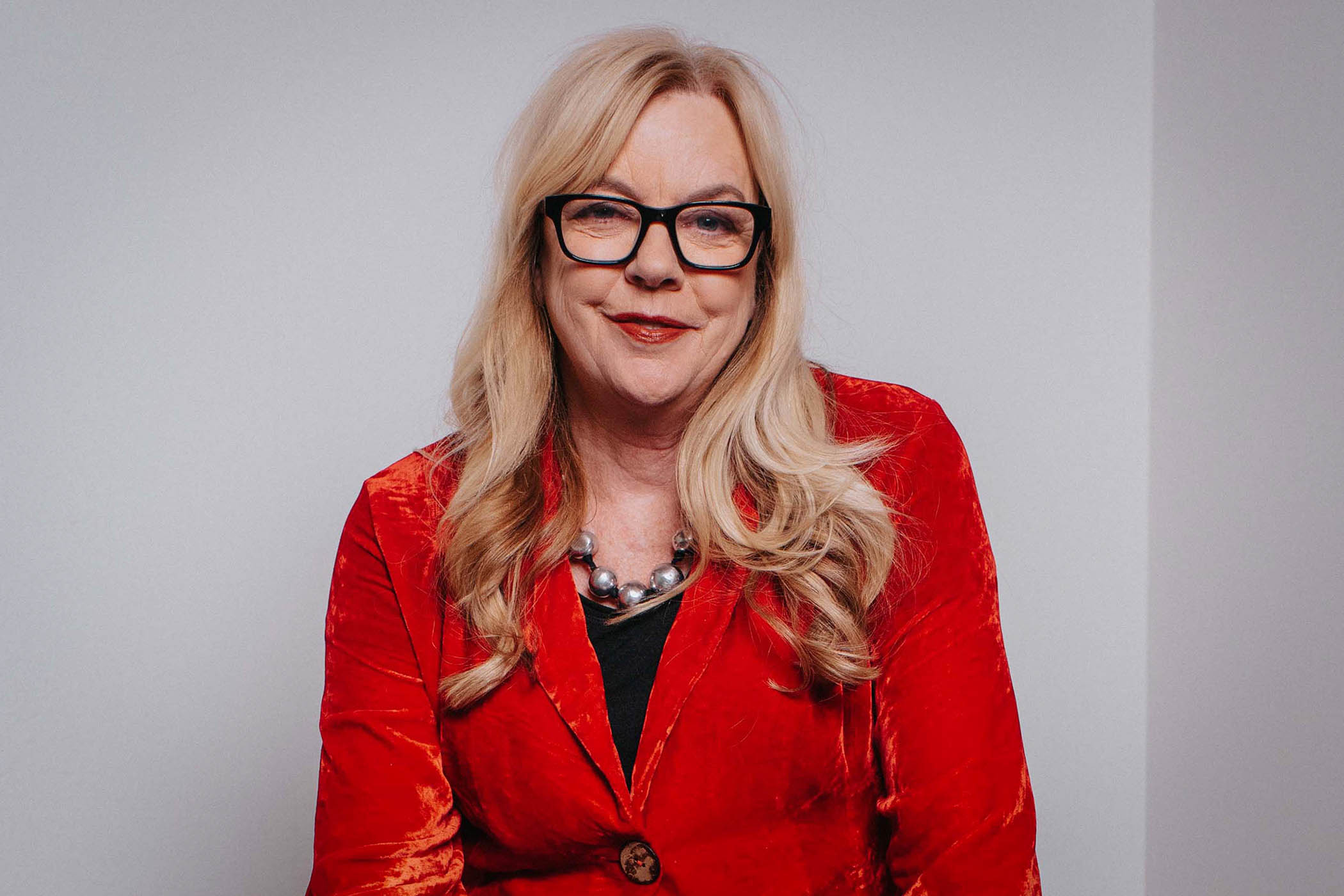

The Australian playwright Suzie Miller receives regular requests to direct her laser focus towards fresh social ills. After skewering the sexist flaws baked into the legal attitude to rape in her Olivier award-winning play Prima Facie, Miller’s follow-up, Inter Alia, showed how even the most judicious of minds can be unseated by family calamity. Starring Rosamund Pike as a judge torn apart by conflicting duties, it is a contender to pick up two Oliviers on Sunday and in March transferred to Wyndham’s theatre in the West End after last year’s successful run at the National Theatre.
Perhaps in future Miller may look at the laws on stalking? Or misogyny in legal chambers? The next target in her sights, though, is the jury system. “I’m looking at what jurors bring into the jury room with them as the third part of my legal trilogy,” she tells me. “You have a slice of 12 different lives there. I want to see how they come together to form a conclusion, with different kinds of intellectual capacity, political leanings, race, gender – all sorts of things.”
Miller’s skill lies in making a smouldering cultural issue burst into flames in real time on stage. I first witnessed this when, having missed Jodie Comer’s sell-out solo performance in Prima Facie in London, I ducked out of part of a New York work trip and ran through the rain to catch her breathtaking incarnation on Broadway. Pike, as Judge Jessica Parks, is pulling off a similar trick, this time supported by a small cast.
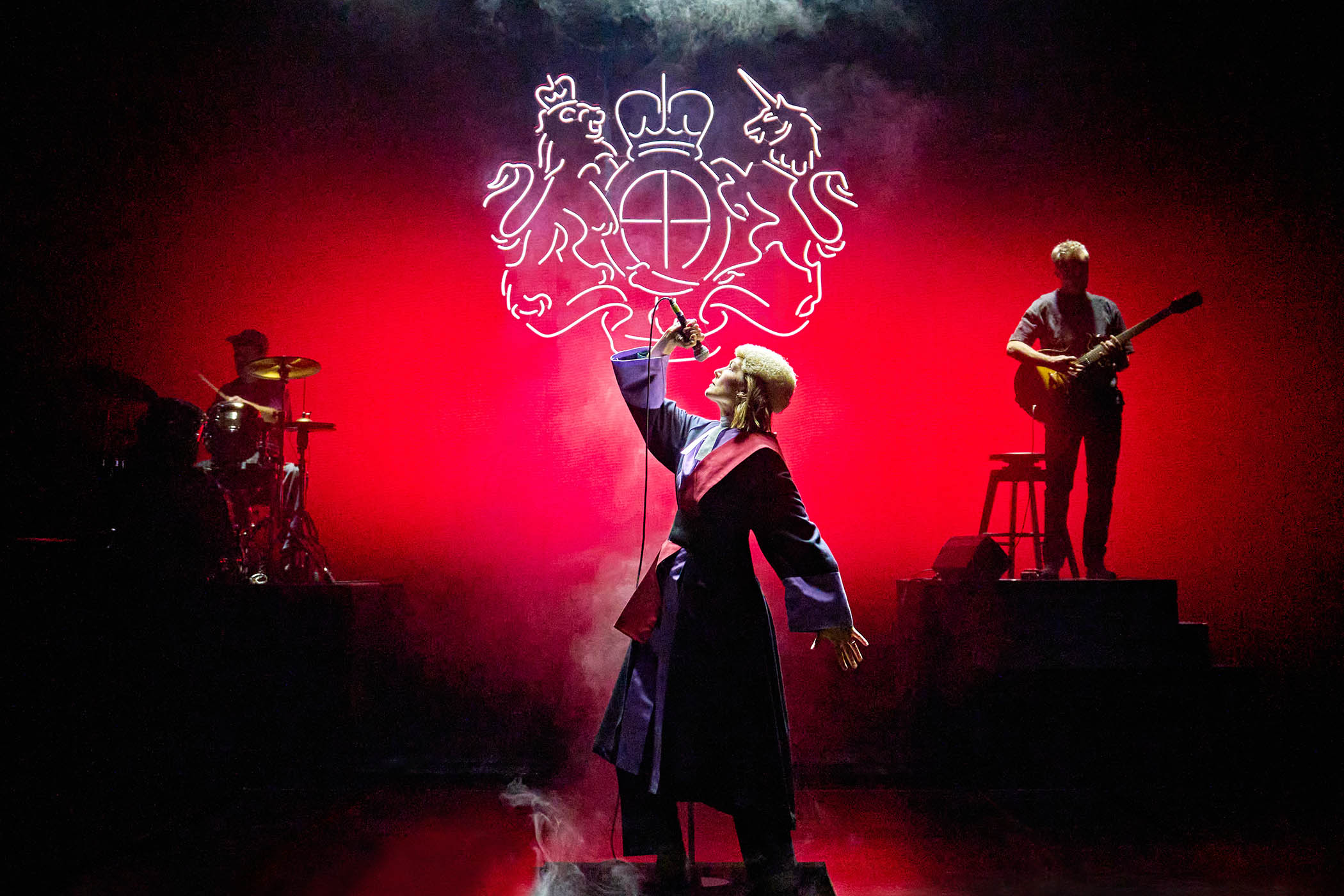
‘I aim to be a conversation starter’: Rosamund Pike stars, at the National Theatre
Miller has been delighted to see her plays applauded in London – “the gathering place for the best playwrights in the world”. She says: “I was so thrilled when I won the Olivier last time. I just remember the shock of walking up to that stage, thinking how extraordinary it was that this could happen to a one-woman play about rape. It gives me faith in human nature.” She realised, she adds, that she was not merely “writing alone in a dark room”.
A love of theatre came late to Miller, 61, who first trained and worked as a lawyer. Missing out on encounters with the stage during her childhood, she remembers instead watching that early spark flicker in her children as they sat spellbound by the 2010 National Theatre of Scotland production of Peter Pan at the Barbican: “I saw it happen. My son then recreated the design in a 3D model at home. Theatre really is a gateway to the imagination.”
In her 30s, Miller applied to study playwriting at drama school in Australia and found sexism just as embedded there as it was in the law. “I was asked why I hadn’t been to the theatre recently. I explained I had a two-month-old baby after a difficult pregnancy. They told me they hoped that didn’t mean I would be late for class. I got in, which was all well and good, but it silenced me talking about my baby there. I never told anyone and I was the only person on time for every single class.”
Theatre, Miller understood, was a good way to highlight unfairness without giving direct personal testimony. “Everything I write has got a touch of my lived life, or of my observations. Even when I was a defence lawyer, what I presented to a judge would very much tell the story of the person before them – my client. I love that people also see themselves in the plays and that they can find humour in them as well. Because it can be pretty hard going, tackling such significant issues. It’s important that audiences can have moments of eye-rolling. I aim to be a conversation starter.”
In many families, Miller fears, frank conversations are being left to mothers. ‘I wondered, what are men actually doing?’
In many families, Miller fears, frank conversations are being left to mothers. ‘I wondered, what are men actually doing?’
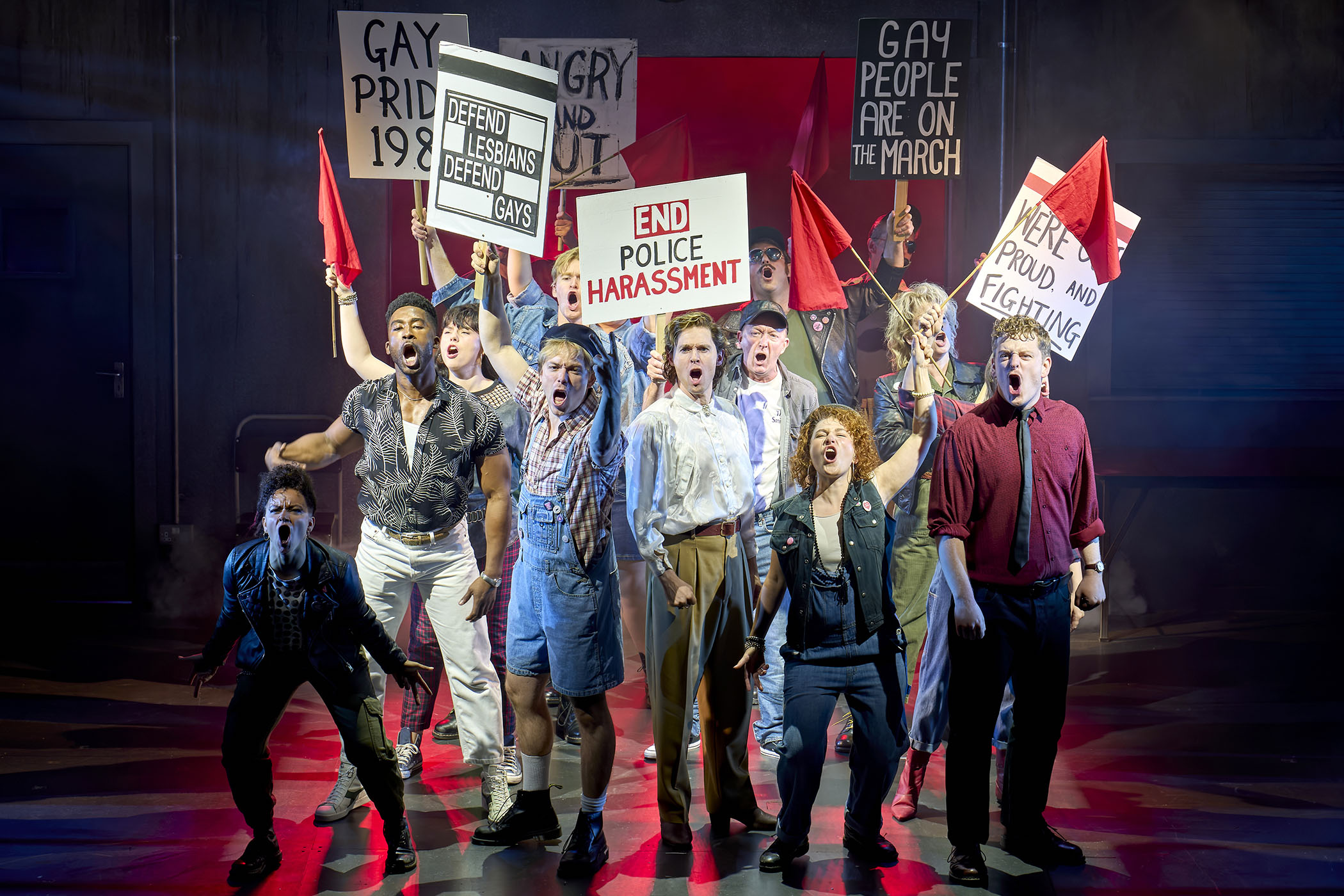
In Inter Alia, Miller turns to men and how they are raised. While the central character is once again a successful working woman, the plot pivots on the destructive influence that gender roles have had on her child. The confusion plaguing many youths is blamed almost squarely on abiding expectations of masculinity.
Arguably, though, Miller goes one further than Jack Thorne’s drama Adolescence by asking bluntly why fathers are not yet talking properly to their sons. “It is interesting to me that the generation of fathers in their late 40s to 60s haven’t talked enough about their emotions and their rejections or sadnesses. We need that. We need them to open up that space, so that boys can also have those conversations without feeling like losers.”
In many families, Miller fears, “these frank conversations” are still left to mothers. “While I was writing Inter Alia, I wondered, what are men actually doing? From what I can gather, most of them talk to young men about their sporting prowess or how many girlfriends they had. They don’t often talk about failing an exam and feeling awful. So boys have these templates of successful, silent men, who all apparently had great prowess with women.”
Newsletters
Choose the newsletters you want to receive
View more
For information about how The Observer protects your data, read our Privacy Policy
A key line in Inter Alia comes when Parks’s husband questions her appointment to the bench. All his performative language of support falls away. “There is a little backlash sometimes when men think that a good job has gone to a woman rather than to a man, simply because they haven’t had many women doing it before. But this is because they’ve always had a supply of average men, each with a sense of entitlement.”
The man who has had to answer to Miller on behalf of all men is her collaborator on both plays, the director Justin Martin. “As well as being a fantastic director, Justin is a man who can give me some insight into how men think,” she says.
Martin tells me it has been his privilege – if at times a little unsettling – to be Miller’s sounding board. “I’m grateful to be a part of the conversation. After all, it’s my people that cause a lot of the problems. As my partner said to me: ‘We women have been wrestling with all this for years. When are you men going to stand up and start wrestling alongside us?’”
Martin was struck by the strength of audiences’ reactions to Prima Facie. “It was courageous, because the entertainment industry wasn’t quite ready to accept it. It was a polemic and there was a sense from some that they weren’t comfortable. But, weirdly, the success of the play has shown that audiences absolutely do want that and need that. Now Inter Alia is a different beast because, while it’s obviously got a polemic to it, it’s also got a knotty problem at the centre.” (Pike’s character is torn between protecting her errant son, or instead following her feminist principles and upholding the law.)
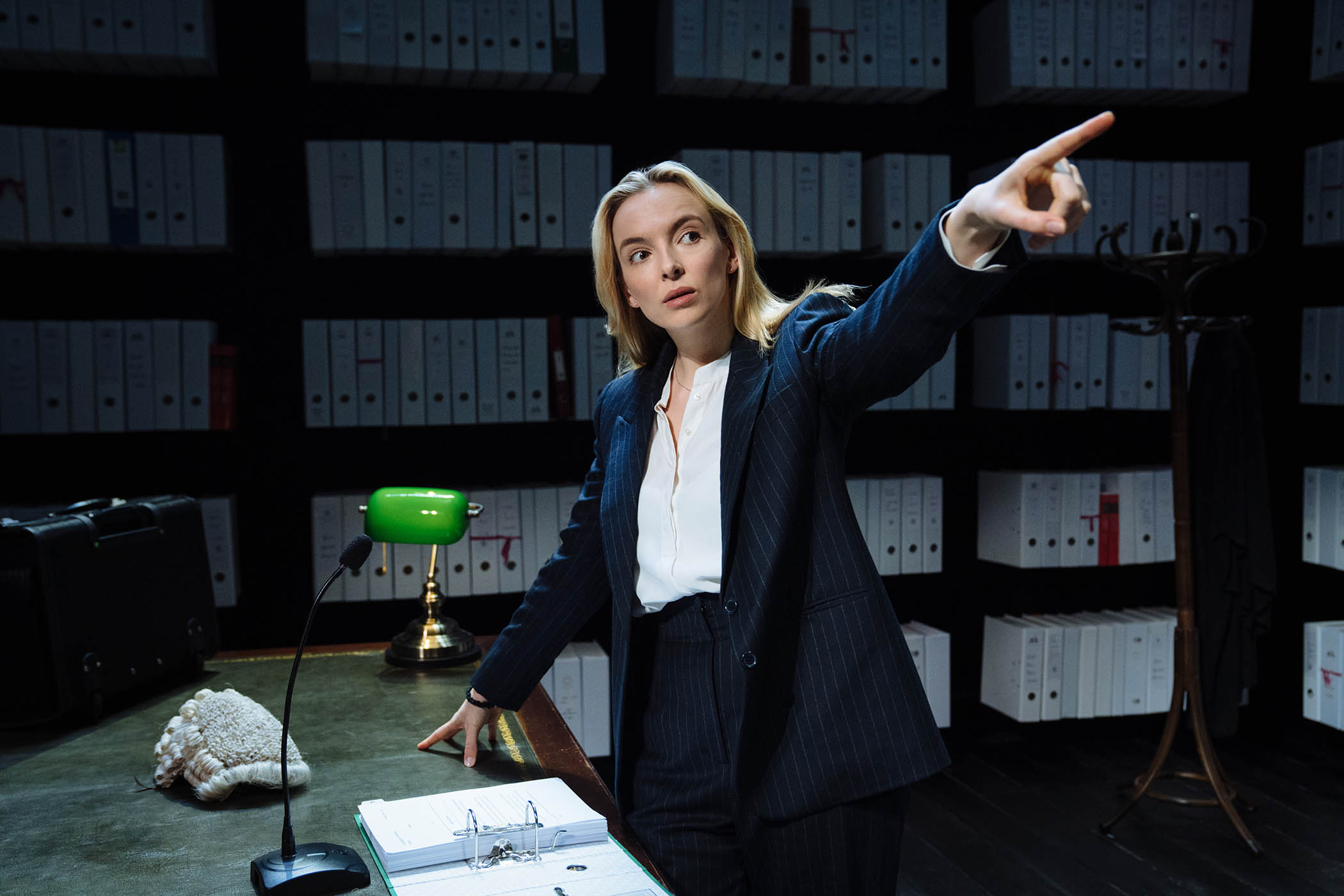
Jodie Comer won an Olivier for her role in Prima Facie
Martin was also taken aback, he says, to be asked why he was directing a second Miller play dealing with sexism and the law: “I thought: ‘Can we really only have one play about these issues?’ There are so many nuanced conversations still to have. It feels exciting to me.”
Both plays featured virtuoso performances, posed huge challenges to their lead actor and demanded a confident dexterity that involves what Martin describes as “an element of circus”. This is the kind of spectacle popular in the West End at the moment, as also seen in Andrew Scott’s solo Vanya or Sarah Snook’s one-woman take on The Picture of Dorian Gray, for which she won an Olivier. “There is a sense that just completing such a play itself is an event,” Martin says.
“When I was writing, I was very aware that there weren’t many new, really juicy roles for women,” Miller adds. “Actors are these amazing creatures and they’re so brave to go out there. Look at Rosamund, who has had a very accomplished career on screen. And then you realise she’s putting it all on the line for my play, which in retrospect, I think, is astonishing. That she’s Olivier-nominated is one of the great joys of my life. Jodie winning it was a landmark moment for me.”
The pace of both plays is fast, and Miller intends this to communicate the amount of activity inside a woman’s head. “When you see a woman working in court, looking calm and contained, beneath that level there’s so much going on. Not only are they managing the workplace, but a whole life outside: the day-to-day running of the household and the emotional load of home.
“Aside from all of that – and I don’t think women are always aware of this – they’re constantly translating the world for their consumption. They walk into a room in the workplace and there’s a group of men, and their inner voice asks: ‘Did I seem cold? Did I look flirtatious?’ There’s so much that women have to carry around.”
Writing a play, Miller says, means she doesn’t have to lecture to make her point. “There’s something about creating empathy in a character. You can show that there’s a lot of unacknowledged things happening under the surface. And once you see it – there’s a line in Prima Facie that expresses this – you can’t unsee it. In theatre, you can really shine a light on something.”
The Observer is proud to be the official media partner of the Olivier Awards with Cunard for the 50th anniversary year
Photographs by James Brickwood/Fairfax/Headpress/Eyevine/Manuel Harlan/Helen Murray