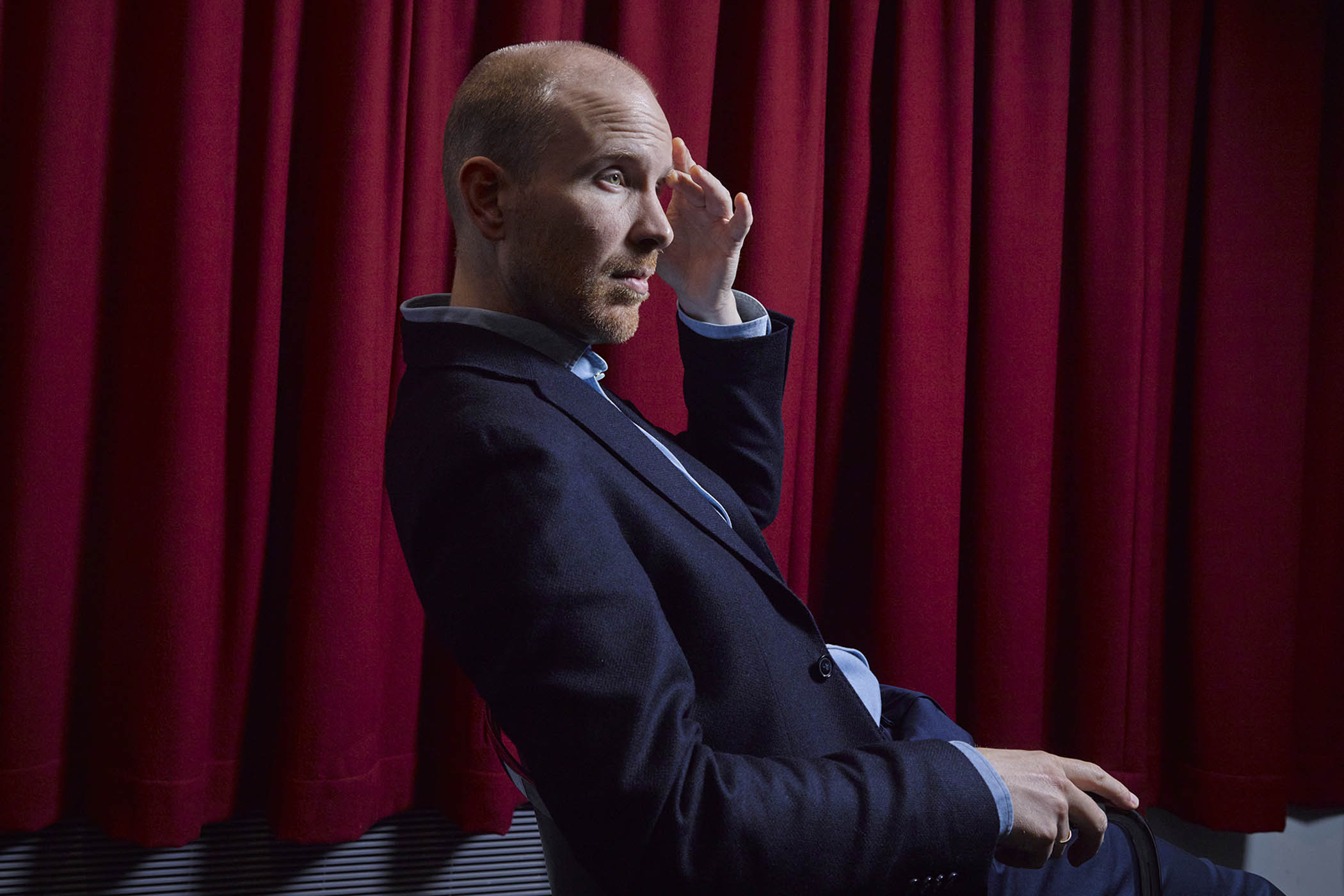



Rutger Bregman, 37, is a Dutch journalist-historian. He is the author of four bestselling books including his latest, Moral Ambition: Stop Wasting Your Talent and Start Making a Difference, which calls for a revolution in social activism and contributions, drawing on the inspirational model laid down by the movement to abolish slavery. His BBC Reith Lectures looked at the same question. He has set up the School for Moral Ambition to help implement his ideas.
In your Reith lecture you quote Theodore Roosevelt, who said people who change history have skin in the game while critics just point out flaws. Isn’t criticism a vital aspect of distinguishing good ideas from bad ones?
I spent a decade in the pundits industry, writing articles and giving talks, and whenever I made a mistake I rarely paid the price for it. I made some predictions that really do not hold up. I thought universal basic income was going to be the big future of the welfare state. That didn’t happen. The thing with the pundits industry is you don’t really get the feedback from reality. This is the big difference with entrepreneurs. If they build something, launch a new product, and it doesn’t work, they go bust. If you have that skin in the game, you learn much more, much quicker, because much more is at stake.
You challenge your readers to ask themselves: what’s the great honour and glory of your life? What’s yours?
I am devoting my life, my career, to building a global movement of ambitious idealists that takes on the most neglected, most pressing issues we face right now as a species. That will be it, changing the course of history, ending the evil of the tobacco industry, hastening the end of factory farming.I honestly think it is possible that if you bring together small groups of really dedicated people who have the right skill sets, and most of all have the perseverance to keep going, then that is entirely doable.
You look at examples from the past of the abolition of slavery, resistance to the Nazis and the civil rights movement. What are today’s equivalents?
I believe that moral progress is not random. I think there’s a pattern. There’s a direction in history here. Abolitionism was the mother of all movements, and it started in Britain. So many of the suffragettes had parents who were active in the abolitionist movement. Many of the civil rights campaigners had parents who were suffragettes. And many of the civil rights campaigners have kids who became really passionate about animal rights. We are torturing billions and billions of animals on a scale that just absolutely melts the mind. And like slavery in the 18th century, most people just ignore it. That is one of the big causes of today.
Has your experience of living in the US this past year given you a greater respect for entrepreneurial spirit?
Absolutely. It’s been a huge wake-up call for me. Americans, not just the Silicon Valley tech bros, look at Europe and see an open-air museum: a great place to go for a nice holiday destination, but that’s about it. To be honest, I think that’s basically true. Europe has turned into one big gerontocracy. You see it in the UK, where pensioners' incomes have been going up while people who have a job have seen their income stagnate. France is probably the worst case: for the first time in world history, they have pensioners who earn more than people who have a job and who work. It’s just not sustainable, and the whole continent is gazing at its own navel, obsessing over a relatively limited amount of immigration. That’s what we call decadence. It’s a spirit of laziness, of unseriousness and also, quite often, a spirit of immorality that’s haunting the whole continent.
We’ve enjoyed a long peace in Europe, mostly funded by the Americans. Do we now need to invest more in our own defence?
Newsletters
Choose the newsletters you want to receive
View more
For information about how The Observer protects your data, read our Privacy Policy
I think idealism and power have to be connected. Ideals are all very nice and fancy, but if you don’t have actual power to implement and enforce them, then it’s nothing.
Look at the history of abolition. Why was Britain able to force 80 per cent of other countries, including the Netherlands, to stop the slave trade. We [the Dutch] didn’t want to. We rather enjoyed it. We made a lot of money. Well, we had to do it because of the Royal Navy. They threatened to hijack all the slave ships and wage economic warfare. I don’t like spending a lot of money on defence but if we really believe that the European postwar social democratic model is the best that history has ever come up with, then we have to acknowledge the only way to prevail is to build up that power so that we can defend those ideals. You don’t fight evil with hugs and slogans.
You diagnose a problem of the left being more concerned with hounding heretics than building coalitions. Do you think activists are starting to realise the self-defeating nature of that approach?
Yes, I think we’ve made quite a bit of progress in the last two years, and we’ve been forced to by circumstances.The end of the “great awokening” is a good thing, even if it’s rather uncomfortable that we needed the election of Trump for it to happen. The fight against Roe v Wade was won by right-wingers after a brilliant strategy. What were liberals doing at that time? They were fighting each other. The civil rights movement into the 60s pushed four massive packages of legislation through Congress. Black Lives Matter was in numbers the biggest protest movement in the history of the US. But where are the results? Where’s the legislation? What’s the tangible change in people’s lives? “Defund the police” – it must be in the pantheon of the worst slogans in the history of humanity. I’m glad it’s over now.
There is an argument that liberal democracy is a form of neocolonialism. Have western liberals lost confidence in liberalism?
Yes. We’ve seen a huge betrayal among intellectuals. We’ve seen a huge amount of moral nihilism. It’s often rooted in good points about very real hypocrisies and failings of “the west”. But take abolition of slavery again. I think there are many young liberals who believe it was only the west that practised slavery, which is absolutely false. The Arab slave trade, for example, was huge and went on for way longer. Only one civilisation, the British, has started a huge global movement for the rights of other people. That had never happened before in history. I would strongly push back against the cultural nihilism or relativism that says all cultures are equal. Some cultures are crap. The culture Andrew Tate is spreading, for example, is poison.
How do you think your Christian upbringing has influenced your sense of moral ambition and your idea of what constitutes goodness?
I really love Tom Holland’s book about Christianity. I think a lot of secular people don’t realise that they’re just Protestants in disguise. There’s a lot of truth to that. My career has revolved around the big questions of religion: Who are we? What is human nature? Where do we come from? What is sacred? Those are the questions I come back to, and I got that from my upbringing. I adopted some of my parents’ answers and came up with some of my own. My dad is a Protestant minister, so he’s inclined to look in theology to answer them. I’m more inclined to look at history, but also at other disciplines like anthropology, psychology and sociology.
In Utopia for Realists, you made the case for open borders. Is it still something you’d like to see take place?
I recently reread that chapter, and if calling for open borders was political suicide a decade ago, now it’s worse than political suicide. So don’t employ me as your political consultant if you want to win elections. But if you read that chapter there is a lot of pragmatism. We need more people to work. What if we say, you don’t get access to the welfare state immediately and then gradually you do, or initially you don’t get the right to vote, but if you show that you can contribute, then you do get it. The interesting thing is that immigrants themselves think that is entirely reasonable, but if you say that on the left, you’re branded as some kind of horrible racist. I think it’s actually a really good idea.
You accuse the BBC of bending the knee to authoritarianism for refusing to broadcast your opinion that Trump is the most openly corrupt president in US history. Given the $10bn lawsuit it is facing [over its editing of the Panorama documentary about the 6 January insurrection], is this not rather a case of choosing when to take on the strong?
No. I think in some cases the right thing, and also the pragmatic thing, is to stand by your principles. The BBC is one of the most important media platforms in the world. It’s a bastion of free speech, of fact-based research, of journalism. It’s a cornerstone of democracy as it exists today. So I was deeply saddened by the whole affair. We went through the whole editorial process. I worked closely with the brilliant BBC editors, and they knew what I was going to say, and I’m sure people in leadership saw the speech beforehand. It was totally fine when I said [those things] before 500 people in the BBC Radio theatre. It was only after the Panorama edit that this came up. They told me that if I had done the speech three months earlier, then it wouldn’t have been a problem.
It’s not my opinion that they bent the knee to the Trump administration. For me, this is in the realm of facts. They said [they cut the passage] on legal advice and that they wouldn’t have done it without the threat of the lawsuit. I think some principles are just so sacred that we have to preserve them and fight for them and really be willing to pay the price as well. Because the price of giving up on them is going to be much, much bigger.
Moral Ambition by Rutger Bregman (Bloomsbury, £10.99). Order a copy at observershop.co.uk for £9.89. Delivery charges may apply
Photograph by BBC/Richard Ansett