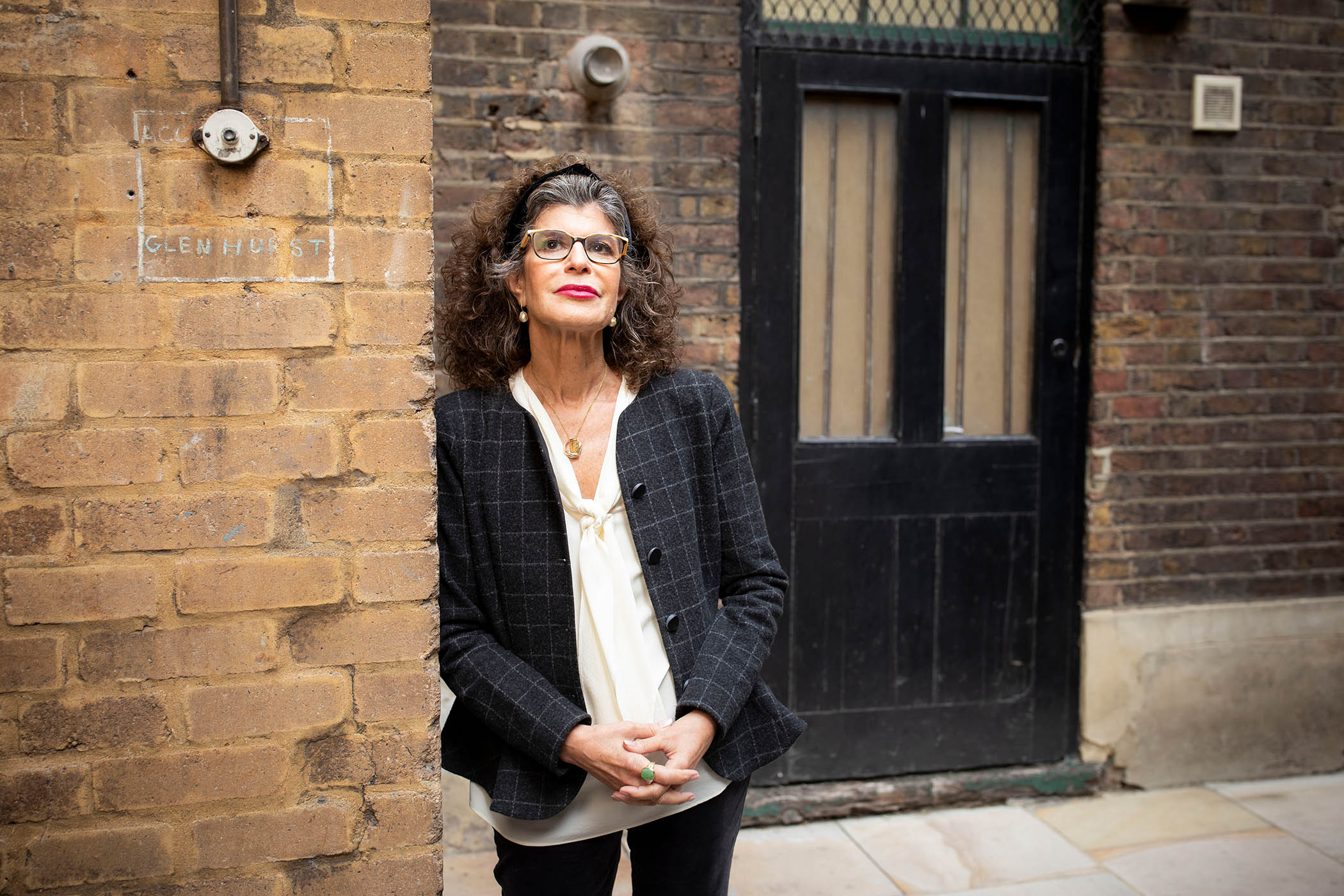
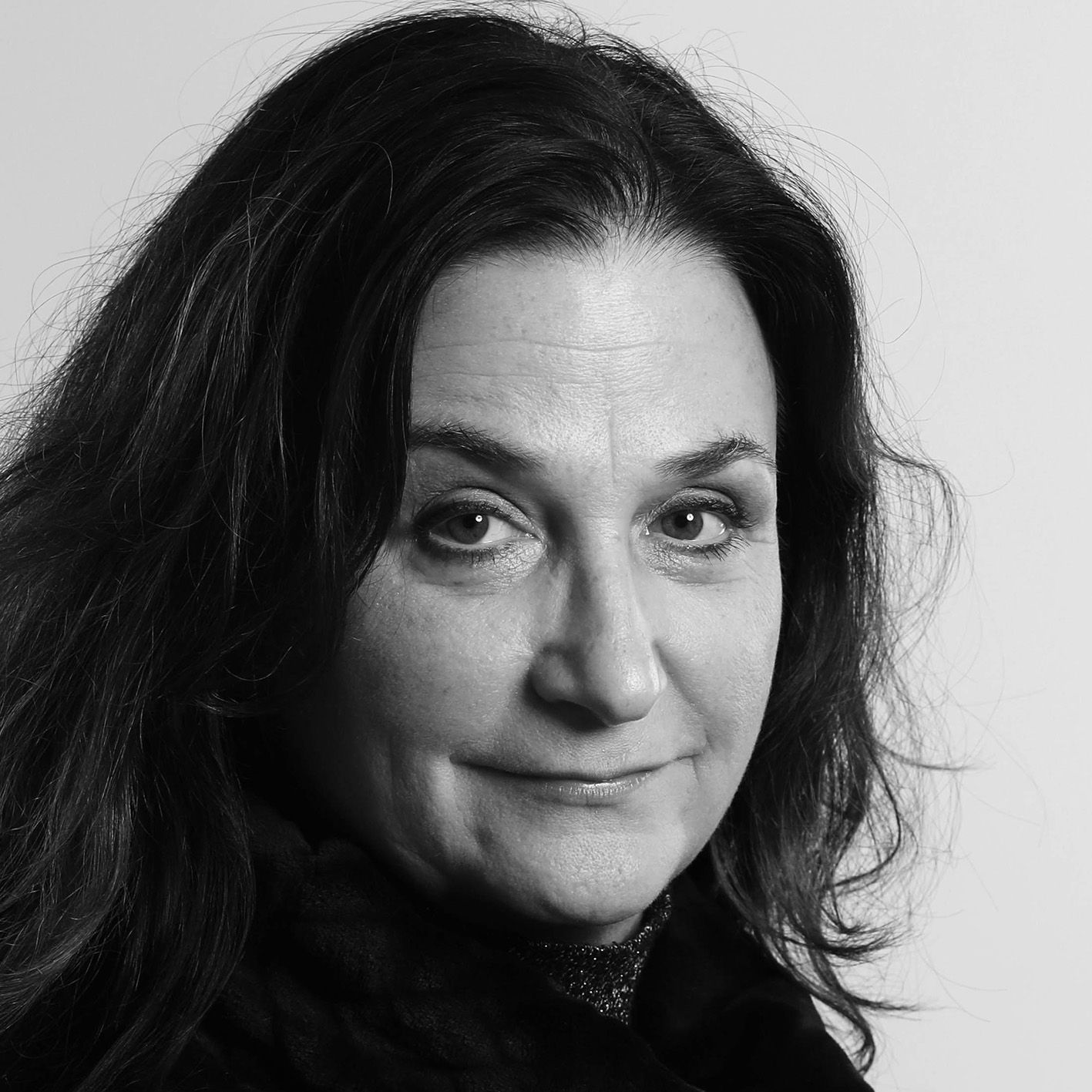


It seems right to start with the human stuff – with a person-to-person encounter. “I remember our initial meeting vividly. I walked into the conference room at the London office of Ian Russell’s legal team,” recalls Shoshana Zuboff, the US academic who was among the first to confront exactly what social media is inflicting on the world. “Ian had just come in and was standing at one end of a long table. I walked over to introduce myself, ready to give him a copy of my recent paper Surveillance Capitalism or Democracy? Before I even showed him the folder, he threw his arms around me and said: ‘I’m so glad you’re here because this is all about democracy.’”
Russell is the former television producer now widely known as the campaigning father of Molly Russell, the 14-year-old who took her own life in 2017 after receiving repeated social media prompts to do so. Zuboff, 74, a Harvard professor, was in Britain to talk to him about a possible collaboration with the British film-maker Marc Silver. Their joint project has resulted in a powerful broadside aimed at big tech. A documentary, Molly vs the Machines, will be screened at the Glasgow film festival on 1 March, when it will simultaneously have its nationwide premiere, before being broadcast on Channel 4 on 5 March.
The film’s content combines Zuboff’s crusading academic approach with this piercingly sad family tragedy. She and Silver were already working together on how to bring her research to a wider audience when they realised that, if they could gain the trust of the Russells, a film about their daughter’s short life would give their arguments a human edge.
Zuboff’s work has documented the conditions of online surveillance we all now live under, the covert harvesting of private data that enables targeted advertising and allows for our emotional manipulation.
Molly was certainly not alone in being exposed to danger as a result. In 2022, Dr Robert Califf, then commissioner of the US Food and Drug Administration, argued that “misinformation” had become his nation’s leading cause of death, with a “disturbing” effect on Americans’ life expectancy.
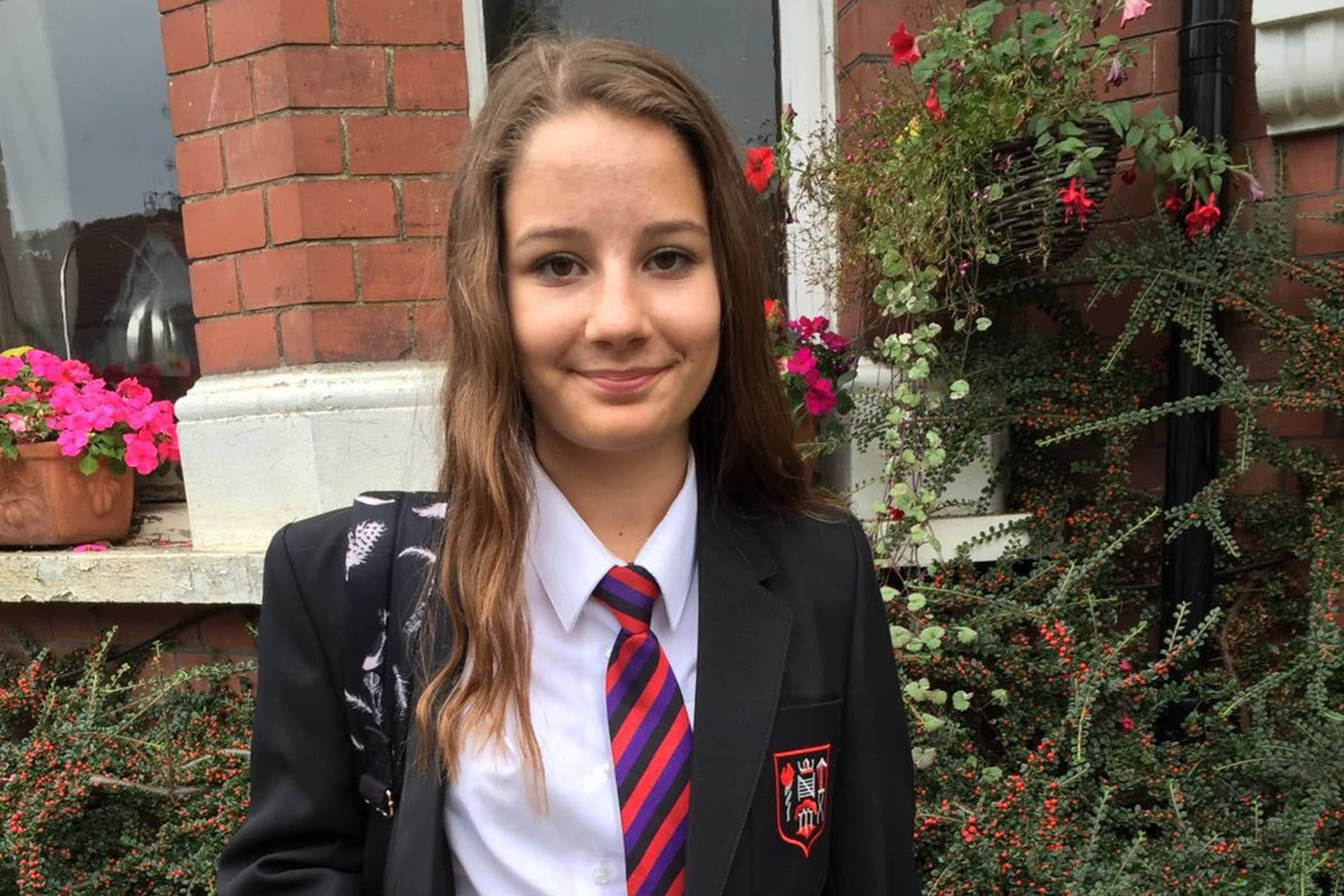
Molly Russell took her own life in 2017
“Molly’s story did get some coverage in America, but nothing like in the UK and across Europe,” Zuboff tells me. “When Marc started talking about her, we realised this could be a story which we could tell respectfully, with true grief, but also in the context of the larger global forces that made such a substantial contribution to her death.”
They saw the potential of a film about a case that had become a sorrowful byword for the damage social media can do. “It was always a priority that the Russell family should feel comfortable every step of the way ... Ian was extremely committed to telling her story.”
Zuboff had previously drawn on her own online experience in her influential 2019 book The Age of Surveillance Capitalism: The Fight for a Human Future at the New Frontier of Power, and so she understood the value of getting personal. That had required something of a mental gearchange for an objective professor, she admits, but helped to make her facts and figures breathe. “You know, this can get very abstract,” she says of her efforts to show the harms of social media. “We’re talking about making a huge shift in the global economic paradigm – and it doesn’t get more abstract than that.”
Crucially, and tragically, the short span of Molly’s life measured out the phases of the development of the social media platforms, as they first learned to harvest our private information for gain, then to predict our habits and eventually to also shape them. “We could see how Molly’s story lay over that structure, over the foundation of all this – that breakthrough idea that human behaviour could be treated as a commodity,” says Zuboff.
The meeting in Russell’s office brought together two powerfully motivated people. Russell now chairs the Molly Rose Foundation and has, through terrible grief, become a full-time advocate, calling social media platforms to account. Zuboff, in comparison, is an intellectually driven Cassandra, who has suddenly found her cries of doom echoing loudly around her.
Last week, Keir Starmer put his weight behind a consultation on establishing a British minimum age for social media use, while in the US, key legal cases are coming to a conclusion. In New Mexico and California, Meta is facing landmark lawsuits over child safety allegations, the first to reach a jury. Its chief executive, Mark Zuckerberg, gave evidence on Wednesday in a Los Angeles court, where he claimed Meta was better at identifying underage users, while admitting: “I always wish that we could have got there sooner.” In Australia, the new ban on social media for those under 16 has established a precedent, with similar restrictions on the way in France and Spain. At least 15 European governments are looking at comparable measures.
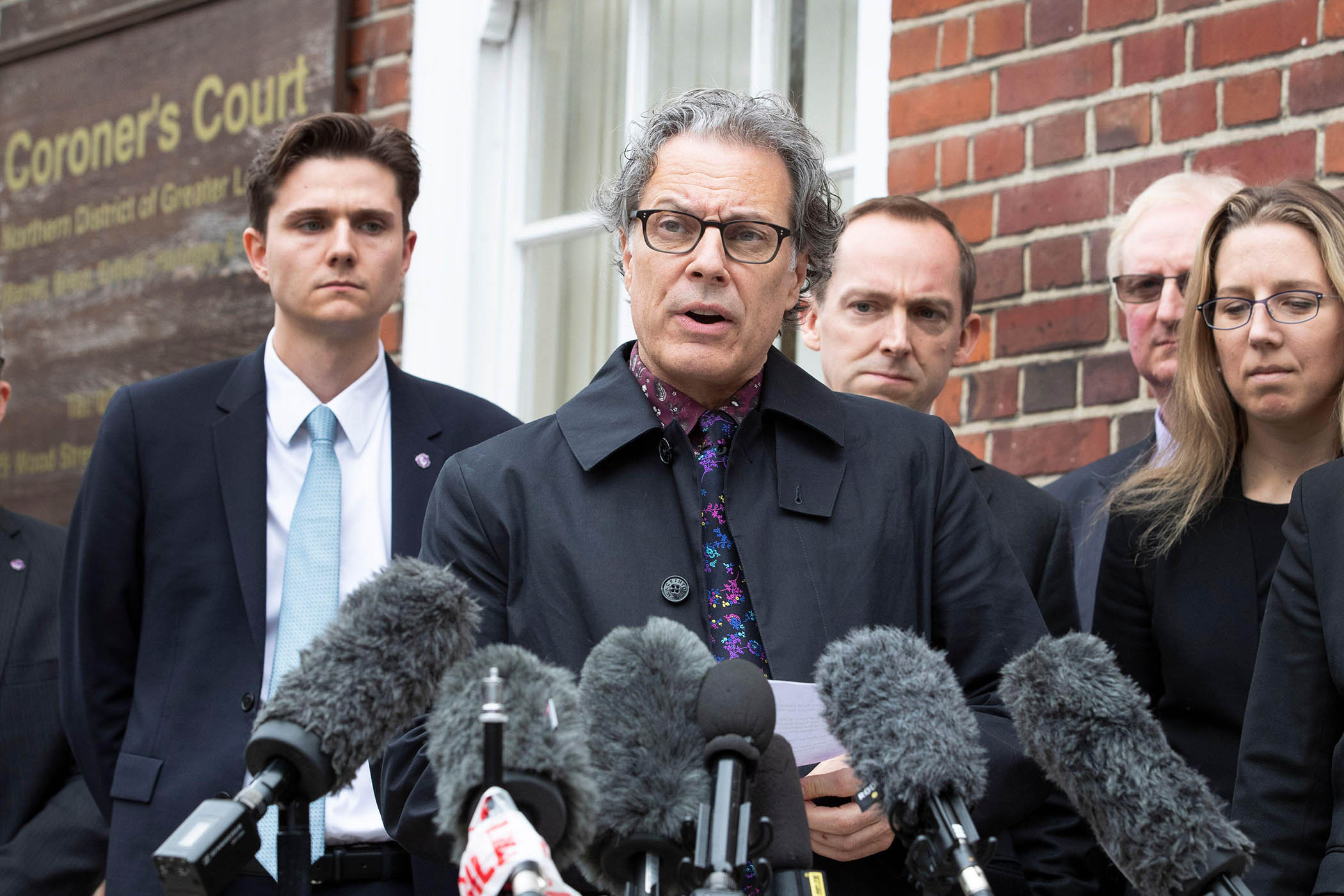
Ian Russell speaking outside Barnet coroner’s court after the inquest into his daughter’s death
It gives Zuboff little pleasure to be vindicated, she says, but it does allow her to feel less exposed. She takes great care in what she says and writes, making sure she can back up every allegation. “After all, I’m defending [this] against some pretty bad people who have a lot of tools.”
Fiercely focused, despite suffering with a seasonal cold, Zuboff is adept at marshalling the data she has accumulated over decades of monitoring big tech. Listening to her is like seeing the gleam of a lorry’s headlights coming at you out of the fog, lighting up the sinister network of algorithms that dictate our online activities. “I’m driven by anger and frustration,” she admits. “It was very motivating for me at the beginning to see how much people were swallowing the hook, not because we are stupid, but because secrecy was considered a necessary prerequisite of corporate success. No one was allowed to be against technology, because that made you a luddite.”
Later, in an email to me, Zuboff refers, unfairly, to her own brand of forceful reasoning as her “bark”. Actually, there is an uplifting logic and warmth in her mission. She remains fired up by her conviction that society has sent its precious young “like canaries in the coalmine” into a “death match” with the all-seeing algorithm.
She began studying the social process of digitalisation in 1976, she explains, looking at the introduction of computers in factories. Her job now, she believes, is to show how humans have become fodder, exploited in experiments that seek out new forms of population surveillance and control. The approach of big tech is in marked opposition to her own scholarly techniques: “The information space is owned and operated by private interests for whom the most corrupt information is actually the most profitable. That’s what attracts and gets people staying around, shouting at each other.”
The documentary she has co-written with Silver has some good narrative ploys. It starts with an AI representation of “the voice of Silicon Valley”, laying out its own perspective and revealing its motivation in exploiting “our infinite data flows”. But the film does not need to rely on AI to vocalise the immorality of the plan. In TV footage, the youthful, emerging tech bros make explicit their early overriding ambitions.
‘Molly received hundreds of grotesque messages and images depicting suicide and self-harm’
‘Molly received hundreds of grotesque messages and images depicting suicide and self-harm’
The most powerful testimony comes in the scenes in which Molly’s schoolfriends talk about how her death might not have happened without the disturbing online content that was pumped at her. The coroner at Molly’s inquest, which is recreated by actors in the film, agreed. He ruled she died “from an act of self-harm while suffering from depression and the negative effects of online content”.
Her friends say they were shocked to learn after her death how she had been repeatedly measuring her stomach and looking at so much negative self-imagery. Guiltily, most of them confess they still look at Instagram on their own phones.
For Zuboff, they are all innocent victims of the tech monopolies’ strategy: “Where the algorithm senses high levels of engagement, it gives that material pride of place,” she says. “It will amplify it and it will send it out, as happened to Molly in the last months of her young life. She received hundreds of grotesque messages and images depicting suicide and self-harm.”
Zuboff cautions, however, that if we do decide to ban our children from accessing social media, then we will have to come up with some compelling alternatives. “We now understand a great deal about why social media is destructive for children, but do we understand what it is our children truly need and want?” she wonders. “What are our plans to build new worlds of solid reality and care in which our children can break free of their social media addictions?”
Her concern is the lack of any ready-to-go, rewarding substitutes for all those online dopamine hits. The academic also wonders about the public reception that her own solution will get, partly because it sounds so dramatic. Zuboff believes the abolition of the business model behind the sites is essential, rather than a mere ban for children: “We don’t want to just put up a firewall and let them go on their merry way. Abolition has been the correct response to anything that represents a moral catastrophe for our people and our democracy, but I have found this can strike people as too extreme.”
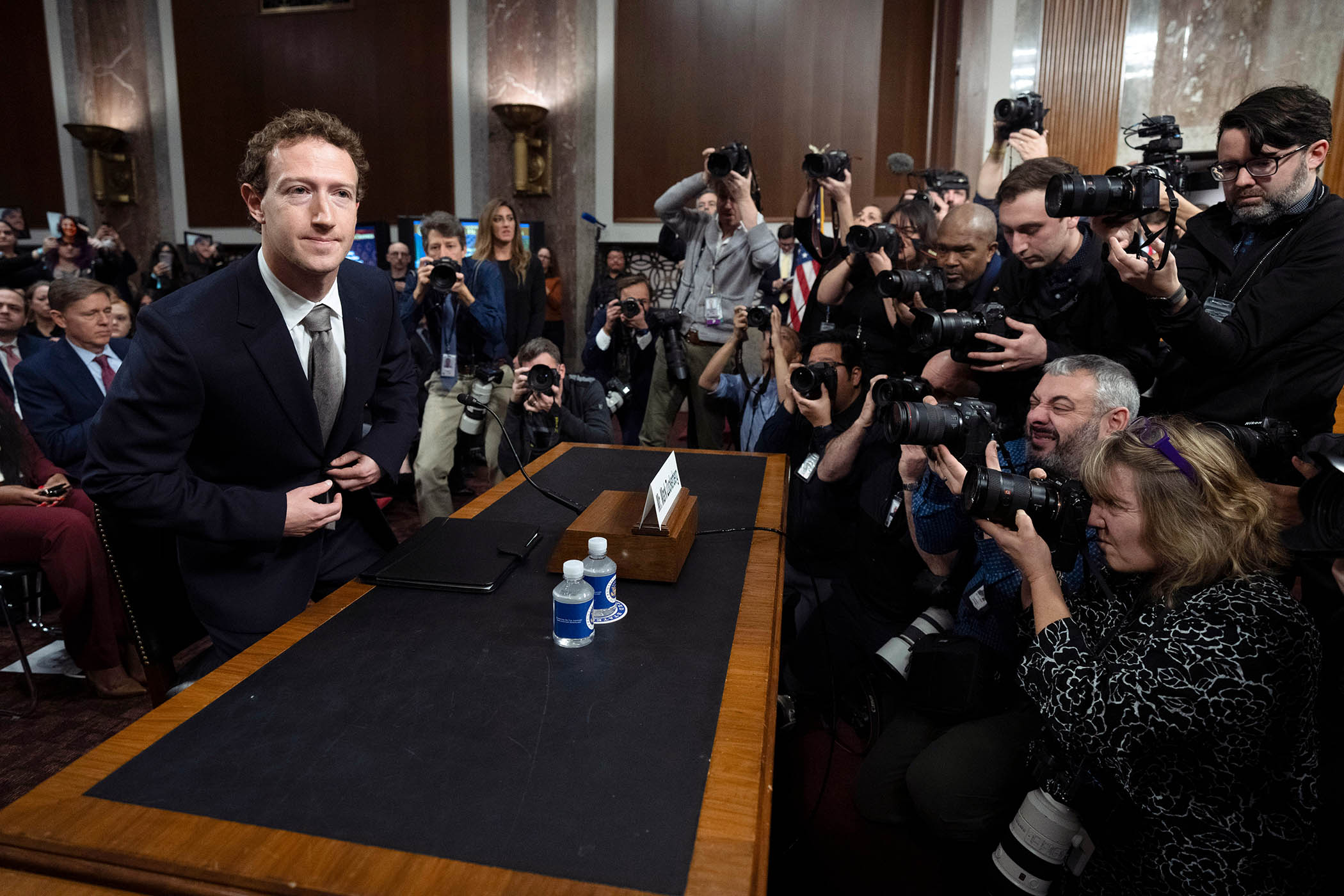
Meta’s Mark Zuckerberg arrives at a senate hearing on child safety at Capitol Hill in Washington in January 2024
She cites successful historical examples of abolition, from legislation against child labour, to Abraham Lincoln’s insistence: “If slavery is not wrong, nothing is wrong.” She wonders how we could have “[killed] privacy in favour of universal surveillance, for the sake of the banality that is targeted advertising?” Instead, she insists, laws could criminalise the comprehensive theft of personal data that should have been identified as larceny from the beginning.
In the US, some states are moving to fill the gaps in regulation, while in Britain there may at least soon be legal and financial consequences for Elon Musk’s Grok AI app in the wake of a formal Ofcom investigation.
Zuboff is heartened to see the depth of public engagement and the growing understanding of the risks posed to democracy. Yet she fears small legal protections will never be enough: “Opening your umbrella does not stop the rain. It’s not enough to put up a firewall banning our children from social media and call it a solution. Pulling our children out does nothing to alter the conditions that have proven themselves catastrophic for people and for democratic societies.”
Efforts to alter voter behaviour – such as Cambridge Analytica’s attempts to influence the 2016 US presidential election through Facebook – would continue. The inexorable trend Zuboff detects is towards the suppression of democracy: “I have in my head, sadly, an indelible picture of a guy like Zuckerberg, up in the celestial cloud with a vast piano, a bit like Liberace, just deciding which tune he wants to play. We all know which companies these are: Google, Meta, Amazon, Microsoft – and who did I leave out? Oh, Apple!”
Zuboff mourns the loss of the “public square” for debate, just as she mourns the human cost of social media. “We now only have algorithmically mediated communication. By 2024, there were fewer democracies than autocracies for the first time since 2002; 72% of the world’s population lived in 91 autocracies, the largest number since 1978. How could we have let this happen?”
The stakes seem astronomically high. The implication of Molly vs the Machines, however, is that even if this battle is over the life of one teenager, tech companies and governments should still think it matters enough to act.
Molly vs the Machines is in selected cinemas nationwide on Sunday 1 March and will air at 9pm on 5 March on Channel 4
In the UK and Ireland, Samaritans can be contacted on freephone 116 123, or email jo@samaritans.org or jo@samaritans.ie.
Photographs by David Levene/Guardian/eyevine, Press Association Images, Alamy, Manuel Balce Ceneta/AP
Newsletters
Choose the newsletters you want to receive
View more
For information about how The Observer protects your data, read our Privacy Policy