
Portrait by Katherine Anne Rose for The Observer
On St Patrick’s Day 1943, Ireland’s prime minister, Éamon de Valera, addressed the nation. In a radio broadcast he laid out his vision for a country that, 21 years after independence, was defining itself anew, albeit on the age-old traditional values of hearth, home and, above all, faith.
“The Ireland that we dreamed of,” said the taoiseach, “would be… a land whose countryside would be bright with cosy homesteads, whose fields and villages would be joyous with the sounds of industry, with the romping of sturdy children… and the laughter of happy maidens, whose firesides would be forums for the wisdom of serene old age. The home, in short, of a people living the life that God desires.”
De Valera’s utopian manifesto masked a harsher reality that was only obliquely alluded to in that final sentence. In many ways, under De Valera, an austerely devout Catholic, Ireland resembled a theocracy in which bishops had more power than politicians, and every aspect of Irish life was informed by an oppressive Catholic ideology. For Irish women, in particular, any expression of individuality or hint of defiance could bring dire consequences.
“A key principle of Catholic ideology was purity,” writes Louise Brangan in The Fallen: The Magdalene Laundries & Ireland’s Legacy of Silence, which is a forensic history of the institutions. “Purity meant living without sin, to be morally unblemished, and this state was achieved through a strict schedule of prayer and penance.”
As Brangan makes clear, the ideology of purity through prayer and penance was at the very core of daily life in the 10 Magdalene Laundries, Catholic-run workhouses that were situated across Ireland from independence in 1922 until 1996, when the last remaining laundry on Seán McDermott Street in Dublin was closed down. In that time, an estimated 10,000 women and girls deemed wayward by the clergy were sentenced to a life of unrelenting servitude and prayer.
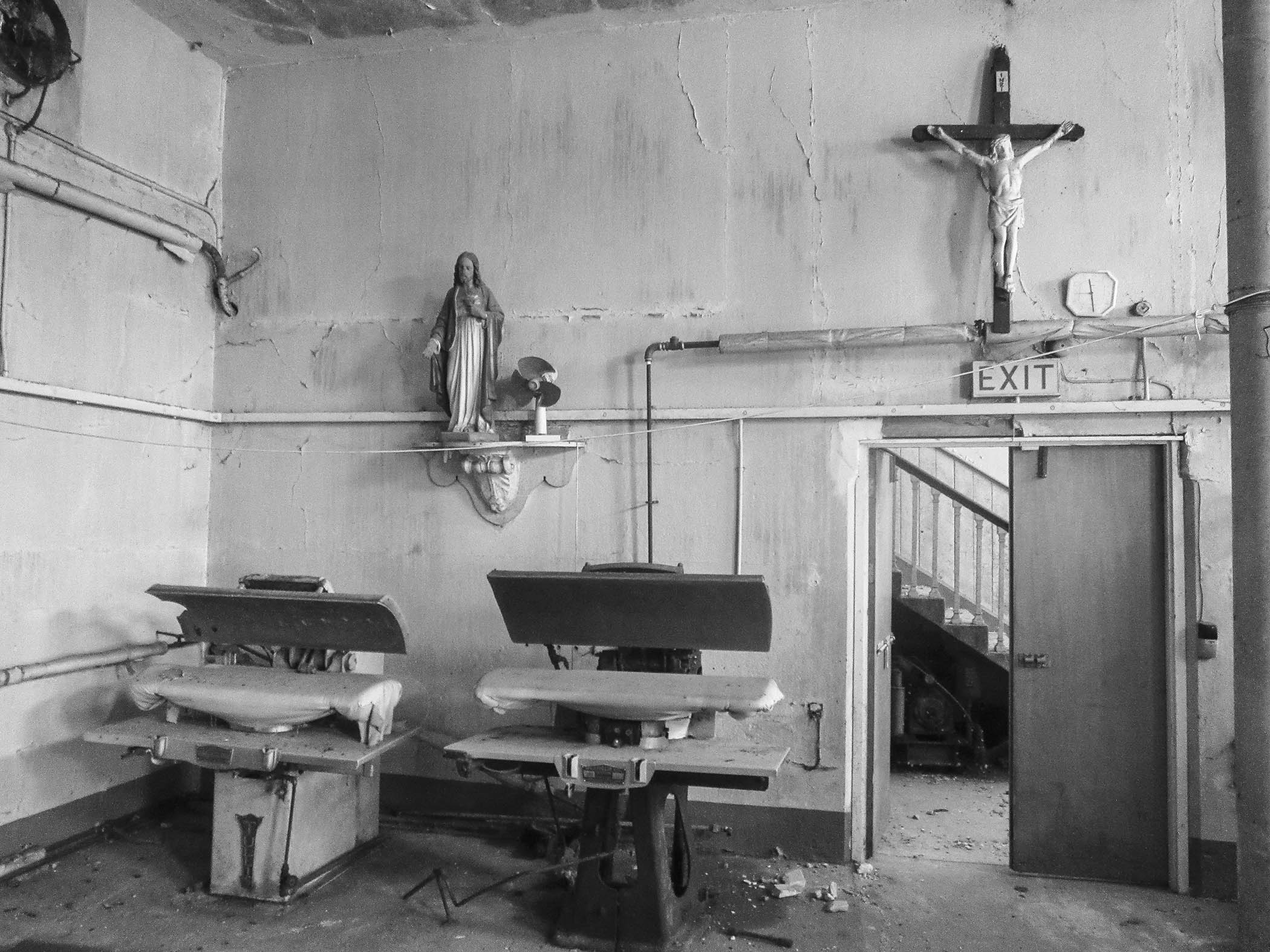
An ironing room at Donnybrook laundry
The “fallen” of Brangan’s title were often ordinary women who did not conform to the ideal of purity ascribed by the Catholic church and had to be punished accordingly. By way of illustration, Brangan quotes from a 1932 sermon that a priest delivered to his parishioners in Donnybrook, Dublin, in which he praised the nuns for their “heroic work” with women who “had been giddy, irresponsible, undisciplined from the start, too eager for attention, flattery and fine dress, too addicted to cinemas, music halls and the like. They played with danger in spite of the warnings of life around them and the reproaches of conscience within them.”
Once confined behind the walls of a laundry, the women lived lives of penitential harshness overseen by four orders of nuns whose collective titles belied their cruelty: the Religious Sisters of Charity, the Sisters of Mercy, the Sisters of Our Lady of Charity of Refuge, and the Good Shepherd Sisters. Under their charge, many women grew old and died there, institutionalised and seemingly forgotten by their families and the communities they vanished from. Sometimes it was their families that handed them over, a still shocking reflection of what Brangan calls “the ordinary, banal brutality” of a society in which piety curdled into cruelty.
As Brangan points out, nuns oversaw an entire system of punitive control in post-independence Ireland, including schools, hostels, hospitals, hospices, youth clubs and mother and baby homes. “In a regime distinguished by its excessive inhumanity, the Magdalene Laundries were its deep end,” she writes. “They were not peripheral, they were Ireland’s main carceral institutions… employed for those women and girls considered to be beyond the help of the Mother and Baby Home, beyond the industrial school, beyond the prison and beyond the pale of ordinary life. The Laundries are the end of the line; the termini.”
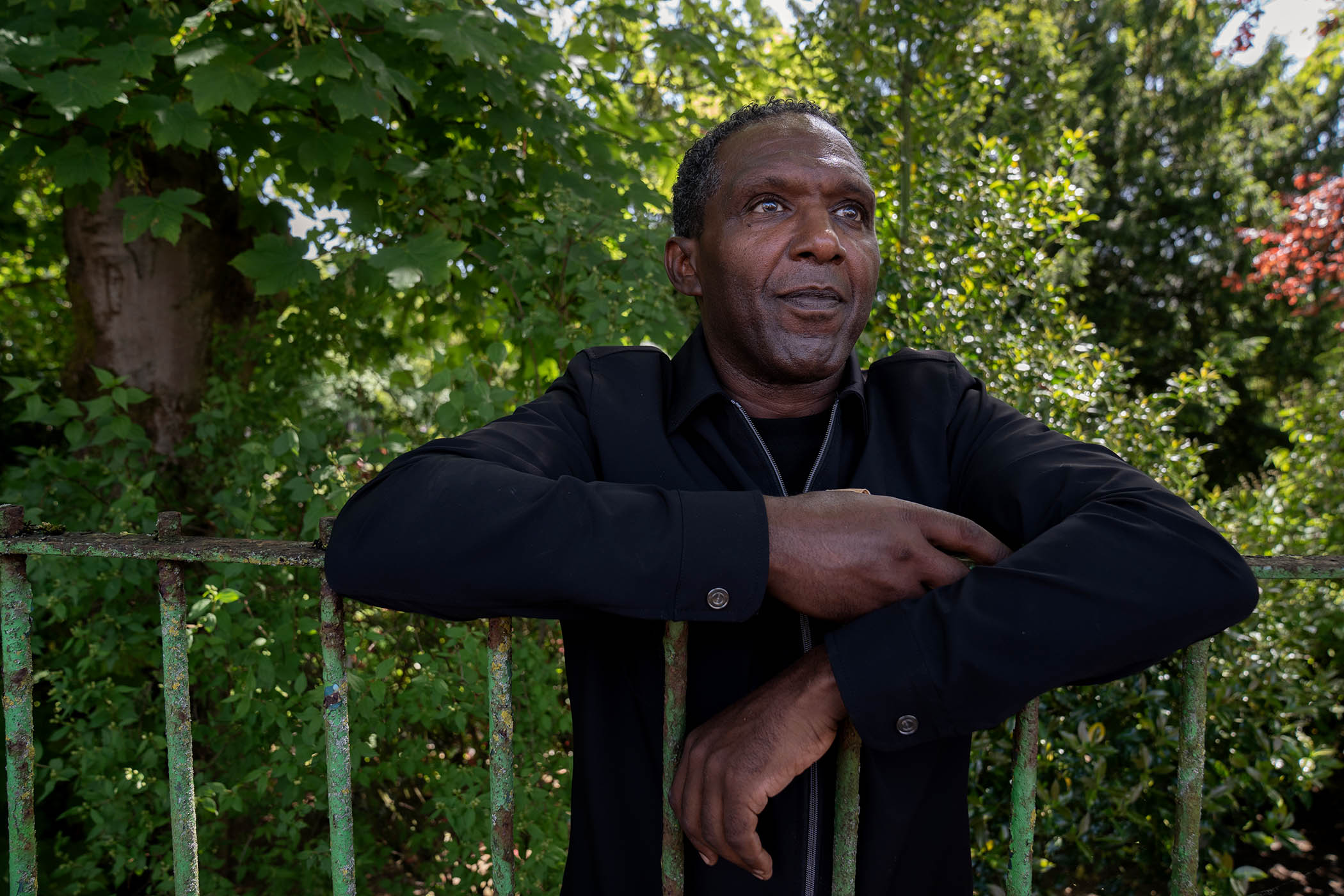
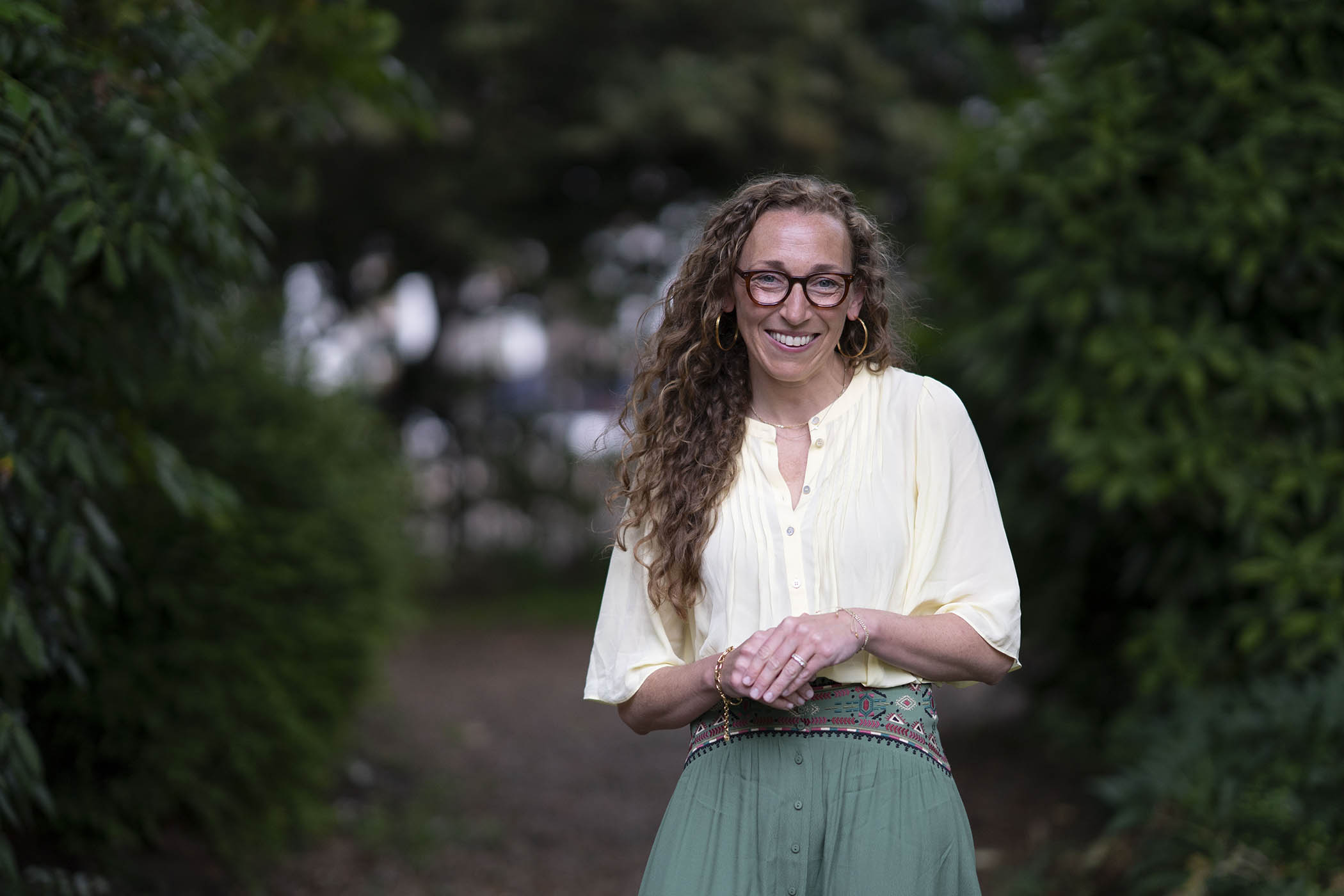
Brangan is an Irish academic, who grew up in Dublin and now lives in Edinburgh. Her main area of research is injustice and imprisonment. “I’m basically interested in how we punish and who we punish,” she tells me. “All societies have national biographies in which we tend to tell ourselves the best stories of ourselves, but if we really want to know what a society holds dear, you need to look at who they exile, who they imprison, who they banish, who they cast out – and what is done to those people in each instance.”
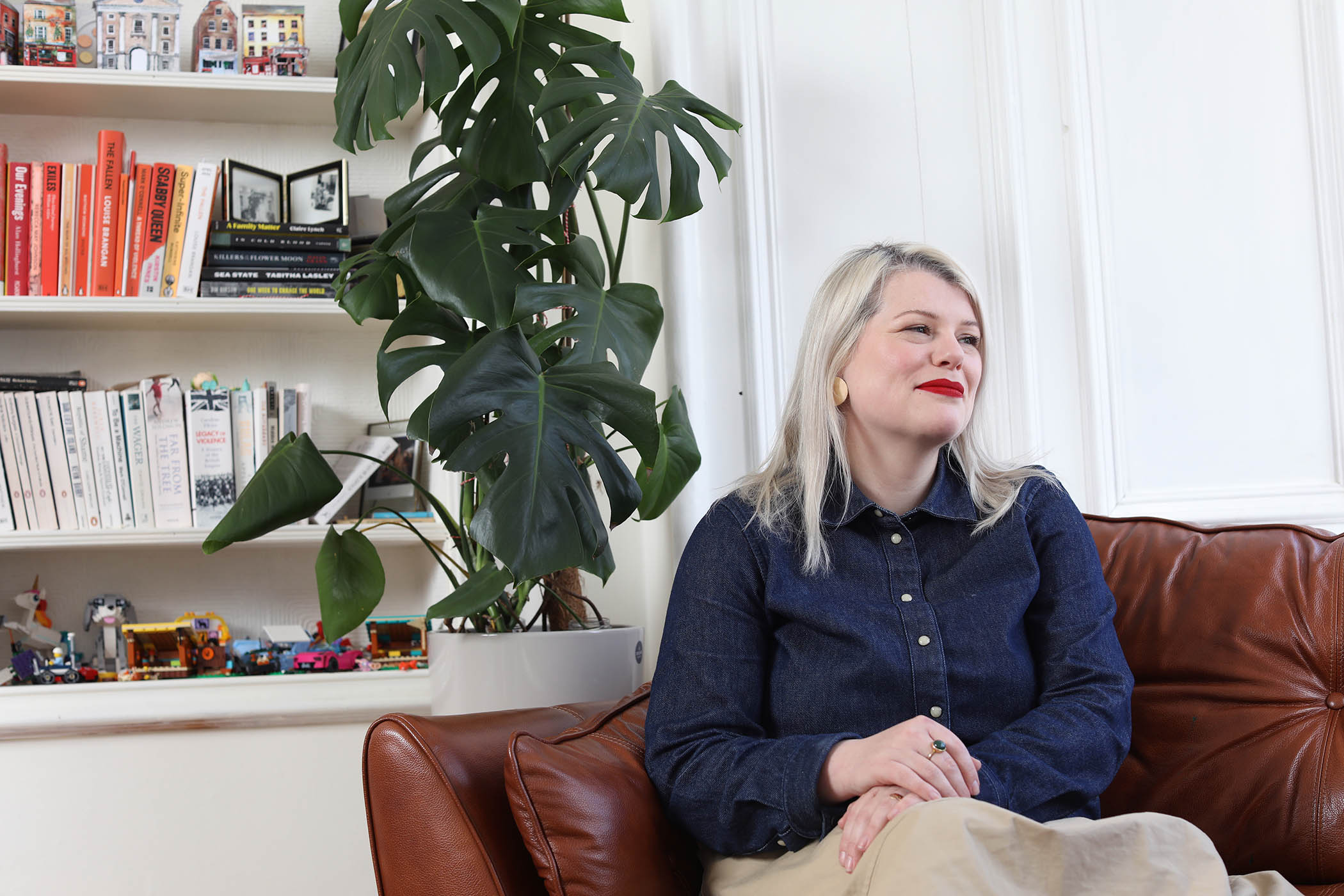
Louise Brangan is an Irish academic based in Edinburgh
She wrote The Fallen in part out of frustration at the way the Magdalene Laundries have been portrayed since their existence became a national scandal in the most darkly dramatic way in 1993. That year, the Sisters of Our Lady of Charity sold a plot of land in Dublin to property developers, whose subsequent excavations uncovered a mass grave on the site. It contained the remains of 155 women. Official records state that 879 women died in the Laundries from 1922 onwards.
“Since [1993], we have rendered the Magdalene Laundries in virtually every art form,” says Brangan, “Fiction, song, theatre, dance, tapestry… I even think there’s a musical coming soon. I thought it was time to look at the issue front-on and to situate it in the society and culture that existed quietly alongside it, because the laundries were not hidden away; they were there in plain sight. Everyone knew about them. People used to drop their washing off there, and they also knew to drop their daughters off there if they had strayed too far from acceptability. It’s time to acknowledge that they were part of our ordered normality. One of the questions I’m asking is, how do we account for that?”
Brangan began researching the book in 2018, prompted by a recording of De Valera’s St Patrick Day’s speech. “I’d been doing a lot of work on Irish prisons and it struck me that the laundries were the real mystery. By the 1970s and 1980s, Ireland had a relatively humane prison system, but there was also this shadowland, where thousands of women had been detained endlessly, for all of their lives, in a whole set of institutions that no one spoke about.”
Her book is a detailed and haunting history of that shadowland, a stark refutation of the ideal Ireland that De Valera imagined. At its heart are six first-person testimonies from women who were incarcerated in the laundries for a variety of “sins”, including wayward behaviour and adolescent rebellion of the most minor kind. The depth of the cruelty described in each is cumulatively overwhelming. A woman known as Eileen describes how her hair was shorn and her name taken from her, while she was still struggling to understand where she was and why she was there. Her state of confusion is echoed throughout the testimonies, the trauma of sudden abandonment giving way to powerlessness, exhaustion and a sense of despair.
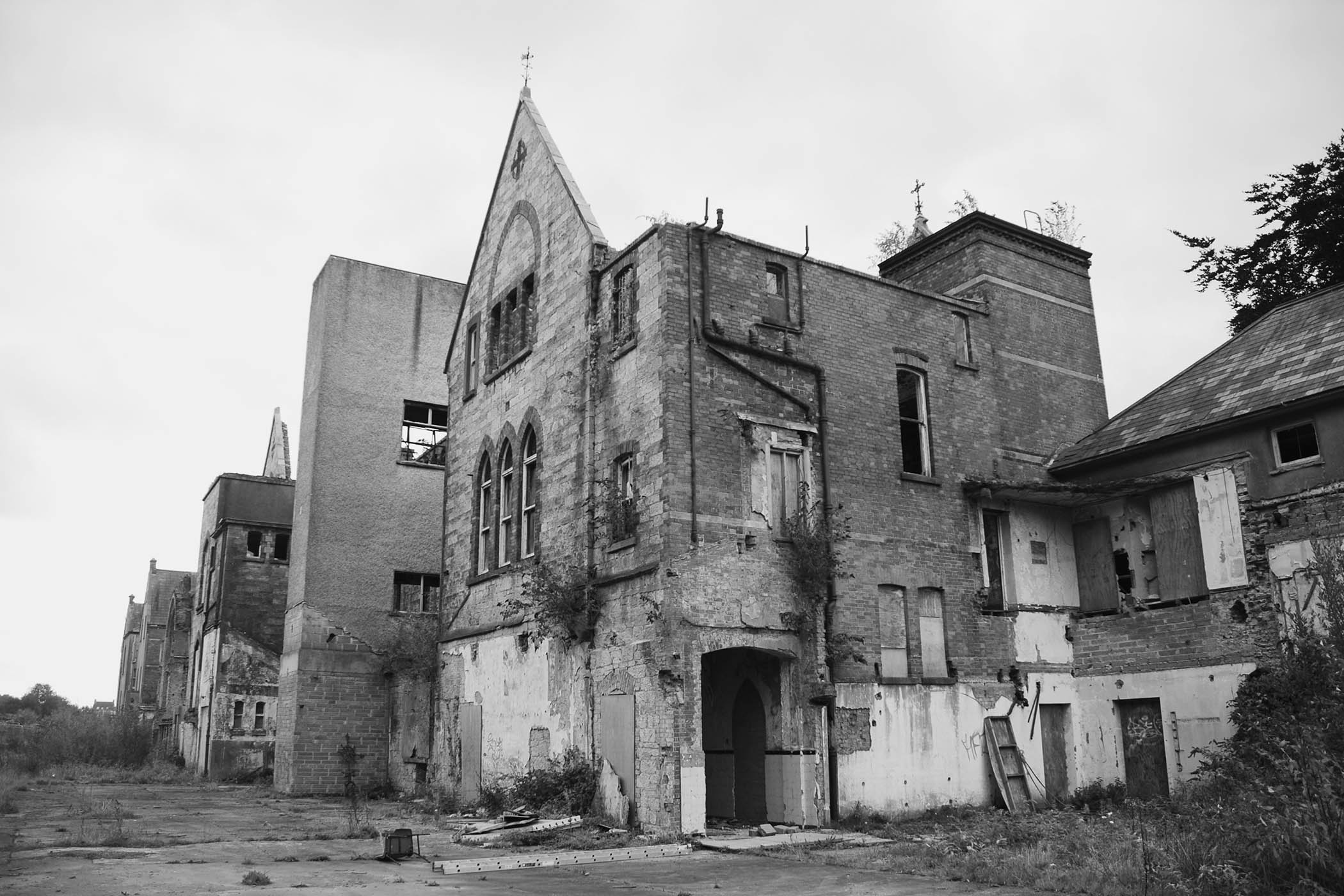
Sunday’s Well laundry in Cork
In the Sunday’s Well laundry in Cork, 18-year-old Carmel was rechristened Imelda after the nun who had brought her there. Her hair shorn, she was given a meal of bread and dripping with a mug of cocoa, and taken to a dormitory which housed aged and infirm women – “worn-out, crooked, with rotted teeth, short white hair, glazed expressions, silent demeanours”. Initially, Carmel thought her role was to care for them, but then, in horror, realised that they represented the possible fate that awaited her.
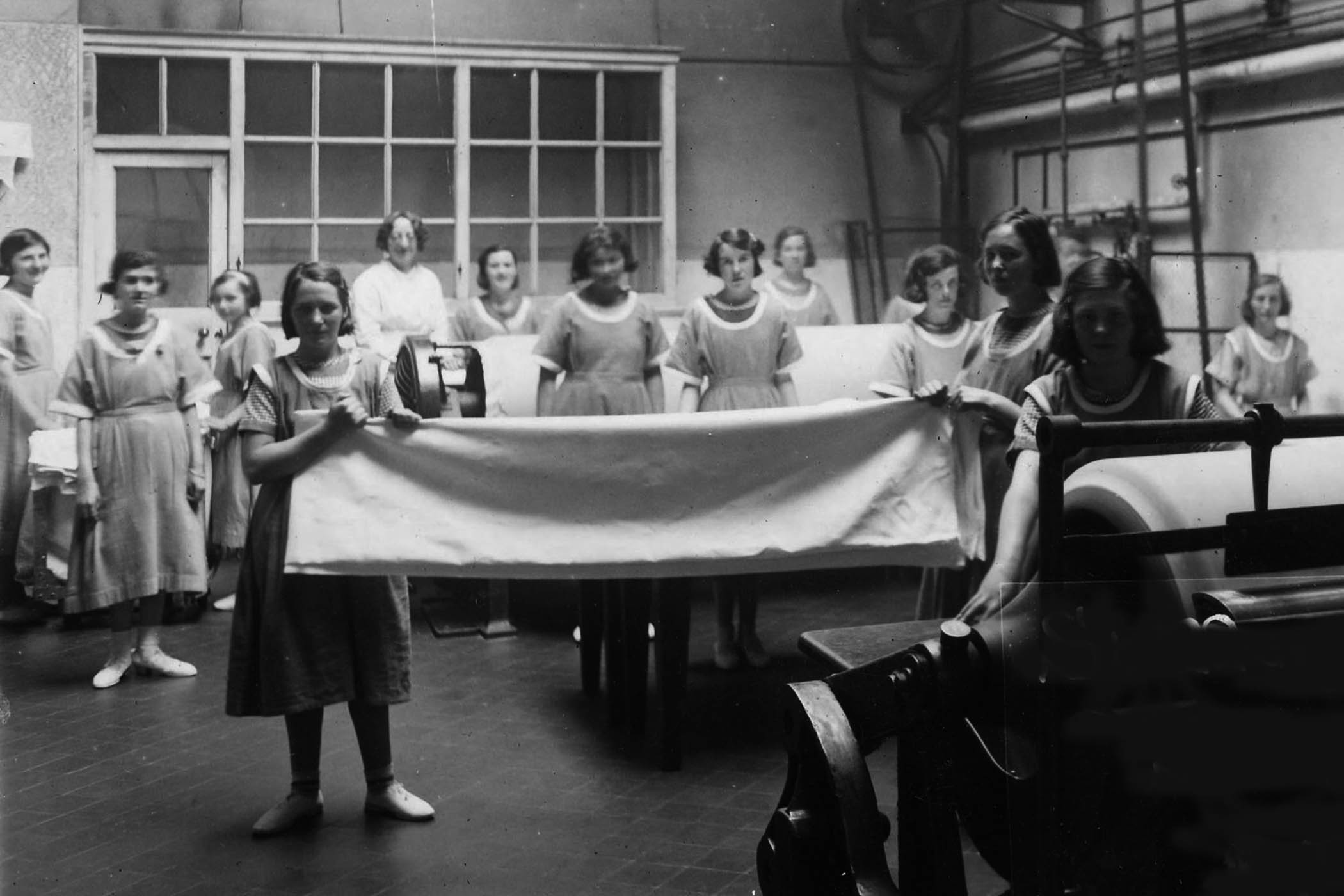
In the laundries, the working day began at 6am with morning mass, followed by a frugal breakfast, the ranks of women overseen by a nun on a raised seat who made sure they did not converse with each other while eating. In the laundry, the work was intense and laborious: lines of silent women washing, wringing out and ironing bed linen from local establishments, tweed and woollen clothes and school uniforms in the extreme heat of steam-filled rooms, while water sloshed around their feet.
The work was hazardous and physically exhausting. Brangan describes “bleach spattering off hand brushes, the searing hot metal, machines spinning at 100 miles per hour”. Throughout her retelling, hell is in the details. “For the children who were sent to the Laundry, who were not fully grown and too small to reach the front-loading machines, a stool was stood by, giving them the extra height required to reach up into the washing machines.”
Reading The Fallen, even given all that I already knew of the Magdalene Laundries, the toxic mix of piousness and relentless cruelty became even harder to fathom. I ask Brangan if her extensive research shed light on that paradox?
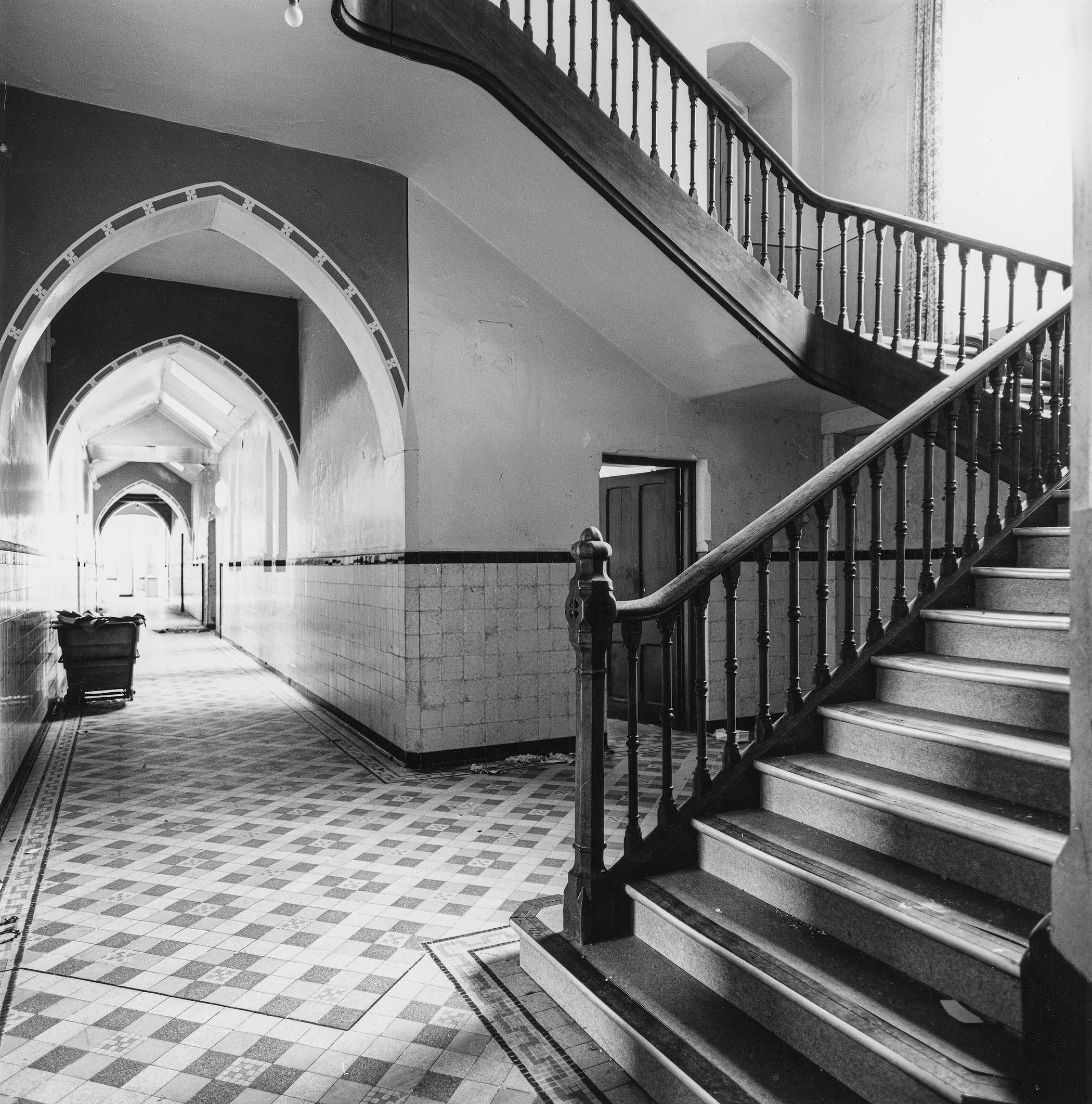
Inside Sunday’s Well laundry
“Well, you can look across any period of history and see different extremities in these systems of punishment. But, in Ireland, the women who ended up in the laundries were so vilified, so dehumanised, that what was done to them does not have to meet the standards of human decency. They were seen not to deserve even that, because their very existence was treated as so base and so immoral, that to even have them around was offensive to many people.”
As the subtitle of Brangan’s book suggests, a collective and complicit silence was at the core of the Magdalene Laundries in Ireland. In a culture in which respectability became a suffocating principle of day to day life, and shame its damning counterpart, that silence became almost total, the act of looking away normalised.
“It’s easy to view these institutions in terms of goodies and baddies, and victims who became survivors,” says Brangan. “And the way that we in Ireland have discussed, represented, theorised and aestheticised this history tends to keep it contained within the walls of the Laundries. What I am trying to show is that the demands of purity, of penance, of self-denial and self-abrogation were also expected of every Irish person alongside a collective vow of silence. So, as much as we have to honour and remember what happened in the Magdalene Laundries, we need to understand how everyone in Ireland was to a degree expected to live under a very punitive cultural code of conduct.”
Ultimately, Brangan’s book asks a question that echoes through history: how do we remember? In Ireland’s case, that question is shadowed by a long history of looking away. “For centuries,” the Irish novelist John Banville noted, “the greatest skill the Irish had was to know how not to know, and the first thing we made it our business not to know was ourselves. Ignorance ensured our peace of mind… The preferred state of the nation was a state of spiritual and intellectual infancy.”
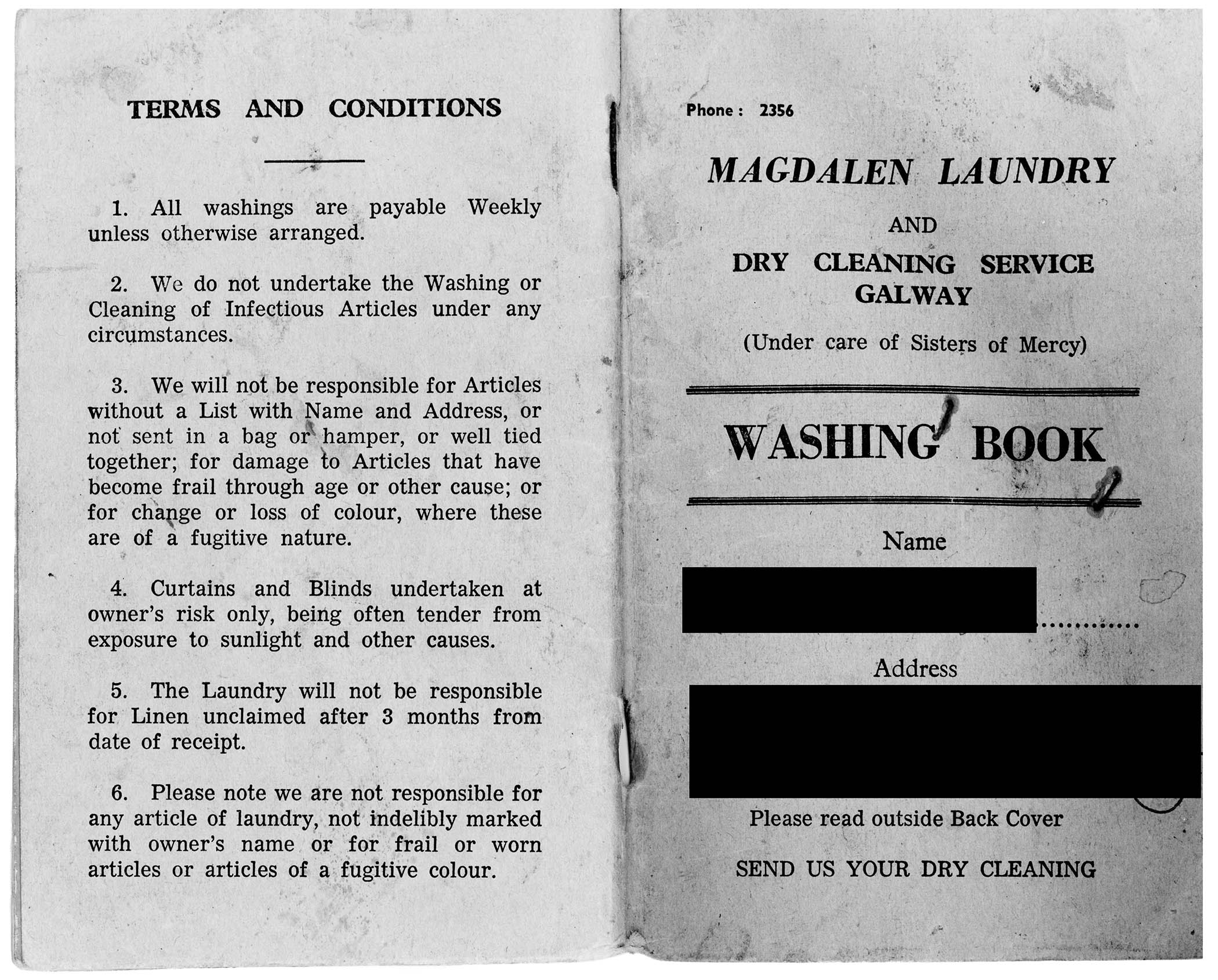
A washing book from 1972
Now, following the accelerated modernity that attended the so-called Celtic Tiger years – roughly the mid-1990s to the mid-2000s – Brangan identifies what she calls “a collective garrulous evasion” that has replaced that collective ignorance. “There has been so much talking, talking and talking,” she says, sounding exasperated, “and, in a way, the more we have spoken about the Laundries, the further we seem to have come from remembering them.”
This evasion is reflected in the church and the state: the nuns have refused to hand over their archives of the Laundries, nor have they been held responsible for any reparation. And, while there are tentative plans under way to turn the laundry building on Seán McDermott Street into a permanent site of remembrance, Brangan points out that the government has already said it is not going to hand over the archives from there. “It will be like an empty museum,” she says. “There is still an official reticence, a quiet demand to move on, which speaks volumes about our inability or unwillingness to remember this part of our history.”
What would it take for a meaningful process of remembering to take place? “Candour,” she replies without hesitation. “Not talk, not discourse, not concepts, but candour, which is the real opposite of silence.”
She describes candour as “a kind of civilised honesty” that is both uncomfortable and liberating. “It addresses our own proximity to this history, because it means, for instance, turning to a family member and asking, ‘Did this happen to you? What was it like? You haven’t spoken of it before, but can we speak about it now?’ It may feel embarrassing or shameful or excruciating, but candour is the willingness to deal with all that to get to some kind of restorative truth.”
She pauses for a moment. “Morally and ethically, remembering is a form of social justice and a big part of remembering is being able to confront our own humanity. So, for me, the bravest, boldest question to put to yourself after reading the book is, could I have done this? Could I have looked the other way? Could I have lived alongside this? It seems important that we try to see ourselves in our collective past, because we are always much closer to history than we think we are.”
Newsletters
Choose the newsletters you want to receive
View more
For information about how The Observer protects your data, read our Privacy Policy
Extract: Eileen’s story
Fifteen-year-old Eileen disappeared on a quiet Sunday evening in February 1954. She was at work when it happened. Eileen was a maid at a bed and breakfast in a large Georgian townhouse in inner-city Dublin, where she remade the crumpled beds, bundled the laundry into bags, ready to be collected, and smoothed the white linens across the breakfast tables. Each week she was paid 10 shillings and lived in the small maid’s quarters located in the attic of the B&B. This was not just a handy living arrangement but a necessary one. Dublin was not Eileen’s home town; she had arrived in the capital the year before as a runaway, escaping a life that she could not bear.
Eileen was born in 1939 at a Mother and Baby Home. These homes were clandestine institutions run by Catholic nuns, places for women and girls who had had sex outside marriage, and found themselves pregnant, which was a catastrophic social taboo. Ideally, after the baby was born, the mother would leave the child behind. She then returned to her normal life carrying her private shame, but with her social standing intact. The nuns then took it upon themselves to make arrangements for the illegitimate child.
Eileen’s mother had been working as a live-in domestic maid with a well-heeled family when she found out she was pregnant. The father of her baby was the husband, the man of the house. So this problem – and certainly no one was saying that this pregnancy was anything other than a problem – was hers alone. When Eileen was born, her mother did as was expected and left her at the mother and baby institution, where Eileen stayed until she was four years old. Little Eileen hadn’t been adopted and so either a family member would have to come and retrieve her, or she would be sent to the industrial school – a dire place for poor orphaned children, also run by religious orders. By then Eileen’s mother was working elsewhere in the country, so in the end it was her married sister, Sheila, who came to collect the little girl. Auntie Sheila said she would raise Eileen alongside her own, older, stepson.
Eileen’s mother visited whenever she could get leave from her domestic duties. Eileen remembered how she adored her mother and loved to see her arrive at the house, but also that she learned quickly that she was expected to contain that feeling. During her mother’s infrequent visits, Eileen was to treat her with no more than polite formality. Recalling these years, she said: “I was never allowed to speak to her alone when she came to see me.”
As Eileen was illegitimate and a source of great shame for the family, her aunt tried to muffle signs of her presence. When the family travelled by pony and trap through the town, Eileen was made to curl up in the footwell where she was covered by a blanket. She was not allowed to attend the local school and was made to travel to a school in another town where her family were not known.
Home life was where the danger lay for Eileen. Auntie Sheila’s stepson was vicious and sexually predatory. Eileen hardly knew what was happening to her, but she came to dread whenever her aunt announced that she and her husband were heading out, leaving Eileen alone with her step-cousin.
“That cruel life,” as Eileen described it, went on until she was 13, when she was taken out of school, her education was over. Auntie Sheila had arranged for Eileen to be sent to work as a domestic for a local farmer who had a gaggle of children and endless errands to be done. The life of live- in servitude flummoxed Eileen, who said that her “blood ran into water”. Within months, she was back with Auntie Sheila, laid out in bed for days on end, trying to recuperate.
She was no longer Eileen; she was to be designated by a number
She was no longer Eileen; she was to be designated by a number
What Auntie Sheila seemed to learn from this episode was that the demanding combination of children and the farm had pushed Eileen too far. Once she was upright again, Eileen was sent to one of the nearby big houses, the stately-looking homes of the landed gentry or respectable and moneyed classes – the doctors, the vets, the big farmers. There, she had no lands to tend to and no children to monitor and feed. Instead, Eileen spent day after day down on her knees scrubbing that grand house until she felt something in her yield; she was 14 and a half when she ran away to Dublin. She said that she “loved” the bed and breakfast, she liked the two other girls who worked there because they were from the country as well, and that the owner, Miss Mullins, was usually milling about the place too. If her dream had been to live a life of her own making, she seemed to have succeeded.
Then, on that Sunday evening in February, Two unremarkable- looking middle-aged women came in from the street and approached Eileen at the front desk. She did not know them, and they were not guests. Many years later she would find out that they were members of the Legion of Mary, a volunteer organisation whose lives were devoted to the veneration and imitation of Mary, the Mother of God and Blessed Virgin, who exemplified purity and a sinless life. The Legion of Mary saw themselves as an army engaged in a “perpetual warfare” against “the world and its evil powers”; their only mission was to guard Ireland’s moral boundaries. In their self-appointed position as neighbourhood apostles, their members pounded the pavements, identifying people who might need to be saved from vice, from sin, from potential proselytism by Protestant charities. They set about “influencing every home, shop, factory, office, and every other place its members might be set by circumstances”. In this wide-reaching role, they sometimes sidled up to young girls on the street whom they suspected of wayward tendencies, who exhibited signs of what they described as “pre-delinquency”, whose downfall seemed dangerously imminent, and to whom they must issue their warnings about evil. They believed that they had found one in Eileen. They immediately pursued a peculiar almost personal, line of conversation.
“You are far too good to be working here.”
“And too nice.”
“We could bring you to a nicer place to work, with more money.”
Eileen was not sure what it was these two women were really talking about, but she did not ask them to clarify. She had been raised in the traditional Irish way, in which deference and obedience to your elders were paramount – she knew that she was not meant to ask questions, especially of people who possessed an air of authority, as these two women did. The two women insisted that there was no time to waste, and that Eileen should come with them immediately.
They led her up a set of shimmery limestone steps. A nun in pitch-black robes appeared at the door, and showed them through to a parlour, a grand and dignified room where the nuns received guests and hosted events. Whatever task these two women had set out upon was now complete, because they turned to leave. Before they did, one of them paused and looked back at Eileen, who was still standing in obedient silence, and said: “We’re putting you in here for your own safety.”
Later that evening, the nun took Eileen’s clothes, then cut off her hair, and changed her name. She was no longer Eileen; she was to be designated by a number. From that moment on she was to be known only as “60”. In the days that followed, everything else was stripped from her.
Where she was and what was happening would take her weeks to figure out. Why it had happened, that would take decades to be revealed.
The Fallen is published by The Bodley Head (£22). Order a copy at The Observer Shop for £19.80. Delivery charges may apply.
Additional photographs courtesy Roz Sinclair / Testimony Films, Mark Cohen, O’Donnell + Tuomey, Galway City Museum, Butler Cammoranesi Architects / Bellmount Developments