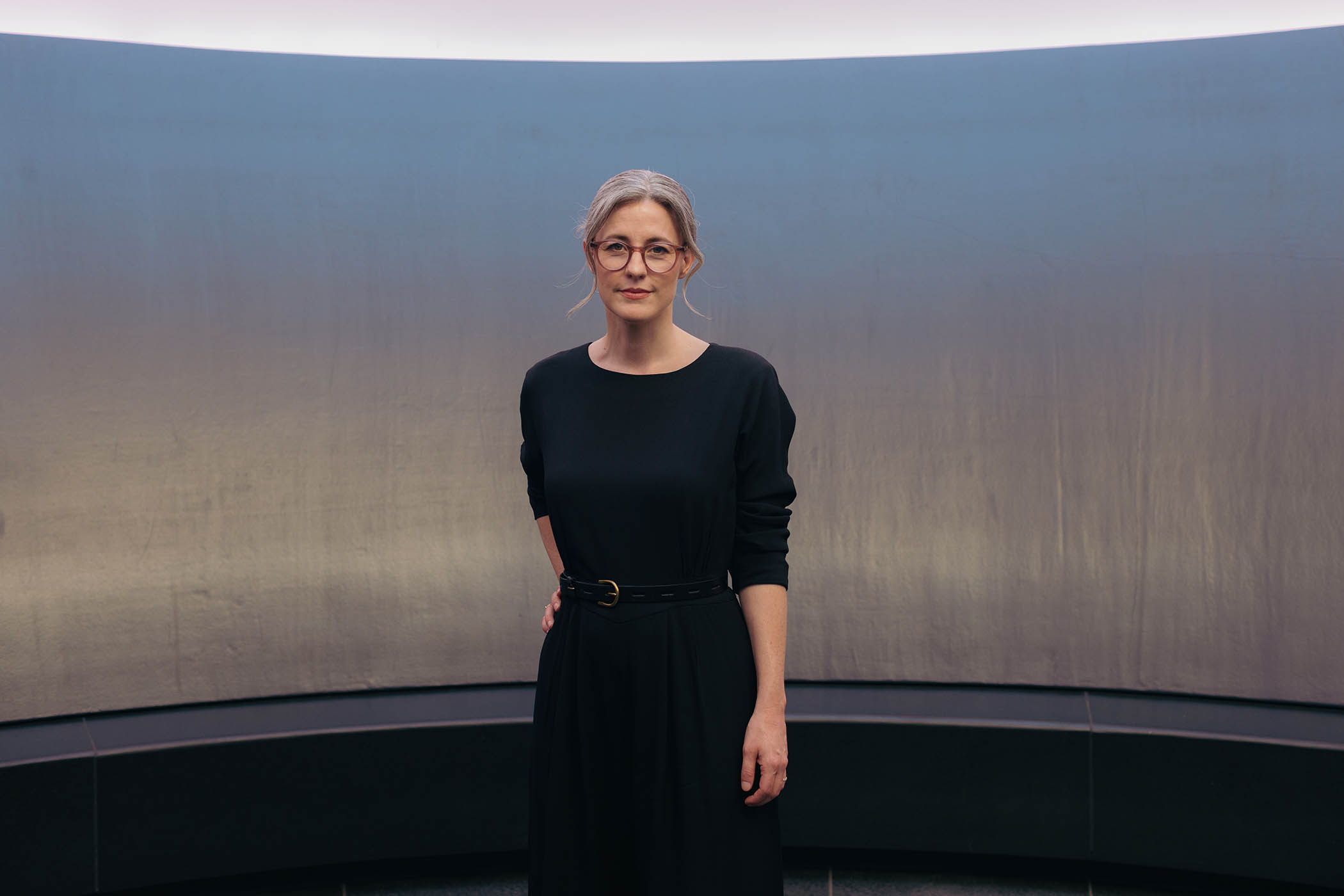

Portrait by Liz Moskowitz
In the autumn of 2021, the behavioural geneticist Kathryn Paige Harden received a letter at her office at the University of Texas in Austin, where she is a professor of psychology. It was from a man held in one of the oldest prisons in Texas, where he had been imprisoned since he was 16 years old. The letter described his crime.
It read: “Why would a young boy of 16 attack a total stranger, a female, at knife point in broad daylight at a busy intersection and make the female drive against her will to sexually assault her? What would drive a boy to do such a thing?”
The prisoner had come to Harden hoping for an explanation because of her research into how people’s genes, as well as their environment, combine to influence their behaviour. “I started to respond, and then I thought, ‘Wait, what am I gonna say?’” Harden says from her home in Texas over video call. “Do I have an answer for him?”
What the prisoner was asking, she later realised, was at the heart of her new book, Original Sin: The Genetics of Wrongdoing, the Problem of Blame and the Future of Forgiveness, which explores to what extent our genes are responsible for acts of wrongdoing, even violent crimes. “I think that’s part of why the side of science that I do is so unsettling to people,” she says. “It suggests that people didn’t have any choice about what genes they inherited, which can profoundly shape our behaviour, and we’re still going to hold each other responsible for what we do.”
Harden, 43, directs the developmental behaviour genetics laboratory at the University of Texas at Austin. Her first book, The Genetic Lottery: Why DNA Matters for Social Equality (2021), was broadly concerned with genes and education – the science behind the genes that are valued by society. She describes her follow-up as “the evil twin of the first book”, looking at socially unacceptable behavioural traits such as violence, aggression and cruelty, and how the science behind them complicates our shared notions about blame, punishment and moral responsibility.
The book makes a compelling case for the influence our genes have on life outcomes, and examines the extent to which some people who have committed violent acts or antisocial behaviour were in some way predestined to make that choice. “We like to tell ourselves that we’re making choices, and that if we are held responsible for what we do – including if we’re blamed and punished for it – that it will be because we would have had the opportunity to make a different choice,” she says. “We won’t be on the hook unless we had a chance not to take the bait.”
The act of procreating, unhelpfully termed reproduction, Harden writes, is in fact a “genetic coin flip”, whereby upon conception, a child inherits “an entirely unique combination of three billion DNA ‘letters’, which are commonly abbreviated A, C, G and T. A three-letter sequence of DNA letters, what you might think of as a genetic word, is called a codon.” The formulation of these codons determines the amino acid sequence for the protein it then encodes, instructing our brain how to respond.
The act of procreating, unhelpfully termed reproduction, Harden writes, is in fact a ‘genetic coin flip’
The act of procreating, unhelpfully termed reproduction, Harden writes, is in fact a ‘genetic coin flip’
Harden gives the example of the MAOA gene, which breaks down neurotransmitters such as serotonin, dopamine and norepinephrine to regulate our mood and stress responses. For those suffering from Brunner syndrome – named after the geneticist who helped identify a Dutch family in the 1990s who were biographically unremarkable aside from the fact that all the males were repeatedly and seriously violent – a single letter of DNA in the MAOA gene had been changed.
The resulting message in the body of that codon change, Harden writes, is “stop regulating one’s rage. Stop developing the joint excellence of reason and character.” Reported patterns of violence in related men around the world show instances of MAOA mutations. These were only found after their DNA was analysed and, as Harden asks: “How many other angry, impulsive, socially and intellectually impaired young men with genetic abnormalities go undiagnosed?”
Newsletters
Choose the newsletters you want to receive
View more
For information about how The Observer protects your data, read our Privacy Policy
In another chapter, she tells the story of Jeffrey Landrigan, a condemned double killer who, while imprisoned in Oklahoma for his first murder, learned about the biological father he never knew – a man who was himself on death row in another state for murder. Harden reports on studies that have found adopted children whose biological fathers have committed a violent crime are more likely to perpetrate one themselves, despite not having been raised by them or even met them.
The 2003 completion of the Human Genome Project, which successfully mapped and sequenced the entire human genetic blueprint, allowed scientists to identify genes that alter the probability of antisocial behaviour. “We keep identifying more and more genes that have these tiny effects,” Harden writes. “OXP2 is associated with hurting people physically, and CADM2 with impulsivity, and GABRA2 with drinking too much, and GPR139 with getting in arguments, and REV3L and WDPCP and FURIN and ZKSCAN5 and SMG6 and NEGR1 and SCAI and SNTG1 and NCAM1 ASCC3 BPTF SPG7 ZIC4 CUL3 RANBP17 MAPT NRAP MCHR2 ERAP2 PACSIN3 ICK CCDC88B XKR6 ALMS1 HS6ST3 TMEM110 TMEM163 STK32C IGSF11 SDK1 UTRN AFF3 ZNF75A…”
Viewed individually, these are like grains of sand, but added together, they eventually build up to a picture that, she argues, makes the influence of our genes hard to disregard. Harden doesn’t believe that our biology is our destiny, fully aware that, as humans, our environment and choices shape us too. “I don’t think people are all good or all bad, and we get into trouble when we project goodness and badness down to genes,” she tells me. “Some of the same genetic variants that might make you more aggressive also might make you more risk-tolerant in ways that cause you to get out of a bad marriage or cause you to start a new company.”
The extreme reading of this – that our DNA is a fixed code assigned at birth that we are doomed to enact – is a scary thought, but Harden argues it is more nuanced than that. “We can say whether, based on your DNA, you are in a high-risk group, whose probability of being arrested for a crime is twice as high as that of people in the low-risk group – but that probability is still far from 100%,” she writes. “There’s a yawning gap between being able to say that genetics makes a difference for violent crime rates and being able to say that this person will commit a crime because of their genes.”
The author grew up just outside Memphis, Tennessee, where she was raised a Christian. She attended church every Sunday, a Bible study group every Wednesday and her father taught Sunday school. She describes herself now as a “recovering Christian”, having stood up and walked out of a church one day while at graduate school in Virginia.
Still, Harden recognises that the Bible stories she was surrounded by helped her to see “the connections between Christian ideas and ostensibly secular ideas that are harder to notice if you weren’t steeped in that tradition growing up”. To demonstrate this, she makes a comparison with formwork – a type of construction where wet concrete is poured into moulds to shape it while it is setting – which she learned about from her husband Travis, an architect.
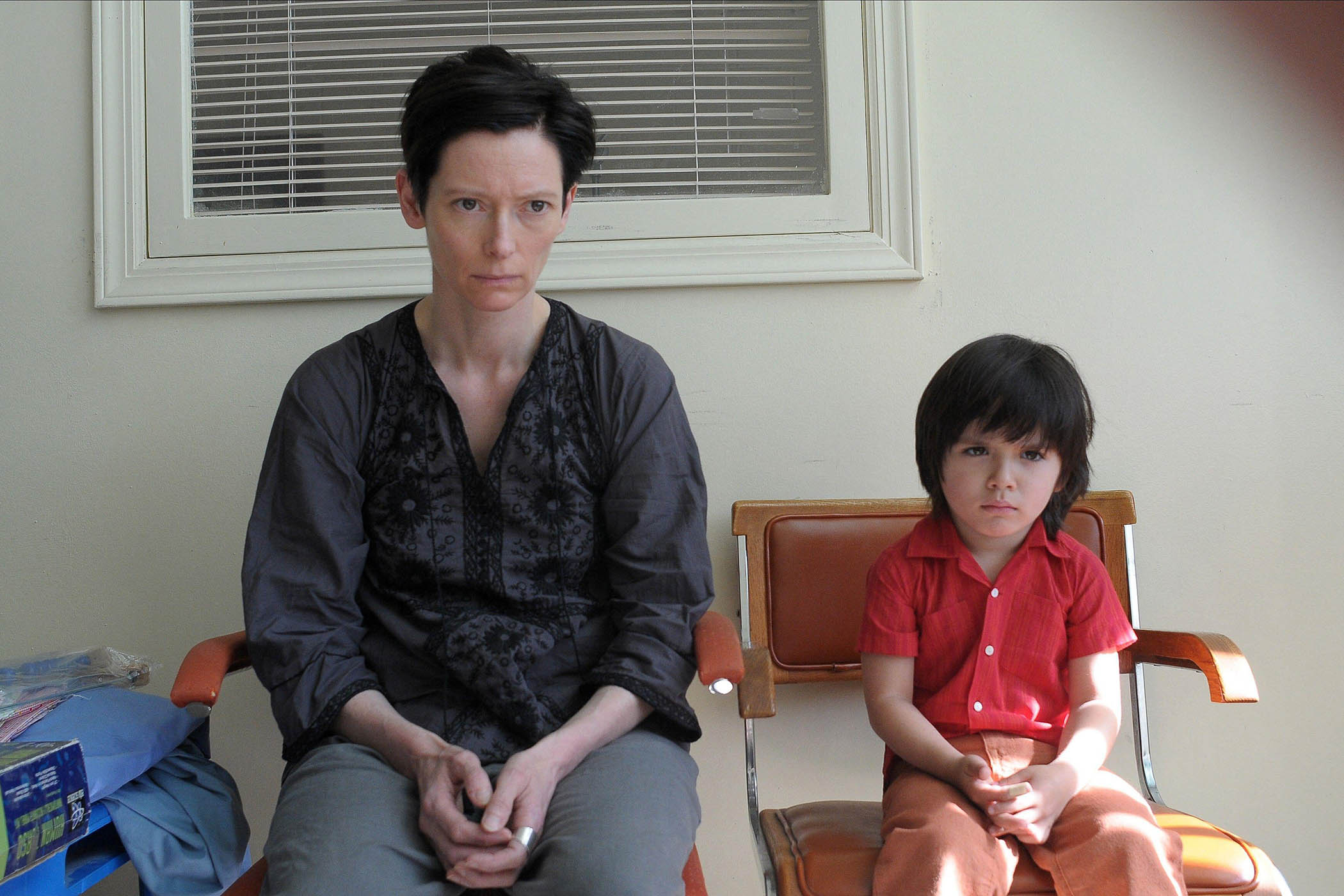
Tilda Swinton and Rocky Duer in the 2011 film We Need to Talk About Kevin
“That’s what I think Christianity has done for Anglo culture. We poured [in] the concrete for all of our institutions, and so many of our cultural narratives around sex, the body, punishment, responsibility and work ethic. Then we removed the formwork, but it forever shows the impression of what it’s shaped by.”
The religious connotations of Harden’s research into “sinful” behaviours is partly why the scientific world has been so suspicious of her work, with many peers challenging or altogether ignoring her research into behavioural genetics. In a 2021 New Yorker piece from around the time of her first book, Gideon Lewis-Kraus wrote that Harden is “waging a two-front campaign: on her left are those who assume that genes are irrelevant, on her right those who insist that they’re everything”.
A paper she published that year in the scientific journal Nature Neuroscience detailed the results from a project she had run out of her lab at the University of Texas over four years. The paper had been rejected for publication several times, the feedback illustrative of a resistance among scientists to explore the genetics of “sinful” behaviour such as crime, addiction, sex and suicide.
Since the publication of that paper and her first book, Harden has been accused of being a eugenicist, conflating her research with historical attempts – most infamously by the Nazis – to argue that there are inferior races based on genetics. Original Sin acknowledges the history of genetics being used for evil purposes and that “essentialism can beget eugenics”, but Harden is clear that the great lie of eugenicists is rather the idea of purity. “In the eugenicists’ fables, human biology can always be neatly categorised as ‘good’ or ‘bad’, and bad biology can always be found in a demonised other,” she writes. In reality, she adds, “nearly all genetic variation exists within each racial group, and two people who share the same racial category (eg, both ‘Black’) may be more genetically different than two people who are seen as being different races.”
Harden is a figurehead for movements often called the “hereditarian left” or the “psychometric left”, urging progressives to seriously consider the role of genetics in behaviour. This is especially crucial given today’s political landscape, where flawed arguments about our biology are influencing ascendant rightwing politicians and commentators. As Lewis-Kraus wrote: “The left’s decision to withdraw from conversations about genetics and social outcomes leaves a vacuum that the right has gaily filled.”
Harden believes that behavioural genetics makes people uncomfortable because it gets at the fundamental tension of being human, “which is that we are both caused creatures and experience ourselves to be subjective agents”.
The scientific world, she says, “tends to think of what’s natural as not moral”. This is evidenced by the acceleration of research into mental disorders such as depression, anxiety and addiction, proving that these behaviours shouldn’t be thought of in ethical terms or right and wrong. As she says: “Addiction is a brain disease – depression isn’t weak character.”
But the belief that what is natural cannot be immoral, Harden says, has come at the cost of restricting research on phenotypes linked to antisocial behaviour. “There are fewer scientific articles written about child conduct disorder – aggression, violence, not feeling guilty about it – than any other mental condition out there,” she says. “It’s the No 1 cause of children being referred to psychiatric services, and there’s less science about it than Tourette syndrome or schizophrenia or anorexia. When scientists aren’t studying something that’s so obviously a social problem, I think that’s something we should be curious about.”
During her first pregnancy, Harden found herself seeking out stories that depicted women giving birth to or raising monsters – films such as Rosemary’s Baby and Prometheus, and books such as We Need to Talk About Kevin. She was seeking catharsis; opening herself up to the potential horrors that motherhood can bring. She writes that, while the parenting literature at “the bookstore offers you the opportunity to Raise Good Humans, Raise Lions, Raise a Feminist Son, or, at the very least, Raise Kids Who Aren’t Assholes”, she found that “none of the mommy blogs and parenting books I browse include sections on parental concerns about giving birth to a son who will grow up to be violent”.
Harden’s background as a behavioural geneticist made her acutely aware of that possibility. It also meant she could not fail to notice the significance when her son was born with two of his toes fused together. Toe webbing – also called a “mark of Cain” – is an MPA (minor physical anomaly), like asymmetric ears or a curved fifth finger, and a sign that something might have gone wrong during fetal development, possibly because of a genetic mutation. “It’s a really classic finding in developmental psychopathology that these small physical abnormalities are related [to] psychiatric disorders, including aggression and violence,” she says.
Every day, I have to make a million choices about how I’m going to spend my time and every one is influenced by my genes
Every day, I have to make a million choices about how I’m going to spend my time and every one is influenced by my genes
As her son grew up, Harden watched for signs that he was exhibiting cruel or aggressive behaviour. She could not completely control the outcome, and yet, as his mother, she felt she would ultimately be to blame.
Relatively recent history shows how the illusion of mothers being in total control of their children’s emotional growth has contributed to wrongful blame, including how autistic children were once thought to be the result of supposed “refrigerator mothers” who lacked emotional warmth. Harden says that it has been liberating for genetics and psychology more generally to point out that “children are not lumps of clay and mothers do not have perfect control and unlimited, infinite responsibility about how their kids turn out”.
While there are now pills you can prescribe children to deal with anxiety or depression, and off-label drugs such as anti-psychotics or mood stabilisers, Harden says “there is no government-approved medicine that psychiatry can offer if your child’s problem is that they hurt people and don’t feel bad about it”.
She believes this is because many people see aggression as a social, moral or parenting problem; that perpetrators of school shootings and violent teenage boys are symptoms of our cultural collapse, never innate biology. “We used to think that about weight too, and then it turns out that you can inject someone with a peptide,” she says. “Before the Ozempic era, people who believed that being overweight was a sign that someone was a morally sloppy person were less likely to believe that body weight was heritable or influenced by genes. For a lot of [behaviour], there’s this choice: it’s either moral or it’s biological. And as soon as the evidence becomes really convincing in the biological direction, we flip to the other story.”
Where does that leave crime and punishment? While double murderer Jeffrey Landrigan tried to appeal his conviction on grounds that his biological inheritance predestined him to violence, he was nonetheless killed by lethal injection. Our society, with the markings of its Christian formwork still visible, wants to see those who have done wrong treated accordingly, despite how much their genes may be to blame. “In those instances, we can accept that it’s biological, but that means that you’re really bad,” Harden says. “You’re bad to the bone, or essentially bad, and then you deserve to be punished.”
I ask about the possibility of a pill or genetic treatment to cure “evil” in the future, and Harden admits that there’s no way of knowing yet what that would look like, though she hopes that people will at least start to acknowledge the role our genes play as part of the picture. Not that we see our genes as a code that condemns us, but instead as an important factor that may help us better understand ourselves.
“Every day, I have to make a million choices about how I’m going to spend my time and, every day, every single one of those decision points is ever so slightly influenced by my genes,” she says. “Those genes are with me every moment – like the tiniest little hand on the scale.”
Original Sin: The Genetics of Wrongdoing, the Problem of Blame and the Future of Forgiveness is published by Weidenfeld & Nicolson (£22). To order a copy for £18.70 go to The Observer Shop. Delivery charges may apply.
Photograph by Alamy