
He was born Alexei Maximovich Peshkov but called himself Gorky – meaning “bitter”. The “stormy petrel” of the Russian Revolution, he was at one time close to Stalin but probably poisoned by him. Advised by his friend Chekhov to take up writing for the theatre, he produced, alongside The Lower Depths, the drifting, acerbic, rarely staged Summerfolk.
First seen in 1904, the same year as The Cherry Orchard, this almost-sequel and riposte to Chekhov’s last drama alchemises melancholy into disgruntlement and puts on stage an unfamiliar layer of Russian society. The summerfolk are the dachniks: just-made-it lawyers and doctors who are the children of cooks and laundresses. Comfortably off, fretful, carping, disloyal, these seasonal visitors to the countryside perch in houses built on land where the cherry orchard might once have stood.
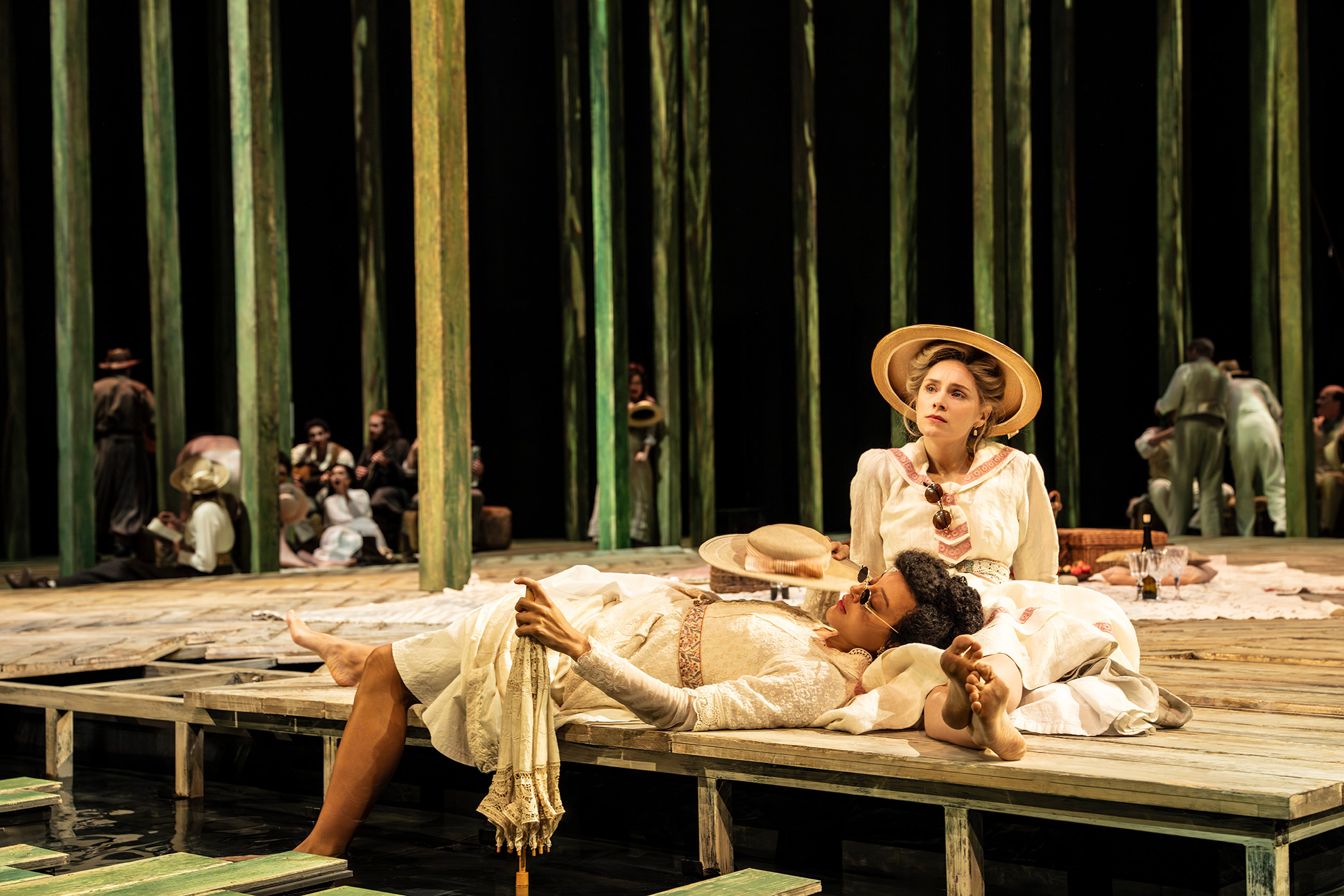
In Robert Hastie’s new production, their precariousness is physically underlined: the action is patrolled by watchmen got up in such exaggerated peasant gear they might be illustrations from a child’s book about ancient Britons. Waiting for their turn in the sun, they comment on what the incomers – “scum on a puddle” – leave behind them: “Mess”.
When Trevor Nunn directed Summerfolk at the Olivier in 1999, it spun like a top. The light was dappled and the soundscape heat-filled. The cast included Simon Russell Beale, Roger Allam, Patricia Hodge and the late Michael Bryant. The talk was of futility but the atmosphere was buoyant. Hastie’s production is less tight. It feels, particularly in the early scenes, unmoored: frustrating, sometimes confusing – and therefore very much in tune with the characters in Gorky’s play. A myriad of tiny scenes – of adultery, failed love, baleful complacency – flicker one after the other. It is an evening of episodes rather than plot, driven by a growing swell of discontent, which ends in feminist bonding, resolution and a denunciation of listlessness. Fascinating rather than forceful.
The production feels, in the early scenes, unmoored – and therefore very much in tune with the characters
The production feels, in the early scenes, unmoored – and therefore very much in tune with the characters
Chekhov, who dismissed critics as gadflies preventing horses from ploughing, particularly disliked the way they – we – make comparisons between playwrights. Still, it is hard to avoid, or want to avoid, thinking of him when Gorky, the lesser writer but a strong one, shadowboxes so extensively with Chekhovian material. A beautiful woman nonchalantly breaks hearts; a shot rings out in the forest; a famous author (“Hair! So important for a writer!”) struts around; a play is rehearsed; an embarrassing poetic declamation unleashed.
Peter McKintosh’s design is traditional Chekhov with a twist. A skeletal wood house – no samovars – is Shakerishly plain, precariously open to the outside world of sylvan green; the shelter capsizes to give way to an open forest space with – always suggestive on stage – a stream of water. Paul Pyant’s lighting ripples shadows over tree trunks so that they suddenly become unstable, while Alexander Faye Braithwaite’s soundscape briefly shakes the air with mechanical musical crunches composed by Nicola T Chang.
Characters click past each other, briefly interlocking. Adelle Leonce is luscious as a pantaloon-flashing tease; Sophie Rundle, who disrupts men’s hearts and eventually rounds on her fellow dachniks, has a creamy assurance but insufficient velocity; as her husband, Paul Ready cleverly peels off layers of jovial self-importance to reveal a threatening lout.
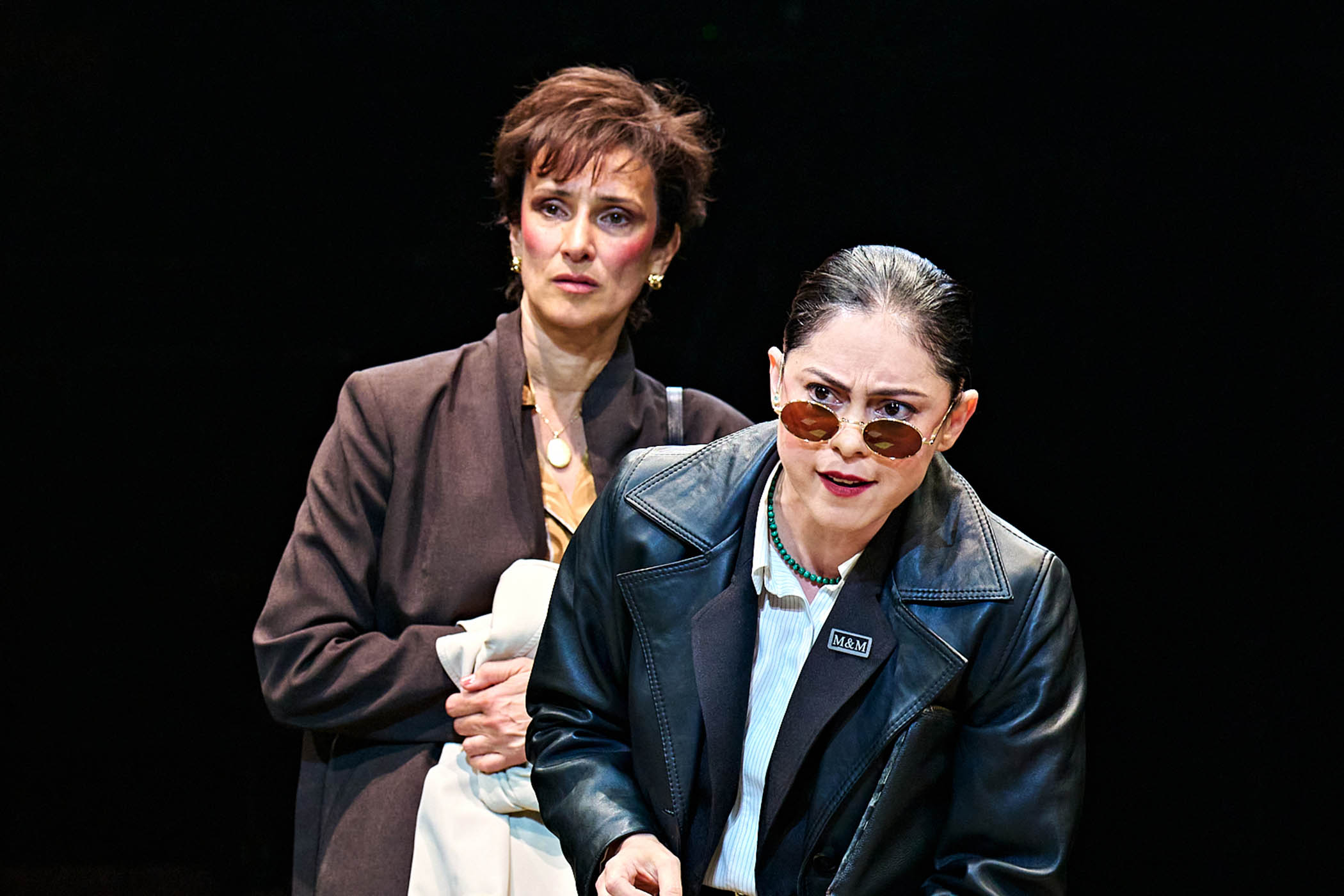
It will be no surprise to anyone who saw her in The Plough and the Stars or Alma Mater that the knockout performance of the evening is from the marvellously truthful Justine Mitchell (also the stepmother of Jessie Buckley’s character in Hamnet). Marked out as a serious woman by wearing a tie (we are spared the look-at-this-clever-female specs), she holds the most original thread of the story: she is a woman with grey hair who is adored by a much younger man. She loves him back but dare not follow her instincts. Mitchell plays her with level anguish. Until her longing engulfs her. A scene in which she hovers while Rundle, the sister of the paramour, urges her to grab her chances, rockets the play into another dimension. One of fiery complication.
The dynamo in Hastie’s production is the tremendous new version by Nina and Moses Raine (sister and brother): she the author of Consent and Tribes; he of Donkey Heart, which, in picturing three generations of a family crowded together in a Moscow flat, drew on the experience of his Pasternak predecessors. Their dialogue is electric, fizzing from one sharp line to another, spicy with 21st-century idiom – “it’s not a thing”. There is weirdness in this comedy: “I’m just another unhappy woman. With big earlobes.” There is subversion of Russian soulfulness in this musing: “It’s always the same with philosophy. It gets violent.”
Summerfolk is at the National Theatre, London until 29 April
Newsletters
Choose the newsletters you want to receive
View more
For information about how The Observer protects your data, read our Privacy Policy
Photograph by Johan Persson