
Rachel Joyce’s The Unlikely Pilgrimage of Harold Fry is the story of a retired man who, like an Anglo Saxon Forrest Gump, goes to post a letter to his dying friend and decides instead to walk 600 miles across England to say goodbye. It has been on its own journey: from radio play, to Booker-longlisted novel to Jim Broadbent tramping in yachting shoes and now – such is the rite of passage – to musical. But no eye roll, please: in fact, this unlikely tale – nearly undermined, for some filmgoers, by its sheer implausibility – is perfectly suited to the unlikeliest of theatrical forms.
And, since it is adapted by Joyce herself, it has the freedom to depart from the source material and seize the musical’s advantages: a story about grand gestures, expressed through dance; an ode to the natural world, through the indie singer Passenger’s whimsical, folk-inflected songs. Also, there is the form’s strength (or weakness) for sentimentality. But where the film navigates shifts of tone and subject – complicated faith, the terror of grief and its expression, the disorientation: what to do with the hours before and after discovering you cannot save someone you love? – the musical sets the tone from the off and does not stray. “Sugar or sweetener?” Harold is asked, when handed a cup of tea by his wife Maureen. The script takes two, of both; it is comforting and will be to some tastes.
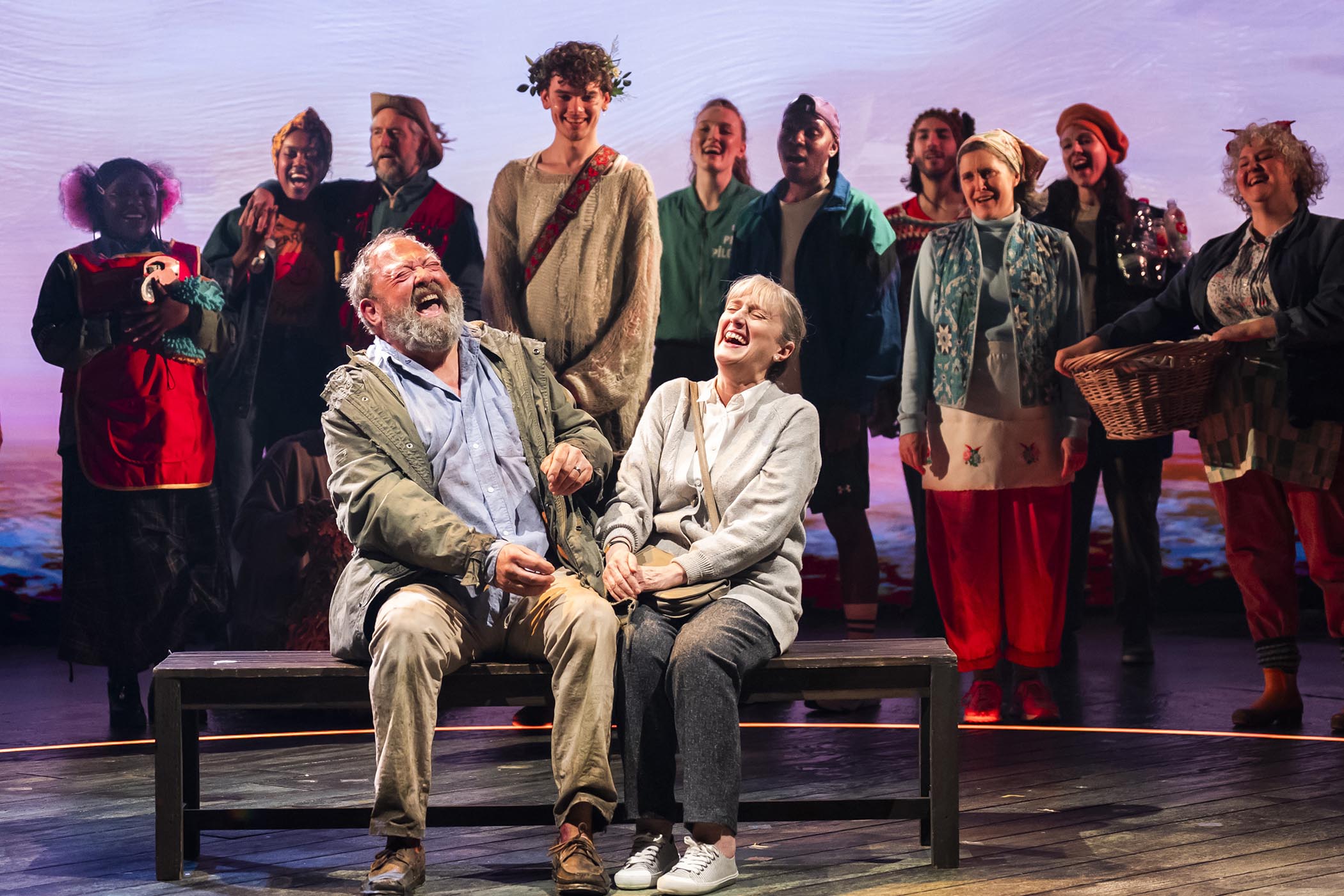
It offers a vision of a postcard-perfect England, traversing marmalade and net curtains, via green fields, and finishing at a nice bench. The view is lovely: red skies, shepherds, delight, courtesy of designer Samuel Wyer. There is a distractingly gorgeous puppet dog, and occasional bite (one song is called You’re Fucked!), but a lyric suggesting Harold is off to “see how great Great Britain can be” is – how to put it politely? – a bit fucking testing.
The clouds come over in the second act because, in truth, Harold is not only walking towards his friend Queenie, ailing in her hospice bed, but confronting his own personal tragedy: the suicide of his son and the repercussions on his marriage. Broadbent wore his sadness on his skin from the beginning; Mark Addy’s Harold is so robust and hearty that when anguish surfaces, it is impossibly sudden, a storm out of nowhere. The son, brilliantly conceived at first as a puckish balladeer who accompanies Harold on his journey, then as the troubled David, is played by Noah Mullins with ethereality. His very presence – surreal, serene – is almost enough to lift the drama when the pilgrimage becomes a plod. We all should have been transported, but the ground underfoot is mushy.
Photograph by Tristram Kenton
Newsletters
Choose the newsletters you want to receive
View more
For information about how The Observer protects your data, read our Privacy Policy