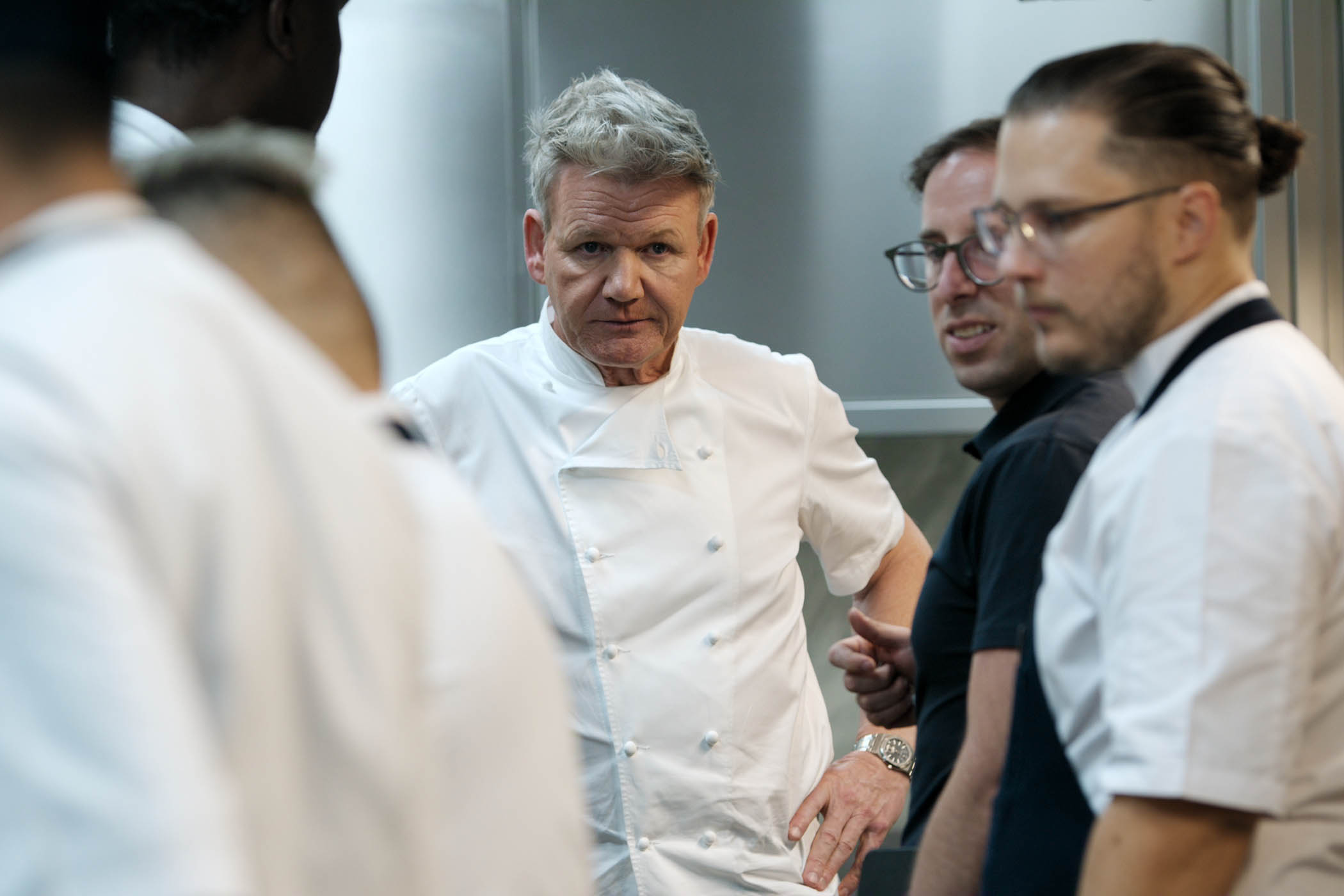

There is a moment in Being Gordon Ramsay where you remember, for a few brief minutes, why this man was once deemed entertaining enough to become famous. Ramsay is tasting the prospective menu for his Asian-inspired restaurant Lucky Cat – a branch of which will open in his monstrous new five-restaurant enterprise at 22 Bishopsgate in the City of London – and he’s stressed. Here we see vestiges of the man whose sharp tongue made him a brilliant TV villain. A sous-chef gingerly asks if they should present the certificate that comes with the A5-grade wagyu beef to diners. “I think it’s a bit wank. If I’m eating dinner and someone gives me a fucking certificate …” Ramsay says, whacking the counter. “It’s like serving a pair of bollocks to a pig you just ate.”
Two hour-long episodes in, and finally this is the Ramsay we love to hate; an impatient perfectionist who has no time for pleasantries on the long and hard road to excellence. Until this point, the only genuine moment of drama in Netflix’s documentary has come from him pranging his car. Not for lack of trying, however, as the endless voiceovers set to drone footage of his new culinary venture try to convince us again and again; this is the biggest thing the chef has done yet – it’s make or break – and he’s put everything on the line.
Otherwise, over six agonisingly dull episodes, Being Gordon Ramsay – an extended trailer for his restaurant and TV empire that makes you long for the silence of paint drying – looks far and wide for something story-worthy. It’s a search with strange results, including a segment about construction manager Terry explaining how his travel schedule to the site affects his weekends.
A camera crew has followed Ramsay and his family for a year, capturing them on the sofa at home, on the school run – basically any setting that might make him look like a doting family man or the big softie who the women in his life protest (a little too much) he really is. “I think people think they know Gordon because they see him everywhere,” says his wife Tana. “He’s known for being opinionated, for saying it straight. But do they know you when you’re at home behind closed doors? No.” But behind closed doors is the opposite of this unbearably staged work of television torture, which has, of course, been made by the chef’s own production company, Studio Ramsay Global. So cosy is the atmosphere with the crew that you can hear them all laughing when he jokes that the sofa he’s sitting on for an interview is too low. Good one, Gord.
This is an extended trailer for Ramsay’s empire that makes you long for the silence of paint drying
This is an extended trailer for Ramsay’s empire that makes you long for the silence of paint drying
Luckily, for anyone seeking a modicum of reality in their reality TV, there are those accidental flashes of the real Ramsay. Another comes when he throws a press party on the terrace of Lucky Cat. The aim is to “fuck every food critic off in the country” because “their egos” have “destroyed restaurants”. Instead, the event is “his clever way” of saying thank you to the influencers he claims have the capacity to finish him off but, as you can plainly see, are more than happy to blindly cheer for free food.
He rounds off this segment by calling the late Sunday Times food critic AA Gill a “knobhead” because he dared make a joke about him. Willingly letting the world know in a self-made documentary that he’s too thin-skinned to face real food critics lest they get in the way of his bottomless greed for more money and attention is a real own goal. But then Ramsay just can’t help himself.
Another reputation-laundering documentary comes in Reality Check: Inside America’s Next Top Model, which looks back – often in horror – at the early 2000s reality series that ran for 24 seasons. The show, which saw young aspiring models compete to win a contract, has of late faced scrutiny over the unethical photoshoot challenges, humiliating storylines and for failing in its duty of care to the contestants.
One person who didn’t get the memo to appear apologetic is the former host and judge Tyra Banks, because what initially appears to be another opportunity for the villains of reality TV past to clear their names turns out to be a fascinating study of a human being entirely void of self-awareness. Banks truly seems to believe that she was a saviour for these young women, as she talks at length about her fight against the fashion industry’s narrow view of beauty.
That fight includes Banks telling a black model that her skin looks “ashy”, threatening another with elimination if she doesn’t get her tooth gap narrowed and shaming numerous contestants for being overweight. This is the fashion industry, after all, she reminds them. So much for her promise to “show beauty in a different light”.
The show’s shocking, dehumanising photoshoot challenges, which saw contestants swap races, dress up as homeless people or victims of violent crimes, and wear clothes made of meat carcasses, are made even worse with behind-the-scenes testimony from the models who are still suffering from the experience of being on the programme. Only one, who was sexually harassed on set and told off for complaining, inspires Banks to make an apology. Still, her choice of words – “I say to Keenyah [Hill]: boo-boo, I am so sorry” – make it hard to believe she’s done much soul-searching.
Newsletters
Choose the newsletters you want to receive
View more
For information about how The Observer protects your data, read our Privacy Policy
The theatre of cruelty in America’s Next Top Model milked humiliation to boost ratings, but Banks’s master deflection is to say that “we kept pushing” because “you guys were demanding it”, pinning the blame on the audience instead. The nadir of this approach involved another young contestant, Shandi Sullivan, who says she was filmed having sex while she was “black out” drunk. The way the show seized on the fallout from this incident alone is evidence of the moral bankruptcy of some reality television.
But Banks, who has been all too keen to take credit for every element of the series from conception, refuses to feel any shame or take responsibility. “It’s a little difficult for me to talk about production, because it’s not my territory,” the show’s executive producer says flatly. Every inch the villain we deserve.
Photographs by Netflix