

Hailed as a confessional drama of unvarnished candour and stunning originality, Richard Gadd’s autobiographical Baby Reindeer was a big hit on Netflix a couple of years ago. But beneath its web of trauma and abuse, half hidden by its distinctively lurid design, was, to my eyes, a much more calculated piece of work bedecked in emotional manipulation and dubious authenticity.
That was perhaps a minority opinion because it went on to win several awards, including Baftas, Golden Globes and Emmys, and now the much-in-demand Gadd has returned with Half Man, a six-part co-production between the BBC and HBO that is a far more impressive achievement.
The story follows two teenage boys whose lives become entwined when they share a bedroom in the house occupied by their lesbian mothers. Ruben, played with coiled menace by Stuart Campbell, is fresh from a young offender unit, his patent volatility bordering on psychopathy. Niall (Mitchell Robertson), by contrast, is sensitive, troubled and unsure of his sexuality.
In the opening two episodes, set mostly in the late 1980s, we see a mutually supportive yet ineluctably destructive relationship form between the two fatherless young men (Niall’s is dead, Ruben’s unmentionably absent). Niall looks to the strutting, fearless Ruben for the confidence he lacks. But the price of an ego boost from his would-be stepbrother is terrifying chaos and brutality.
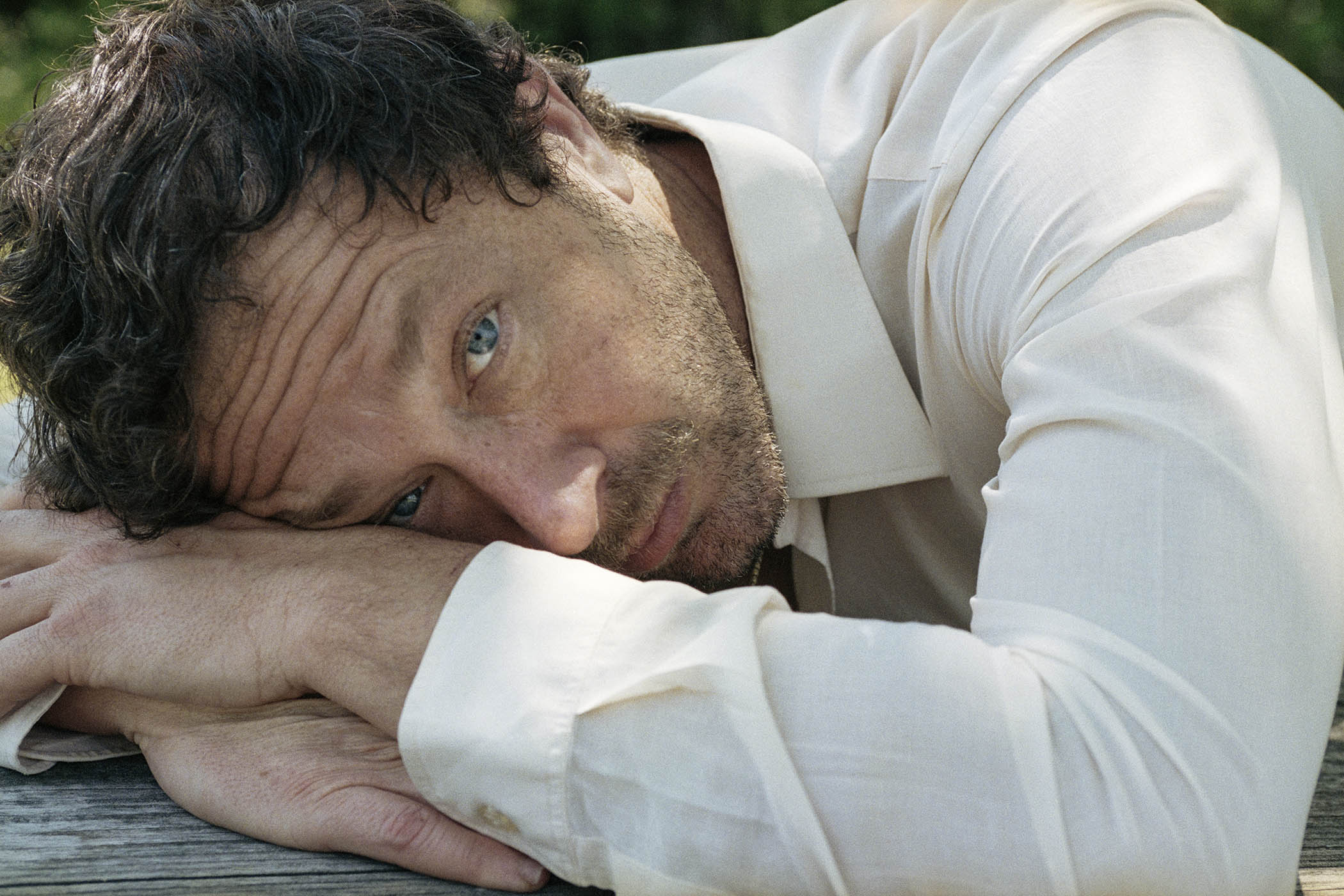
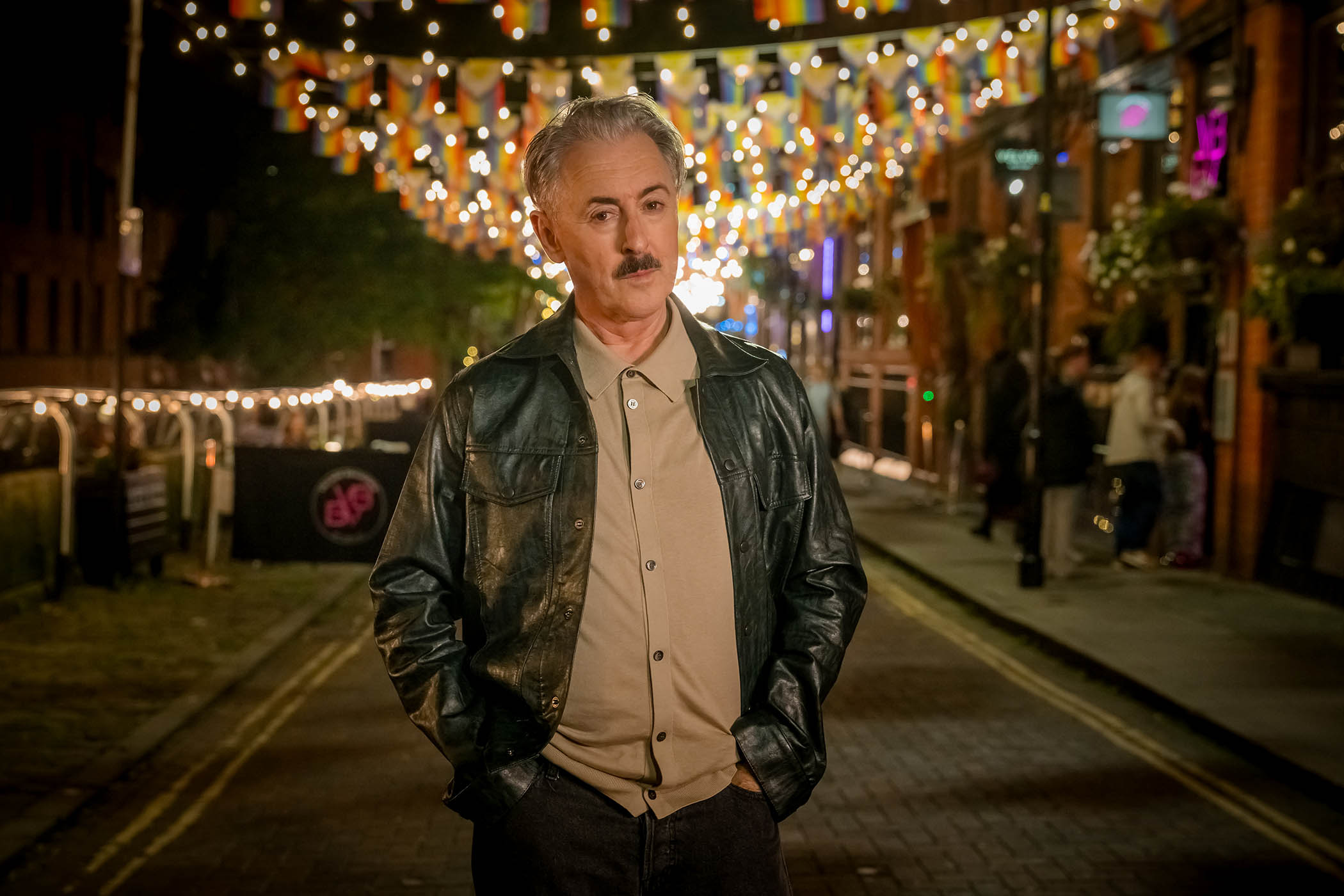
Things come to a head many years later at Niall’s wedding, when a brooding, leather-clad Ruben turns up unannounced on a motorbike seeking to reaffirm his twisted psychological bond with the bridegroom. The adult Niall is played by a taut-faced Jamie Bell, while Gadd plays a beefed-up Ruben. Not since Robert De Niro in his protean prime has a physical transformation been quite so dramatic as Gadd’s. It’s hard to reconcile the muscle-pumped figure of Ruben with the fragile protagonist Donny Dunn in Baby Reindeer.
The action is internal: the mental anguish stemming from turmoil and the turmoil created by mental anguish
The action is internal: the mental anguish stemming from turmoil and the turmoil created by mental anguish
It’s not just bodies but characters that Gadd has switched. If the bullied Donny was a progenitor of the bullied Niall, then Ruben is a male version of Donny’s stalker, Martha: insistent, unstoppable and compelled to behavioural extremes by minimal or imaginary provocation.
Although advanced publicity for the show has used buzzwords such as “toxic masculinity” and the “manosphere”, Gadd’s interest seems more focused on the interaction between trauma-carrying men than in exploring misogyny. As in the earlier drama, women feature less as victims of male anger than the causes of it.
In Baby Reindeer the women were demanding and unsupportive of Donny’s creative ambitions, except Martha, who loved his standup show but was a deranged bunny boiler par excellence. In Half Man, the women function to undermine or misunderstand Niall. His mother is hard and dismissive; her (underwritten) lover is indulgent of her pathological son. The young women in the first two episodes are sexually bold, even predatory, or in the case of Niall’s blond university dorm-mate, Joanna, giggly and desperate.
At one point we learn, but do not see, that Ruben spits in Joanna’s face. Niall seems underwhelmed by this news, and is only later mildly perturbed when Ruben explains: “If you give away your body so easily like that don’t be upset if it comes back with spit on.” It’s not as if Gadd condones such an outlookwe are meant to recognise its ugliness – but it’s perhaps fair to say that he signposts his disapproval of homophobia more unambiguously.
Although the setting is Glasgow, with Gadd the real action is always internal – the mental anguish stemming from turmoil and the turmoil created by mental anguish. It’s a dark place, to be sure, full of shame and misery, but the sometime comedian is not afraid to make it his dramatic home. And once we enter, it’s not easy to leave behind.
Newsletters
Choose the newsletters you want to receive
View more
For information about how The Observer protects your data, read our Privacy Policy

Emma Laird as Shannon in Mint
Also set around Glasgow is Mint, an eight-part reworking of Romeo and Juliet in which the star-crossed lovers are Arran (Benjamin Coyle-Larner AKA Loyle Carner, the hip-hop musician making his acting debut) and Shannon (Emma Laird), two members of rival crime families.
It’s made by Charlotte Regan, the talented young film-maker who in her feature debut, Scrapper, threw at the kitchen-sink drama everything but the kitchen sink. Here, she employs similarly wide-ranging techniques, including flights of magical realism, albeit with more jarring results.
The casting, for a start, is counterintuitive in ways that seem more interesting in theory than in practice. Sam Riley and Lindsay Duncan are incapable of dull performances but their gifts are not best displayed as a gangland godfather and his promiscuous mother (grandmother to Shannon). A master of reticence and dissipation, Riley never fully inhabits the part of ruthless Glaswegian gangster, we’re rather waiting for him to cross his legs, light a fag and look wistfully into the middle distance, lost in a reverie of a misspent youth. Whereas the heavy-handed sexual innuendo in which Duncan’s character trades makes her sound like a superannuated Samantha from Sex in the City, if she were Scottish and spoiling for a naked scrap. It’s a credit to both actors that they’re still highly watchable.
In any case, everything in a love story boils down to the chemistry between the leads. Carner and Laird are certainly an attractive couple, but their appeal doesn’t transcend the youthfulness of their characters, so their liaison feels more like the stuff of YA fiction than epic romance. Unlike our disbelief, Shannon spends quite a bit of time suspended. When she’s not in midair, the camera fixes on the city’s industrial landscape, as if to suggest the gritty underbelly that calls for soaring escapism. It’s an odd confection, but you have to admire the intention to break new ground with a very old story.
The second part of Ric Esther Bienstock’s Speechless documentary on transatlantic cancel culture covered the enforced resignations of the Harvard biologist Carole Hooven and Sussex University philosopher Kathleen Stock because of their insistence that biology determines sex differences. Both felt abandoned by colleagues who either joined the witch hunt or feared that any form of support would make them the subjects of it too.
Some of the universities in this marathon film have clearly lost faith in the idea that the best way to oppose an opinion is by articulating a more convincing one. There may be many sophisticated reasons for that, but I wouldn’t rule out rank cowardice.
Photographs by BBC/Mam Tor Productions/Anne Binckebanck/House/Fearless Minds/BBC/Mark Mainz