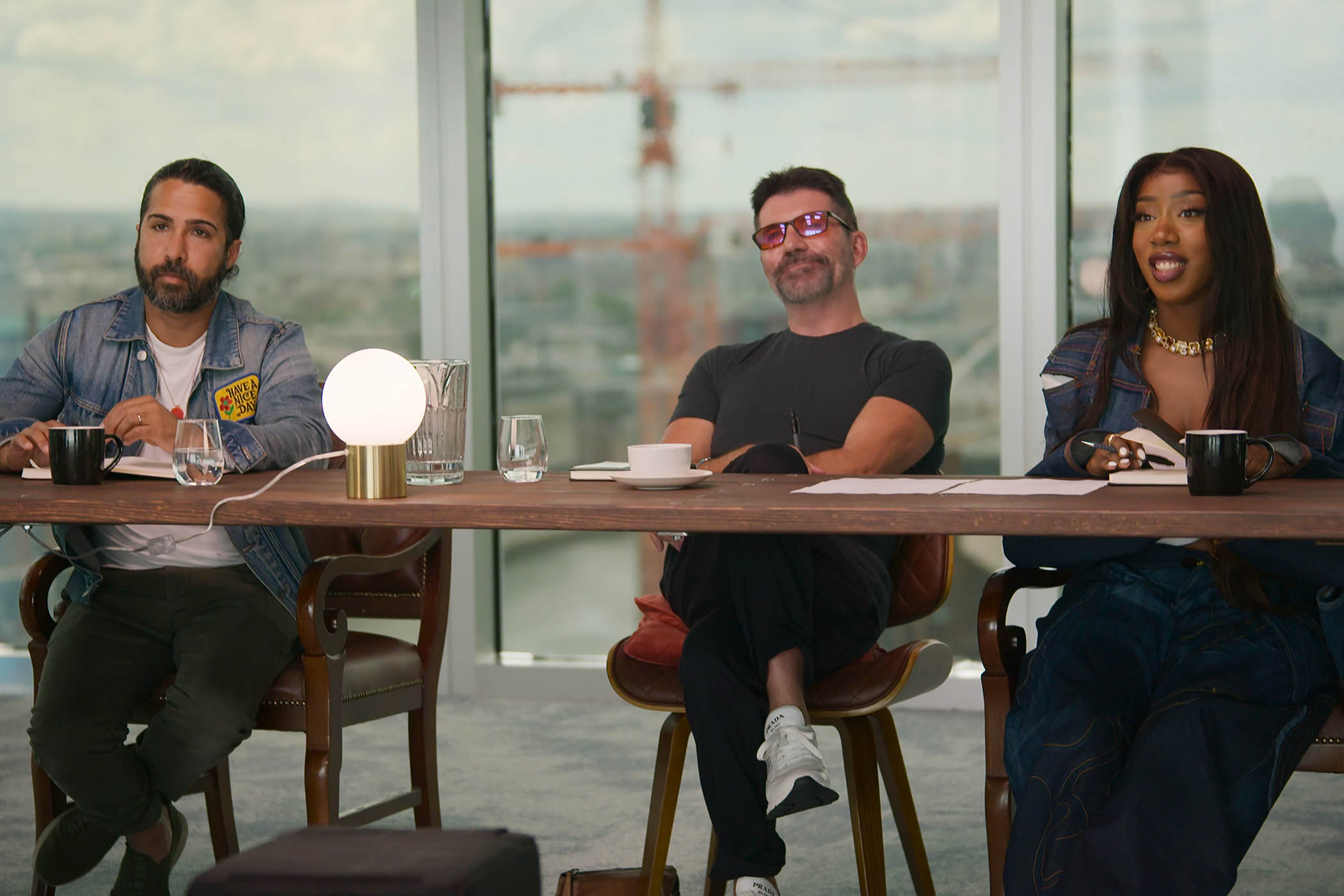



Where have all the boybands gone? This is the question Simon Cowell sets out to answer in his new documentary, Simon Cowell: The Next Act. Yet it seems the one he really wants some answers to is: where has Simon Cowell gone?
In the documentary – partly an attempt at reputation rehabilitation, and partly, for anyone under 25, an explanation of who this vape-honking ghost of reality TV past actually is – Cowell grapples with his decline. Less than 20 minutes into the first episode he stares down his image in a more literal sense as he stands by the side of a road, personally pasting his face on to a billboard advertising his latest talent search. (Don’t worry, he has a QR code and he’s live on Instagram.)
All Cowell’s Avengers team of staff and songwriters (here talked about in terms of how many “billion-plus” streams they have to their name) have to do is sit back and wait for applications to roll in. Instead what happens is that 9,000 people visit the website, and of those only 160 apply. Actually, “to be perfectly honest, only 93 of them are candidates that are actually possible”, says James, PR firm, no known streams, because a bunch of applicants in their 40s didn’t read the age range was 16-18.
“Well this is a disaster,” Cowell says. And he’s not referring to the fact it took assembling a crack squad of music industry experts to realise that few teenagers want to read five minutes worth of text before they get to an entry form. Guys, did anyone try this on mobile?
All of this makes for great entertainment: not for the intended reasons, but because it is fascinating to witness someone becoming aware of their irrelevance in real time. For those who grew up watching The X Factor, there is a schadenfreude to seeing a kingmaker reduced to a jester, begging for attention from TikTok influencers. “Since One Direction decided to split up I haven’t signed a successful boyband and I miss it,” Cowell says in a rare moment of authenticity. “I miss it so much.”
Eventually he does get enough applicants to host auditions, but for anyone who can recall the camera panning the snaking queues on The X Factor, the sight of a slow trickle of boys and young men with guitars on their backs is tragic. This isn’t Cowell’s fault. While he was away, fame has warped into something else. Young people no longer need someone to make them a star, they can become one themselves. They are also more likely to list “influencer” than “popstar” as their dream career. Being in a boyband is hard work, as Cowell reminds the applicants. But if his last success was a boyband who split up almost 10 years ago, what exactly is he asking them to work hard for?

A boyband rehearses in Simon Cowell: The Next Act
The fate of One Direction member Liam Payne is the elephant in the room. News of Payne’s death, after he fell from a hotel balcony in Buenos Aires, interrupts the production. Cowell debates whether to continue with the show.
Cowell’s grief is evident, but the series has no real reckoning with the role of the machine that makes stars and then spits them out. To do so might in some way implicate an industry boss like Cowell, so instead there’s a meeting called with the parents and hopefuls where he decides to continue because “I want you to have this opportunity”. Cowell opens up the floor to their queries, yielding one revealing question: what would he be telling his own son to do? “My first question would be, honestly, do I really, really believe my son can deal with what comes when you become well known?” he says, deftly passing the responsibility to the parents to make an assessment of the pressures of fame in an industry they have no experience of.
This kangaroo court inquiry, and a dedication to Payne at the end of the episode, is about as much soul-searching as is offered here. Cowell is not responsible for what happens to people 10 years after making them famous, as he has said, but there is a duty of care when you expose young people to a reality-distorting world. Now he has a son of his own, that seems to have just hit home.
This next act – one that speaks in the language of care, but uses the same methods to extract something marketable from young people – sees Cowell attempt to address his pantomime villain era. We see shots of the boyband hopefuls cleaning cars or working in Nando’s, as though Cowell is a wealthy benefactor whose Midas touch can lift them out of poverty. The promise he made to them is his reasoning for carrying on. Honestly, this is all about them.
Newsletters
Choose the newsletters you want to receive
View more
For information about how The Observer protects your data, read our Privacy Policy
The show comes after a glut of soft, self-produced documentaries from celebrities such as David and Victoria Beckham, and Prince Harry and Meghan. Next year Gordon Ramsay will put out Being Gordon Ramsay, produced by Studio Ramsay Global, which he co-owns, presumably in the hope that few of us remember that being Gordon Ramsay once involved abusing staff and having critics thrown out of his restaurant. Perhaps the TV villains of the 90s believe if they simply pump out enough footage of them with their children and talking about how much they have changed it will erase what came before. For a reminder watch Boiling Point, the 1998-9 series which Ramsay didn’t have the final cut on.
Simon Cowell: The Next Act instead does something I imagine Cowell thinks is very clever: distracting from this personal PR push by saying he “just wants to change young boys’ lives”. It is hard not to wonder, given the emotional cost and short shelf-life of being a boyband member, if they might be better off at Nando’s.
Photographs by Netflix