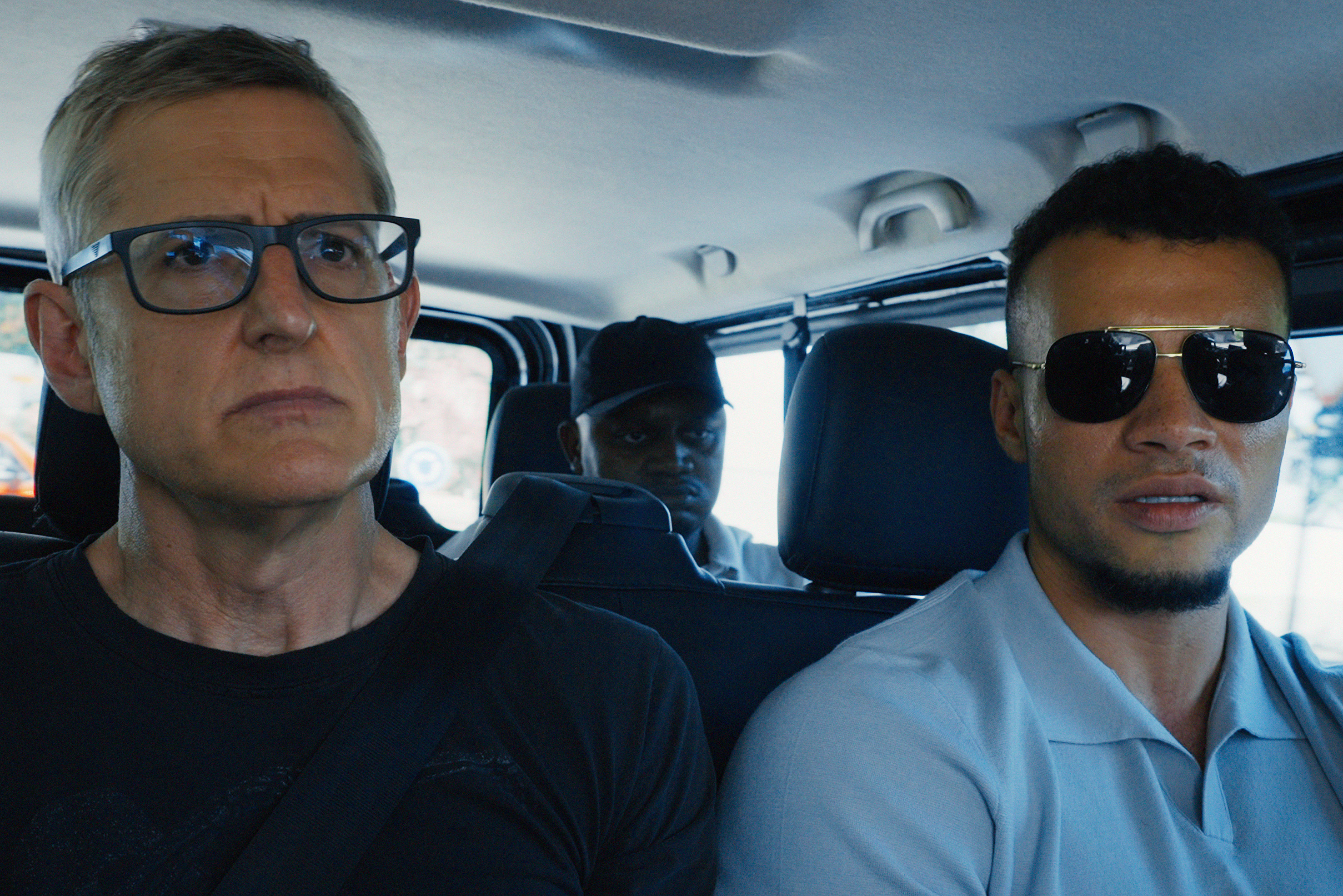

The new Netflix documentary Louis Theroux: Inside The Manosphere makes clear just how predictable and stagnant the sexist and misogynist online grift has become these days.
The manosphere, for the uninitiated, is the online landscape of toxic male influencers who earn mega-bucks by exhorting millions of mainly young followers to denigrate women. It’s “Adolescence: The Reality” or, going by the sorry lot Theroux encounters here, A Clockwork Orange meets Beavis and Butt-Head.
The most notorious of these influencers is Andrew Tate, who remains under investigation with his brother Tristan for human trafficking and other offences. Theroux fails to secure a meeting with Tate, instead travelling to Marbella, New York and Miami to interview British fitness, dating and cryptocurrency influencer HSTikkyTokky (Harrison Sullivan), “success coach” Justin Waller, who brags about having dinner with Barron Trump, and podcaster and vlogger Myron Gaines (Amrou Fudl), whose 2023 book is entitled Why Women Deserve Less.
There’s a clash of sensibilities: the old-school camera crew juxtaposed with the influencers’ lawless livestreaming, which exposes Theroux to audience taunts (jibes about his 2000 Jimmy Savile documentary) and ridicule. The documentarian doesn’t relish becoming content; the influencers suspect him of doing a “hit piece”.
Elsewhere, there’s standard manosphere fare. There is much discussion of the “attention economy” (big influencers can make millions, which is all any of them care about). “Red-pilling” the Matrix (the rigged system conceptualised by the 1999 film of the same name). Antisemitism. Homophobia. And of course, misogyny: women reduced to “vagina and titties”; “one-sided monogamy”, where only men are allowed to stray (interestingly, their partners seem unimpressed by their worldview). When Sullivan’s mother appears, she reproaches her son (telling him to clean his floor) but also rebukes Theroux: “If you don’t agree with what Harrison is doing, then why are you making money off it?”
There’s little new here, just more grifting copycats singing from the Andrew Tate hymn book
There’s little new here, just more grifting copycats singing from the Andrew Tate hymn book
There’s an effort to show the vulnerability – the bruised underbelly – of influencer culture (unstable childhoods; absent fathers). But it isn’t Theroux’s best work, and is a far cry from his past studies of everything from cults to Nazis. His approach – the baffled interrogator trying to understand – has to be ditched with this volatile crowd. The entire project feels behind the curve – straggling previous documentaries, including last year’s Men of the Manosphere from James Blake. Post-Adolescence, audiences are much better informed, so while the effect on young minds remains alarming, the shock value of the manosphere has waned. There’s little new here, just more grifting copycats singing from the Andrew Tate hymn book.
Jesse Armstrong’s masterwork Succession is said to be based on the Murdochs – the family headed by media magnate Rupert – with a more polished script. The new four-part Netflix docuseries Dynasty: The Murdochs, helmed by Liz Garbus (Harry & Meghan), has barely begun before the S-word is invoked. The death of Brian Cox’s character Logan Roy in 2023 reportedly sent a Murdoch aide into a panic over Rupert’s mortality – the Australian patriarch turned 95 last week – and the outstanding issues of succession among his brood.
What follows is a portrait of a ruthlessly successful businessman who encouraged his children to fight for his business empire: Fox News; News Corps, and the rest. As one commentator observes: “The Murdoch succession battle has been like a soap opera that’s been going on for decades.”
All this mainly concerned the children from Murdoch’s second marriage to Anna dePeyster: creative Elisabeth, dutiful, conservative conservative Lachlan and liberal James. A family trust gave the four older children (including Prudence from his first marriage) equal shares in the Murdoch empire. Last September, following extended legal scrabbling, the other children sold them off, and Lachlan, Rupert’s pick, took sole control of Fox News and News Corps (until the new trust expires in 2050).
It makes for engrossing viewing with texts, document and emails never before seen on television. It also explores the phone hacking scandal that led to an inquiry and the closure of Murdoch’s first UK newspaper News of the World. Hugh Grant observes: “Murdoch is a proper danger to liberal democracies … if liberal democracy is your thing”.
Newsletters
Choose the newsletters you want to receive
View more
For information about how The Observer protects your data, read our Privacy Policy
It’s not a total monstering of Murdoch: arriving in Britain, he’s presented as refreshingly unimpressed by the establishment; later, he was appalled by Trump, though he eventually let Fox News back him. Mainly though, the series presents a dark family dynamic, mangled by power, survival and daddy issues.
On BBC One, to mark the 30th anniversary of the Dunblane massacre, there is Liz Mermin’s documentary Dunblane: How Britain Banned Handguns.
On 13 March 1996, Thomas Hamilton walked into Dunblane Primary School and killed 16 children and their teacher, injuring many others, before shooting himself. This documentary (which refrains from naming the gunman) examines the horror of that day, the inquiry led by Lord Cullen, and the local Snowdrop Campaign, which is named after the flowers blooming in the vicinity and aims to see handguns banned across the UK.
Interviewees include bereaved parents, Snowdrop campaigners, local politicians and Tony Blair (who visited Dunblane with then prime minister John Major). Kenny Ross, who lost his daughter Joanna, recalls telling blair Blair: “I said, ‘I had a daughter. She’s now 6ft under. That is why you have to do something about these guns’.”
The campaigners recount how they amassed over 700,000 signatures for a petition in pre-internet times. One, Ann Pearston, gave a powerful speech at the Labour party conference, rightly shown here in full. Despite opposition from the gun lobby and beyond (it turned out parliament had a shooting range), the Conservatives passed a partial ban – exempting Olympic pistols – and handguns were fully banned by Labour after the 1997 election landslide. This is a simply crafted, elegant documentary, but one steeped in raw emotion. I highly recommend you see it.
Photograph by Netflix