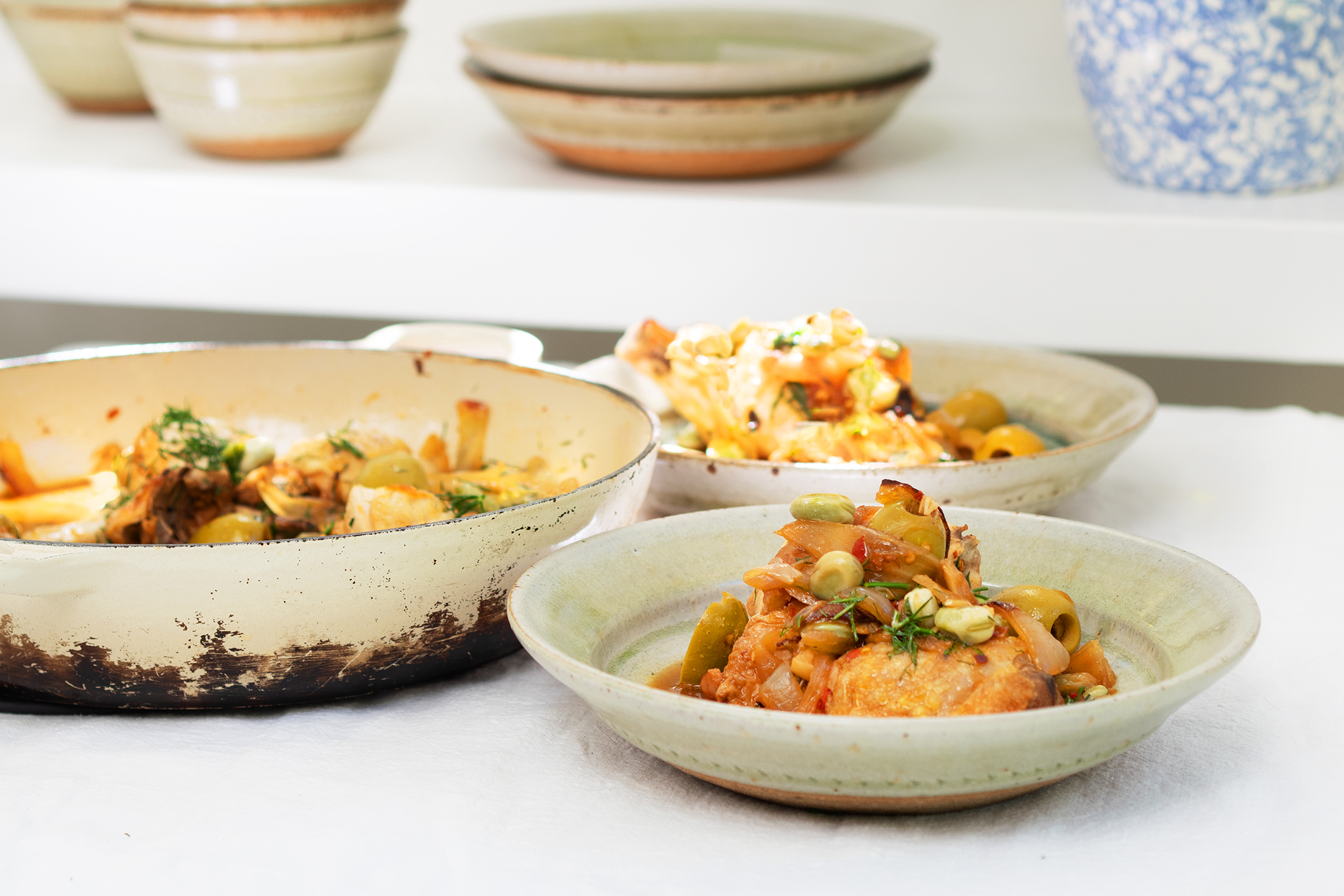



Lunch outdoors. We had everything we needed: wedges of melon, focaccia torn from the tin, a jug of water tinkling with rough-hewn ice cubes, cucumber slices and the pointed leaves of lemon verbena. There was a salad of soft, pale lettuce the colour of butter, pea shoots with curling tendrils and crisp, white-tipped radishes. The table was laid in a haphazard way, with a pile of mismatched plates and cluster of cutlery, and we poured wine into chilled glasses. I brought out a wide, cast-iron dish of chicken I had simmered with sweet onions, green olives and young broad beans. Seasoned with lemon juice and dill, it was fresh and light in a summery way, with golden-brown juices that were both salty and citrus. This was one of those dishes that is good-natured enough to work for any weather, depending on what you serve it with (orzo or mashed potato for a cold day, leafy salad for when the air is warm).
There has been a rather useful sauce in the fridge this week that I have used as both accompaniment and salad dressing. It’s mostly yoghurt, a little olive oil, then stirred through with finely chopped gherkins, a few capers, shredded mint and basil leaves and a fistful of grated cucumber. The latter lightly salted and left to drain for 30 minutes before being squeezed in the fist and stirred into the yoghurt. A summery pale green, it even smells of the season and has so far graced gravlax, cold roast chicken and a pork pie. I’m not sure I could get through summer without it.
Everything is coming on well in the garden. The thymes, three varieties, all healthy now and in flower. The nasturtiums have finally come into leaf, though they are a long way from flowering (I often add the petals to slices of young, snow-white goat’s cheeses) and the fennel is almost knee-high. The fronds carry the lightest breath of aniseed, making them delightful when very finely chopped and stirred into the mayonnaise dressing of a new potato salad. Equally, kept whole, the fronds and shoots have just enough flavour to stuff by the handful into the belly of a sea bass before it meets the oven.
I should also mention to look out for the locally grown strawberries that are at last appearing in the shops. Go for the smaller, darker fruits – they have the best flavour and are perfect for eating with soft fruit-based creams. A favourite of mine is to make a purée of berries, then stir it into softly whipped double cream with a splash of elderflower cordial. Keep the berries whole and fold them gently through the cream. Or perhaps simply marinate the fruit, thickly sliced, in a couple of spoonfuls of the cordial and a handful of strawberries crushed with a fork. An instant, dazzling dessert.
A fresh-tasting summer stew. I would normally suggest leaving any stew to settle, even to leave it overnight, before serving, but this is best eaten as soon as the chicken is cooked.
Serves 4. Ready in 1 hour
large chicken breasts on the bone, skin on 4
olive oil 2 tbsp
medium onions 2
garlic cloves 4
smoked paprika 2 tsp
chilli flakes 1 tsp
green olives 24
pickling brine from the olives 100ml (or white wine vinegar)
broad beans, fresh or frozen 200g
lemon 1
dill sprigs 10g
Cut the chicken breasts in half. Rub salt and a little pepper into the skin. Warm the olive oil in a large, deep saucepan, then lightly brown the chicken pieces on both sides.
Peel and roughly chop the onions. Peel and thinly slice the garlic. When the chicken is golden, remove from the pan and set aside in a dish (you will want to retain any flavoursome juices that seep out).
Put the onions into the empty chicken pan, stirring to dislodge the caramelised meat juices, then stir in the garlic. Leave over a medium heat until the onions are starting to soften, a good 15 minutes. Stir in the paprika and chilli, then pour in the brine or vinegar and bring to the boil. Lower the heat, return the chicken to the pan together with any juices from the dish, then lower heat and let the chicken simmer gently for about 25 minutes.
Put a small pan of water on to boil, salt it lightly, then drop in the broad beans and let them cook for 8-10 minutes depending on their size. Drain them and, if you wish, pop the beans from their papery skins. (This isn’t essential unless the skins are on the tough side.) Add the beans to the stew, together with a grinding of black pepper.
Squeeze the lemon then stir in a couple of tablespoons of the juice, taste, add a little more salt and more pepper if you wish.
Add the olives to the sauce. Cut the dill fronds from their stems and roughly chop, then stir into the stew.
Newsletters
Choose the newsletters you want to receive
View more
For information about how The Observer protects your data, read our Privacy Policy