
Related articles:

For decades lovers of French wine have mostly stuck to what they know: Bordeaux, Burgundy, Sancerre. Now a lesser-known group of wines collectively termed Vin de France are gaining popularity.
Vin de France doesn’t follow the country’s strict century-old rules that have dictated where and how specific wines can be made. That means it’s not labelled by appellation – the geographic indicator which shows where a product is made – and it can include blended grapes, grapes which are usually not permitted in a specific region, and can come in any style. When it was first introduced in 2009 as a nationwide category, Vin de France was considered inferior. Now it’s all the rage.
For buyers the benefits are clear. If you’re not fussy about labels, Vin de France is usually cheaper than more prestigious wines. According to Anivin de France, the body representing the wine, volume sales in the UK are up 27% on last year. The Wine Society sold 150,000 bottles in 2025, which is double the number pre-Covid, and 10% of still French wines sold at Waitrose now carry the label.
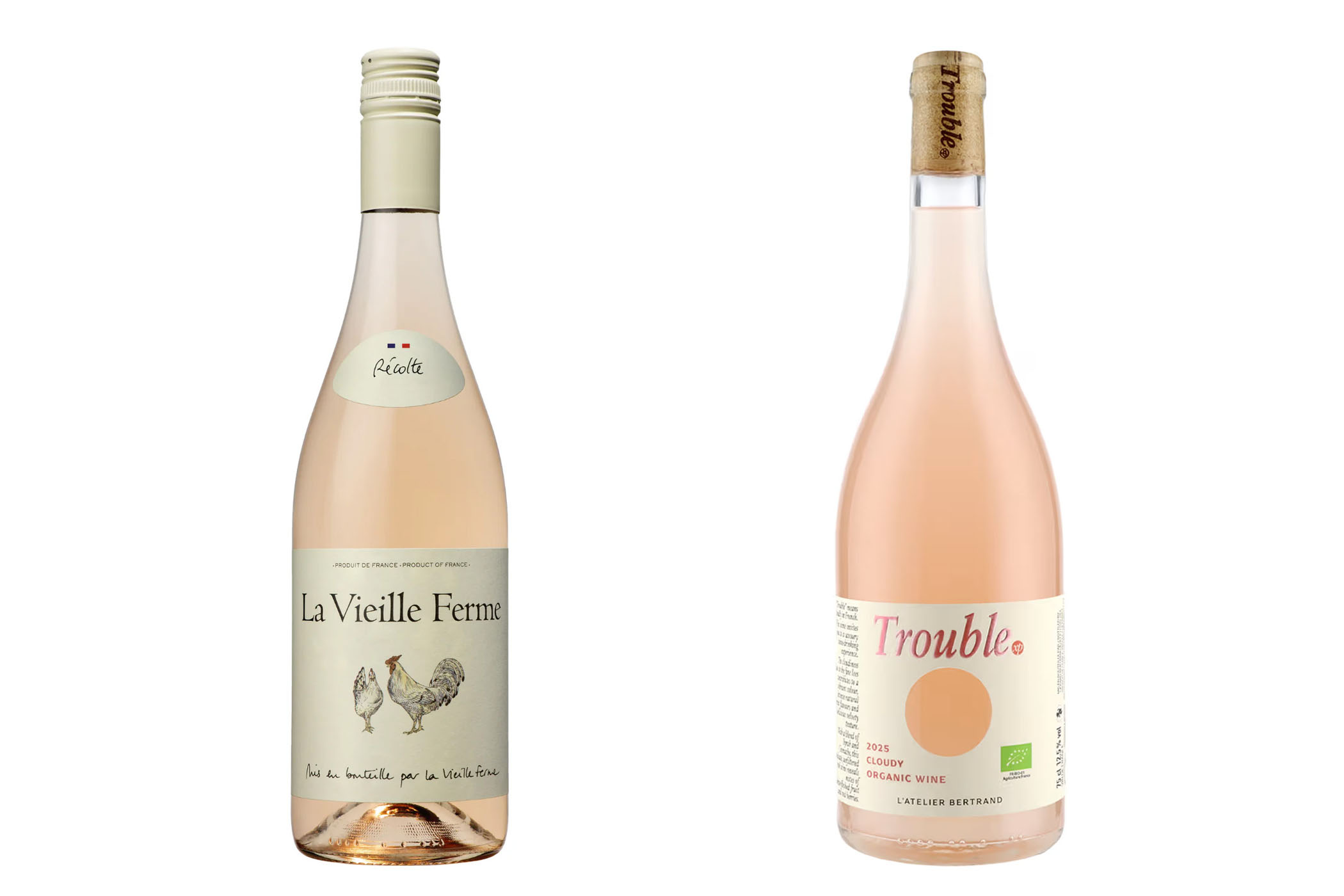
Rosé in particular is leading the charge as an alternative to that made in Provence. In the year to January, total rosé sales increased by 64% in Britain – and La Vieille Ferme, a Vin de France colloquially known as the “chicken wine” because of its label, is responsible for around 70% of those sales. Although only 4% of M&S’s French wine range fits the category, its Trouble Cloudy Rosé recently went viral – a bottle was sold every 20 seconds last week.
Younger drinkers are “steering away from traditional European hierarchies”, said Poppy de Courcy-Wheeler, a wine buyer at Waitrose. “Instead, they prioritise individual producer ethics, sustainability and distinctive flavour profiles over previously rigid rules.”
There are positives for winemakers too. “[Vin de France is] relatively common with producers as the appellations can be so strict, which doesn’t allow for much, if any, agility,” said Mark Gurney, who runs the Peckham restaurant Levan and sells plenty of the wine. “Add the impact of global warming and the resultant increase in freak weather and disease pressure, and growers are having to go Vin de France to survive.” That might include using grape varieties better suited to a warming climate but forbidden by appellation rules.
A large chunk of Vin de France producers sit within the burgeoning natural wine category, which prioritises experimentation and minimal chemical intervention in the vines and production. At Bavette, a French restaurant in Leeds, about 40% of the list is Vin de France, said co-owner Clément Cousin.
“Appellations started from a good place, to promote the region and make the wine better, but it became very restrictive,” Cousin said. Still, he acknowledged that the term Vin de France can be confusing for consumers. While bottles can include the grape or grapes from which the wines were made, the region often remains a mystery, so drinkrs may not know what to expect – whereas they know what they are getting from a Burgundy. A knowledgeable sommelier or shop owner can break down barriers, Cousin said.
Related articles:
At Poney Club, a wine bar in Paris, about 80% of bottles sold eschew appellations, similar to many of the city’s natural wine bars. Owner Timothy Schweizer said it was a “contradiction” that natural winemakers are trying to produce wines that closely reflect the local environment using fewer chemicals, but appellation rules prevent them from saying where their wines were made.
Tim Sykes, a wine buyer at The Wine Society, said Vin de France allowed producers to “make the best wines possible in the conditions that they work in” but that there was still an important place for appellations. “If you eliminated appellations you would potentially be doing away with generations of experience and heritage,” he said.
Newsletters
Choose the newsletters you want to receive
View more
For information about how The Observer protects your data, read our Privacy Policy
Photographs by Gary Yeowell/Getty Images, M&S, Famille Perrin