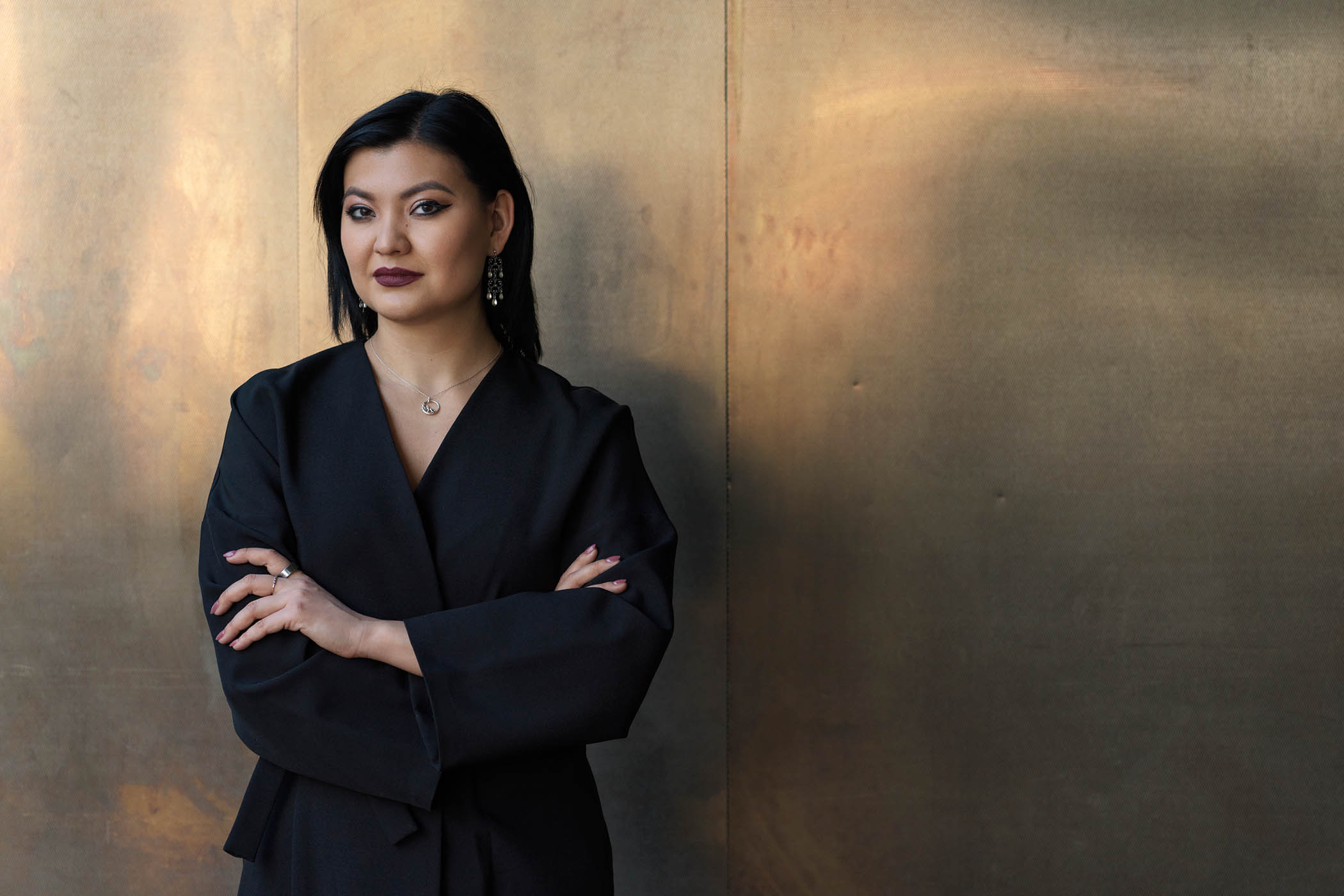
Mezzo-soprano Aigul Akhmetshina grew up in the village of Kirgiz-Miyaki, among the Ural mountains in the Republic of Bashkortostan. She sang folk songs as a child and, following her acclaimed 2018 Royal Opera House debut as Carmen at the age of 21, is now recognised as a stellar operatic talent. Akhmetshina is still closely associated with that role, but when she spoke to The Observer, the day before her 30th birthday, she was preparing to go out on the same stage to play another infamous temptress in Camille Saint-Saëns’s Samson and Dalila, which runs until 3 June.
Covent Garden’s pavements are packed with people from across the world. Do you often think of your old village?
My village was quiet, but on Sundays everyone came in for the big market, bringing food or handmade stuff to sell, so you would meet everyone. I left when I was 14, but I go back once a year because all my family are there. I’ve lived in London for 10 years, in Blackheath, and now for the first time I’m bringing over my mum for my opening in Samson and Dalila. She’s excited, but it will be a difficult journey and a bit shocking for her, because London is so hectic. Last year when I took her to Naples she was overwhelmed. She wanted to go home and I know how she feels. At first, I found all the travelling entertaining. Now, when I am constantly working with people, I want to hide and be on my own.
So do you miss a simpler life with your childhood friends?
Not really. I always hung around with older people because I was into things like psychology and philosophy. Kids are cruel when you are different, and for a while I was bullied at school. The teacher would just say: “Oh Aigul, you don’t need to do this. You are a singer.” And of course that special treatment would irritate the others. So it was a battle.
Opera has had to defend its protected status recently after critical comments by Timothée Chalamet. Whose side did you take?
I had mixed feelings. I wondered why we were all destroying him for just saying something without thinking. Then I thought the reason people had reacted so strongly was because there’s truth in what he said. We can’t put our heads in the sand. If you go into ballet or opera as a profession, there will be a lot of sacrifice for less money and smaller audiences. That’s not because the younger generation doesn’t want to see it. They are fascinated and curious, but they cannot afford it. Tickets are expensive because it’s a complicated and expensive art form. I [wouldn’t even be able to buy] good tickets for my own shows.
Would you like to run an opera house?
Oh, yes, and I have a vision ready, but probably everyone would hate me for doing it. I would give younger audiences more traditional productions. That’s what they want. Then you can offer a modern version to those who have been coming for years. Also, opera houses spend too much time negotiating with unions instead of focusing on creating something meaningful. All the world’s major houses are the same.
How do you feel about some singers reclaiming the word “diva”?
Newsletters
Choose the newsletters you want to receive
View more
For information about how The Observer protects your data, read our Privacy Policy
I hate that word. It’s kind of insulting. I want people to understand that we’re human beings. We serve our talent, given to us by God, by the universe, or whatever. It’s our purpose and it forces us to sacrifice a lot, but I always try to keep myself grounded and have balance in my life.
You say you are half Tatar and half Bashkir, rather than Russian, and are no fan of Putin. How does the current conflict affect your work?
I have stopped watching the news. It doesn’t help me stay hopeful. As an artist, you have to feel a lot and I cannot accept the cruelty and violence in the world: people hating each other because of religion or nationality. I don’t belong to my homeland now and I don’t belong here either. I don’t belong anywhere. In Moscow, because of my nationality, I’m still second class.
Your voice is likened to Anna Netrebko’s. What did you think when the Russian star was invited to sing at the ROH last autumn, dividing the industry due to her links to Putin?
An artist is in a vulnerable position. Of course, nobody is perfect, and she made her mistakes. But you have to understand that we don’t always choose where we perform. When I was younger, I sang at Buckingham Palace in front of the Queen. There are photos. Let’s say then that, after so many years on, the regime here changes and then somebody might pull out those photos and say: “Oh, she was the royal favourite!”
You played Carmen in several productions and suffered burnout.
Did playing her take its toll?
A bit, because she demands 200%. But it was also about constantly fulfilling people’s expectations. I love Carmen, but feel I am moving on. It’s so important to look after your mental health because it affects your voice. After my burnout I realised that in our culture today you not only pretend you are having a happy life on social media, but also to your friends. We always tell them, “Everything’s great!” with a big smile. But it’s OK not to feel OK.
In rehearsal for Samson and Dalila, did you discuss the fact it is set in ancient Palestine?
The opera is all about how when you answer violence with violence, it never ends. We focus on the story and we’re not setting it in a particular time. Of course, it’s there in the text: these are the Jews and Philistines of the biblical story.
How do you escape from the pressure of performance?
I love to dance. It helps me to express my frustration or pain. It’s very basic. I also recommend screaming. Every day I go into an emotional state; this rollercoaster of loving Samson and then betraying him. There is one moment on stage when I have a wild scream. That helps me to reset and release the tension.
Portrait by Tereza Červeňová For The Observer