
Do we get too worked up about Così fan tutte? Beethoven thought the 1790 opera buffa in bad taste. So did Wagner, but who was he to judge? In this work, one of Mozart’s three collaborations with the librettist Lorenzo Da Ponte, love is a game you can bet on. Murky ambiguity results. It was shunned for a century or so until Mozart was rehabilitated – hard to believe such a revision was necessary – as a genius. People I know still stay away. I’ve been vexed by its cruelty, but always succumb to the sublimity of its music.
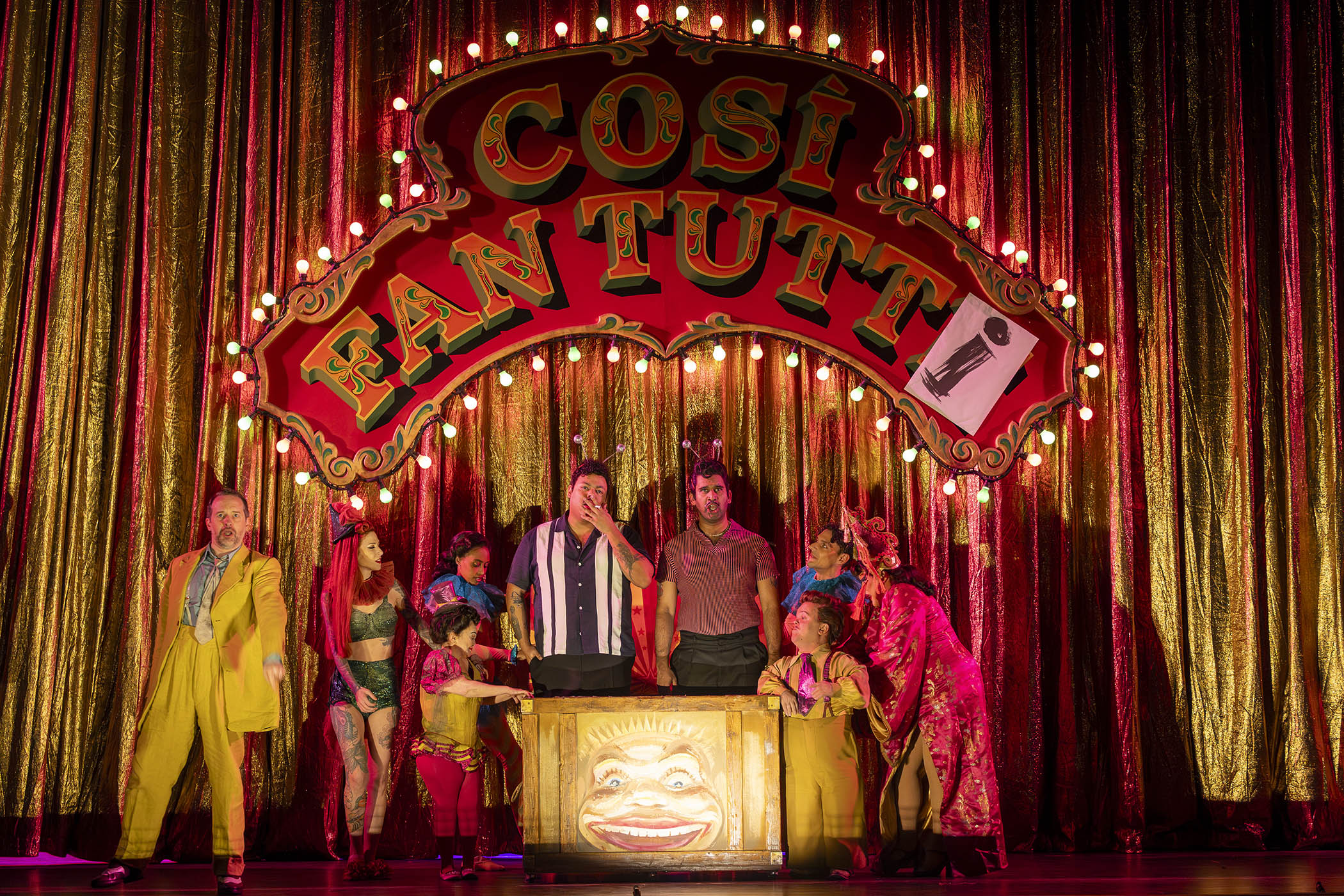
English National Opera’s genial “end-of-pier” staging from 2014, directed by Phelim McDermott and now revived, soothes qualms and dilutes cynicism. Are we in denial? Perhaps. Take it on its own terms: a well-paced show, delivered by a skilful cast and chorus, incisively conducted by Dinis Sousa with vigorous orchestral playing. The setting, in Tom Pye’s designs (lighting by Paule Constable), is New York’s Coney Island in the 1950s. All the visual jokes – bum-waggling bunny girls, circus tumblers, sword-eaters, peep show booths – can feel manic, but the execution is deft.
The populous activity inevitably blurs the wondrous geometrical symmetry of the original work: two men, two girls, two manipulators. But life is messy and, in this production, compassion wins out. In a clever jibe, the opera’s title – displayed on a fairground-style sign – is visibly altered from the feminine “tutte” to “tutti”. Thus the misogynistic “all women are like that” becomes “everyone is like that”: tolerable, truthful. We tend to overlook the fact that the two men, almost indistinguishable in character, are as fickle and distressed as the women whose devotion they are testing.
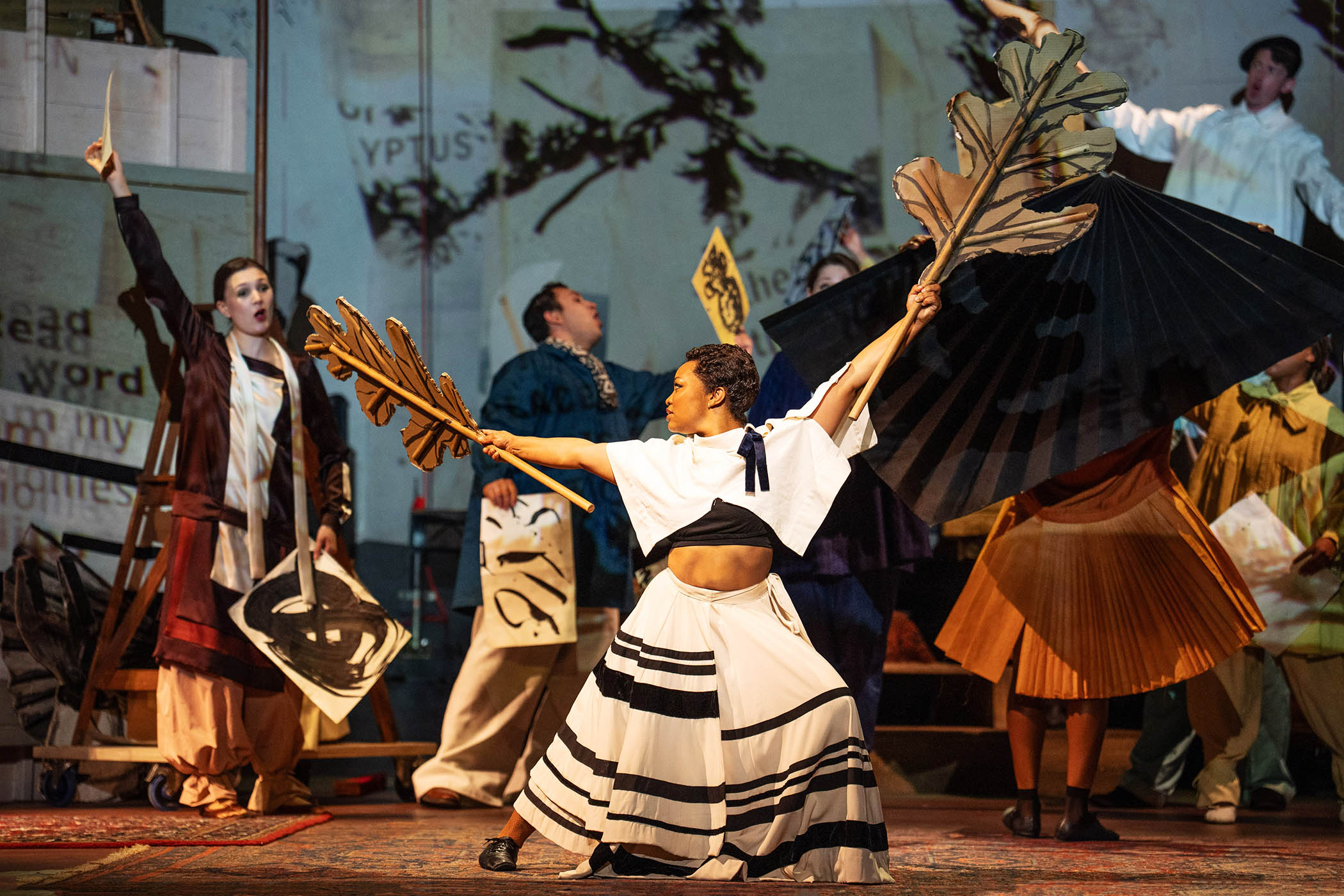
The performers entered the comedic spirit, each making their mark within, or despite, the flurrying action
The performers entered the comedic spirit, each making their mark within, or despite, the flurrying action
The cast, who settled as the evening progressed, had a first-class Fiordiligi in the British soprano Lucy Crowe (almost unrecognisable in red wig, but vocally unmistakable, excelling in her big Act II arias). The American mezzo-soprano Taylor Raven, in her house debut as Dorabella, British-American tenor Joshua Blue (Ferrando) and Mumbai-born Darwin Prakash (Guglielmo) entered the comedic spirit, each making their mark within, or despite, the flurrying action.
Jeremy Sams’s shrewd translation deserves its own comedy award: Mozart in English, instead of the original Italian, puts some people off. It shouldn’t, especially with actor-singers of the quality of the Irish soprano Ailish Tynan, as the delicious, world-weary Despina, and the English bass-baritone Andrew Foster-Williams as an oleaginous, scheming Don Alfonso. Both gave performances of zinging energy. McDermott and his improvisation group Improbable are responsible for some of ENO’s most inspired productions this century, including Philip Glass’s Akhnaten and Satyagraha (with Einstein on the Beach to premiere in Manchester next year). This may not quite match up to those, but it’s a reading of this prickly opera that works. Così sceptics should try it.
Mozart was born too early for the “art for art’s sake” movement of which his fervent disciple, Camille Saint-Saëns (1835–1921), was an exponent. The French composer’s view, spurred on by fellow Paris bohemians, was that art has nothing to do with morality. Parents, he argued, could take young daughters to operas whose subject matter would be thought appalling without the transformative power of music.
Was he talking about Così? One of Saint-Saëns’s own most popular works, his Cello Concerto No 1, has an economy of style not dissimilar to Mozart. Guy Johnston was the lithe soloist in this virtuosic work, with the Royal Liverpool Philharmonic Orchestra led by their chief conductor Domingo Hindoyan.
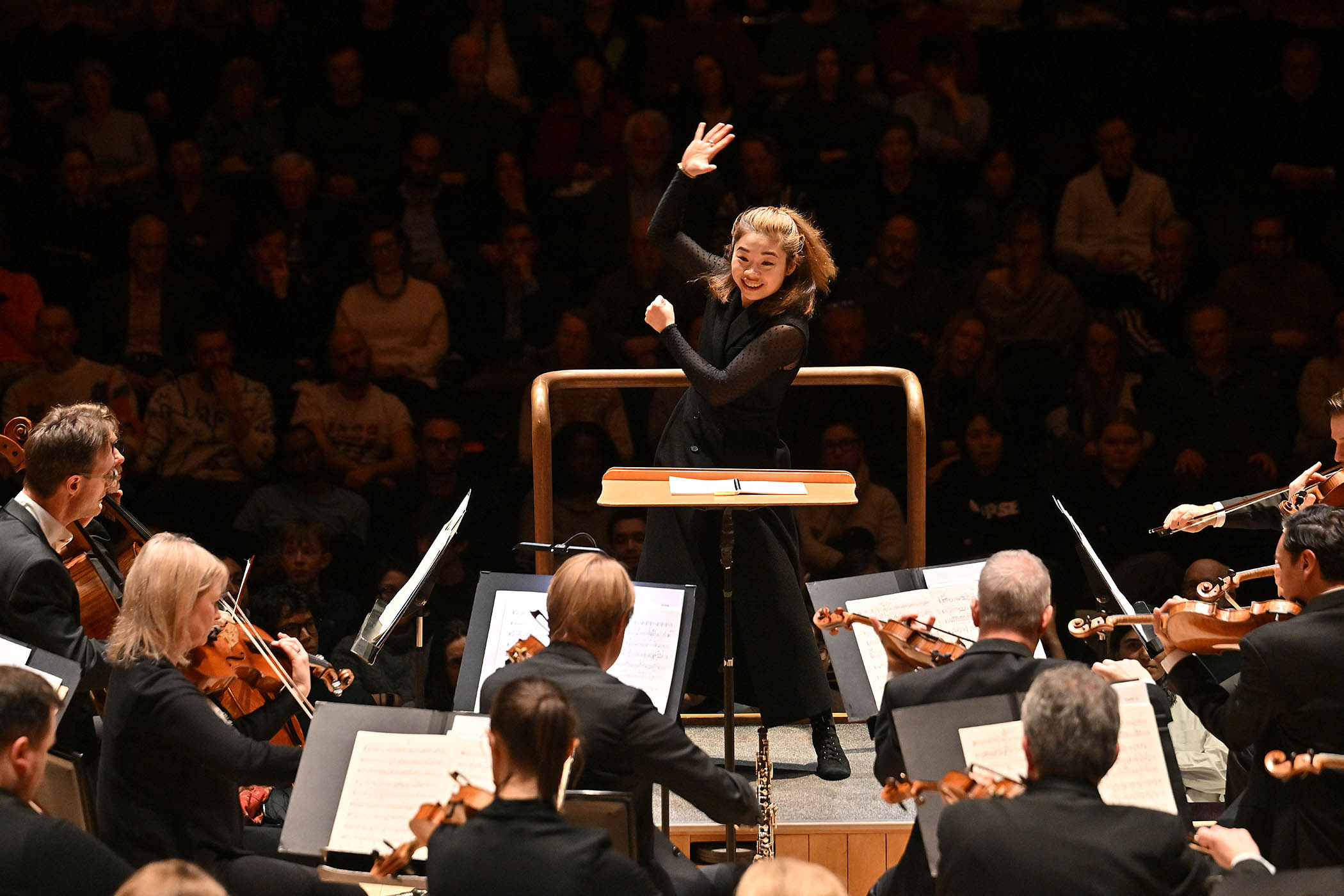
‘Vivid orchestral colour’: Elim Chan conducts the London Symphony Orchestra at the Barbican
Bruckner’s Symphony No 6, strange, majestic, an outlier in relation to his other symphonies, was the main work. The RLPO has an assured string section and top quality woodwind and brass. The horns, especially, triumphed here. This being Bruckner, they had plenty to do. So much about this enigmatic composer dwells in easily missed detail. In the coda of the first movement (about two minutes before the end), a call-response between trumpet and first horn, blazing and brassy, is transfigured into a hushed duet between two horns over rippling strings, almost shy in its lyricism. It was beautifully done.
In Hindoyan, the Venezuelan-Swiss conductor also recently appointed music director of the Los Angeles Opera, the RLPO has one of the world’s most exciting mid-career conductors. Word needs to spread in Liverpool. More younger faces would have been a welcome sight among this loyal but not capacity audience.
The British composer Colin Matthews, a tireless champion of young composers and of new music (via the record label NMC), teaching and nurturing, has just had his 80th birthday. The London Symphony Orchestra, in a programme that also featured dance-inspired works by Rachmaninov and Bartók, celebrated with a world premiere commission, crisply conducted by Elim Chan: Matthews’s oboe concerto, written for Olivier Stankiewicz, LSO principal oboe since 2015. This single-movement work displayed all the composer’s flair in creating vivid orchestral colour, with ensemble and soloist entwined in dense but transparent textures. Dialogues between lush harp and cool, taut percussion imprinted themselves on the memory.
The abrupt midair ending, a nice rude shock, reminded us that Matthews has much still to say. Age won’t stop him.
Così fan tutte is at London Coliseum, London, until 21 February
Photographs by ENO/Mark Allan
Newsletters
Choose the newsletters you want to receive
View more
For information about how The Observer protects your data, read our Privacy Policy