The noisiest cheers were for the person who took his bow last: Ralph Fiennes. He even risked a sheepish smile. Tickets sold out months ago for Tchaikovsky’s Eugene Onegin at the Opéra national de Paris, Fiennes’s first venture into opera direction. The 63-year-old stage and screen actor – one of our best-loved heavyweight performers, from Shakespeare to The English Patient to Harry Potter – had come face to face with a work he was born to tackle.
Fiennes’s affinity with Pushkin’s 1833 verse novel, on which Tchaikovsky based his opera, stretches back to 1999, when he played the title role (a fire-ice mix of smoulder and menace) in a film made by his sister Martha Fiennes. He learned to speak some Russian and steeped himself in that country’s culture, evident in subsequent acting and directing work (Turgenev’s Two Women; The White Crow, about the ballet dancer Rudolf Nureyev). Details of the Paris staging were kept secret until the last moment, therefore little was known about how this plum job came about. Fiennes was invited by his friend of two decades, the Russia-born conductor Semyon Bychkov, newly announced as the French company’s music director designate (following the brief tenure of Gustavo Dudamel, who left in 2023 after two years).
Pushkin’s poem is spare and ironic. Tchaikovsky remains faithful to it but unleashes a tumult of emotion through his music. Tatiana, on the cusp of womanhood, falls in love with Onegin, a cool dandy who rejects her then, too late, loves her in turn. Bychkov has assembled a superb, predominantly eastern European cast led by the Russian-Austrian baritone Boris Pinkhasovich, who gives depth to Onegin, an intentionally hollow figure. In the terminology of Russian literature he is the original superfluous man, a prototype for Turgenev, Lermontov Goncharov and others.
Tatiana, vulnerable yet self-assured, is captured in all her facets by the Armenian soprano Ruzan Mantashyan. (She will sing the role at the Grange, Hampshire this summer.) As Lensky, the Ukrainian tenor Bogdan Volkov sings his lyrical aria, before the duel that will kill him, to heartfelt effect. Marvic Monreal as Olga, Elena Zaremba as the nurse and Susan Graham as Madame Larina scale up their cameo roles to create an impressive household of flesh-and-blood women.
Subversion is embedded in the text and music, and given freedom to emerge without interference
Subversion is embedded in the text and music, and given freedom to emerge without interference
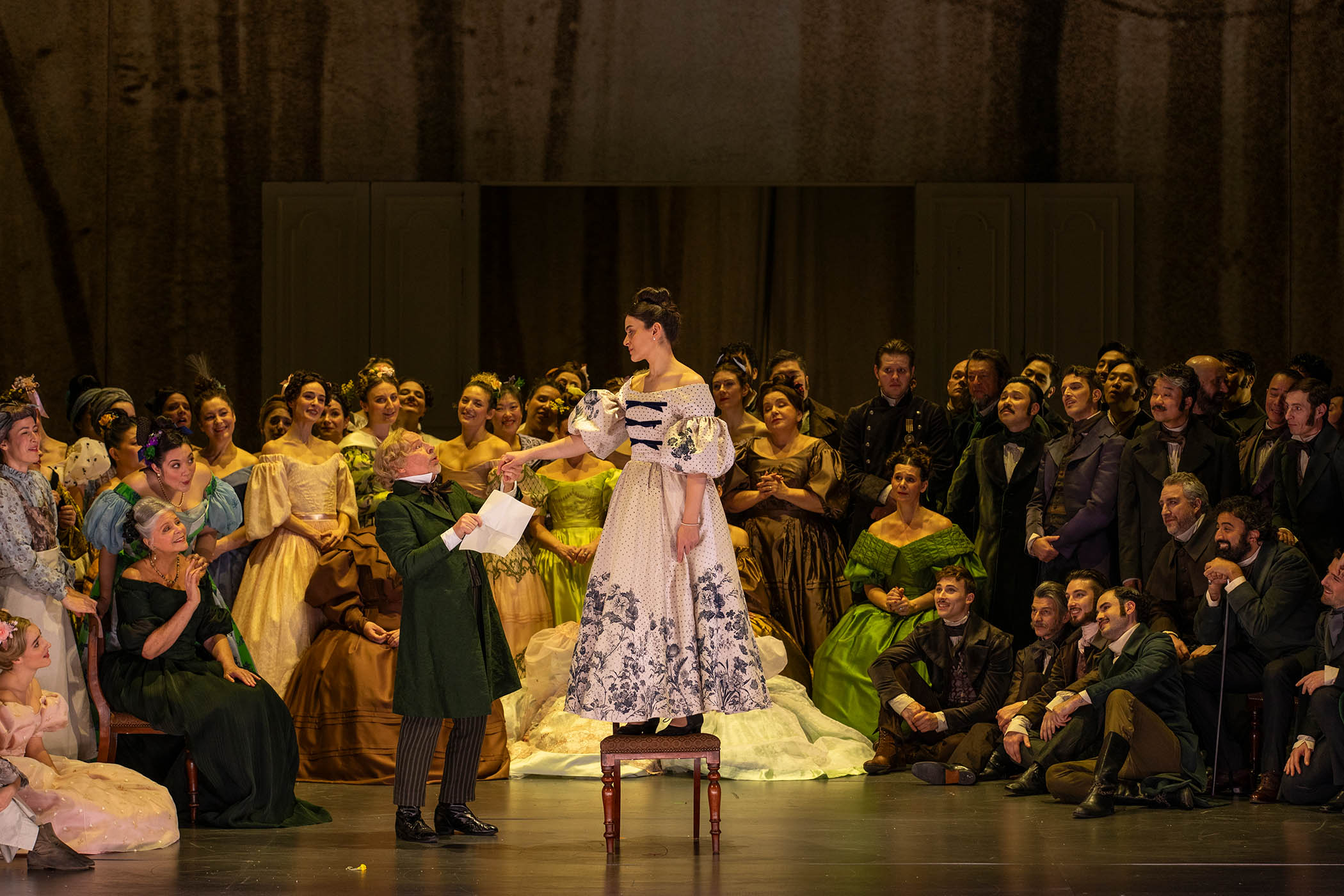
Bychkov’s own acquaintance with Onegin was confirmed long ago in his definitive 1993 recording (with the baritone Dmitri Hvorostovsky). He can accelerate or slow down with confident flexibility, always leaving space for the work to breathe, as does Fiennes in his direction. We’ve had Onegin in Brokeback Mountain mode, where the hero is gay and wears flares. We’ve had Lensky singing his aria with a coat over his head. We’ve had the ball scene danced by zombies. Fiennes, with sets by Michael Levine and costumes by Annemarie Woods, serves it straight: a Russian country estate at the start; a lot of trees; a grand-looking salon for the St Petersburg finale. Subversion is embedded in the text and music, and given freedom to emerge without interference. It’s not the only way to handle this work, but it succeeded here.
Paris has two main opera houses: the 2,000-seat Palais Garnier, more often used for dance and baroque opera but where Onegin is being staged; and the 2,745-seat Bastille (1989) for large-scale works. Each will close soon for renovations, starting with the Garnier next year. That theatre, a rampage of marble, porphyry and gold leaf (and inspiration for Phantom of the Opera), opened in 1875, three years before Tchaikovsky completed Onegin. It’s a fitting venue, more intimate than the Opéra Bastille and honouring the pliancy and detail of the orchestral sound, and the lustre of the chorus.
Tchaikovsky had little time for grand opera in the mode of Verdi (“I don’t want kings, queens, popular uprisings”) or Wagnerian epic fantasy as epitomised by the Ring (“there’s certainly never yet been anything more boring and tedious than this rigmarole”). In the same week as Onegin, Paris has obliged audiences with works by both composers.
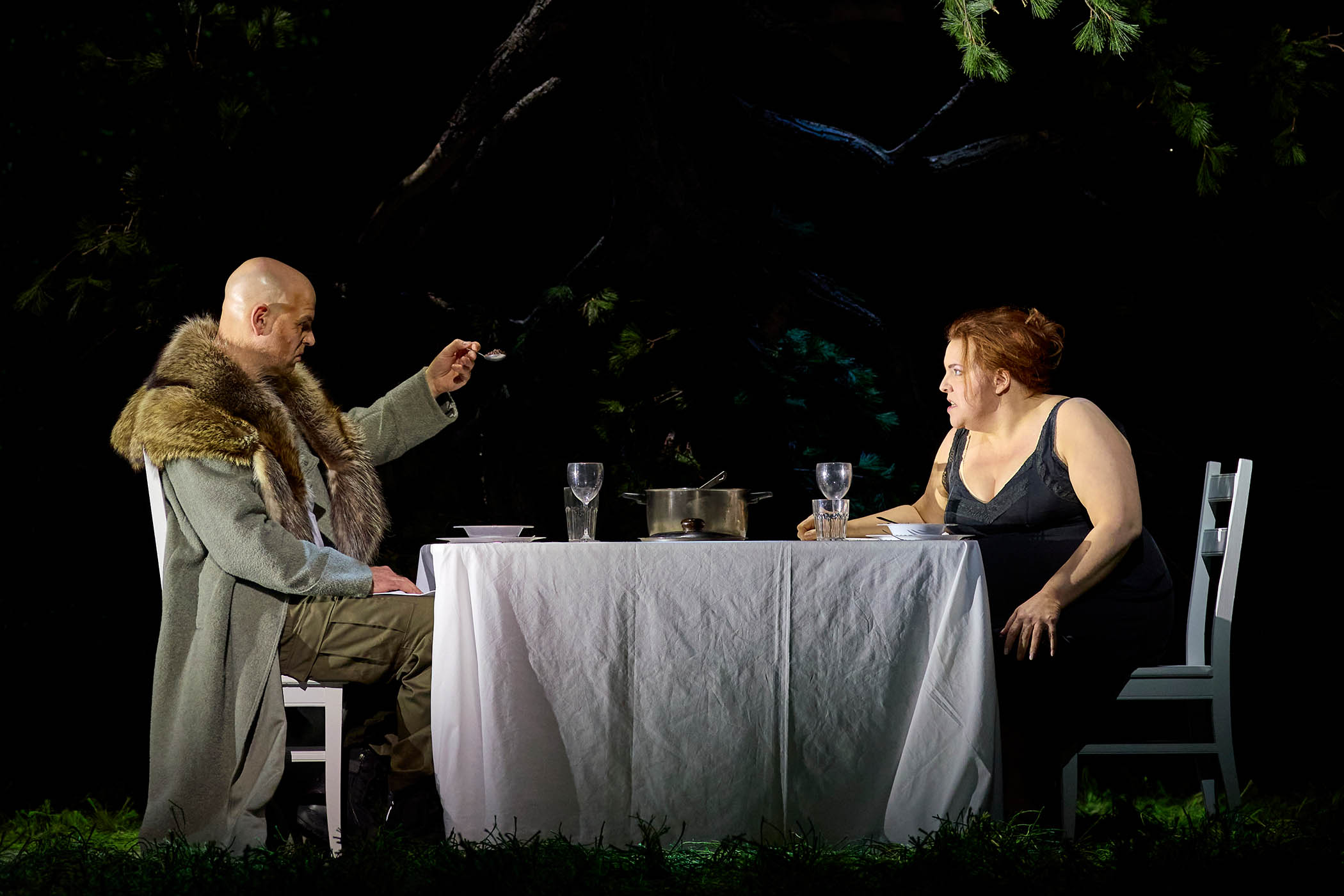
Derek Welton and Tamara Wilson in Siegfried. Main image: Soprano Ruzan Mantashyan, above centre, as Tatiana in Eugene Onegin
Siegfried, part three of the Ring, in a new staging by Calixto Bieito, consolidates a sophisticated, original and probing approach to Wagner’s “rigmarole”, thrillingly conducted by Pablo Heras-Casado, with a sterling cast led by Andreas Schager (Siegfried) and Tamara Wilson (Brünnhilde). The set is a quivering forest of lush trees, deformed and malevolent. Derek Welton’s Wanderer, in a departure from the grizzled norm, is alert and virile, ready to flex his muscles at his nemesis, Alberich (Brian Mulligan). This opera is regarded as the Ring’s “scherzo”, with glimmers of doubtful humour in the snivelling figure of Mime (Gerhard Siegel). The last act, conversely, soars to ecstatic heights with Siegfried’s discovery of Brunnhilde, here protected not by fire but by a block of ice and several metres of plastic. No I don’t know either. All may become clear after the finale, Götterdämmerung, later this year.
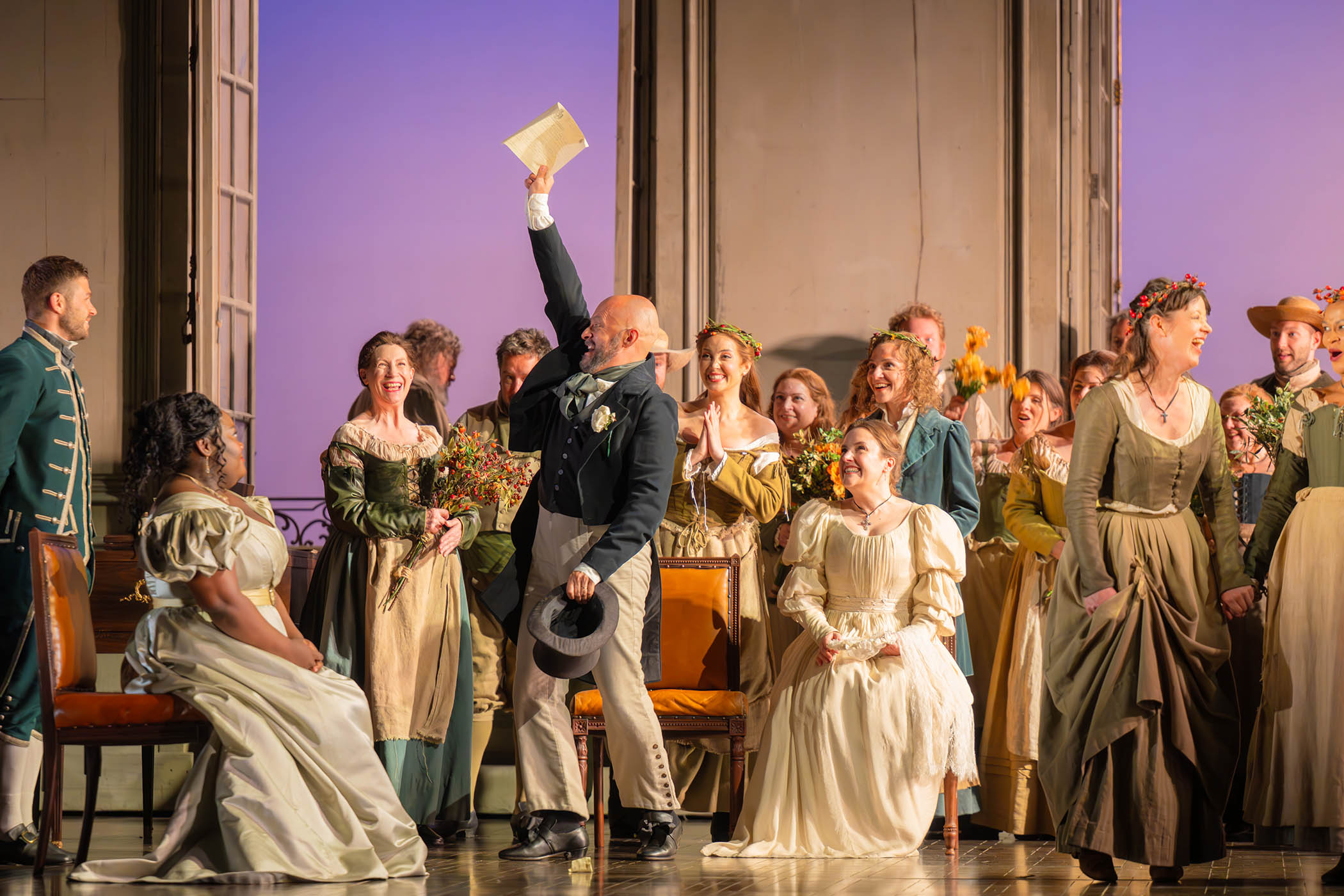
A revival of Verdi’s Un ballo in maschera in a dull, subfusc staging by Gilbert Deflo, conducted with spirit by Speranza Scappucci, provides a vehicle for the Russian superstar Anna Netrebko, who has been welcomed back to Paris with no fuss (she was also there in 2022 and 2024) but wild enthusiasm. The role of Amelia has dazzling vocal roulades and a famous top C, without question beautifully executed by Netrebko in big black hooped gown, but – shoot me – this is not Verdi’s most interesting character or opera.
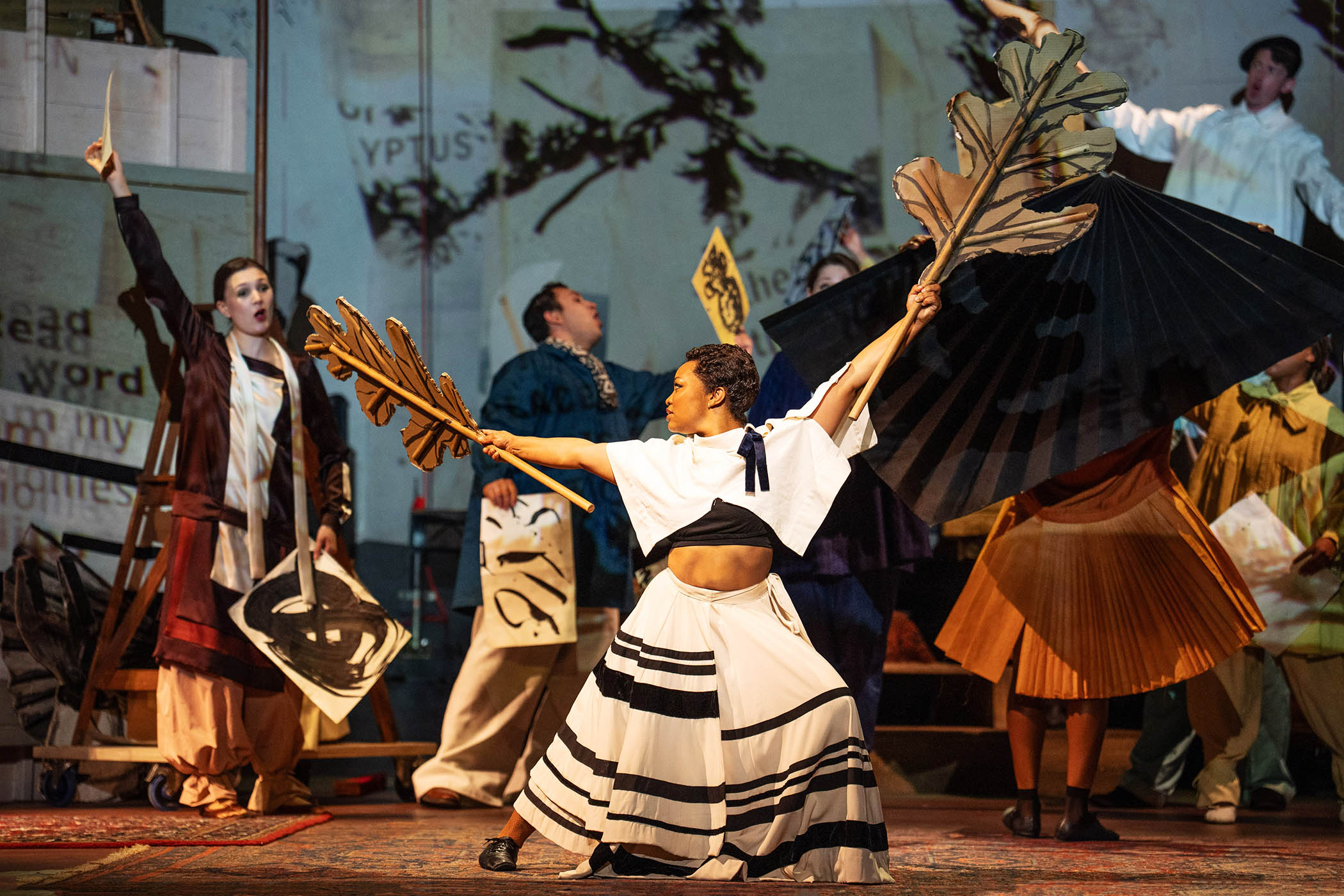
In London, a respectful protest greeted those entering the Royal Opera House – a handout cited Russia, Putin, Netrebko, Reform UK, propaganda, the threat to British democracy and more – for a revival of Boris Godunov directed by Richard Jones and conducted by Mark Wigglesworth, both at the top of their game in this uneasy, austere work. Mussorgsky’s study of tyranny is not sympathetic but raw and truthful. Bryn Terfel, in the title role, portrays a figure racked by ambition, bewilderment, folly. This is art that demands we look and try to comprehend – not turn our backs.
Newsletters
Choose the newsletters you want to receive
View more
For information about how The Observer protects your data, read our Privacy Policy
Eugene Onegin is at Palais Garnier, Paris, until 27 February; Un ballo in maschera is at Opéra Bastille, Paris, until 26 February; and Boris Godunov is at Royal Opera House, London, until 18 February
Photographs by Guergana Damianova/ONP/Herwig Prammer