
Can’t sing. Won’t sing. When children, particularly boys, move up to secondary school they often lose the confidence or desire to join with others in song. That’s a tragedy, as singing is so much more than making music. It nurtures reliability, courage and wellbeing, helping teenagers develop into well-rounded young people. And it’s a fun way to make new friends when school can seem a daunting, confusing place.
But there are reasons to be hopeful. Last week the BBC launched Get Singing, a nationwide education scheme aimed at 11-14-year-olds. In a major act of public service, it is providing the tools necessary for teachers and young people to rediscover singing, in and out of school. And, crucially, it recognises that this is a difficult age, with some of the material directly addressing the bewildering uncertainties of adolescence.
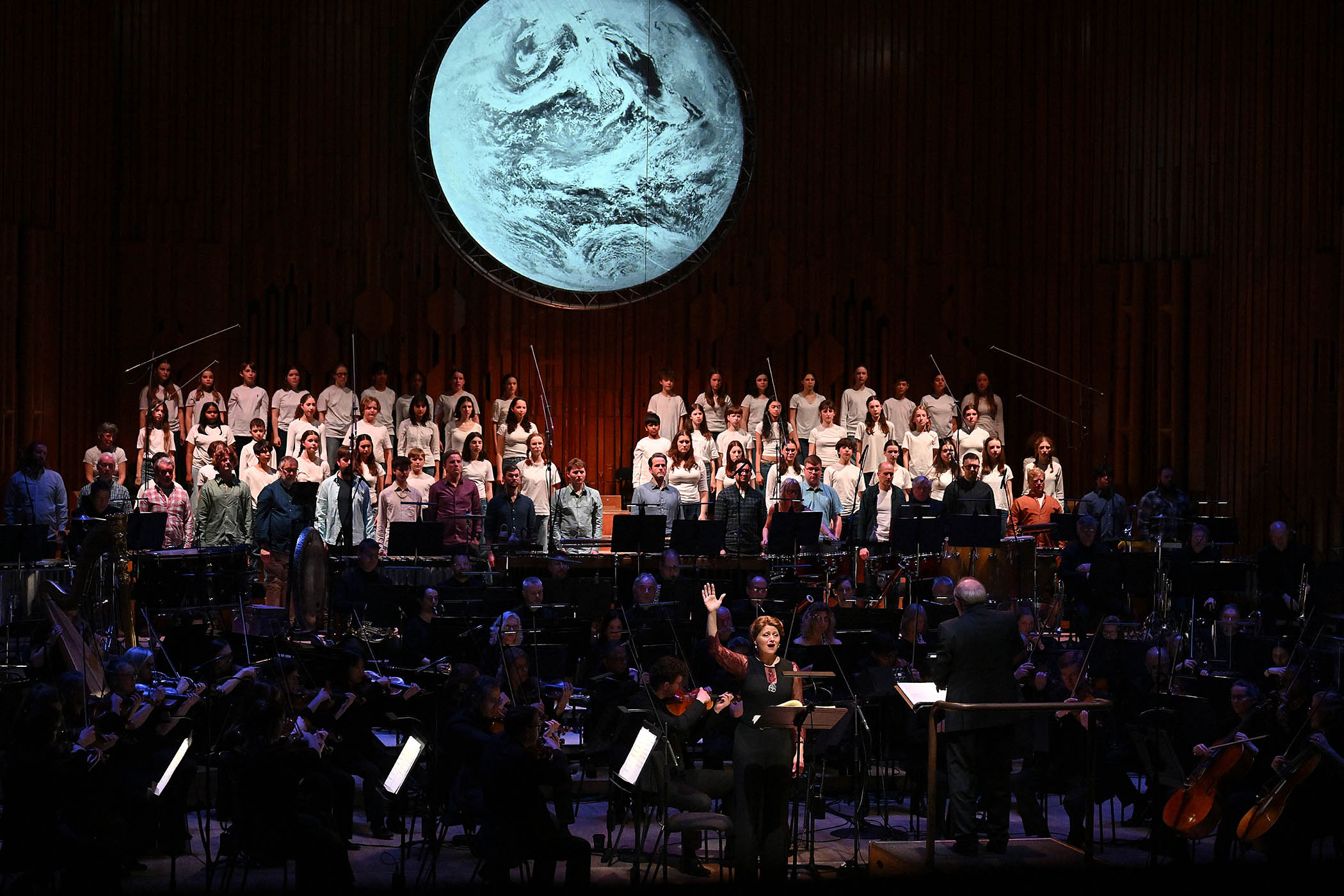
Anyone doubting the value of singing in young people’s lives should have been at London’s Barbican Centre last week, when members of National Youth Voices and Finchley Children’s Music Group powered their way through the UK premiere of unEarth, a sprawling, suitably fretful climate crisis oratorio by US composer Julia Wolfe, complete with visual projections by the always-innovative collective Bang on a Can.
Young people fight to be heard in the climate debate, and so did these feisty singers, as Wolfe scores the piece for a vast orchestra with thunderous percussion and brass representing the forces of nature and the bone-headedness of climate deniers. Urged on by conductor Martyn Brabbins, the piping voices of the children’s choir cried out above the rising waves of the surging BBC Symphony Orchestra. Five young tenors and basses from National Youth Voices joined the men of the BBC Singers in demanding vocal lines that tested all, including the evening’s soloist, the Danish soprano Else Torp. If the message seemed to be hammered home a little too obviously, these are not times for subtlety. To quote the young singers: hope requires action.
Thunderous brass and percussion represent the forces of nature and bone-headedness of deniers
Thunderous brass and percussion represent the forces of nature and bone-headedness of deniers
Brabbins had opened with a surprising reading of Aaron Copland’s Appalachian Spring. He is renowned for his recordings of the symphonies of Ralph Vaughan Williams with this orchestra, and it was striking in the more reflective passages to detect fleeting similarities between Copland’s expansive, open-air harmonic palette and Vaughan Williams’s approach in his fifth symphony. Both works were completed amid the tumult of the second world war and look to wards the future with a serene optimism completely at odds with the era.
Cellist Alisa Weilerstein and pianist Pavel Kolesnikov are top international soloists in their own right, so to hear them play together at Wigmore Hall last week was a rare treat. They make an arresting duo, Kolesnikov’s unerring lyricism providing a tempering foil to Weilerstein’s often fiery, emphatic sense of urgency.
In Brahms’s cello sonata No 1 in E minor, they shaped the great arc of the opening allegro with enormous care before enjoying the wit and playfulness of the triple-time second movement. Only in the finale did Weilerstein produce her trademark fury, bleaching her tone in the race towards a triumphant close.
Later, these fine players offered us front row seats at the Moscow State Circus in Prokofiev’s mighty cello sonata in C from 1949. Its romping second movement is made up of fragments of the sort of acrobatic melodies heard under the Big Top, marked out in dramatic chords strummed across the strings of the cello as the piano clowns along underneath. You almost smell the sawdust.
BBC Get Singing is on BBC Bitesize; unEarth will be broadcast on Radio 3 on 12 February; The Weilerstein/Kolesnikov recital is on BBC Sounds.
Photograph by Mark Allan
Newsletters
Choose the newsletters you want to receive
View more
For information about how The Observer protects your data, read our Privacy Policy