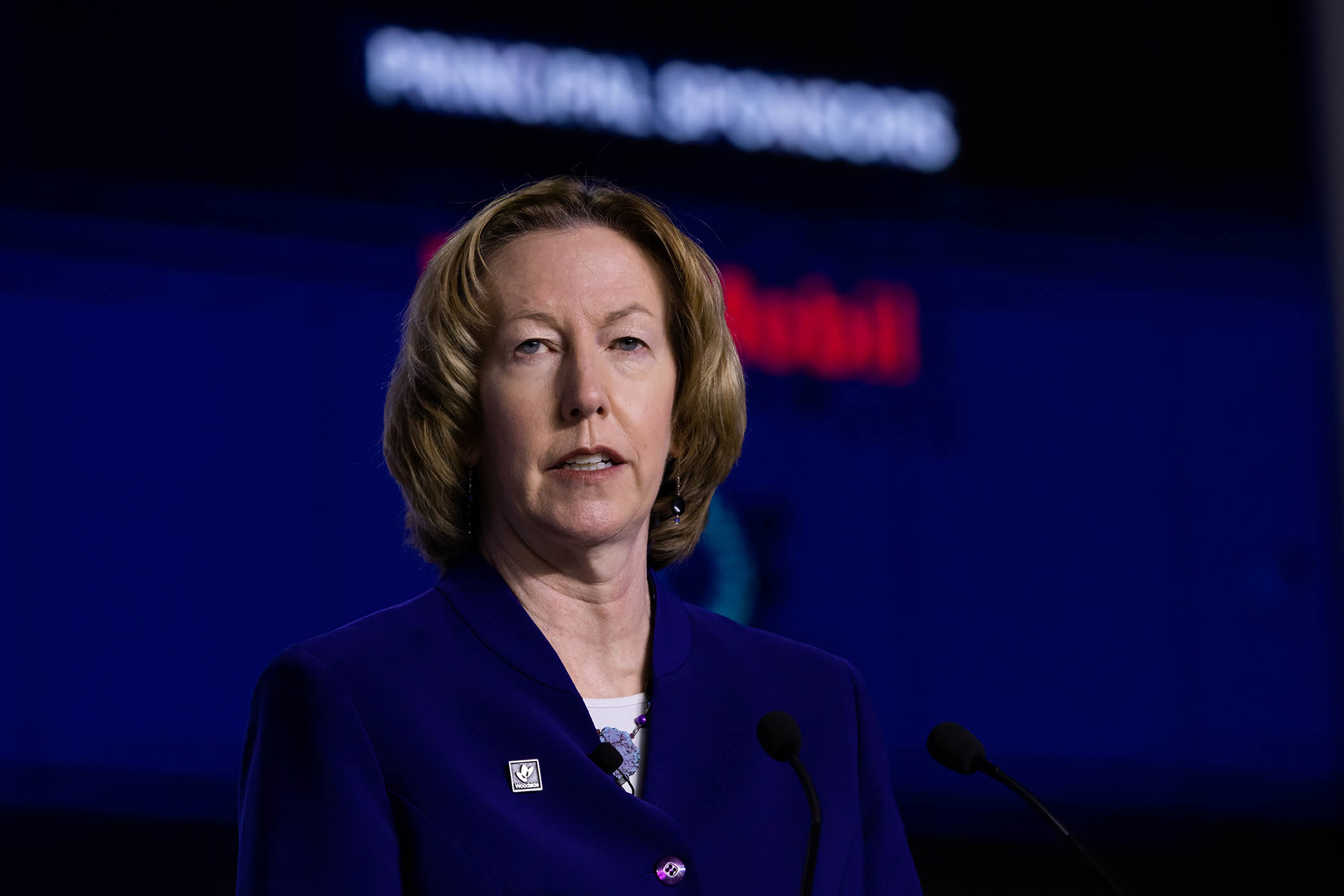



The abrupt departure of BP CEO Murray Auchincloss after barely two years in the job was preceded by sharp disagreements over strategy with the oil major’s chairman.
Albert Manifold, who became chair in October, apparently didn’t rate the former CFO, who fell into the top job when Bernard Looney was fired for inappropriate relationships with colleagues. He felt he was moving too slowly in executing BP’s latest strategy of doubling down on oil and gas, selling non-core assets and decisively abandoning its efforts to transition into renewable energy.
Meg O’Neill, Auchincloss’s replacement, will be the first female and lesbian boss of an oil major. She brings no-nonsense oil and gas credibility after a long career at the top of Exxon Mobil, followed by a record of focused business restructuring and deal making in a four-year spell as CEO of Australia’s biggest oil and gas producer, Woodside Energy.
Her willingness to stand up to local Indigenous and climate activists in Australia suggests she will not hesitate to axe any remaining green investments at BP that do not make financial sense. The replacement of those responsible for BP’s ill-fated effort to switch from fossil fuels to renewables with two outside leaders, in O’Neill and Manifold, who appear fully-aligned with its strategy, represents a significant win for Elliott Management.
The activist investment firm, which acquired a 5% shareholding in the company this year, has been agitating for a return to oil and gas basics, and a shift in corporate culture to one of pursuing financial outperformance. But beyond the boardroom Elliott does not have a great deal to show for its shake-up: BP’s shares are trading a little higher than they were at the start of the year.
Auchincloss was reportedly resistant to Manifold’s desire for BP to adopt a third new strategy in as many years. O’Neill is unlikely to share this reluctance. The question is whether version three will work any better than the first two. If not, it will surprise no one if BP disappears into a mega-merger – provided a more determined suitor can be found than Shell, which considered making a bid earlier this year but decided not to.
Photograph by SeongJoon Cho/Bloomberg via Getty Images
Newsletters
Choose the newsletters you want to receive
View more
For information about how The Observer protects your data, read our Privacy Policy