

Listen to more of Matt Russell’s reporting on this story on this week’s episode of the Slow Newscast here.
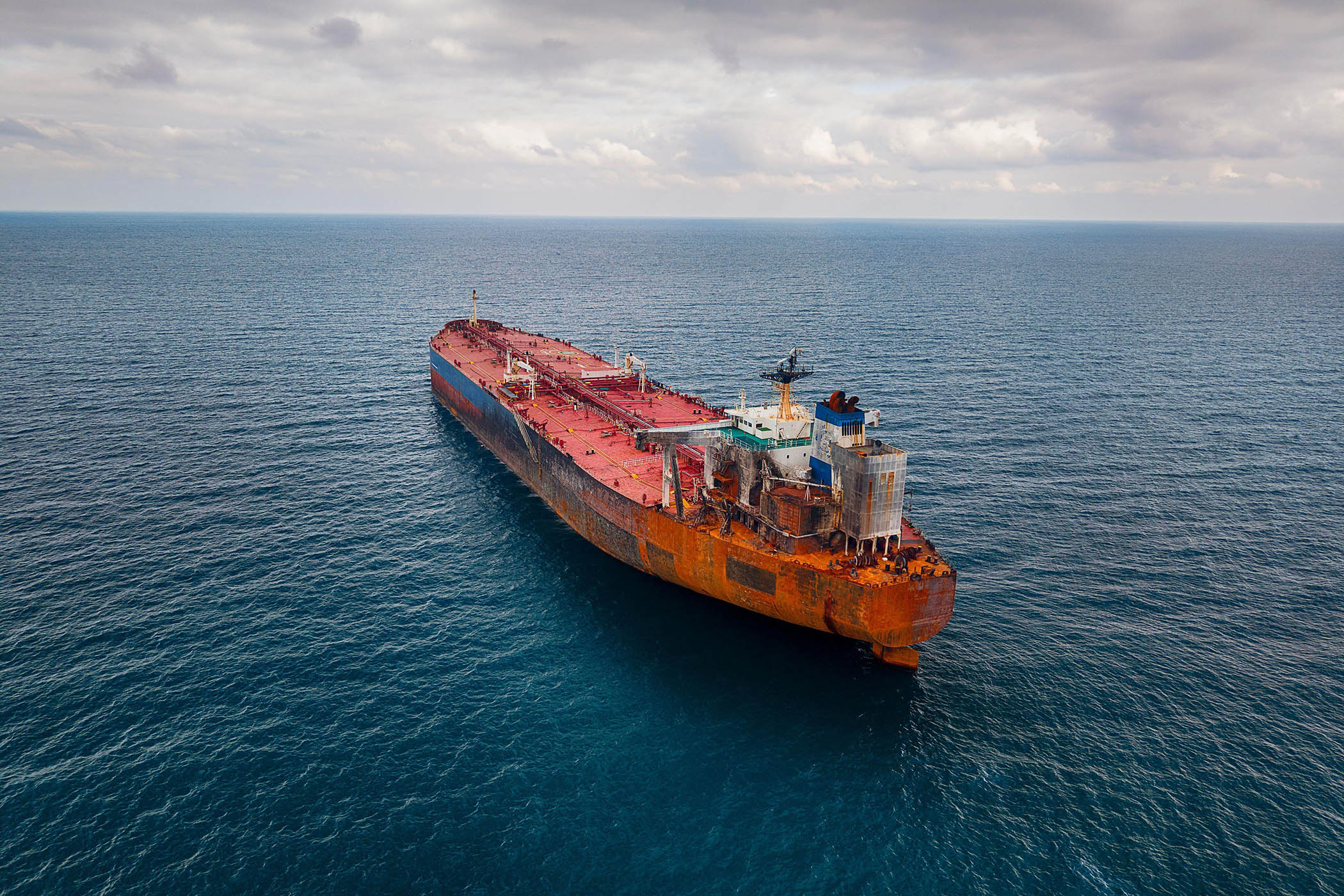
At the same time as Keir Starmer was being welcomed to Beijing last week, another less high-profile arrival was slipping into port near Shanghai. The Boracay is a sanctioned Russian oil tanker, part of the shadow fleet helping the Kremlin to circumvent western oil sanctions.
It was stopped twice in 2025, first by Estonia and then by France, before being released. Its Chinese captain is due to stand trial in France this month.
The story of the Boracay and its crew highlights the tightrope the prime minister finds himself walking, having committed the UK to taking action against Russia’s vast fleet of ghost tankers.
Many of those tankers end up in India, with which the UK signed a trade deal in July, or China, with which Starmer said last week he wants a “more sophisticated” relationship.
The UK has started to act, in October banning imports of products refined from Russian-origin crude, a policy that especially targets India. However, the effects of that action could now be dwarfed by an undertaking by India to stop importing sanctioned Russian oil, announced yesterday as part of a free trade deal with the US.
Western sanctions have already cut Russia’s oil and gas revenues by about a third. The newly announced US-India deal could mean further dramatic declines in the flow of oil money that has funded Russia’s war against Ukraine: reports say Indian imports of Russian oil will fall by 1.5 million barrels a day.
But this sort of bilateral deal will not stop Russia seeking clients elsewhere, and with a shadow fleet of more than a thousand tankers there will be no shortage of ships to service them – unless Ukraine’s allies step up tanker interdictions.
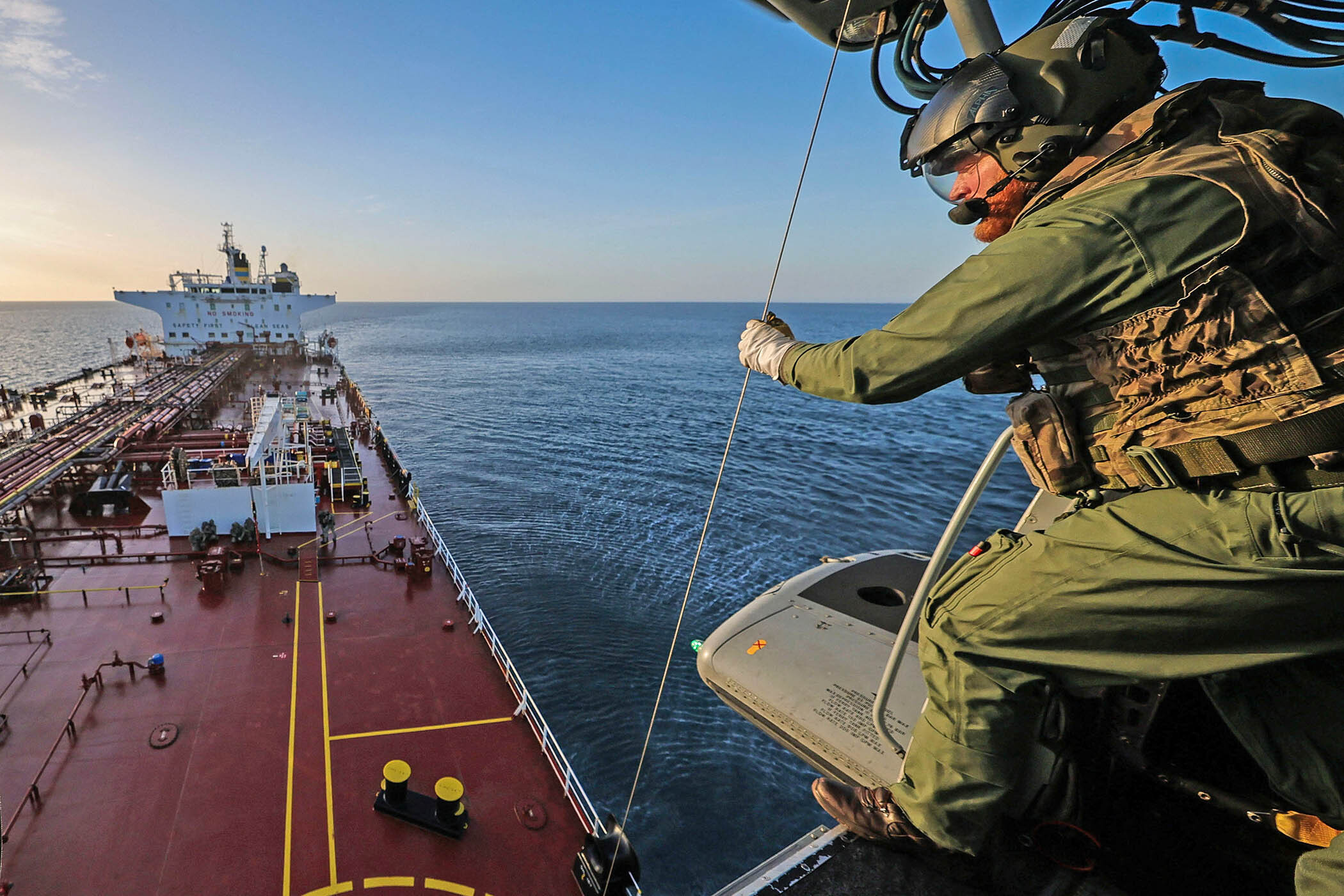
In the weeks since John Healey, the defence secretary, first stood up and said the government would begin intercepting ghost tankers on the high seas, The Observer understands several dozen have sailed through the Channel.
Just before the prime minister flew to China, Healey addressed the defence select committee, in part about the shadow fleet.
Newsletters
Choose the newsletters you want to receive
View more
For information about how The Observer protects your data, read our Privacy Policy
He said the UK had now “identified further military options” that could be used to target these vessels, and that a legal basis would be agreed soon.
The question is why the UK has not acted so far.
The Channel provides an almost unique opportunity for Europe in its battle against Russia’s shadow fleet. The Dover Strait is one of the few places where these vessels have to pass through territorial waters, in this case that of either France or the UK.
That means, in theory, the UK could prosecute a ship’s captain or owner for evading sanctions.
Yet since Russia launched its full-scale invasion of Ukraine in 2022, the UK has not detained or seized a single vessel in the shadow fleet.
The US, meanwhile, has seized seven Venezuelan-linked tankers since November, while France, Germany, Estonia and others have all physically intercepted ships from the ghost fleet.
Gonzalo Saiz Erausquin, a research fellow specialising in sanctions at the Royal United Services Institute thinktank, said the detentions by the US, France, Finland, Estonia and others showed that “there is ample scope for stronger action against the shadow fleet, including in the English Channel”.
One source at the Ministry of Defence pointed out that for all the boats that have been stopped, only Germany has actually seized the sanctioned oil.
In all other cases, the tanker and the crew have been released and allowed to continue transporting sanctioned crude oil around the world.
This source says the challenge is not simply to intercept and board a tanker. Where to store the ship and its cargo is not always obvious and the cost of doing so can be high, while Russia has shown it is willing to take retaliatory measures such as sabotage against undersea cables.
There is also the question of the crew, many of whom will have nothing to do with Russia.
Francesca Fairbairn, of the Institute of Human Rights and Business, said the shadow vessels were often staffed by jobbing seafarers who are often unaware the ship is participating in sanctions evasion.
But Gonzalo Saiz says these reasons don’t really stack up as an excuse for inaction.
“As demonstrated by US interventions, a handful of detentions can have a deterrent effect and degrade shadow fleet operations,” he said.
The same argument was made by Emmanuel Macron after France detained and then releasing Boracay. Disrupting the shadow fleet, the French president said, costs Russia money.
Given the shadow fleet is reported to be moving sanctioned oil worth as much as $80bn (£60bn) a year to the Russian economy, a stop-and-release policy barely makes a dent.
And Macron said French intelligence believed the fleet is funding up to 40% of Russia’s war efforts in Ukraine.
The UK has led the way on legislation, in October placing sanctions on any imports containing or made with Russian crude oil. It wasn’t until January this year the EU followed suit.
But at sea, Gonzalo Saiz says, the UK is not stepping up to the “great expectations” placed on it by Europe.
A UK government spokesperson said: “Deterring, disrupting and degrading the Russian shadow fleet is a priority for this government. Alongside our allies, we are stepping up our response to shadow vessels, and as the secretary of state set out, we will continue to do so.
“According to estimates, sanctions against the shadow fleet, by the UK and our partners, have forced 200 ships off the seas. Russia’s oil revenues are also down 27% from October 2024, the lowest since Russia’s full-scale invasion of Ukraine.”
The United States restarted the conversation about the UK’s inaction over the shadow fleet when its coastguard chased the Bella 1 oil tanker thousands of miles across the Atlantic.
Photography by Todor Stoyanov/Alamy