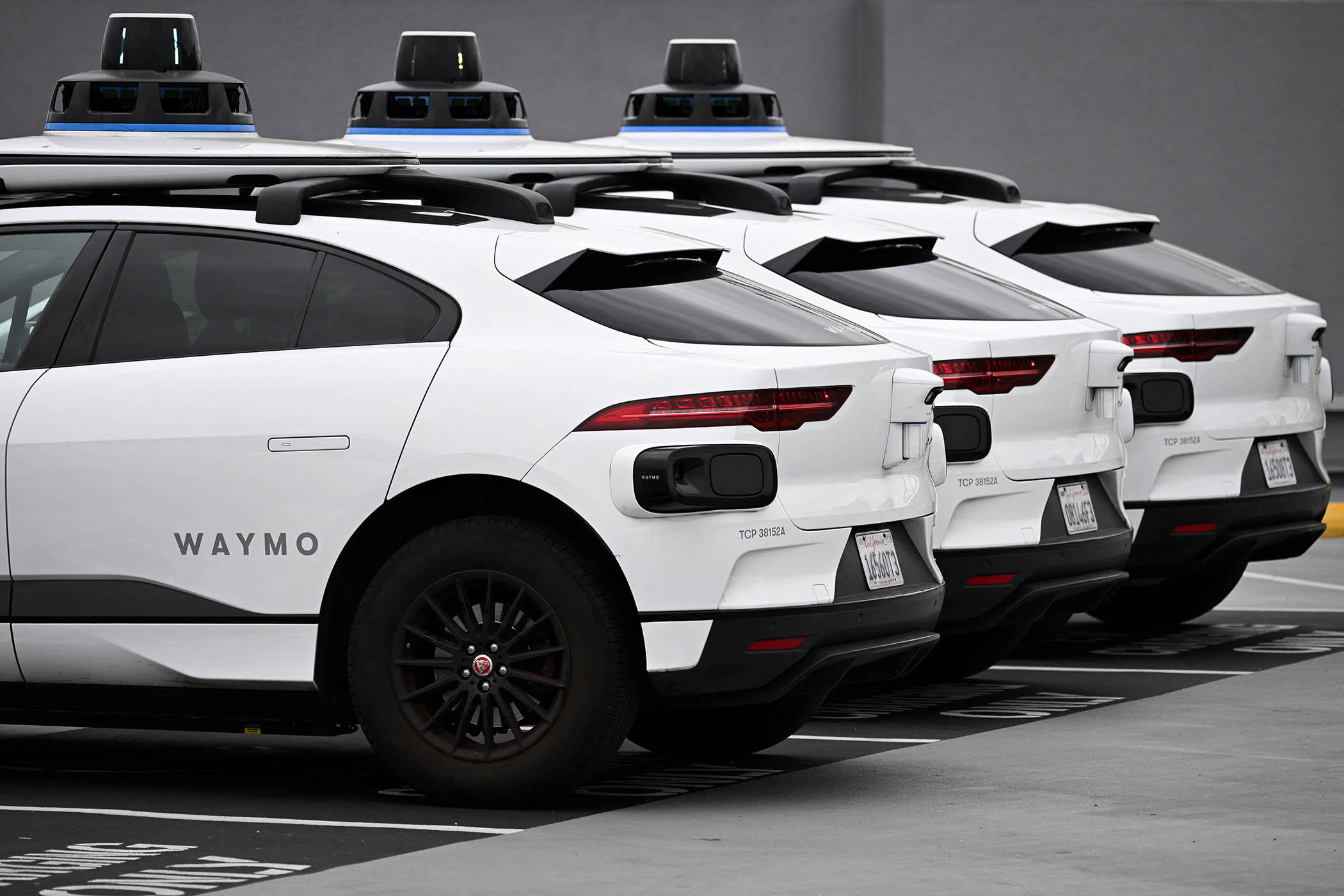

On Friday morning, a white electric Jaguar glided sedately along the Strand in central London.
It may have been moving slowly, but it was participating in the highly competitive race between US and Chinese technology giants to provide the first driverless taxis in the capital.
The self-driving Jaguar I-PACE vehicles, operated by Alphabet subsidiary Waymo are being tested across London, with safety staff in the vehicle to monitor the system and intervene if required. The Chinese multinational Baidu is also due to pilot its driverless vehicles in the capital in the first half of this year.
Transport secretary Heidi Alexander said in a post last month, when the Waymo vehicles first took to the London streets, that self-driving cars were expected to carry passengers for the first time in the UK in spring. She said “harnessing this technology safely and responsibly” could transform travel.
Analysts have predicted the self-driving sector could generate as much as £300bn in global revenue by 2035. Driverless taxis already operate in China and several cities in the US.
Current technology enables the vehicles to travel in geographically defined zones which have been mapped in detail by the operators. The vehicles can struggle in poor conditions, with heavy rainfall in Phoenix, Arizona last year reported to stop the Waymo driverless cars “dead in their tracks”.
The Automated Vehicles Act 2024 provides the regulatory framework for self-driving cars in the UK. Ministers say self-driving vehicles could create 38,000 jobs and add £42bn to the UK economy, with the greater mobility of workers and new opportunities in transport technology.
Christian Wolmar, the transport writer and author of the book Driverless Cars: On a Road to Nowhere?, said London was a very challenging environment for driverless cars, with narrow roads, thousands of cyclists and many pedestrians walking across streets.
“The government is making a big mistake rushing into this,” he said. “It’s not only a risk to Londoners, but a risk to the car companies because it will only take one serious accident to force the government into retreat.”
Waymo vehicles are equipped with radars, cameras and AI. The firm says vehicles have notched up more than 20m miles of real-world driving, with customer services in many US cities.
Newsletters
Choose the newsletters you want to receive
View more
For information about how The Observer protects your data, read our Privacy Policy
Baidu’s robotaxi service Apollo Go already operates in multiple cities in China, with its largest fleet of more than 400 vehicles in Wuhan. Baidu has agreed partnerships with ride-hailing apps Uber and Lyft.
There are other firms also likely to be in the market to provide robotaxis in the UK. Uber is also working with the British tech firm Wayve on trials of driverless taxis in London this year.
Elon Musk also wants to make Tesla a global leader in driverless taxis. There have been trials of Musk’s robotaxis in the US, but no pilots have been confirmed to date for the UK.
Photograph by Patrick T. Fallon / AFP