


The year’s biggest gathering of competition enforcers is meeting this week in Washington DC, under the auspices of the American Bar Association (ABA).
They might be less renowned than central bankers, but antitrust regulators are a bulwark against economies succumbing to monopolistic crony capitalism, zombie firms and high prices. Their integrity has never been more important.
Hobbling Russia’s new competition agency in the 1990s aided the original oligarchs. In Mexico, the absence of a competition enforcer until 1993 made it easier for entrenched monopolies to emerge and stratospheric telecoms prices to persist.
Done right, robust antitrust enforcement spurs innovation. In 2006, the United States Federal Trade Commission (FTC) waved through a joint venture between Lockheed Martin and Boeing in rocket launch services – with the crucial condition that Nasa and the Department of Defense encourage other bids, including from Elon Musk’s SpaceX. Vibrant competition is thus a sacred tenet of free-market capitalism – few politicians or policymakers decline to genuflect before Saint Antitrust.
Yet in several economies the saint is becoming less revered.
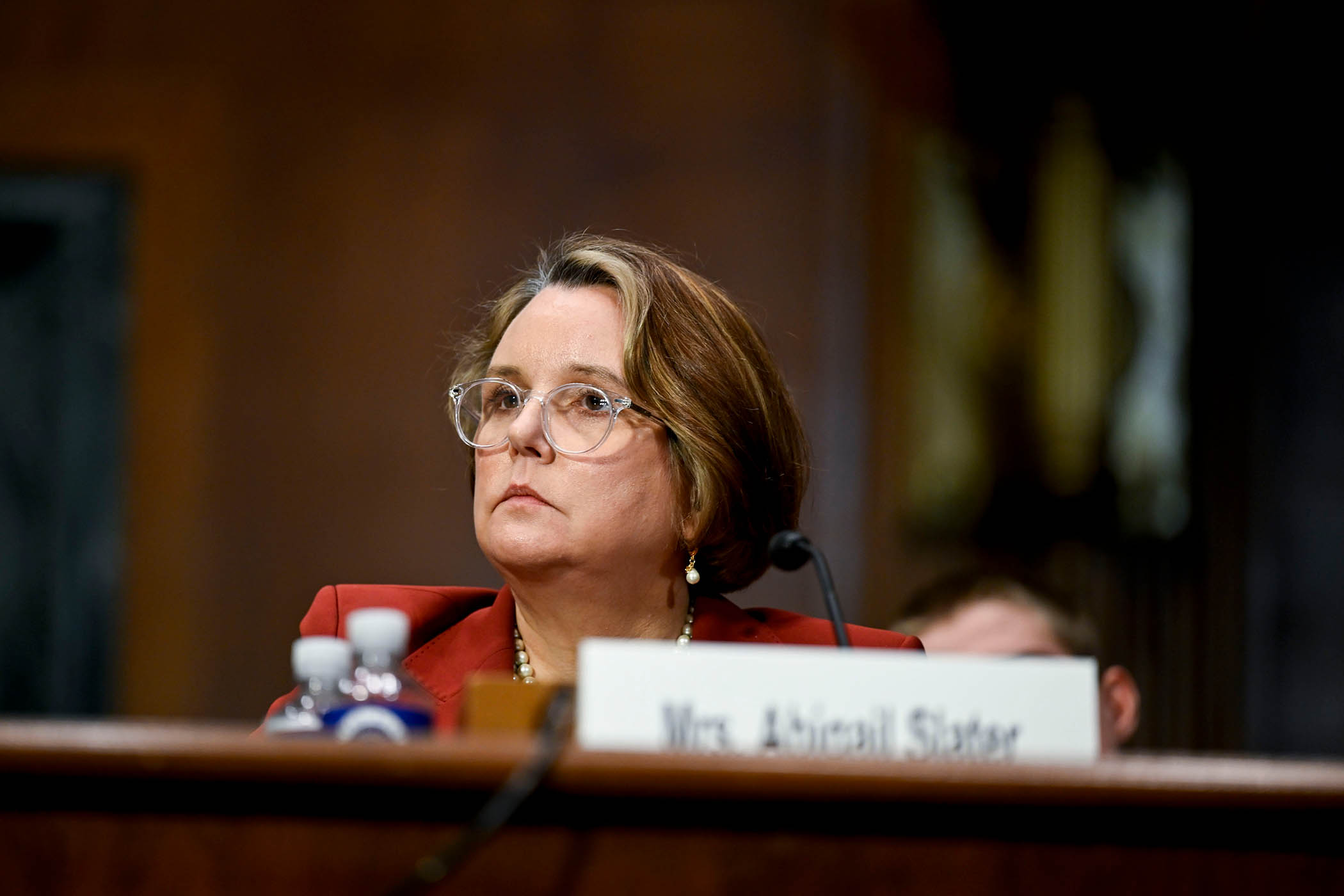
At the ABA, attendees will dissect the continuing fallout from the ejection in February of one of America’s two top antitrust enforcers: Gail Slater, assistant attorney general for antitrust at the Department of Justice. Slater reportedly opposed a DoJ settlement in 2025 that allowed Hewlett Packard Enterprise, a maker of IT equipment, to acquire its rival Juniper Networks for $14bn. More recently, she reportedly held up a settlement to let Live Nation Entertainment (a live events giant the agency says is a monopoly abusing its dominance), hold on to its subsidiary, Ticketmaster.
According to reporting in the Wall Street Journal, Mike Davis, an influential lawyer close to the Maga movement and to President Donald Trump, played a role in securing the HPE/Juniper settlement and also in Slater’s exit. The affair will rumble on: this week a California federal judge heard a challenge from a group of Democrat state attorneys general under the Tunney Act, a Nixon-era piece of legislation, saying the settlement was a product of undue influence by well-connected lobbyists.
Meanwhile, the DoJ’s antitrust division is having to fend off concerns that its scrutiny (or lack thereof) of Paramount Skydance’s $110bn acquisition of Warner Bros Discovery (parent of CNN, Trump’s bête noire) could be politically influenced. The president has in the past engaged in fulsome praise of Paramount proprietor David Ellison and his father Larry.
The Trump administration may be an outlier in baiting trustbusters but other governments are not far behind, flexing their muscles in the service of various aims including faster economic growth, forging national champions and promoting resilience amid volatile world affairs. The European Union is about to release a draft version of its merger guidelines which is expected for the first time to explicitly incorporate factors such as industrial resilience, innovation and economic security into the analysis of deals.
For national competition agencies, the new reality can be messy. “Sometimes governments want us to clear [mergers], sometimes they want us to prohibit. Politicisation is all over the place. And if agencies don’t comply, just fire the boss,” says a senior staff member at a European competition agency.
Newsletters
Choose the newsletters you want to receive
View more
For information about how The Observer protects your data, read our Privacy Policy
‘Sometimes governments want us to clear [mergers], sometimes they want us to prohibit. Politicisation is all over the place’
‘Sometimes governments want us to clear [mergers], sometimes they want us to prohibit. Politicisation is all over the place’
Senior staff member at European competition agency
A doomsday vibe pervaded a gathering in Berlin this month of antitrust agency bosses hosted by Germany’s Federal Cartel Office. Speaking of the importance of trustbuster independence, the head of the French agency hopefully compared a central bank – and by extension, competition agencies – to whipped cream. “The more it is beaten, the harder it becomes.” That image, according to BenoÎt Cœuré, president of the Autorité de la Concurrence, encapsulates well the resilience required of independent institutions. Eleanor Fox, a legal scholar at New York University School of Law, urged agencies to fight back hard.
Sometimes the intervention is more anti- than pro-business, and politicians may want more not less enforcement. South Korea’s left-leaning president, Lee Jae Myung, is bullying the Korea Fair Trade Commission to act aggressively against industry cartels, in line with his campaign to lower the cost of living. The action is nonetheless viewed as compromising the agency’s independence. Former president Joe Biden’s rapid elevation of and support for the FTC’s former chair, Lina Khan, raised similar independence concerns.
Agency design is another way for governments to gain sway. Mexico’s President Claudia Sheinbaum eliminated several autonomous regulators last year, including its antitrust agency, Cofece, replacing them with bodies under government oversight. Mexico’s new National Antitrust Commission is linked to the economy ministry, which can prioritise investigations and sectors. Its chair, Andrea Marván Saltiel, says the ministry cannot influence decision-making.
Two (conflicting) theories exist for why politicians may be justified in disciplining competition enforcers. Mexico’s wholly independent regulators were isolated from everything that was going on in Mexico, and in the world, says Saltiel. Saintliness, after all, can be infuriating when everything else is going to hell.
Second, competition agencies wield immense power and some in large economies overreached, leading to the current backlash, which, in turn, raises alarm. Post-Brexit, unlimited by EU membership, the UK’s Competition and Markets Authority (CMA) went on a global enforcement spree, for example, forcing Meta in 2022 to divest Giphy, a meme generator with no UK sales. In January 2025, the government ejected the CMA’s chair and forcibly reset its approach.
During 2021-2024 the CMA examined 157 deals and either blocked, or caused to be abandoned, 23 transactions, or an average of just over five a year. In 2025, it examined 36 deals and let them all through, some with conditions. At the same time, the CMA is enforcing on issues with broad popular appeal, this week announcing a crackdown on high prices in the increasingly private-equity owned and chain-dominated veterinary sector.
Vets and veterinary chains will have to publish price lists, be subject to prescription fee caps and support a new price comparison website to help pet owners cope with the soaring cost of care. The effects of the government’s “strategic steer” to the CMA on how it should support faster economic growth appears moderate, yet competition insiders wonder how it would look in future if regulation-allergic Reform UK gained power.
What sensible people in the area of antitrust all agree on, from enforcers to lawyers to corporate dealmakers, is that competition decisions should not fall prey to lobbying, self-dealing and actions for personal gain. A culture of political rewards for friends and punishment of enemies through merger control and other antitrust processes would ramp up unpredictability for companies, as well as harm consumers and citizens. As one leading US lawyer puts it, transparently holding antitrust agencies to account is one thing. Backroom manoeuvring and shaping outcomes via “exchanging texts while on the toilet” is another.
Tamzin Booth is editorial director of Economist Enterprise Events, a unit of the Economist Group, and co-chair of the Economist Enterprise Antitrust Summits in London and New York
Photograph by Daniel Heuer/Bloomberg via Getty Images