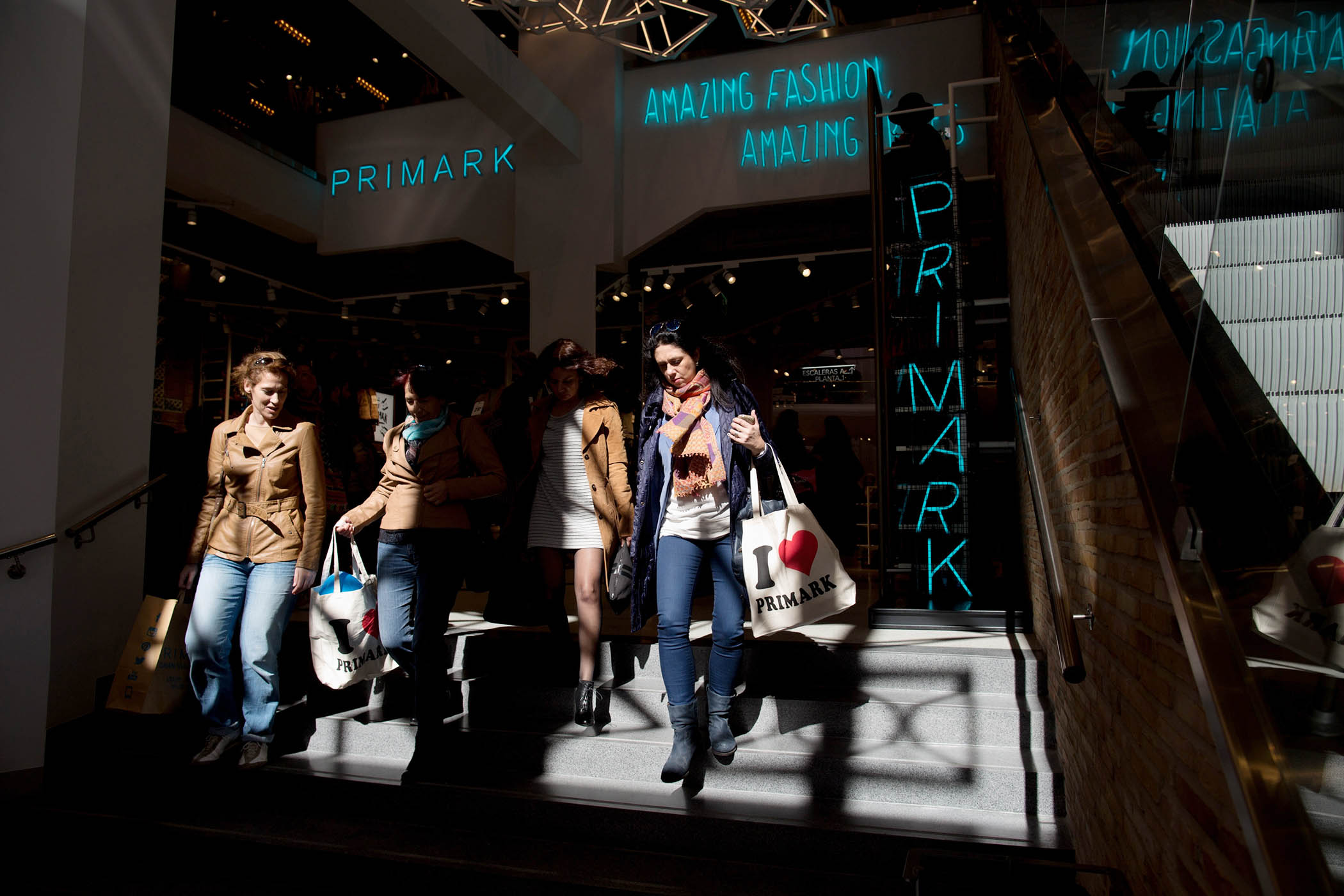

Associated British Foods (ABF), the parent company of Primark, is expected to confirm a split between the discount fashion and food arms of its business, when it announces results on Tuesday.
The decision has been a while coming and marks a bittersweet moment for ABF’s billionaire owners, the Weston family. Last year, FTSE 100-listed ABF launched a review into its conglomerate structure, which houses a varied – and supposedly undervalued – stable of brands including Ovaltine, Ryvita and Twinings.
Meanwhile, Primark is facing stiff competition. UK bank credit card data shows that Chinese fast fashion retailers Shein and Temu, along with resale platform Vinted, accounted for half of all spend in the value fashion and apparel markettowards the end of 2025, up from 10% three years ago.
“I think the price discovery, if there is any, is going to be for ABF, not Primark,” says Clive Black, analyst at Shore Capital.
ABF is a top-three global sugar producer, and the second-largest yeast provider, but “95%” of analysts’ attention is on Primark, which will now face direct comparisons from investors with the likes of H&M and Inditex.
The combined group’s share price is down 14% over the past year, and it issued a profit warning in January. In a further sign that a split was expected to be the best cure, Eoin Tonge was appointed as Primark’s permanent CEO last month after his predecessor, Paul Marchant, stepped down following a complaint about his behaviour towards a female employee.
It is understood that both Tonge and newly appointed chief commercial officer Filip Ekvall, a former H&M executive, will retain their roles at the standalone fashion company.
Primark has been good to the Westons. Its revenue growth of 61% between 2020 and 2024 helped to swell the coffers of the UK’s sixth-richest family, worth an estimated £17.7bn. But it’s also fair to say the Westons, who control 59% of ABF and also have stakes in Fortnum & Mason and Heal’s, have been good to Primark: “They are very long term,” says Black. “Very serious about things, and therefore not prone to flights of fancy.”
The demerger comes at a risky moment. Pressures are growing as a result of weak consumer confidence and higher energy and freight costs, driven by conflict in the Middle East, where Primark is pushing ahead with plans to open five new stores.
But the supply chain impact of the war is arguably more damaging for ABF’s food business. “These companies have long-term shipping agreements already in place for the next 10 to 18 months,” says Anubhav Malhotra at Liberum. “But if the conflict continues, it could feed into prices of fertilisers, natural gas – all of which feed into the agriculture businesses. That second-order effect will eventually come.”
Newsletters
Choose the newsletters you want to receive
View more
For information about how The Observer protects your data, read our Privacy Policy
The question of food security has been front of mind for retailers this week, after it emerged that the UK government has drawn up plans for shortages of carbon dioxide, which is used in the slaughter of some animals and in food preservation.
Ironically, ABF could have been part of the solution. Last year, the company was forced to mothball a bioethanol plant in Hull that was one of the country’s only two functioning CO2 producers.
Paul Kenward, the chief executive of ABF’s sugar business, warned at the time that a concession in the US-UK trade deal to reduce British tariffs on American ethanol from 19% to zero was “existential” for the sector. Last week, US president Donald Trump warned that the deal “can always be changed” amid a frosty moment for relations.
ABF declined to comment.
Photograph by Pablo Blazquez Dominguez/Getty Images