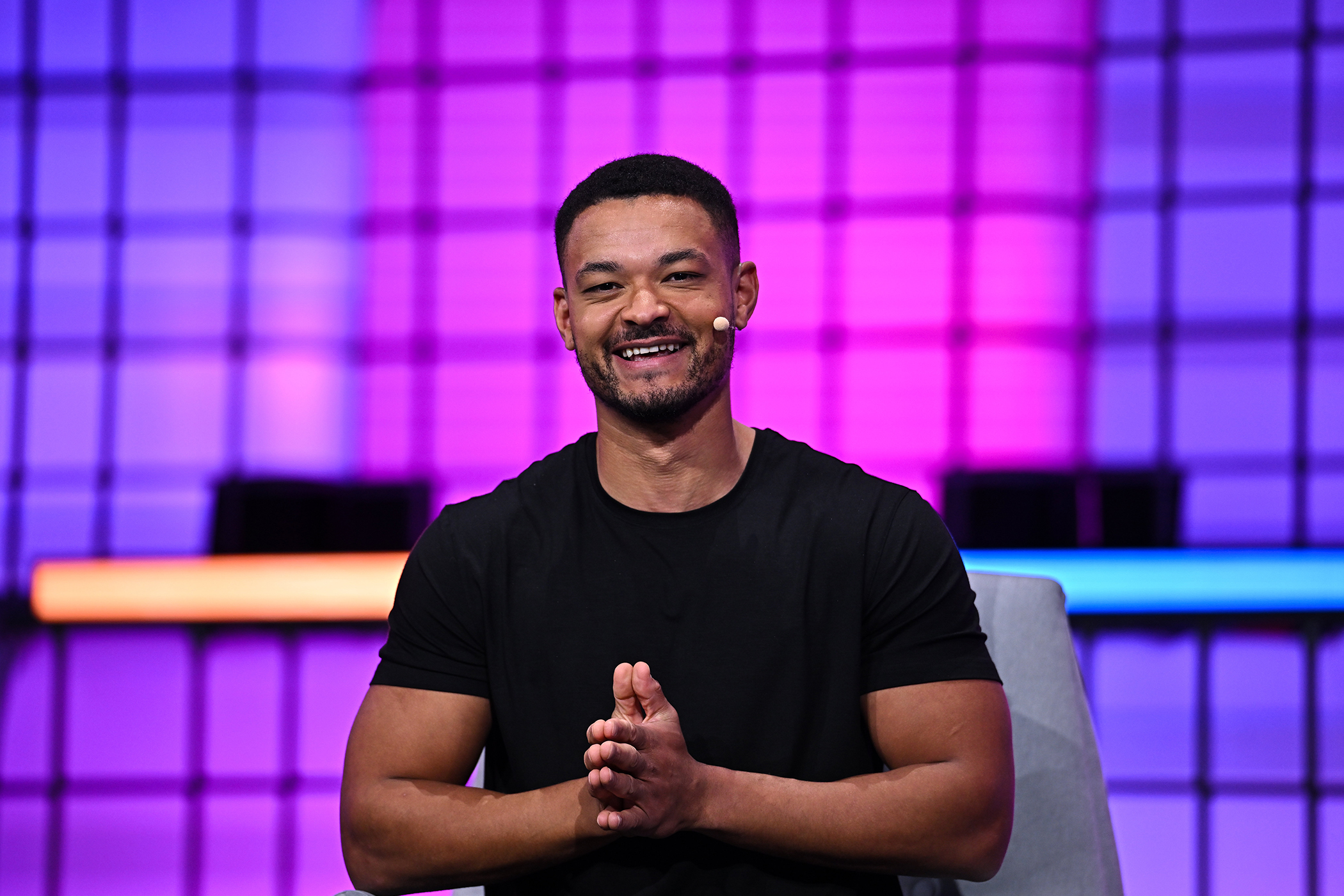


Steven Bartlett, the entrepreneur and Diary of a CEO podcast host, is releasing an AI-generated children’s show that repackages lessons from his interviews with celebrities and business leaders for a younger audience.
Bartlett’s podcast has been on the digital airwaves since 2017. Through sit-down, advice-led interviews, he has amassed a YouTube following of 16.7m subscribers, with guests including Michelle Obama, Piers Morgan and Simon Cowell. Last year, it overtook Joe Rogan’s podcast to become the most successful UK show on Spotify.
Bartlett’s children’s show, Steven’s World, is still in development and is set to be released this summer on YouTube and Spotify. The AI model producing it is using data from Bartlett’s existing output to generate the new content. An early version seen by The Observer shows smooth, uncanny, animated cookies and vegetables walking around, with a young Bartlett as the main character, travelling through a glossy cartoon world with his friends.
A preview of Steven’s World shows a young Bartlett as the main character, travelling through a glossy cartoon world with his friends
A preview of Steven’s World shows a young Bartlett as the main character, travelling through a glossy cartoon world with his friends
“We’re always looking at how we can take our existing IP and expand on it,” said Isaac Martin, director of innovation at Steven.com.
“The appetite for this type of content on YouTube is instantly evident when you look at the vast amount of kids’ channels with millions or billions of views,” he said, adding that the company takes a data-led approach to what it decides to make.
Focus groups of children have given mixed feedback so far, but the AI-generated musical numbers set to be included were a favourite feature, Martin said. The team has discussed pegging future content to primary school curriculums.
“We’re so conscious of not spoon-feeding them just because they’re children and still making an engaging piece of content,” he added.
Industry professionals have expressed scepticism about the use of AI in programming for children. “Children’s content isn’t just another format to optimise,” said Nathan Wilkes, animation director and creative producer of shows such as Numberblocks on CBeebies. “The best kids’ content has a real respect for the audience.”
“I can see a place for AI in early research or development, but I’d be very wary of using it as the creative engine of a children’s show,” he added. “The UK has a world-class track record in children’s television because it has been made by artists, writers, performers and producers who understand that children deserve more than scalable output.”
This isn’t the first time the Dragons’ Den star has looked to AI to create new content categories. This time last year, Steven.com released a computer-generated show called 100 CEOs. Episodes are around 40 minutes long and are narrated by an AI clone of Bartlett’s voice, giving an overview of the lives of the likes of Tesla CEO Elon Musk, late Apple founder Steve Jobs and Richard Branson.
Newsletters
Choose the newsletters you want to receive
View more
For information about how The Observer protects your data, read our Privacy Policy
Podcast creators are operating in a rapidly evolving market. As AI becomes more capable of producing credible human audio and animation, platforms are being hit with a wave of so-called “podslop”. That has meant 39% of new podcasts are likely to be AI-generated, according to research by Podcast Index, an independent audio directory.
There have been podcast factories specifically set up for this kind of production, too. It was reported last September that start-up Inception Point AI has only four staff on its content team and produces 3,000 podcast episodes a week.
Steven.com – the holding company for Bartlett’s podcast brands, VC fund, and production studio – has new fuel to ramp up experiments, having closed an eight-figure investment deal at the end of last year which valued the company at $425m.
Bartlett has unabashedly compared his project to those of Walt Disney, who “built a global empire by taking a character like Mickey Mouse and building a universe around him: films, theme parks, merchandise and more”.
While Bartlett is exploring what’s possible in the brave new world of synthetic audio formats, Martin insists there’s always a “human in the loop”, signing off decision making at every step and, while humans create the concepts, AI is mainly instrumental in the execution.
“We’re spending weeks, not hours developing this,” he said. “Even though it’s AI, it’s very much on a track that we build not only to hit the standards we want to hit, but to make sure it’s not veering off in a direction we don’t want it to go in.”
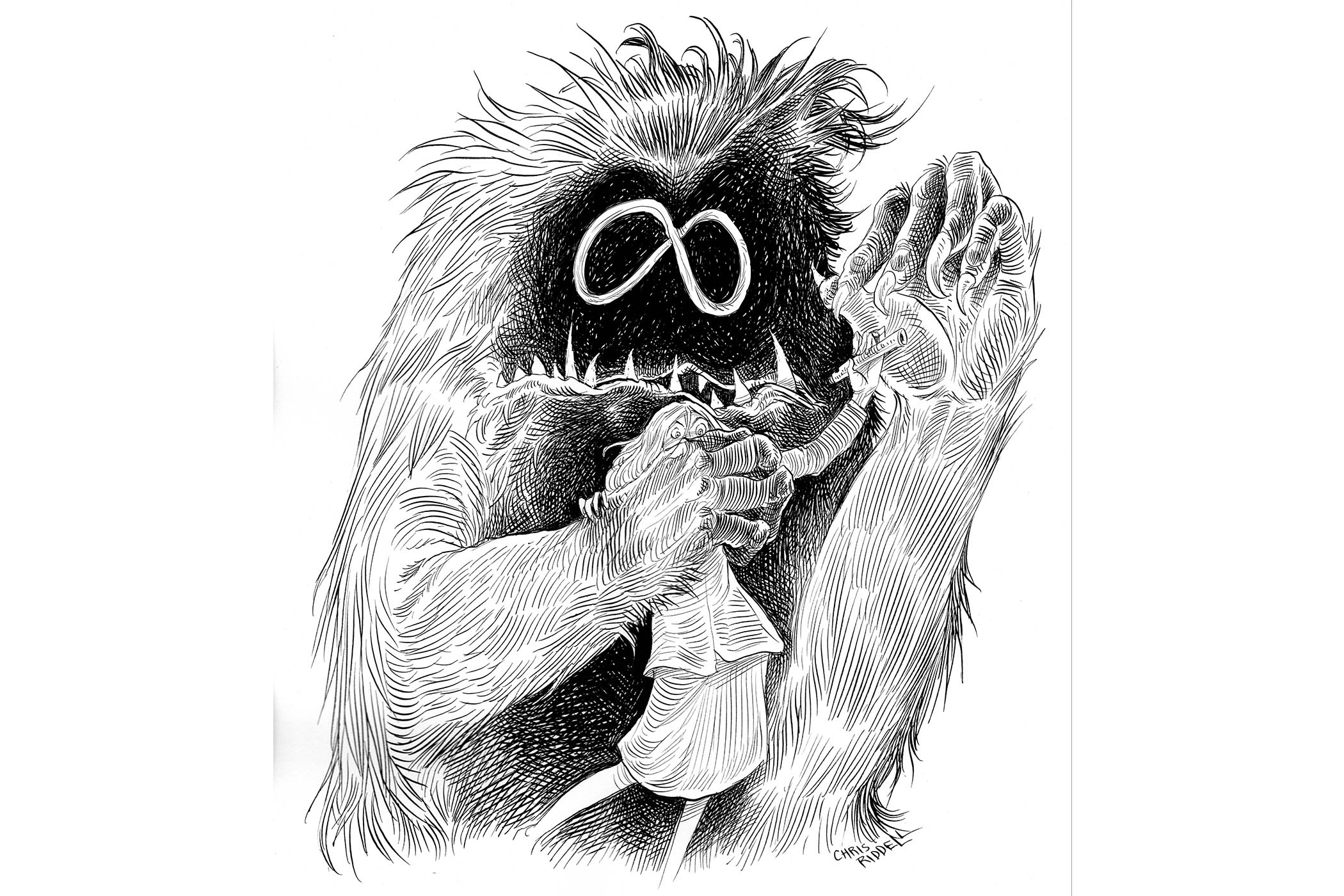
These projects suggest the next battle in AI media may not be over search engines or chatbots, but who can turn an internet audience into an endlessly recyclable entertainment universe. In that world, successful podcasts are datasets capable of spawning countless new formats.
Thanks for reading. You can tell us what you think by writing to letters@observer.co.uk
Photograph by Sam Barnes / Getty Images