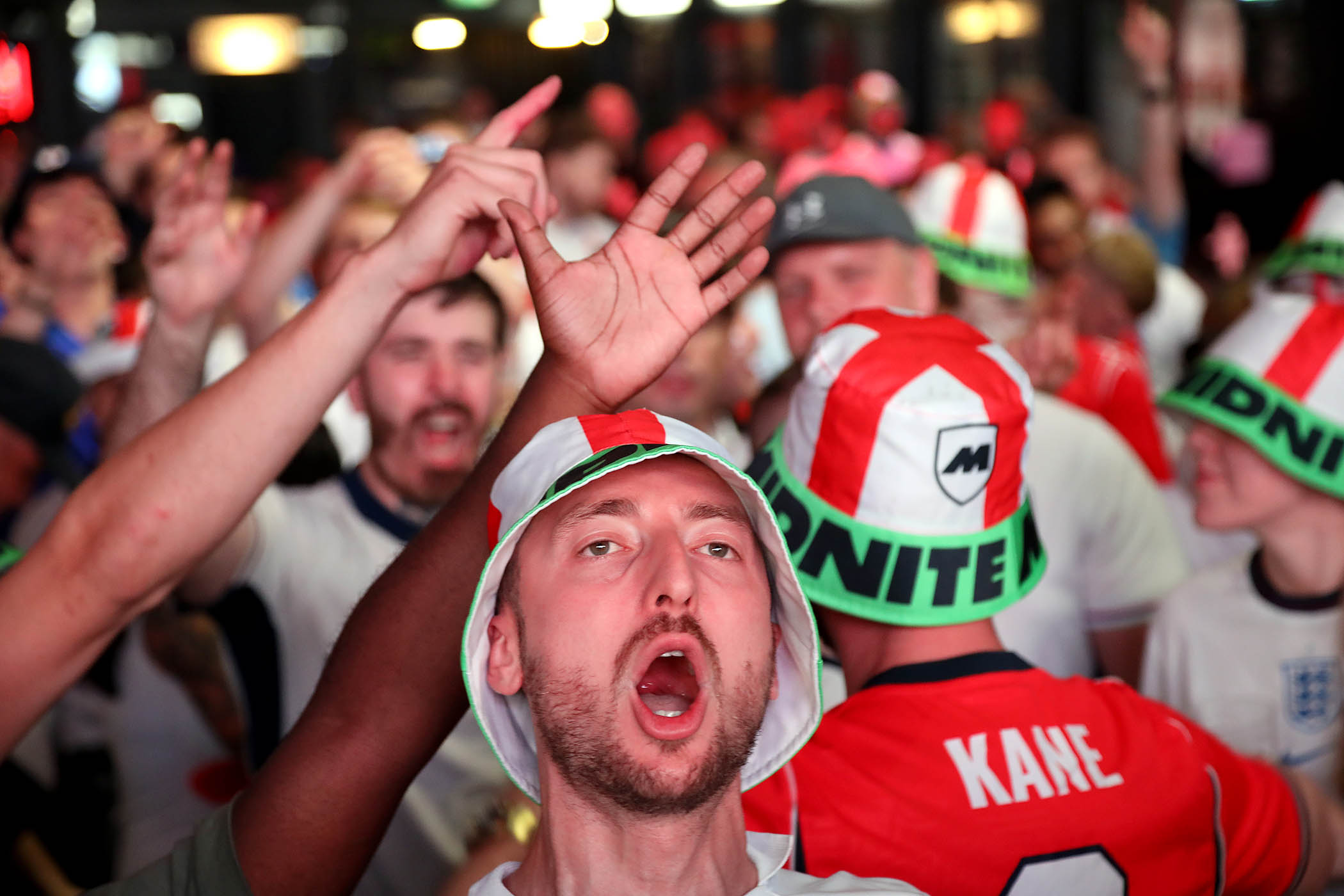

When my grandchildren are gathered around me and ask: “Grandad, tell us about the Azteca in 2026,” I know now that I’ll have to look in their cherubic eyes and say: “I wasn’t there.” “But, Grandad,” they will ask, puzzled, “what could possibly have made you miss that moonlit magic hour when the whole nation came together around Jude and Harry, Wonderwall, ten men, backs against the wall, blood, sweat and St George?” “Well,” I will say, “I decided I needed to get some kip.”
If I go back through my reasoning I really made the decision to stay in bed for this one not long after the 0-0 against Ghana. My thinking was sound I felt: if I sleep through most of a game that starts at 9pm what chance would I have with a 1am start? It was pure head over heart stuff; I was even quite proud of my grown-up thinking – you’ll regret it, you’ve got a heavy week of work, the local is closed for refurbishment – and anyway I had a plan. Get to bed straight after Brazil vs Haaland. Set the clock for 5am. Watch the recording as if in real time, get into work for that morning meeting.
I knew deep down it was a bad decision. Because anyone who knows anything at all about football knew in advance this was going to be the epic game. And I had form in this regard. Against Argentina in 1998, Owen and Beckham, I’d somehow contrived to be on a plane and missed the lot and had to listen to Lisa, my generally football averse wife, give me a breathless minute by minute account of all the excitement I’d not seen.
To be honest, I wavered a bit last night, when the first pictures of the storm-tossed stadium came in on my phone as I was turning in. In the course of my bedtime Samuel Beckett internal monologue – “You must stay up, I can’t stay up, you could stay up, I won’t stay up” – I even looked into the science of it. Could you trick your brain into believing a recording was happening in real time? The science confirmed what I already knew: watching on playback, even a few minutes after the event, messes with all the factors that make live sport compelling: anticipation mechanics, temporal expectation, social proof, shared expectation, contingent emotional contagion. I knew I’d be fighting a losing battle. I turned to poetry instead. As TS Eliot famously observed: “time present and time past are both perhaps present in time future”. I saw the team with Quansah at right back. I set the alarm for five.
It is a curious thing to watch momentous events after the event. Nobody wants to watch the moon landing a couple of days late. There’s no mileage in a re-run Wimbledon final when you’ve already seen Andy Murray clutching the trophy. However hard you resist spoilers, you have that nagging sense that everyone else in the world already knows what you don’t. You are behind the nation’s emotional curve.
At 5am the alarm beeped and I scanned the street outside for clues. The city felt way too quiet. The pessimist in me looking out over the ghost town outside knew the worst: Harry and the boys were gasping for breath from the outset and we’ve lost 2-0 without getting a shot on target. The optimist in me, never admittedly a strident voice, whispered the opposite: “it’s hungover quiet”, that voice said, “it’s triumphant pull a sickie quiet, it’s “I can’t believe I was alive to witness that” quiet.”
I approached the TV remote with the care of a bomb disposal expert. One false move now – an inadvertent BBC news screen showing Rashford in tears – and all my 5am plans would be in ruins. I found the recording with eyes half averted from the screen and slowly, ever so slowly, selected ‘Watch from the Start’ to avoid the trauma of opening with the closing scenes of triumph or disaster. My vain belief was that I would watch the whole thing without recourse to the fast forward button. I would thereby experience every emotion as if in my local, but smugly rested. My resolve didn’t last. I fast-forwarded through the BBC’s montage from Azteca, pausing for Carlos Alberto’s greatest ever goal and the ‘Hand of God’ and Tuchel in the tunnel choking on his energy bar and then went straight into the anthems.
Can you have recriminations in advance? There was something about the saturated colour of the stadium, the smoke haze, the post-storm light, that gave the spectacle the same air of mythology as that reel of Mexico City highlights. I knew even as I was watching the first ten minutes, Rice’s reckless booking, Pickford’s save, that this was something that demanded real time. I soldiered on without anticipation mechanics, temporal expectation, for a while, but then during a dull passage of play in midfield, fatally, I pressed the fast forward button, keeping a watchful eye on the score in the corner of the screen all the time. It was the speed of the first goal that did for me – Pickford to Rice to Saka to Jude; I ended up watching the diving header at manic Buster Keaton speed. And while rewinding and trying to capture the replay of that I somehow missed the second goal and had a double take when the scoreline read 2-0.
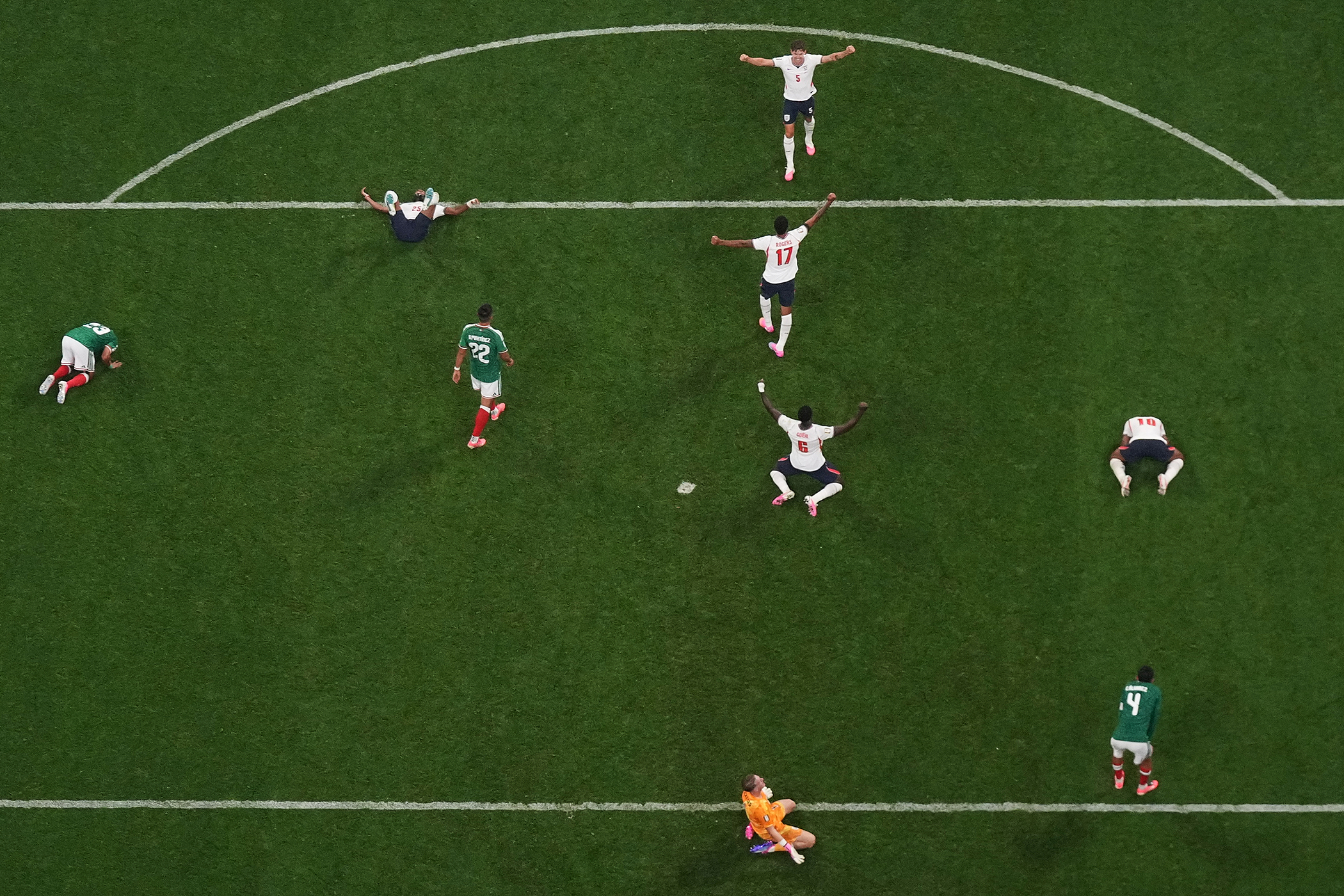
Not many sporting events conjure proper ‘Rumble in the Jungle’, vintage Lions vs All Blacks vibes these days, but when Mexico scored just before half time, even on repeat, this felt like it could well be one of them. I could only imagine the “contingent emotional contagion” of seeing the sending off and then Gordon’s brilliant touch past the keeper that earned Kane’s penalty in real time. I watched the last fifteen minutes without pause or fast forward – at least I would give myself that – the heroics of Dan Burn and Ezri Konsa, Jude’s great thin-air defying lungs sucking in every bit of oxygen in the stadium. It was 6.30am now for me and the city remained eerily quiet outside. With each last-ditch tackle, robbed just a little of its jeopardy, I sensed the full enormity of my miscalculation. The BBC commentator, Guy Mowbray, could read my thoughts: “If you are just getting up now and watching this on iPlayer, dear, dear me you made a bad call.” “All right Guy”, I said out loud, “no need to rub it in.”
Photograph by Alishia Abodunde/Getty Images
Newsletters
Choose the newsletters you want to receive
View more
For information about how The Observer protects your data, read our Privacy Policy