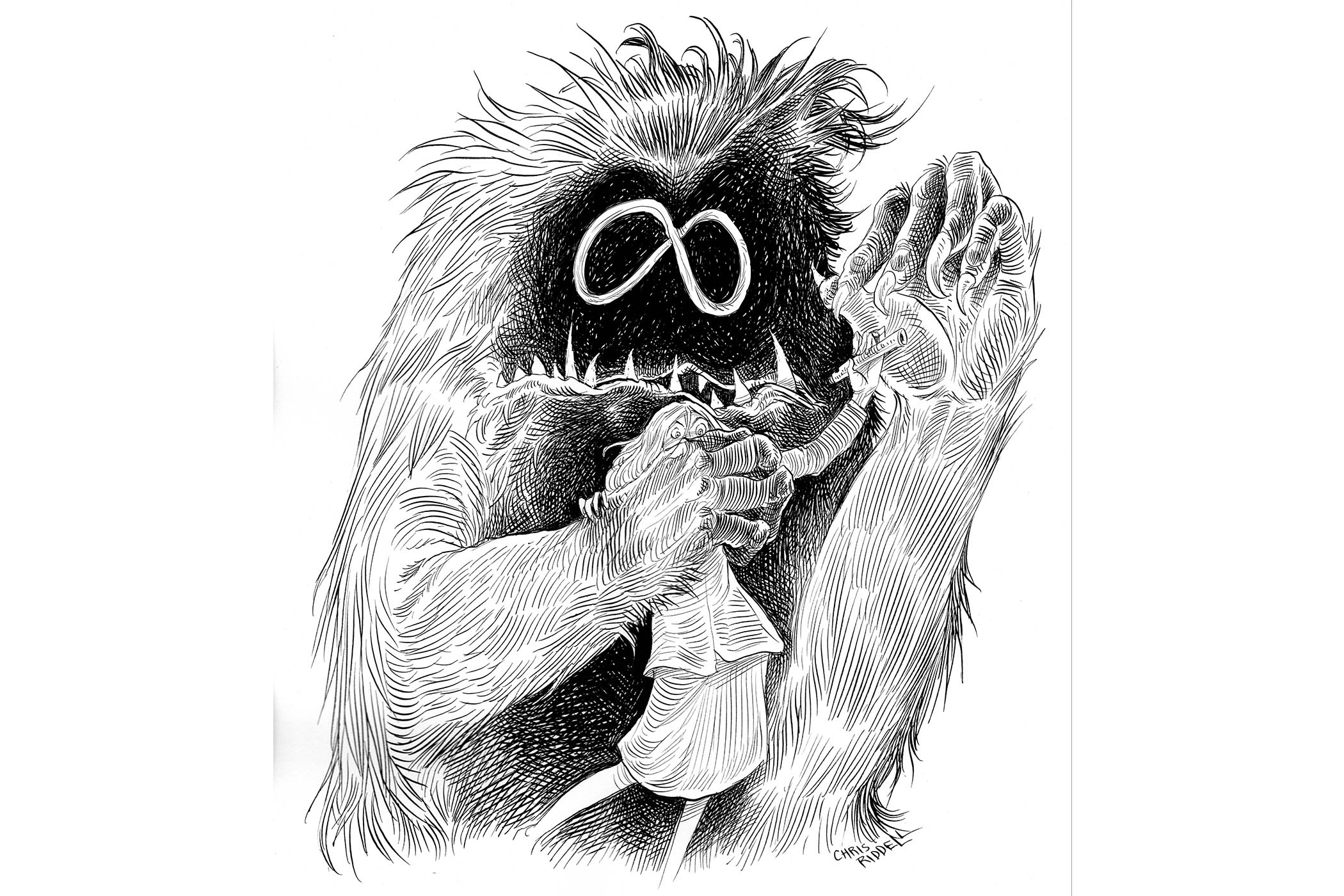



In October 2019, Facebook put out a press release after its famous founder made a speech: the headline was “Mark Zuckerberg stands for voice and free expression”. Today, that document could stand for the sort of unironic doublespeak that Facebook wheels out to justify its treatment of its former director of global public policy, Sarah Wynn-Williams.
Wynn-Williams has made serious allegations against Zuckerberg’s Facebook, and the company has gone to extraordinary lengths to close her down. She has raised the alarm about the culture within the firm, its alleged disregard for the online safety of girls, and its willingness to deal with dangerous regimes. What has happened subsequently is not a test of whether those allegations are true or not – we do not know that. It is only a test of muscle. Should the imperial power of Meta, as it now is, be able to silence Wynn-Williams regardless of the gravity of her claims, and regardless of the truth, because of a contract she signed when she was at her weakest and Facebook was at its strongest?
To recap: Wynn-Williams held a senior position at Facebook from 2011 to 2017. She was fired, she says, when the company knew she was on the cusp of making a complaint of sexual harassment against one of Zuckerberg’s inner circle. According to the case she filed last week to a California court, over several years this male executive sent Wynn-Williams vulgar emails about her breasts and genitals, and physically assaulted her at corporate events. Meta denies the claims.
Wynn-Williams signed a severance agreement as she was sacked. She says now that she was under duress, with a financial settlement and her health cover at stake. The agreement included a broad non-disparagement clause and a binding arbitration agreement to settle any dispute about what amounted to disparagement. In 2025, Wynn-Williams wrote a book, Careless People, about her experiences at the company. Her case for writing it is that she was blowing the whistle on a terrible culture, and that she believed Facebook had conceded in the intervening years that arbitration was not suitable for resolving allegations of sexual misconduct.
And so to the present day. The spectacle that brought home Wynn-Williams’s ludicrous and sinister predicament was the sight of her on stage at the Hay festival a month ago, mute for fear that anything she said might be construed as disparaging Facebook because of a gagging order the company had been granted, unable even to nod in response to anything a fellow panellist said in case it was taken as a signal to the audience to buy her book. In the crowd, surveilling her every word and gesture, were people hired by Meta. The Observer understands that Meta would prefer we say they were “watching” rather than engaged in “surveillance”.
The legal sledgehammer that Meta has wielded against Wynn-Williams would be troubling in any corporate hands, but particularly Meta’s for two reasons. The big tech platforms are not bystanders in the debate about free speech. They own the spaces where it happens – or doesn’t. And the tactics Meta has employed point to a wider cultural shift. Donald Trump’s White House has set the tone – macho, aggressive, bullying, misogynistic – and big tech has aped it.
Trump’s belief that he can impose his world view through force of will is mirrored at Jeff Bezos’s Washington Post, where editorials must all express a free-market perspective, and at Elon Musk’s X, whose AI chatbot, Grok, is designed to be partial in its answers.
The US has no laws that would prevent Wynn-Williams today from signing the exact same non-disparagement agreement she signed in 2017, and over that same period there has been a profound shift that demands a response from the law: the personal has become more political than ever. The vendettas Trump has pursued against individuals are inseparable from his political practice, and Meta’s determination to silence Wynn-Williams’s voice speaks eloquently about its attitude to censorship more generally. The lesson of this case is that we can only protect the public square if we look after the rights of each person in it, particularly when they are confronted with the almost limitless wealth and power of the titans of tech.
Illustration Chris Riddell
Newsletters
Choose the newsletters you want to receive
View more
For information about how The Observer protects your data, read our Privacy Policy