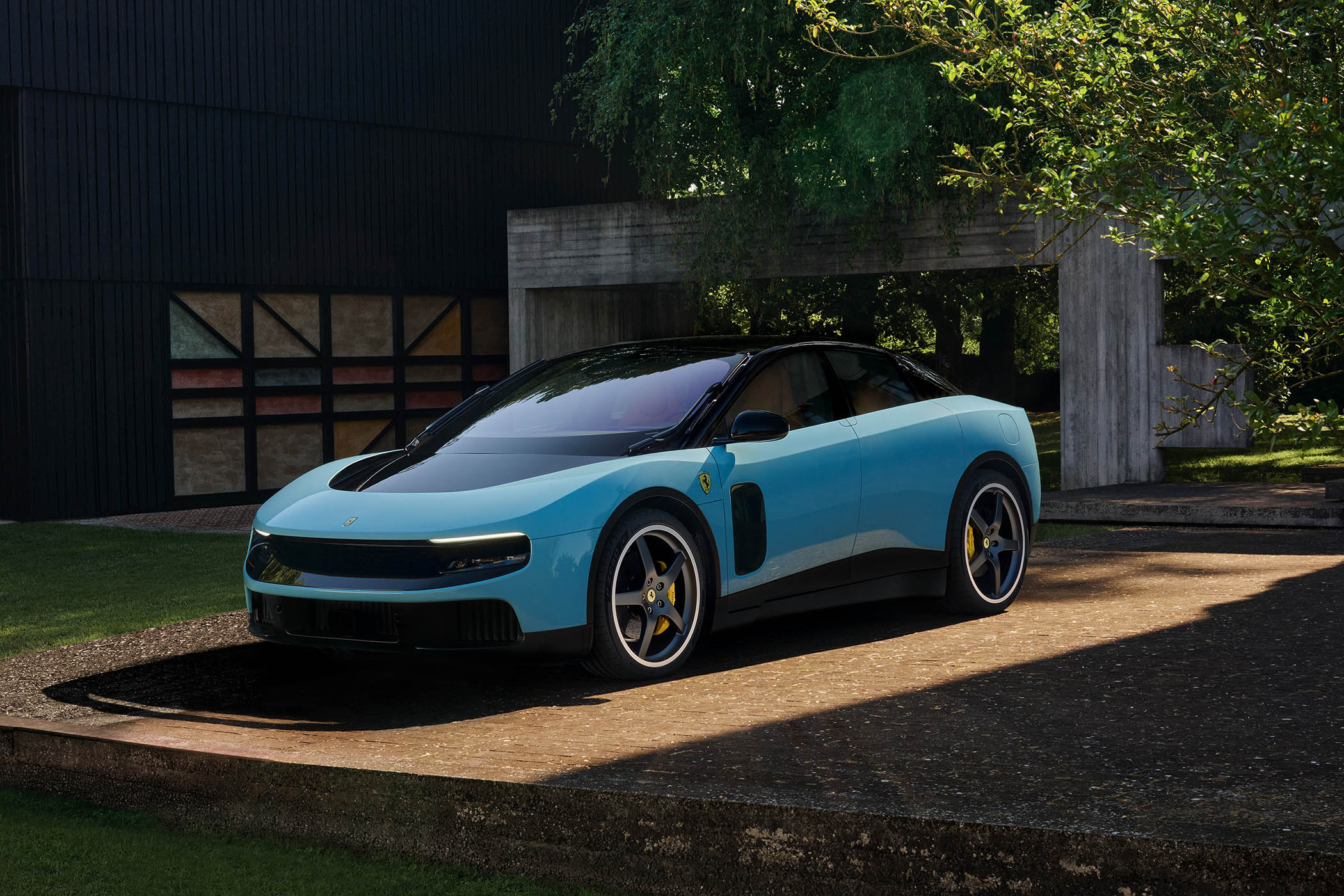

The launch of the new Ferrari Luce could hardly have got off to a worse start – a five-seater electric vehicle in light blue, not the brand’s usual racing red, which seems designed for the school run rather than transporting hot Italian couples to fabulous locations. Ferrari’s revered former boss Luca di Montezemolo publicly criticised the design. The company’s shares, down over the past year, fell another 9%. The day after the launch, already needing a miracle, Ferrari gave the pope a test drive.
Perhaps putting His Holiness at the wheel will turn the tide. Benedetto Vigna, Ferrari’s CEO, insists that lots of orders are coming in for the Luce, from exactly the sort of people the new model is targeting as Ferrari repositions itself as a luxury lifestyle brand far broader than its traditional luxury sports car niche. One reason Ferrari shares were falling, even before this week, were growing doubts among investors, including short-sellers, about the company’s ability to make this transition. As well as strong sales of the Luce, Ferrari needs quick success in other aspects of its lifestyle strategy, such as retailing, hotels and hospitality.
The initial scepticism about the Luce is also adding to the debate about whether the legendary British industrial designer Jony Ive has lost his touch. The Ferrari is the most significant product he has designed since leaving Apple. It is now five years since he launched the LoveFrom studio. And, having pocketed $6.5bn from the sale to OpenAI of his artificial intelligence project io, the launch of its supposedly category-defining AI device has already been delayed amid reports of multiple problems. The next few months will reveal whether Sir Jony still has the magic touch he once showed with his designs for the iconic iPod, iPhone and iPad.
A new golden age of techie philanthropy
Starting with SpaceX, a series of huge US IPOs in the coming months will mint dozens of new billionaires, prompting talk of a new golden era of philanthropy.
The listings of OpenAI and Anthropic alone could have a massive impact. Anthropic’s seven co-founders are on track to pocket more than $100bn between them – and they have committed to give away 80% of their wealth. Many Anthropic employees will also get rich, and they are incentivised to give by the company’s generous donation-matching programme – maybe $60bn of donations collectively. The OpenAI Foundation owns 26% of OpenAI which, if its IPO goes to plan, could be worth well more than $220bn.
A third wave of American philanthropy may be about to begin, according to an influential post by Nan Ransohoff (chief climate officer of Stripe) – following the early 20th-century Carnegie and Rockefeller-led wave, and the early 21st-century one epitomised by the Gates Foundation. She predicts a sort of Philanthrocapitalism 2.0, as an emerging “Silicon Valley for public goods” brings new funding methods and hundreds of philanthropic startups.
Though far from inevitable, given the many practical challenges of doing philanthropy well, that is a more compelling vision than New York Times columnist Ross Douthat’s demand that: “The new AI money should be spent on beauty.” He grudgingly applauds the poverty-reduction programmes of Gates but claims much recent giving “threw money after fashionable political causes and education fads”.
Sure, beautiful public buildings are important, but in the era of AI, the defining challenge will not be a shortage of palaces and fine institutions but of relationships, a crisis of belonging, attention and trust, loneliness and polarisation. The top priority for AI’s philanthropists should be to fund ways of maximising the good, and minimising the negative, effects of AI on humanity.
Time to bring back critical infrastructure defences
Newsletters
Choose the newsletters you want to receive
View more
For information about how The Observer protects your data, read our Privacy Policy
The British government is minded to block the Indian telecoms billionaire Sunil Bharti Mittal should he try to increase his ownership of BT, as he reportedly wants to do, beyond his 24.95% stake. BT shares fell on the news, attributed to unnamed government sources by the Financial Times.
This is not personal, said the official, nor anything to do with India. Rather it is about establishing that the government is determined to protect critical national infrastructure. BT fibre goes to 23m British homes, and it carries sensitive data, such as from the Ministry of Defence, that the state wants to keep under its sovereign oversight.
Yet would the modest increase in Mittal’s ownership to the 29.9% he is said to want really bring a significant increase in risk to the nation’s security? Is the government instead regretting the 2024 decision to allow him to buy his current stake in the firm? And is controlling company ownership via unattributed media briefings really the way to go?
Far better might be for the government to take a golden share in BT and other firms in critical industries, with clear rules about when they can be exercised. Yes, Donald Trump loves golden shares, but that doesn’t make them wrong – especially if, in contrast to the US, Britain deploys them in ways that bring greater clarity to when exactly foreign ownership will be resisted.
Ironically, in 1984, when BT was privatised, the government retained a “golden share” allowing it to block unwanted owners. But this was voluntarily given up in 1997 by the incoming Labour government, which in those heady, pro-globalisation times felt it no longer need worry about foreigners acquiring national assets. It may be time for the current Labour government to right that historic economic wrong.
Photograph courtesy of Ferrari