On or about 10 October 1997, an announcement drifted across the Black Rock desert in northern Nevada from a makeshift tannoy. A stripped-down Porsche 911 was going to make a speed run across the dry lake bed where nowadays the Burning Man festival is held each year. Would onlookers please stay out of the way. The car would be going “at a high rate of speed”.
A few days later, in the same place, the jet-powered Thrust SSC became the first car to break the sound barrier. In between, the American Craig Breedlove, in another jet car, joined in this impromptu festival of speed with a run that veered out of control at 500mph, fortunately killing no one. But it’s the Porsche that sticks in the mind – the garbled syntax and tremor of excitement in the announcement, and the heartbreakingly honest look-at-me vibe of the car and its little dust plume on the lake bed.
We can’t help ourselves. It’s unfashionable to say so, but as a species, in cars, as on horses and in rocket planes, we’re obsessed with speed and with going faster than the next guy. Of course, we go faster through air and space, but speed in two dimensions is the mass-participation version; the one that resonates, that leaves grit under the fingernails and a smell of petrol in the air. That lets competition rip wherever two or more are gathered together in its name.
James Hunt in 1976 wanted to win the Formula One drivers’ championship, but more than anything he wanted a scrap with Niki Lauda. When jobsworths at the Fédération Internationale de l’Automobile tried to turn the season into a battle between rules and (supposed) rule-breakers in the McLaren team, Hunt said, with uncharacteristic restraint, that he saw it much more simply as “myself having a battle with Niki”.
Rivalries like theirs have led to wild risk-taking and astonishing feats of skill and engineering. Ken Miles combined all three getting a Ford GT40 to more than 200mph at Le Mans in 1964, before any Ferrari. But here’s the thing: quite often these rivals seem to have kept each other alive.
Achille Varzi died racing, but not against Tazio Nuvolari. Mike Hawthorn was killed in a car crash, but Sterling Moss had nothing to do with it. Ken Miles died driving a superfast Ford, but not against Ferrari at Le Mans. Hunt died early – of a heart attack, in bed, and Senna was killed at the Imola Grand Prix, but Alain Prost didn’t drive him to it. He was a spectator that day, aghast with 60,000 others.
From the comfort and safety of our deckchairs, we salute you.
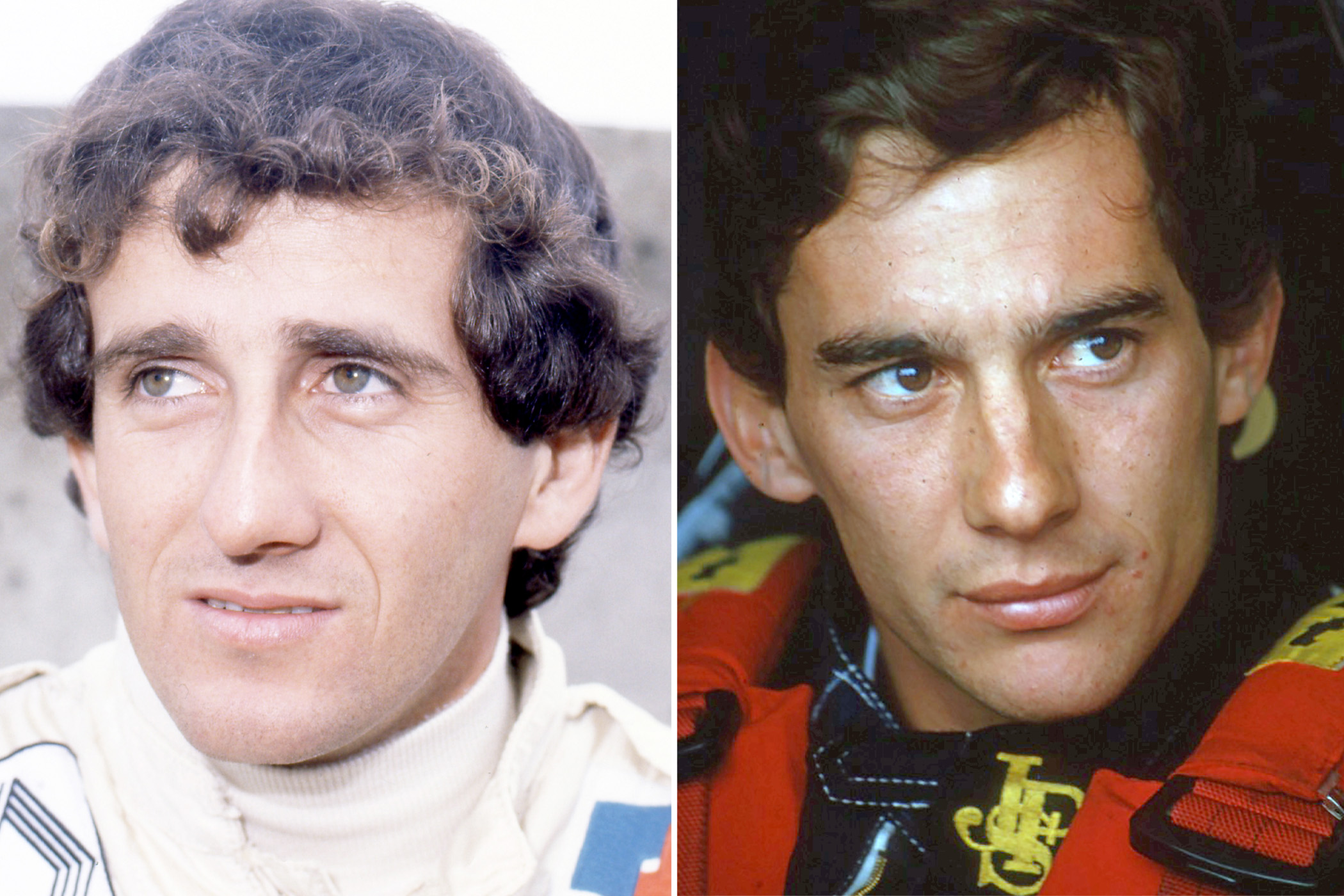
PROST V SENNA
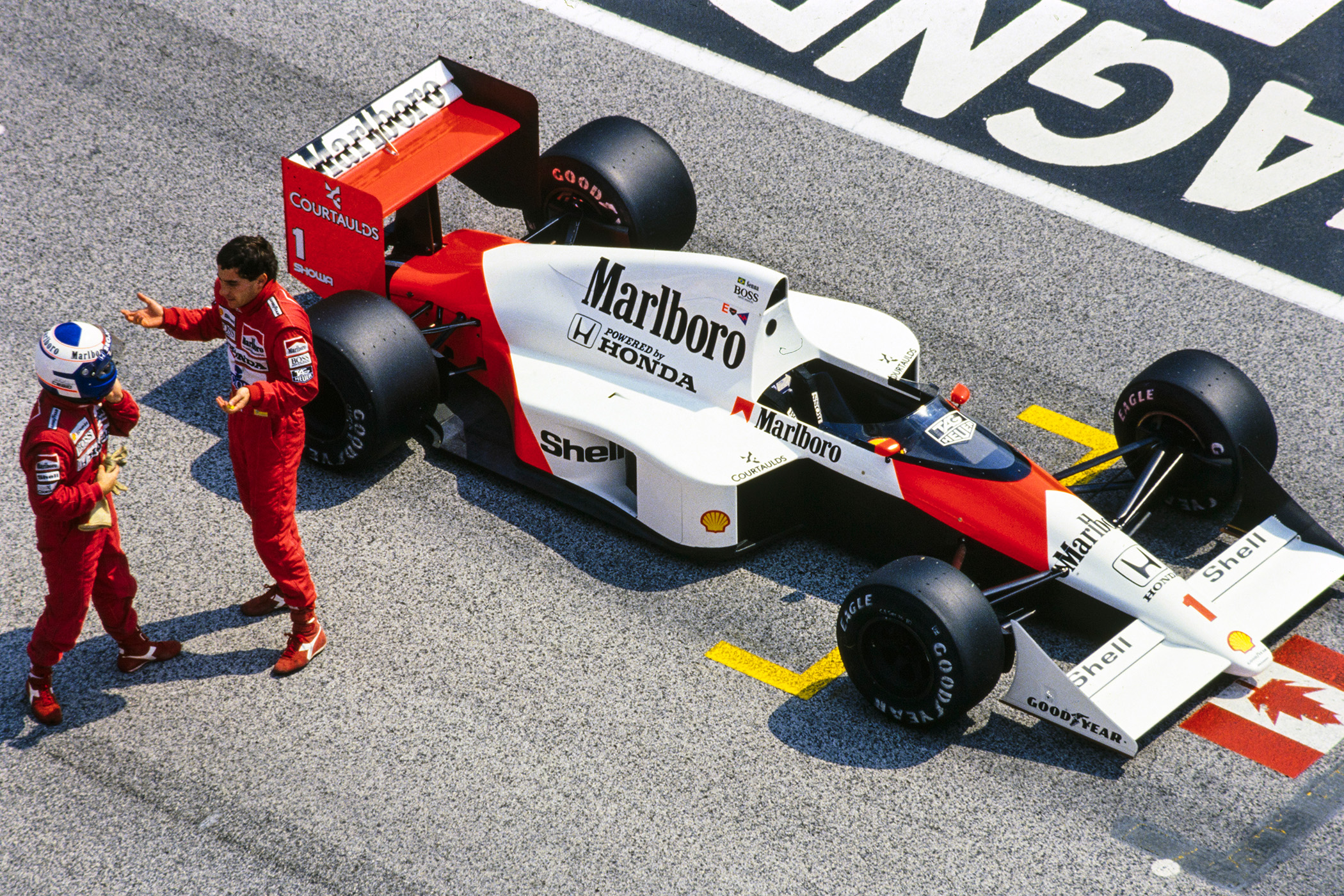
The very first time Alain Prost met him, Ayrton Senna acted normal. It was the morning of a celebrity race hosted by Mercedes at the famous Nürburgring circuit in Germany in 1984 – a friendly. And on the drive from Frankfurt airport to the track, Senna was just that. “We chatted and he was very pleasant,” Prost said later. But then a weird thing happened.
Senna jumped the start, pushed Prost off the track and drove 12 laps flat-out to beat Niki Lauda by several seconds. “A great start, no?” Prost mused. Senna was a newcomer then, from Brazil, among the sport’s greats, cocky but shy, better at driving than reading the room. Prost was impressed. He asked McLaren to hire Senna as his teammate, which is how he came to know as well as anyone how Senna’s mind worked.
Newsletters
Choose the newsletters you want to receive
View more
For information about how The Observer protects your data, read our Privacy Policy
“Ayrton didn’t want to beat me,” he wrote. “He wanted to destroy me.”
No rivalry in motorsport history is more dissected or, in the end, more poignant than Prost v Senna; cool v hot; patron v prodigy. It lasted six years. It wasn’t served up with sex and drugs – Prost was married to his high school sweetheart; Senna to his ambition – but it was authentic, scary, bewildering.
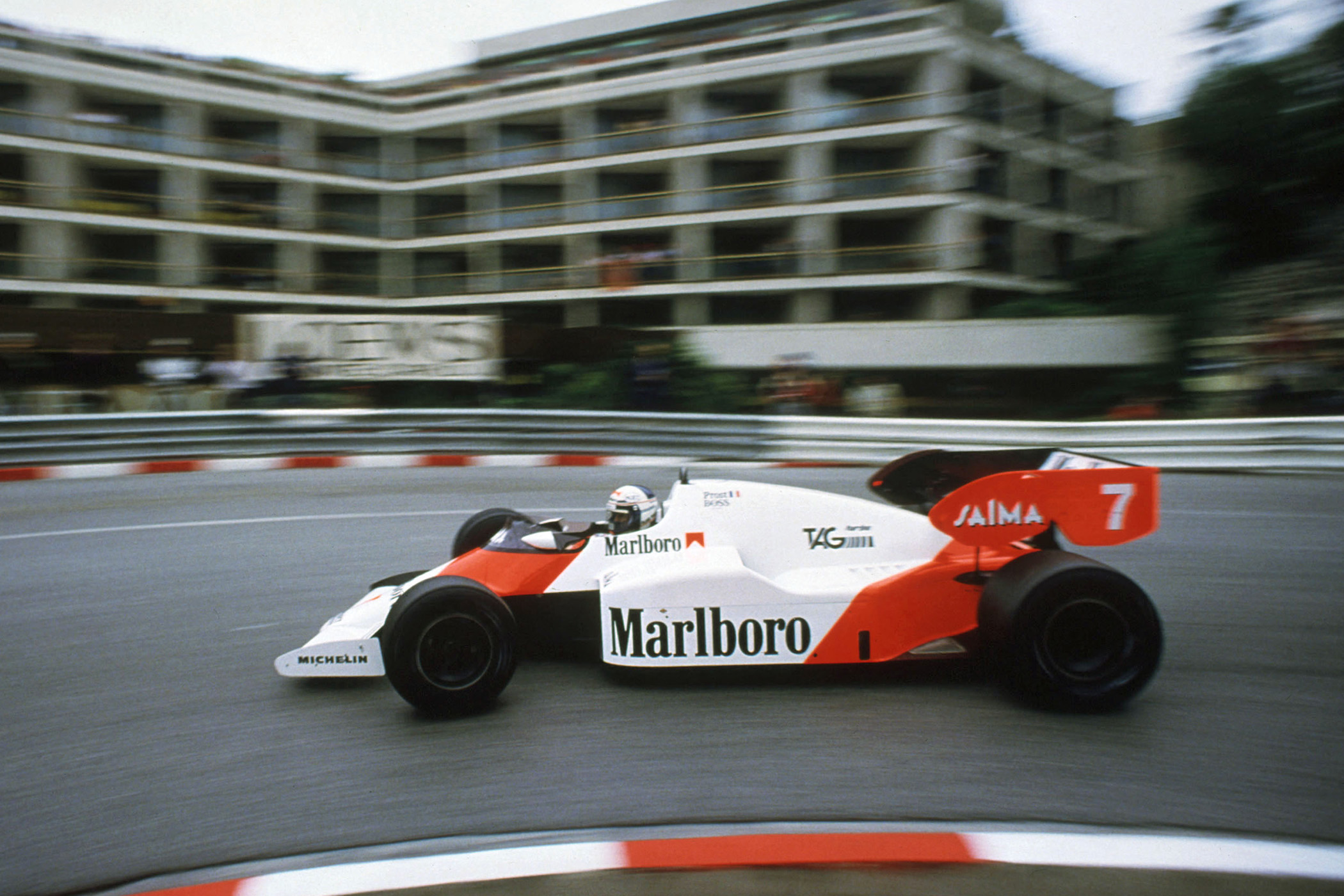
The constant was Senna’s will to win. On lap two of the 1988 Portuguese Grand Prix at Estoril, Prost had the lead and the fastest line but Senna wanted it, and nearly forced Prost into the pit wall at 180mph to take it. (That time, Senna backed off.) The next year, and the next, Senna drove both of them off the track at the Suzuka circuit in Japan to be absolutely sure Prost couldn’t win. The second time he ploughed into the back of Prost’s car on turn one of the race and claimed afterwards to have been looking for a gap: “If you no longer go for a gap which exists then you are no longer a racing driver.”
Senna said that he had been “fucked by stupid people” in being put on the dirty side of the starting grid even though Senna was fastest in qualifying. “I never caused the accident… I was treated like a criminal.”
It was all nonsense. The Honda engineers monitoring telemetry from Senna’s engine could see he’d floored his right foot and kept it down instead of backing off as he would have if looking for a gap and realising it wasn’t there. He’d taken Prost out, even though it could have killed them both.
For three more years they feuded. Prost called Senna’s risk-taking stupid, and that was when he was being polite. Senna called Prost a coward. Then, in 1993, Prost said he was retiring and Senna pulled him up on to the winner’s step after the Adelaide Grand Prix. Soaked in champagne, they seemed to put the past behind them.
On 1 May 1994 they breakfasted together and Senna told the TV cameras he missed Prost on the circuit. A few hours later he was dead after a sickening crash into a concrete barrier at Imola. Prost was the only Formula One driver invited to mourn with the family in São Paolo.
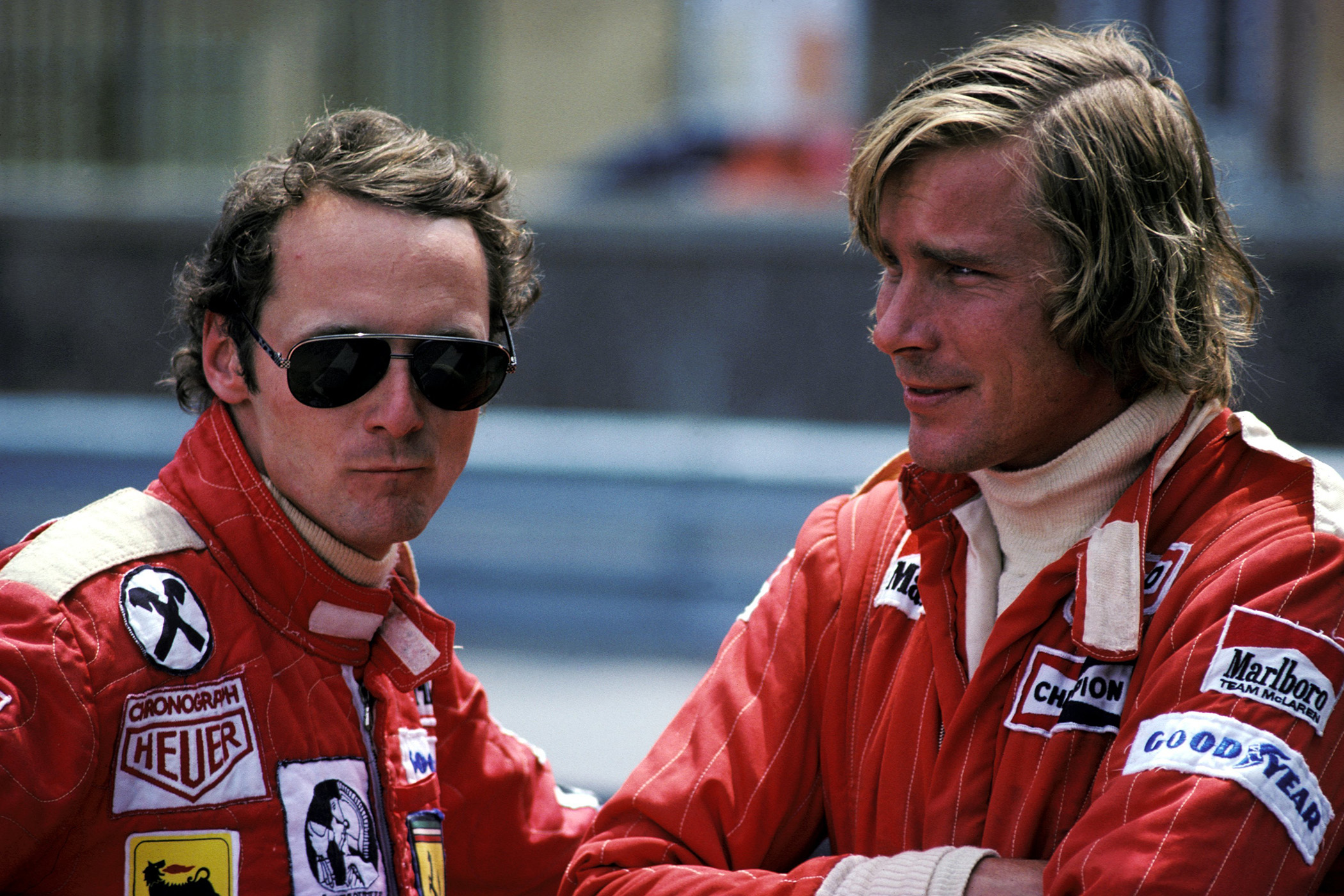
HUNT V LAUDA
The essence of James Hunt – and everything about him that was different from the demonic dentist demeanour of Niki Lauda – was captured by whatever he got up to on the night of 2 October 1976.
He’d just been told an appeal against disqualification from that year’s British Grand Prix had been rejected. The season seemed lost. “We gave up,” said Alastair Caldwell, the McLaren team manager. “Meanwhile, James went completely ape. Lost all discipline. He was difficult to discipline at the best of times. We had trouble keeping him in line, making him go to bed, stay away from women and booze and so on.”
So Caldwell wasn’t sure of the details of that night – only that Hunt didn’t get to bed until the early hours, “very drunk and probably not alone; but the rest, of course, is history”.
Hungover, on little sleep, Hunt won that day’s Canadian Grand Prix. Lauda was still way ahead on points and so confident of winning the drivers’ championship that he walked into Hunt’s hotel room on the morning of the next race in upstate New York and announced, as Hunt recalled it, that he was “going to vin ze championship today”.
He didn’t. Hunt won again, and took the title that year by a single point by staying out in the rain in Japan after Lauda had opted out mid-race.
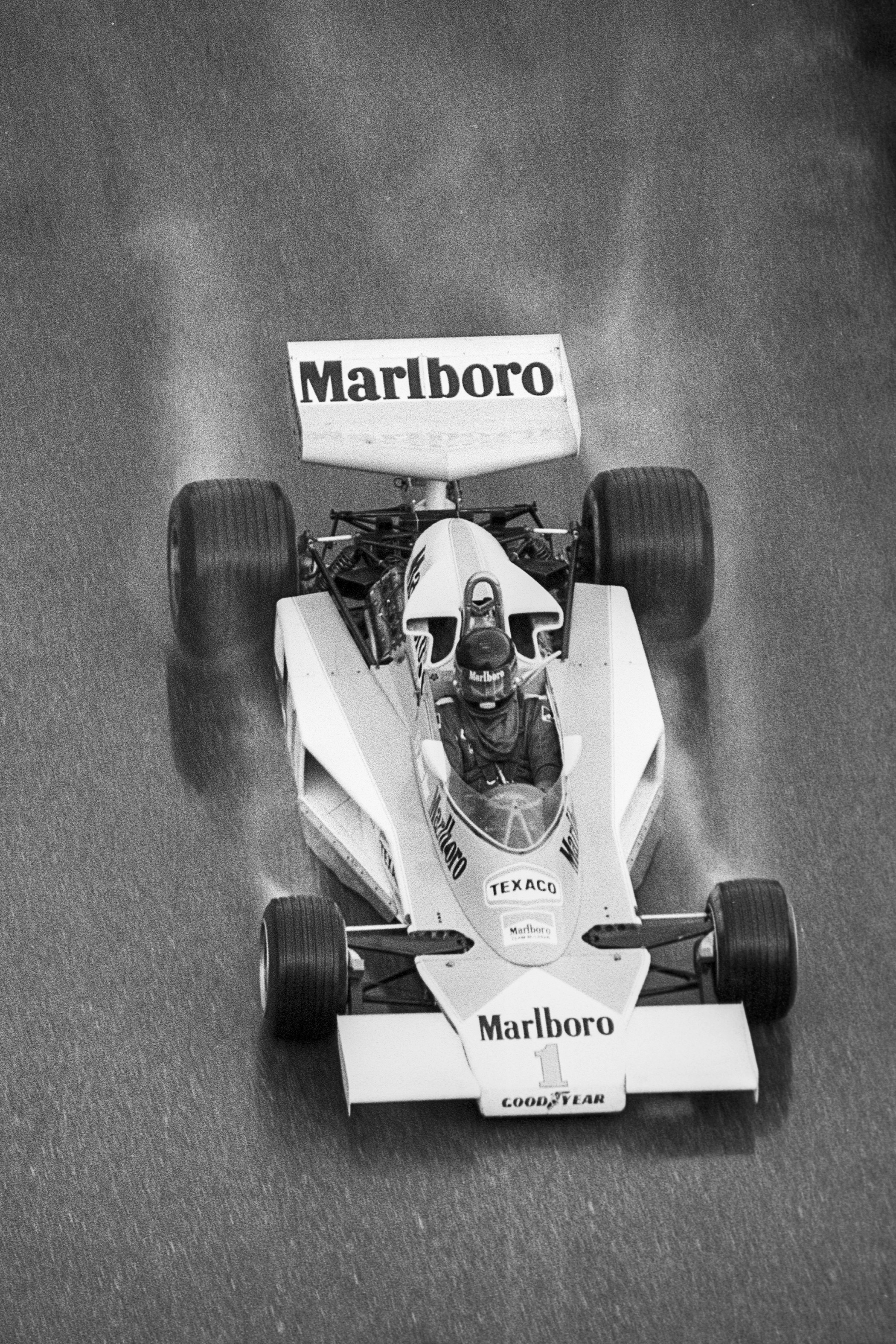
Lauda’s confidence on the morning of the US Grand Prix was itself a piece of history. Two months earlier, he’d crashed on the Nürburgring after warning the German race officials that the track was too long to be safe, especially in rain, because ambulances took too long to get to its furthest stretches. It fell to other drivers to pull Lauda from the wreckage of his car, with terrible burns to his head and neck. Doctors feared his lungs would never recover. A priest read his last rites.
Six weeks later, Lauda was back in practice. Hunt “the shunt”, whose reckless style infuriated Lauda, had used the time to rack up points on the drivers’ leader board. There’s no way he would have been in contention but for Lauda’s crash, and there was no love lost between them. When Lauda expressed himself “delighted” at the failed British Grand Prix appeal, Hunt told the BBC’s Frank Bough: “Niki is not a sportsman. Niki’s interested in only one thing, and that’s Niki.”
And yet Hunt missed Lauda as a rival. And – in the mythic version at least – he was willing to defend his rival’s honour. When Ron Howard turned their story into the film Rush, he included a scene in which a journalist asks Lauda, in his first post-injury press conference, if he thinks his marriage to the model Marlene Knaus will survive his injuries. In the film, Hunt pursues the hack down a corridor and beats him up. When the film came out I asked Howard if this really happened. He said the press conference did – “we found it in the newsreels”. As for the other bit, he said, “we can only hope James beat the shit out of him”.
Later, Lauda looked back to 1976 and offered a lesson, not to fly to “cloud seven” when you win the world championship “because the landing can be hard”. It was too late for Hunt, who’d died three years earlier having boasted of sleeping with 5,000 women in the course of his truncated career.
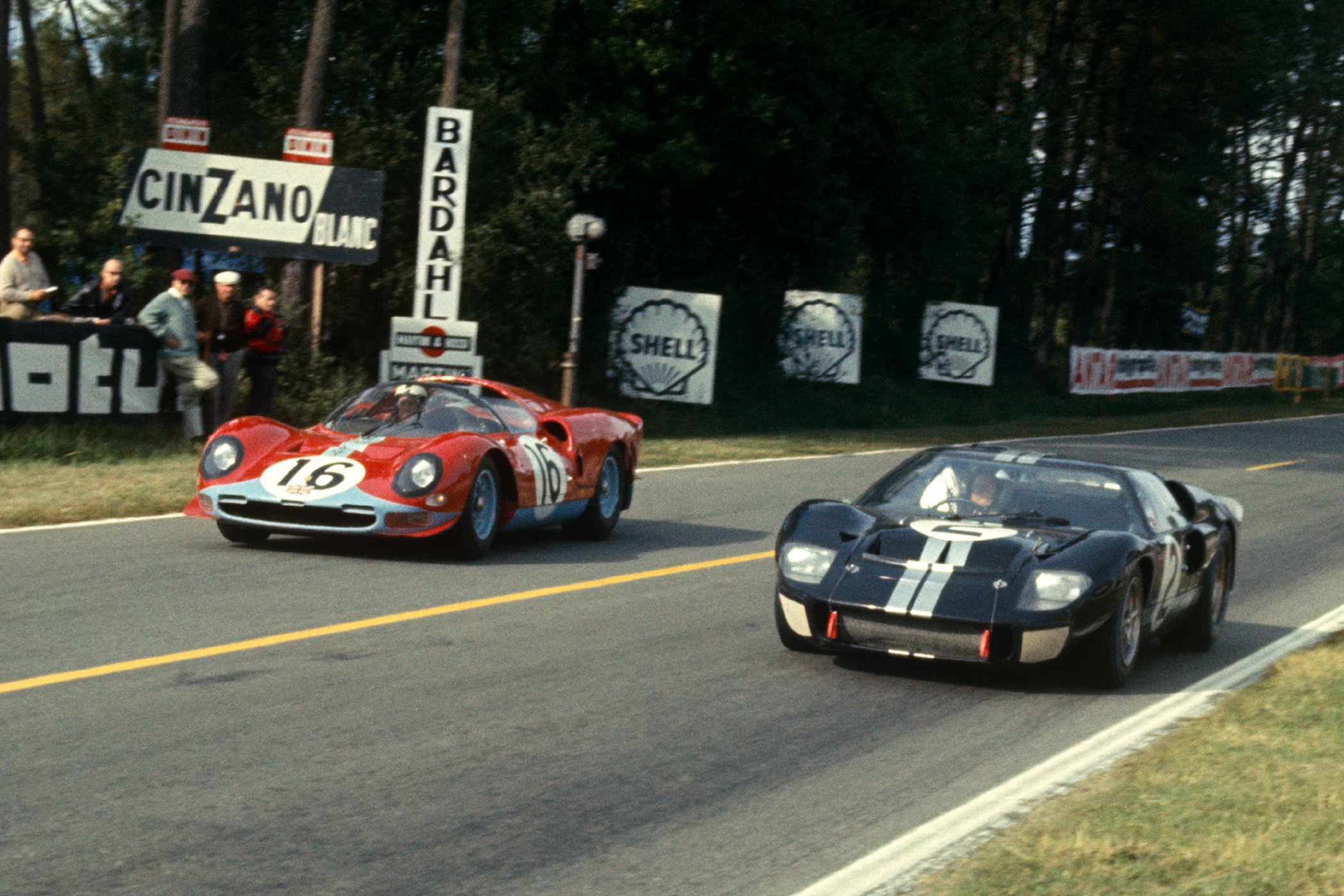
FORD V FERRARI
In 1963, the economics of boutique supercar production weren’t working out for Enzo Ferrari. He wanted someone else to take care of his retail business, and more freedom to focus on racing. And so it was that a message was discreetly passed via the German consul in Milan to Robert Layton, Ford’s head of finance in Cologne.
Layton forwarded the message to Ford’s HQ in Michigan, together with a note: “While I doubt whether this is of special interest, there may be angles I don’t know of.”
As indeed there were. Ford’s chairman, Henry Ford II, had, the year before, fallen for an Italian divorcee and European glamour generally. His general manager, Lee Iacocca, a child of Italian immigrants, was convinced the company needed to sex up its brand for baby boomers. The idea of buying Ferrari ticked all his boxes.
In the end, Enzo Ferrari had other ideas. “He played us,” a senior executive says in the 2019 film Ford v Ferrari. And this seems to be what happened. As Peter Grimsdale writes in Superveloce: How Italian Cars Conquered the World: “A patriot and a cunning schemer, Ferrari, knowing that rumours of the negotiations would spread, was in all likelihood testing the water to see who else might come forward with a better deal.”
Fiat came forward. The Ford deal was off. Enzo Ferrari had his cash injection and his freedom – and Henry Ford II was furious. He knew the Le Mans 24-hour endurance race was the ne plus ultra for bragging rights and brand exposure. Ferraris had won it the previous four years. “You go to Le Mans and beat his ass,” Ford told Leo Beebe, his chief troubleshooter, and over the next three years they spent about $100m in today’s money doing so.
Beebe and Iacocca bought a prototype called the Lola from British designer Eric Broadly, and commissioned Shelley Colby – who’d won Le Mans himself – to turn it into the monstrously powerful seven-litre Ford GT40. It didn’t sing like a Ferrari, one of its drivers said. “It shouted. It was a sledgehammer.” And when driven by Ken Miles it turned out to be almost impossible to beat.
Miles was a former tank commander who’d raced motorbikes in England before the war and moved to LA in the 1950s. He had a sixth sense about what a car could and couldn’t do. “No one drives like Ken,” Colby said. “He talks to the car and the damn thing talks back.”
Colby insisted to Ford high-ups that Miles be brought on not only to develop the GT40 but to drive it, too. Ford v Ferrari makes much of the idea that Miles’s sharp tongue and fell-runner’s countenance weren’t apple pie enough for Ford’s marketing people. It’s true that they forced him to slow down at the end of the 1966 Le Mans, having established a lead of more than a lap, all for a finish-line image of three victorious Fords without a Ferrari in sight. Also true: by that June afternoon in 1966, Miles had beaten Ferrari by forcing its shapely red cars so far out of their comfort zone that, one by one, their engines blew up.
Ford won again at Le Mans in 1967, 1968 and 1969, and it retains a hint of daring in its corporate DNA even now, in the Mustang – a mass-market, all-American version of the prancing horse.
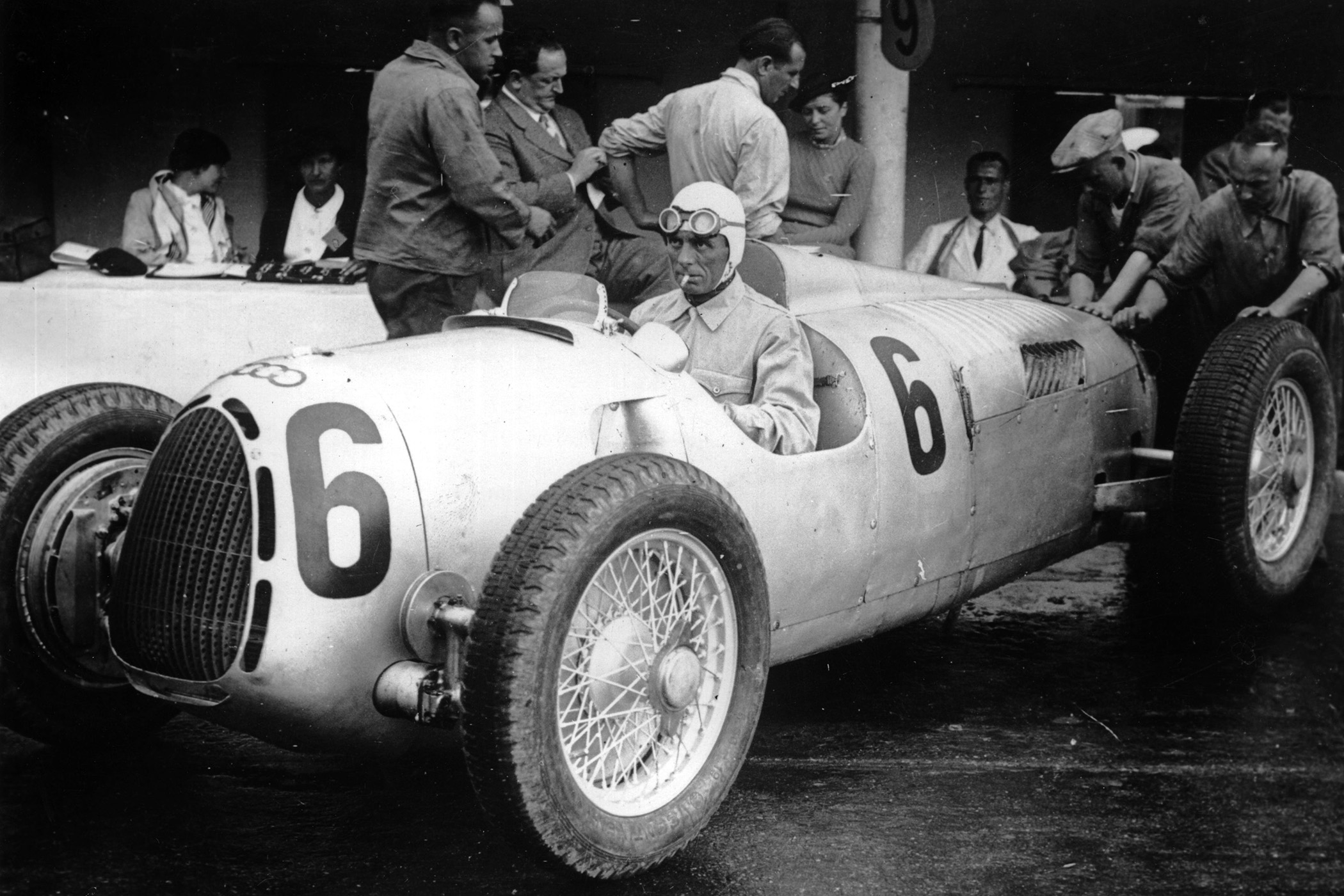
VERZI V NUVOLARI
The story goes that the genius of Tazio Nuvolari was revealed to Enzo Ferrari on the floor of a mighty eight-cylinder Alfa Romeo, on a practice lap before a 1931 grand prix. This was a car with a nose as long as a Spitfire’s and an open cockpit. How Ferrari came to be crouched in the bottom of it isn’t clear, but what he saw was simple: Nuvolari’s right foot, clamped to the floor.
This meant he had to skid into every turn, aiming to be pointing in the right direction heading out of it. He could do it, but almost no one else was fool enough to try. Nuvolari was tiny, scrappy, fearless – and a bit bonkers. He smoked constantly, including in the cockpit of his car. If his perfect rival had been ordered up from central casting he would have been a foot taller, suave, moneyed and unflappable, which roughly described Achille Varzi, at least until the drugs took hold.
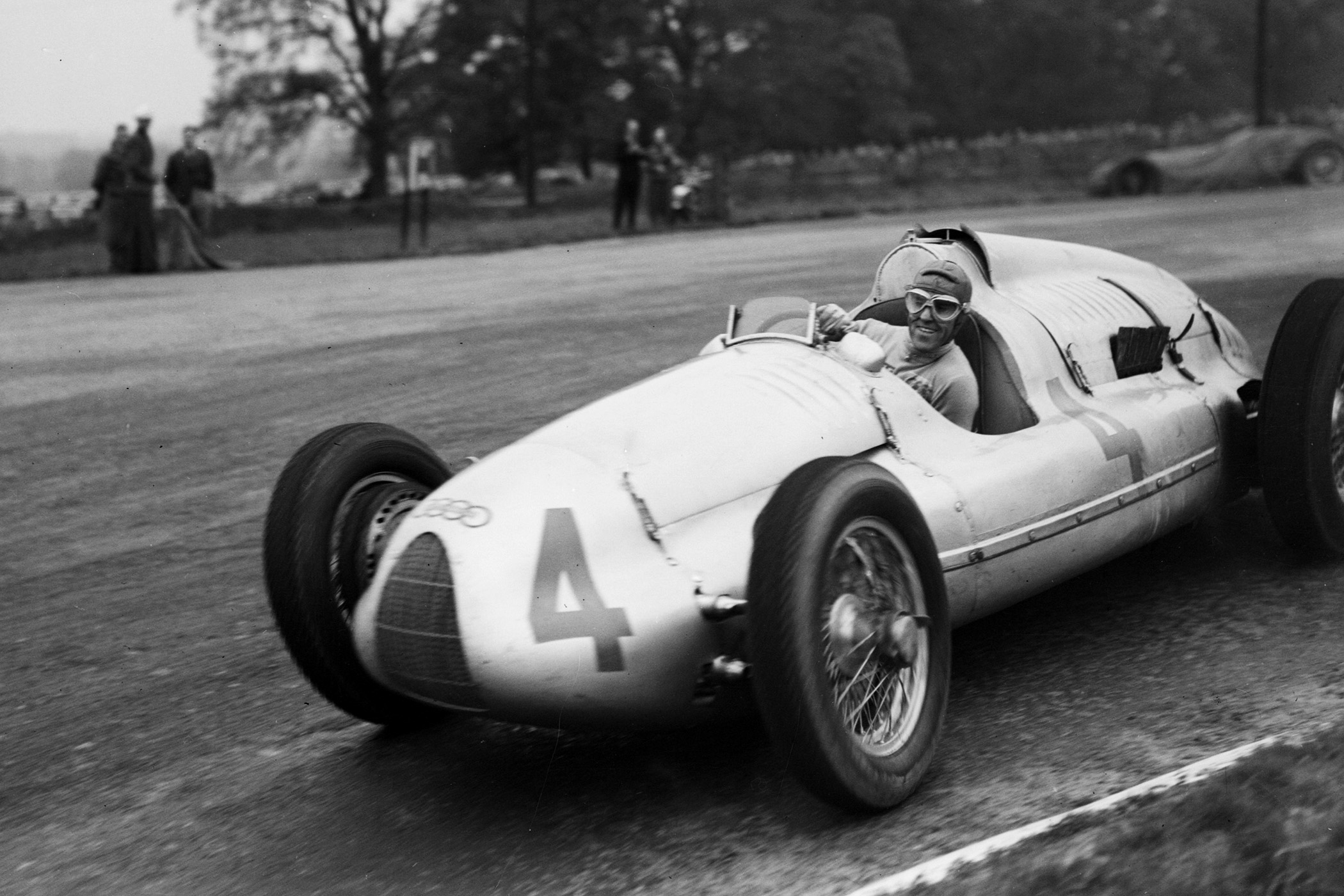
Tazio Nuvolari driving at Donington In 1938
Their pre-war duel was more than just a template for others. It was an epic that mesmerised Italy, turned them into international stars and infuriated the Nazis.
Three of Nuvolari and Varzi’s races live on in the motorsport pantheon. Legend has it that in the first, the 1930 Mille Miglia from Brescia to Rome and back, Nuvolari trailed Varzi for 998 of the race’s 1,000 miles and crept up on him at the end after dark with his headlights off – and won.
The second was the 1933 Monaco Grand Prix, in which they swapped the lead constantly for three and a half hours, seldom more than 20 yards apart. Varzi won, but only because Nuvolari burst an oil pipe on his last blast through the tunnel on the Route de la Piscine. He emerged in a dramatic cloud of smoke, pushing his car.
The third was the German Grand Prix two years later at the Nürburgring, where the Nazi high command expected German cars and drivers to win just as they expected Aryans to triumph at the following year’s Olympics in Berlin. In the second half of the race, Nuvolari overtook five German cars in his underpowered Alfa, including the leader, Manfred Brauchtisch, who burst a tyre on the final lap.
Nuvolari outshone Varzi on the track. Varzi attracted more attention off it. In 1936, he scandalised the Reich by starting an affair with Ilse Pietsch, wife of the German driver Paul Pietsch, and picking up her addiction to morphia. He was drummed out of the German Auto-Union team, while Ilse was personally banned from Italy by Mussolini.
Varzi said his so-called rivalry with Nuvolari was a myth that distracted from their friendship and mutual respect. But Nuvolari was unquestionably the better driver.
Juan Manuel Fangio, another contender for the title of greatest driver of all time, said of Nuvolari: “To me, he was a god.”
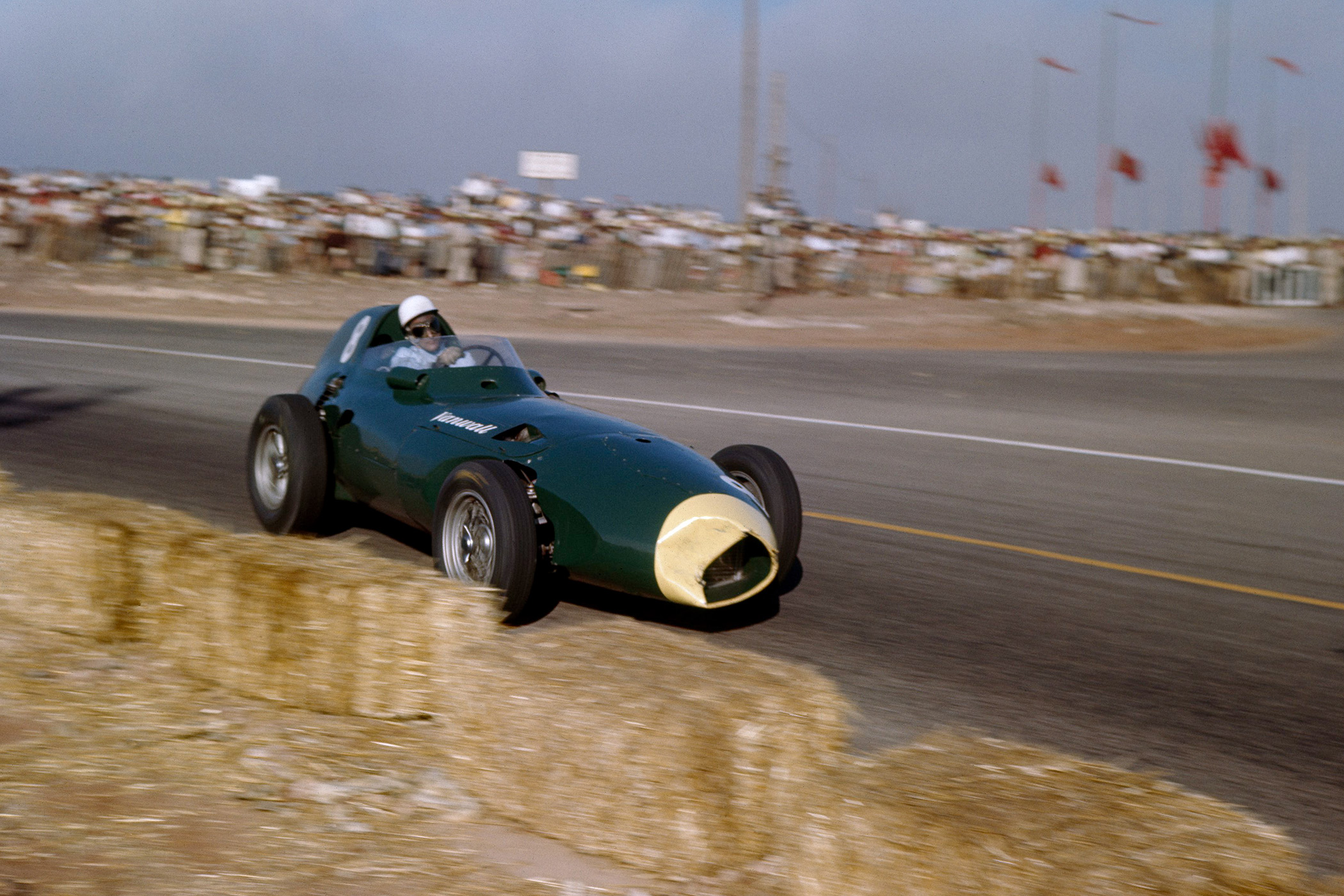
MOSS V HAWTHORN
The battle to be the first British Formula One champion wasn’t really a battle. It was more a motorised gentleman’s joust. The horses could do 170mph even though it was decades before their riders were properly protected by crash barriers or carbon-fibre cockpits, and the riders kept getting killed. Apart from that, the Porto Grand Prix that decided the 1958 title race between Stirling Moss and Mike Hawthorn was almost decorous.
At the time of the race, in late August, three British teams had edged Ferrari and Maserati out of the running for the constructors’ championship for the first time. Only two drivers were in contention for the drivers’ title – Moss in a British-racing-green Vanwall and Hawthorn in a Ferrari.
Hawthorn arrived in Porto six points ahead of Moss with four races to go. Much of the circuit was on old cobbled streets, with tramlines for good measure along the esplanade and Avenida da Boavista. Moss and Hawthorn were 0.05 seconds apart in qualifying; Moss took pole and led for most of the race because his rival had brake trouble from lap seven.
By the half-way point, “Moss was leading by almost a minute and in complete control,” wrote the F1 writer Maurice Hamilton 60 years later.
In front of a crowd of 120,000, Moss extended his lead to more than a lap, even though Hawthorn had won a bonus point for the fastest lap in the race after an extra pit stop to attend to his brakes. Moss won easily, but not before slowing to let Hawthorne unlap himself, which left the winner behind his challenger on his victory lap – which is how he came to see that Hawthorne had spun off the track into a steep cobbled side street and was struggling to restart his car.
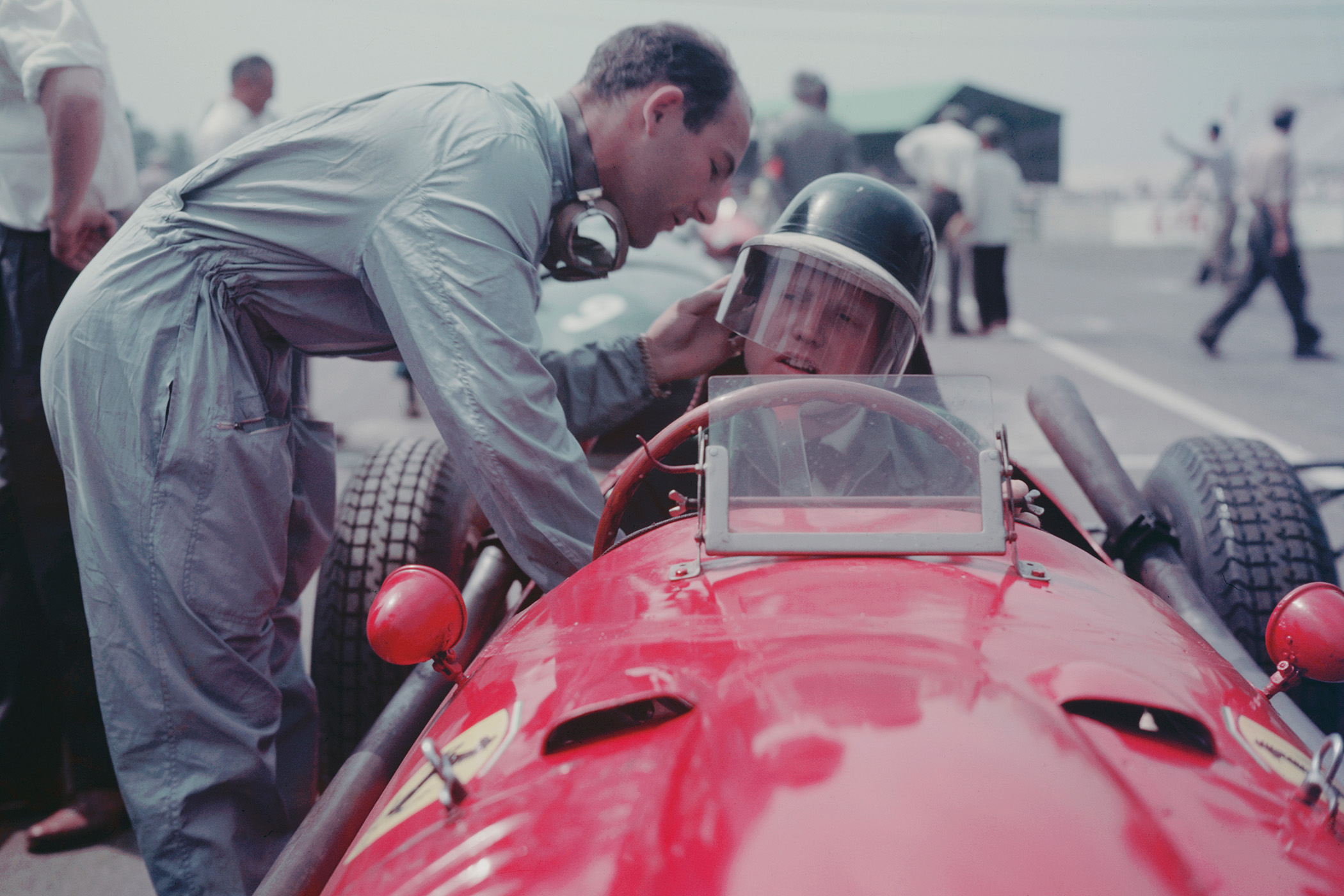
Instead of driving by, Moss paused to wave away a posse of race officials, knowing that if Hawthorn accepted their help he’d be disqualified. Hawthorn used the slope to push-start the Ferrari and rejoined the race. When stewards claimed he’d done so in the wrong direction, Moss, who’d seen it all, protested that the side street wasn’t part of the course and Hawthorn’s seven points – six for second place and one for his fast lap – were reinstated. Three races later he beat Moss to the drivers’ title at the Moroccan Grand Prix by a single point.
That weekend in Porto you could have been forgiven for forgetting what F1 drivers risked. In reality the race was an interlude in a season of carnage. The Italian Luigi Musso, driving for Ferrari, died after somersaulting off the track at the French Grand Prix in July. A month later Peter Collins, an old friend of Hawthorn and Moss’s from Kidderminster, was thrown from his car and killed at the Nürburgring. Stuart Lewis-Evans, from East Grinstead, died of his injuries after crashing at the season finale in Casablanca, at 28.
Moss never did win the drivers’ title, or evince an ounce of regret about Porto. “The fact that [Hawthorne] was my only rival didn’t come into my thinking,” he told Hamilton, deep into his 80s. “Absolutely not.”
Images by Alamy; Sutton; Getty