

I never read reviews of Punchdrunk shows before I see them – I try hard not to read anything at all, bar where and when to turn up, which these days is usually the theatre company’s home in Woolwich, south-east London, a warehouse space that can, thanks to the imagination of founder Felix Barrett and his team, be transformed into any number of immersive spaces, using only draped sheets, old furniture and haunting sound and light design. I loved last year’s Viola’s Room, in which Helena Bonham Carter whispered a story by Daisy Johnson into your ears and you flowed through a setting that was half child’s bedroom, half folktale sprung to life. So I was eager to mark the turn of the year with a visit to Lander 23, a show configured as a game. I won’t say much in case you want to go, but it’s set in outer space and you have to run and hide – heart-poundingly authentic to my sheltered self. And yet. It was curiously empty, and – despite having to work in teams – didn’t provide the sense of connection to your fellow audience members you usually get with their work. Note to self for 2026: seek connection. Not just at the theatre: everywhere.
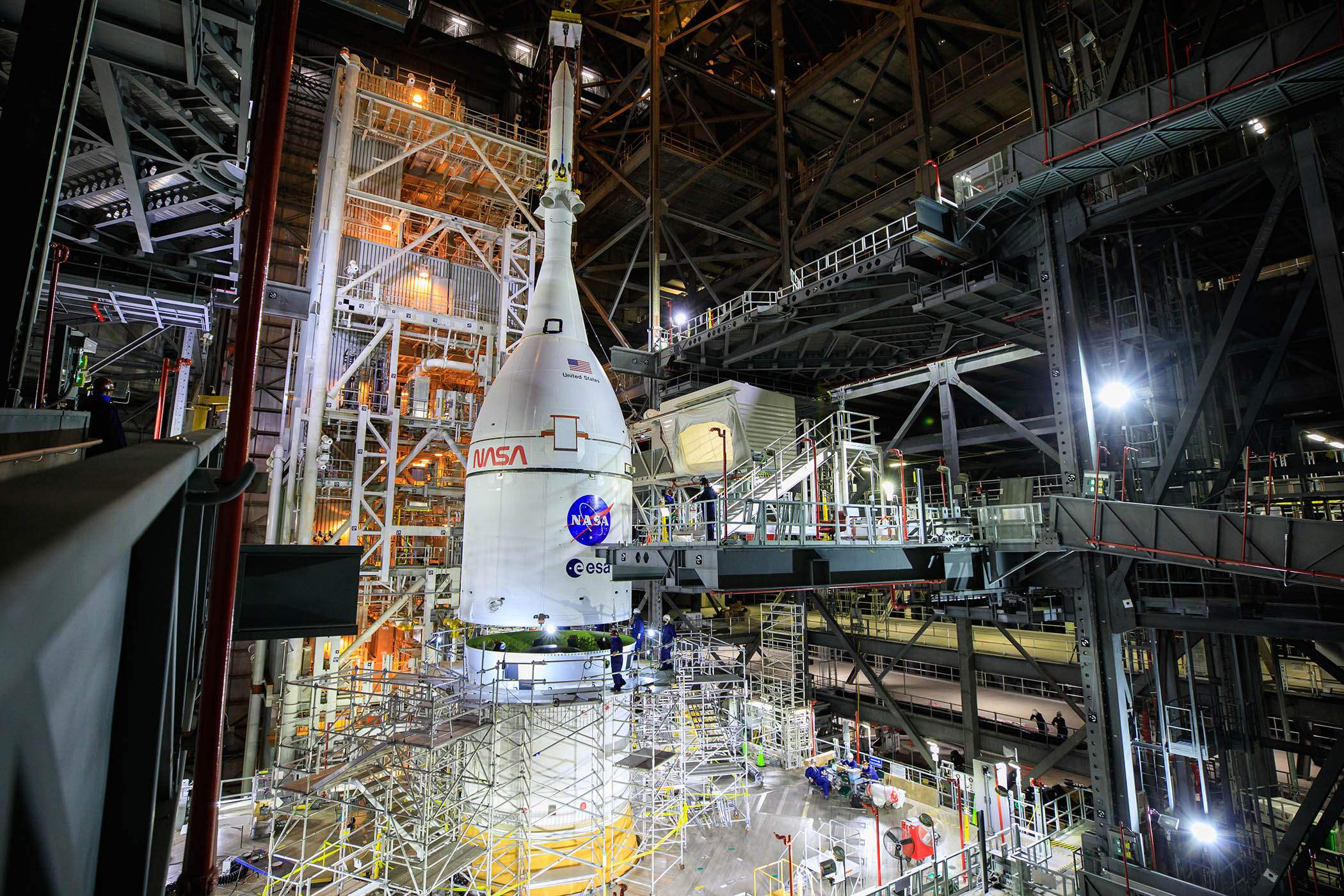
If my critical brain was disappointed, the part of me that desperately wants to climb aboard the Starship Enterprise, that watches the film of Apollo 13 over and over, that listens to the brilliant podcast 13 Minutes to the Moon, yes, over and over, was exhilarated at a reptilian level at running away from aliens on a strange planet, even if the planet was really on the banks of Old Father Thames. So I’m thrilled that this year, if all goes according to plan, Nasa and the Canadian Space Agency will travel around the moon on the Artemis mission – pretty much what Frank Borman, Jim Lovell and Bill Anders accomplished in 1968, but it’s been decades since any craft has travelled that astonishing distance. And Blue Origin, Jeff Bezos’s spaceflight company, plans to settle a lander on the lunar surface sometime this year. But my instinctive pleasure at such accomplishments (or, potential accomplishments, better safe than sorry) is tempered by dismay at the news that the library of the Goddard Space Flight Center – Nasa’s largest library, located in Greenbelt, Maryland – is to be shut. Some of its holdings will be stored in a government warehouse but some of it, hold on to your hats, will just be thrown away. Thrown away! Much of this material is not digitised. It is available nowhere else, in no other way. Seven other Nasa libraries have already been closed since 2022. A Nasa spokeswoman told the New York Times that this was a “consolidation not a closure” but, like so much talk that comes from American government agencies these days, that’s just not true. I despair. How can we fly into the future if we don’t know where we’ve been?
Putting humans into space is always risky. But sometimes it’s not bad to be reminded that no travel can ever be easy; the frictionless surfaces of our digital lives can’t be reproduced IRL, as the young folk no longer say. We’d gone to France just before new year, and were headed home on the 30th. But as we drove towards the Channel tunnel, rumours began to swirl of a massive electrical failure on the Eurostar/Eurotunnel lines and of people stuck in the terminal for seven hours, or on the train for five. The motorway exit was approaching. It was do or die. I felt like Tom Cruise in Mission Impossible as I booked the ferry, there and then, and we sped past the growing queue of cars on the road below towards the port and the seaborne delights of the Isle of Inishmore. We were lucky, yes, where others were not. I do love the engineering marvel of the Channel tunnel. But sometimes I am glad to feel what distance is. The ferry pulled through the swell, the white cliffs drew near. Of course I knew where I was heading, but I wondered, all the same, where I might truly land.
Photograph by Frank Michaux/Nasa
Newsletters
Choose the newsletters you want to receive
View more
For information about how The Observer protects your data, read our Privacy Policy